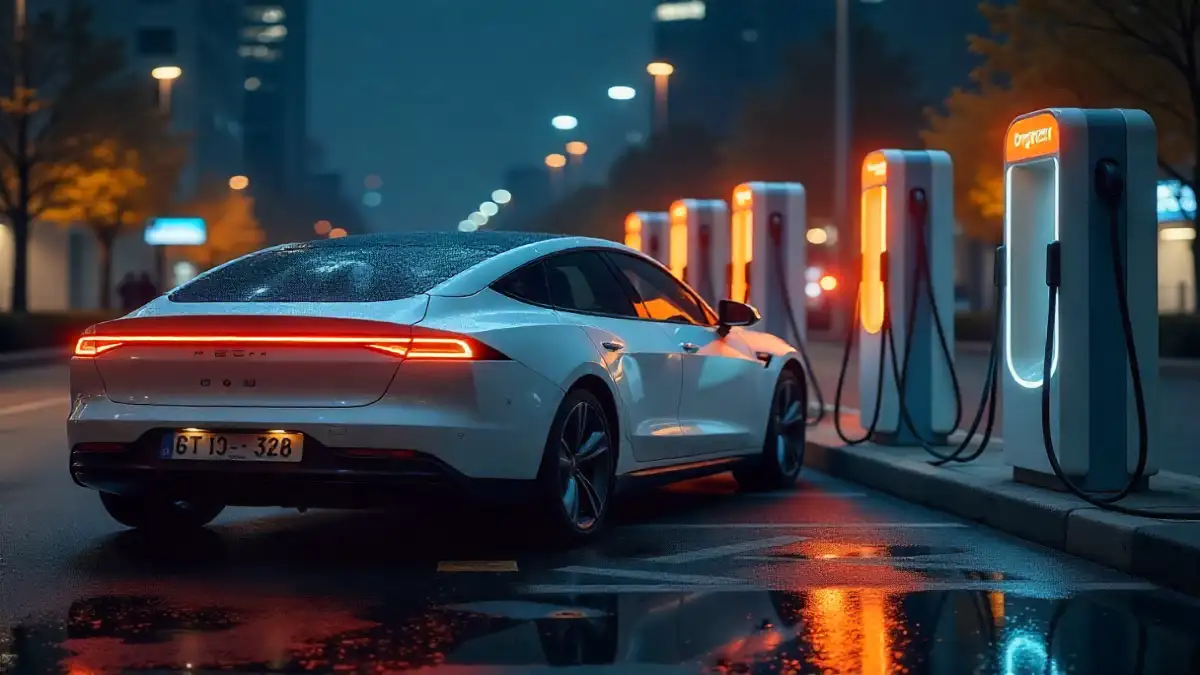
“Understanding electric car charger types can feel overwhelming at first. Remember how simple it was to plug in a smartphone? With EVs, it’s a bit more complex, with Level 1, Level 2, and DC Fast charging options—but once you know the basics, it all makes sense.”
If you’re new to the EV world, the alphabet soup of charging terms can feel overwhelming. Level 1, Level 2, DC Fast Charging, CHAdeMO, CCS – it sounds like someone mixed up a tech manual with a license plate generator. But here’s the thing: once you understand the basics, it all makes perfect sense. And more importantly, knowing these differences will help you make smarter decisions about which electric car to buy and how to charge it efficiently.
Think of it like learning about different types of fuel stations, except instead of regular, premium, and diesel, we’re talking about slow, medium, and lightning-fast ways to fill up your battery. Let’s break it down in a way that actually makes sense for your daily life.
Level 1 Charging: The Tortoise of the Charging World
Level 1 charging is exactly what it sounds like – the most basic level. This is what happens when you plug your electric car into a regular household outlet using the charging cable that comes with your vehicle. Yes, the same 120-volt outlet that powers your coffee maker can also charge your car. Pretty cool, right?
Here’s what you need to know about Level 1 charging: it’s slow. We’re talking about 3-5 miles of range per hour of charging. If your daily commute is 40 miles round trip, you’d need about 8-12 hours to replace that energy. Fortunately, your car sits parked for much longer than that most days, so the math usually works out just fine.
I like to think of Level 1 as the “set it and forget it” option. You get home from work, plug in your car like you would your laptop, and by morning you’re ready to go. No special equipment needed, no electrician required – just you, your car, and a standard wall outlet.
But let’s be realistic about when Level 1 makes sense. If you drive less than 40 miles per day and can charge overnight at home, Level 1 might be all you ever need. It’s perfect for apartment dwellers who snag an outdoor outlet, or homeowners who want to try EV charging before investing in faster equipment. However, if you’re road-tripping or have a longer commute, Level 1 will test your patience pretty quickly.
One thing that surprised me when I first learned about Level 1 charging: it’s incredibly efficient. Because the charging happens slowly, there’s minimal energy loss. Your electricity bill will barely notice the difference, and your car’s battery experiences very gentle charging cycles, which can actually extend its lifespan.
Level 2 Charging: The Sweet Spot for Most People
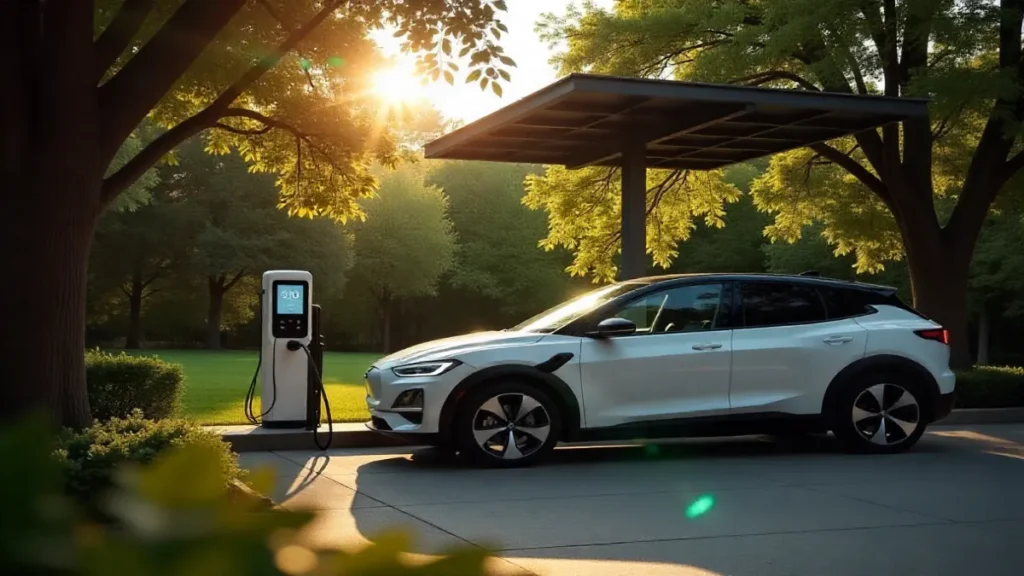
Now we’re talking! Level 2 charging is where most EV owners find their happy place. This uses 240 volts – the same power that runs your electric dryer or oven – and delivers 10-60 miles of range per hour of charging. That’s roughly 4-12 times faster than Level 1, depending on your specific setup.
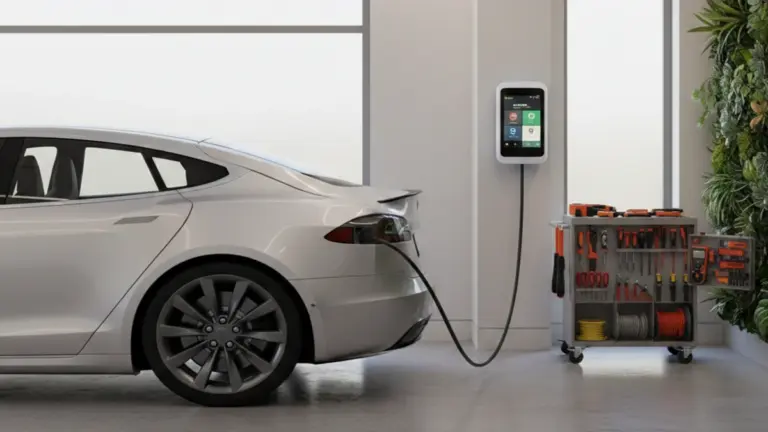
Here’s where it gets practical for your daily life: most Level 2 home chargers will fully charge a typical EV overnight, even if you roll into your driveway with a nearly empty battery. We’re talking about 6-8 hours to go from almost empty to completely full. Perfect for the vast majority of people’s daily driving patterns.
The beauty of Level 2 charging lies in its versatility. You’ll find these chargers at shopping centers, office buildings, hotels, and in many home garages. The charging experience feels natural – park your car, plug it in, do whatever you came to do, and return to significantly more range than when you arrived.
If you’re considering installing a Level 2 charger at home, here’s what you should know: you’ll need a 240-volt electrical outlet (like what your dryer uses) and possibly some electrical upgrades depending on your home’s setup. Most installations cost between $500-2,000, including the equipment and electrical work. It sounds like a lot upfront, but when you consider that you’ll be “filling up” at home for the equivalent of $1-2 per gallon, the math works out pretty quickly.
The connector types for Level 2 can seem confusing at first, but it’s simpler than it appears. In North America, most EVs use the J1772 connector – a standardized plug that works across different car brands. Tesla vehicles come with an adapter, so they can use J1772 stations too. Think of it like how most phones now use USB-C; the industry is converging on common standards.
DC Fast Charging: When You Need Speed
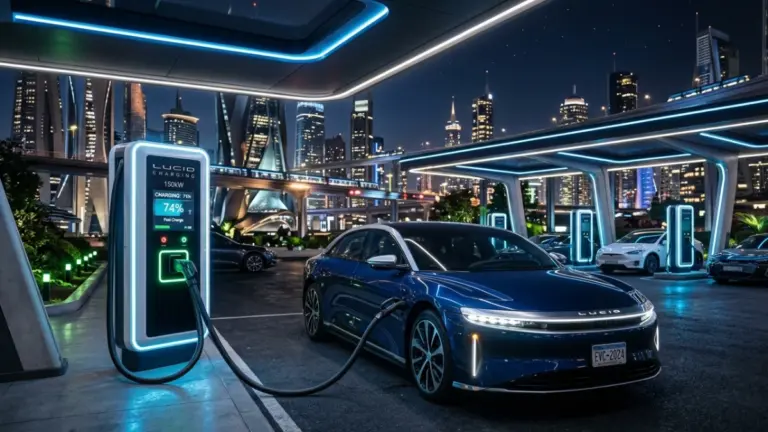
DC Fast Charging is the superhero of the charging world. We’re talking about adding 60-200 miles of range in 20-30 minutes. This is the technology that makes electric road trips not just possible, but genuinely convenient.
Here’s how it works differently from the other levels: instead of your car’s onboard charger converting AC power to DC power (which takes time), DC Fast Chargers bypass that step entirely and pump DC power straight into your battery. It’s like the difference between filling a swimming pool with a garden hose versus opening up a fire hydrant.
But here’s where it gets interesting – and where some confusion often happens. DC Fast Charging speeds vary dramatically based on your car’s capabilities, the battery’s current charge level, and even the outside temperature. A brand-new Lucid Air might pull 300+ kilowatts from a high-end charger, while an older Nissan Leaf might max out at 50 kilowatts from the same station. It’s not the charger’s fault; it’s like how different phones charge at different speeds even when using the same wall adapter.
The connector situation with DC Fast Charging is where things get a bit more complex. In the U.S., you’ll encounter three main types: CCS (Combined Charging System), CHAdeMO, and Tesla’s Supercharger network. CCS is becoming the dominant standard for most new EVs, while CHAdeMO is primarily used by Nissan and Mitsubishi. Tesla has their own proprietary connector, but they’re gradually opening their network to other vehicles and adopting CCS for newer installations.
Here’s a practical tip from real-world experience: DC Fast Charging is most effective when your battery is between 10-80% charged. The charging speed typically slows down significantly after 80% to protect the battery. So don’t plan on charging from 80-100% at a fast charger unless you really need those extra miles – you’ll be sitting there much longer than expected.
Choosing the Right Charging Strategy for Your Life
So, which charging type should you rely on? The honest answer is probably all three, depending on the situation. It’s like having different tools in a toolbox – each serves a specific purpose.
For daily charging, Level 2 at home or work is usually the winner. It’s fast enough to handle your regular driving needs without being overkill. You’ll plug in when you park and unplug when you leave, just like you probably do with your phone at night.
Level 1 charging earns its place as the backup option and the “better than nothing” solution. Visiting relatives who don’t have a Level 2 charger? Level 1 will keep you going. Staying at a hotel that only has regular outlets? Level 1 to the rescue.
DC Fast Charging is your road trip enabler and emergency backup. Long drives become totally feasible when you can add 150+ miles of range during a lunch break. It’s also peace of mind for those times when you forget to plug in at home or have an unexpectedly long day.
What This Means for Your EV Purchase Decision
Understanding these charging types should definitely influence which electric car you choose. Some vehicles charge faster than others at DC Fast Chargers. Some come with more robust onboard chargers that make Level 2 charging quicker. And some are designed primarily for city driving where Level 1 might be sufficient.
Before you buy, think honestly about your driving patterns. Do you regularly take long trips? DC Fast Charging capability becomes crucial. Live in an apartment with limited charging options? You might want an EV with longer range and faster charging to make the most of public charging sessions.
Also consider your local charging infrastructure. If there are plenty of Level 2 chargers near where you work and shop, that changes your home charging requirements. If DC Fast Chargers are sparse in your area, you’ll want to prioritize home charging capability.
The Future is Getting Faster and Simpler
The charging landscape continues to evolve rapidly. We’re seeing new technologies like 350-kilowatt chargers that can add hundreds of miles in minutes, wireless charging pads that power your car while parked, and even dynamic charging systems built into roadways.
Connector standards are also consolidating. Tesla’s decision to open their network and adopt CCS for new installations is pushing the industry toward greater compatibility. Soon, the connector confusion should largely disappear, making the EV charging experience as straightforward as filling up with gas.
The bottom line? Today’s charging infrastructure already supports the needs of most drivers, and it’s only getting better. Understanding the differences between Level 1, Level 2, and DC Fast Charging helps you make informed decisions about which electric vehicle to buy and how to integrate charging into your daily routine.
Whether you’re charging slowly overnight at home, topping up during a shopping trip, or powering up quickly on a road trip, there’s a charging solution that fits your needs. The key is matching the right charging type to the right situation – and now you know exactly how to do that.