You know that exhilarating feeling when you floor the accelerator in an electric car? That instant surge of power that pins you to your seat isn’t magic—it’s all about the drivetrain working beneath you. But here’s something most people don’t realize: not all electric drivetrains are created equal, and the difference between a single-motor setup and a tri-motor beast can be as dramatic as comparing a bicycle to a motorcycle.
I’ve spent years testing EVs in everything from sun-baked desert highways to snow-covered mountain passes, and I can tell you this: understanding drivetrain configurations is the secret to choosing an electric car that actually matches your driving needs. Let’s dive into what really matters when comparing these systems, minus the engineering jargon that usually makes your eyes glaze over.
The Basics: What Actually Is an EV Drivetrain?
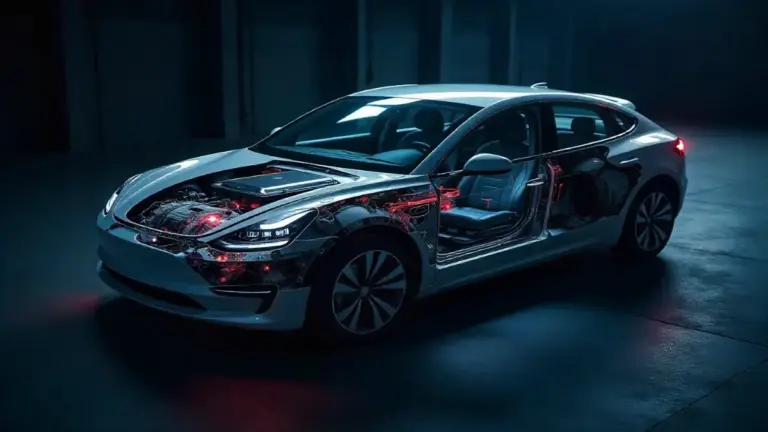
Think of an EV drivetrain as the heart and muscles of your car combined into one system. Unlike traditional cars with their complex transmissions and driveshafts, electric drivetrains are refreshingly straightforward. You’ve got electric motors that convert battery power into wheel rotation, and that’s essentially it. No clutch to burn out, no gears to grind—just pure, instant torque.
The real difference comes down to how many motors you have and where they’re placed. It’s like the difference between rowing a boat with one oar versus two—same basic principle, completely different experience.
Single-Motor Drivetrains: The Efficient Workhorse
Let’s start with the most common configuration: single-motor, rear-wheel drive (RWD) or front-wheel drive (FWD). Cars like the base Tesla Model 3, Chevrolet Bolt, and Nissan Leaf use this setup, and honestly? For most people, it’s more than enough.
Performance Characteristics
A single-motor EV typically delivers between 200-300 horsepower, which sounds modest until you remember that electric motors produce maximum torque from zero RPM. That means even a “base” electric car can leave many gas-powered sports cars in the dust from a stoplight. I’ve driven the rear-wheel drive Tesla Model 3, and its 0-60 mph time of about 5.8 seconds feels quicker than the numbers suggest because there’s zero lag.
Where They Shine
Single-motor setups excel in efficiency. Without the extra weight and parasitic drag of additional motors, these cars typically achieve the longest range per kilowatt-hour. The base Model 3 Long Range, for example, can squeeze out over 340 miles on a charge—that’s partly thanks to having just one motor doing the work.
They’re also perfect for:
- Daily commuting in fair weather
- Highway cruising where traction isn’t challenged
- Urban driving where you need maximum efficiency
- Budget-conscious buyers (single-motor EVs cost $5,000-$15,000 less than dual-motor versions)
The Limitations
Here’s where things get interesting. I learned this the hard way during a winter trip through Colorado. Single-motor RWD vehicles can struggle when roads get slippery. Without power going to all four wheels, you’re relying on weight distribution and traction control alone to keep you moving. It’s not impossible—good winter tires work wonders—but you’ll definitely notice the difference compared to AWD.
Front-wheel drive single-motor EVs (like the Nissan Leaf) handle better in snow because the motor’s weight sits over the drive wheels, but they sacrifice some of that sporty, balanced feel that makes RWD so enjoyable on dry pavement.
Dual-Motor Drivetrains: The Sweet Spot for Most Drivers
Now we’re talking. Dual-motor configurations—with one motor on the front axle and one on the rear—transform an electric car from “quick” to “holy smokes, what just happened?” These systems power all four wheels independently, creating what’s technically called electric all-wheel drive (eAWD).
Performance That Actually Matters
The numbers get impressive fast. The Tesla Model 3 Performance with dual motors hits 60 mph in 3.1 seconds. The Ford Mustang Mach-E GT Performance Edition does it in 3.5 seconds. But here’s what the spec sheets don’t tell you: it’s not just about acceleration—it’s about control.
Each motor can adjust its power output hundreds of times per second. When you’re powering through a corner, the front and rear motors work together to rotate the car more precisely than any mechanical differential ever could. It’s called torque vectoring, and once you’ve experienced it, traditional AWD systems feel clumsy by comparison.
Real-World Advantages
I’ve driven dual-motor EVs in conditions where I wouldn’t dare take a single-motor car:
- Snow and ice: Power automatically shifts to whichever wheels have grip
- Rain-soaked highways: Stability feels rock-solid even at speed
- Mountain switchbacks: The ability to put power down precisely makes cornering surprisingly confidence-inspiring
- Off-road (for capable models): The Rivian R1T’s quad-motor system can tackle trails that would stop most SUVs
The Trade-Offs
There’s no free lunch. Dual-motor systems add weight (typically 100-200 pounds), cost more upfront, and reduce efficiency by about 10-15% compared to single-motor equivalents. That 340-mile range on the base Model 3? Drop to about 310 miles with the dual-motor setup. For some drivers, that’s a deal-breaker. For others, the added capability is worth every lost mile.
Tri-Motor and Quad-Motor Systems: Performance Unleashed
Welcome to the extreme end of the spectrum. Vehicles like the Tesla Model S Plaid (tri-motor), Rivian R1T (quad-motor), and Lucid Air Sapphire (tri-motor) represent what happens when engineers ask, “What if we just added MORE motors?”
Insane Performance Numbers
We’re talking about 1,000+ horsepower, 0-60 mph times under 2 seconds, and handling characteristics that seem to defy physics. The Model S Plaid completes the quarter-mile in 9.23 seconds. That’s faster than most dedicated drag racing cars from just a decade ago.
But these aren’t just straight-line monsters. With independent control over three or four wheels, these systems can do things like:
- Adjust power to individual wheels in real-time for maximum cornering speed
- Provide unprecedented stability during emergency maneuvers
- Enable features like “tank turn” mode (on the Rivian) where the vehicle can pivot nearly in place
Who Actually Needs This?
Let’s be honest: most people don’t. These are halo vehicles designed to showcase what’s possible with electric powertrains. They’re for:
- Performance enthusiasts who want supercar acceleration with four-door practicality
- Off-road adventurers who need maximum capability (quad-motor systems especially)
- Tech early adopters who want the absolute cutting edge
- People with budgets that stretch into six figures
The efficiency penalty is steep—expect 20-30% less range than comparable single-motor models. And prices? You’re looking at $90,000 to $250,000+ depending on the vehicle.

Choosing the Right Drivetrain for Your Needs
So which configuration makes sense for you? Here’s how I’d break it down:
Go Single-Motor If:
- You primarily drive in fair weather conditions
- You want maximum range and efficiency
- Budget is a primary concern
- You live somewhere with mild winters
- Your driving is mostly highway and urban commuting
Choose Dual-Motor If:
- You experience real winters with snow and ice
- You value spirited driving and performance
- You want the best all-around capability
- You can accept 10-15% less range for added capability
- You have the budget for a mid-range to premium EV
Consider Tri/Quad-Motor Only If:
- Performance is a top priority regardless of cost
- You need extreme off-road capability (quad-motor)
- Range reduction isn’t a concern for your use case
- You want bragging rights at Cars and Coffee
The Future of EV Drivetrains
Here’s where things get really exciting. The next generation of electric drivetrains is moving toward in-wheel motors—individual motors integrated directly into each wheel hub. Companies like Aptera and Lordstown Motors are pioneering this technology, which could revolutionize weight distribution, efficiency, and packaging.
We’re also seeing innovations in motor efficiency that could narrow the gap between single and multi-motor systems. Some manufacturers are developing “disconnecting” AWD systems that can completely shut off the front motor during cruising to maximize range, then instantly re-engage it when needed.
The Bottom Line
After testing dozens of EVs with different drivetrain configurations, here’s my honest take: most drivers will be happiest with a dual-motor setup if they can afford it. The combination of all-weather capability, strong performance, and reasonable efficiency hits the sweet spot for the widest range of use cases.
But if you live in Southern California, Florida, or anywhere with mild weather year-round, a single-motor EV will save you money upfront and at every charging session while still delivering performance that feels quick and engaging.
And those extreme multi-motor systems? They’re incredible to experience, but they’re solutions looking for problems for most buyers. Unless you genuinely need supercar performance or extreme off-road capability, you’re paying a steep premium for bragging rights.
The beauty of electric drivetrains is that even the “base” configuration in most modern EVs delivers performance that would have been considered remarkable just a few years ago. Whatever you choose, you’re getting instant torque, smooth power delivery, and an driving experience that’s fundamentally different—and better—than any gas-powered car.
Now, if you’ll excuse me, I have a dual-motor EV waiting in the driveway, and these mountain roads aren’t going to drive themselves.