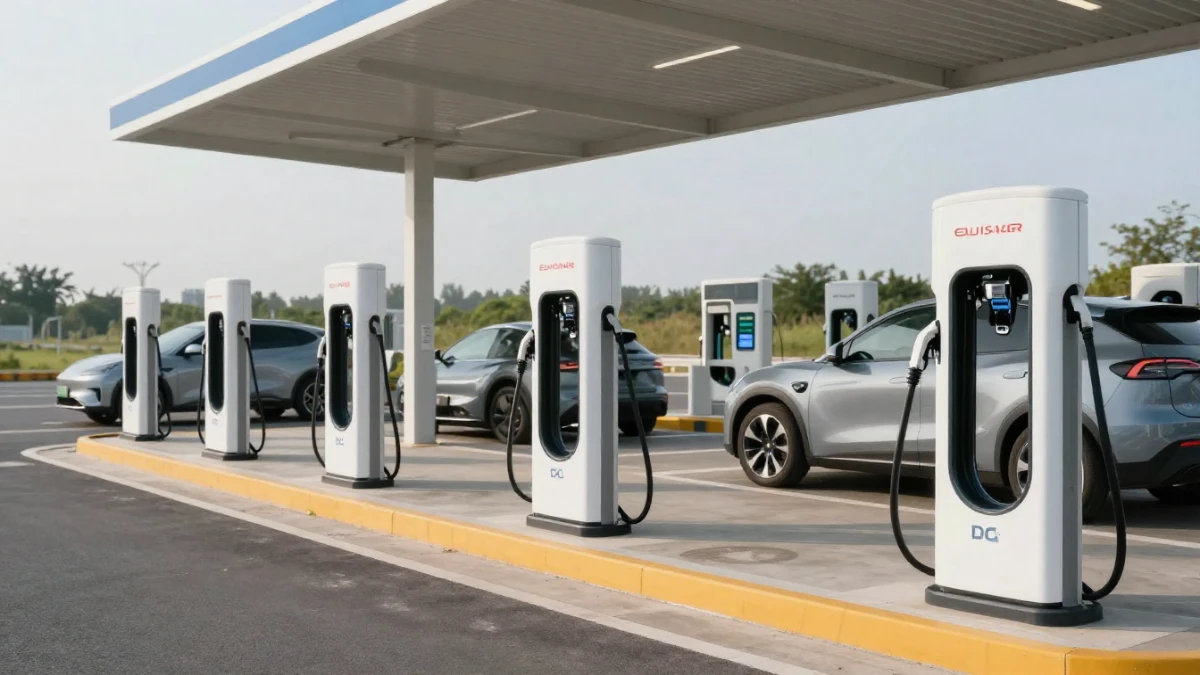
Have you ever wondered if you could actually road trip across the country in an electric vehicle? Or maybe you’re curious whether there’s a charging station near your favorite coffee shop? Here’s the reality: electric vehicle charging infrastructure has transformed dramatically over the past few years, and what was once a legitimate concern has become surprisingly manageable for most drivers.
The charging network in North America has grown from roughly 22,000 public charging ports in 2020 to over 192,000 ports as of early 2025, according to the U.S. Department of Energy. But it’s not just about the numbers—it’s about where these chargers are, how fast they work, and whether they’ll be there when you need them.
In this guide, you’ll discover how EV charging infrastructure actually works, the different types of chargers available, where the network is heading, and practical tips for navigating this evolving landscape. Whether you’re considering your first EV purchase or you’re already driving electric and want to understand your options better, this article will give you the complete picture.
Understanding the Three Levels of EV Charging
Think of EV charging like filling up different-sized containers—some methods are quick, others take time, but each serves a specific purpose in your daily life.
Level 1 Charging: Your Home Outlet
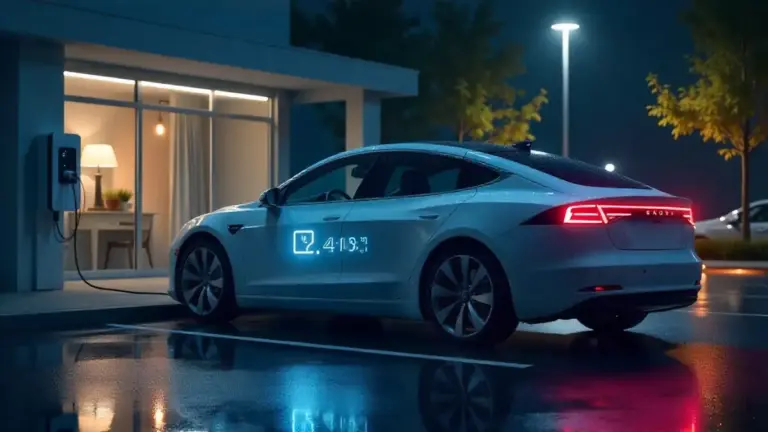
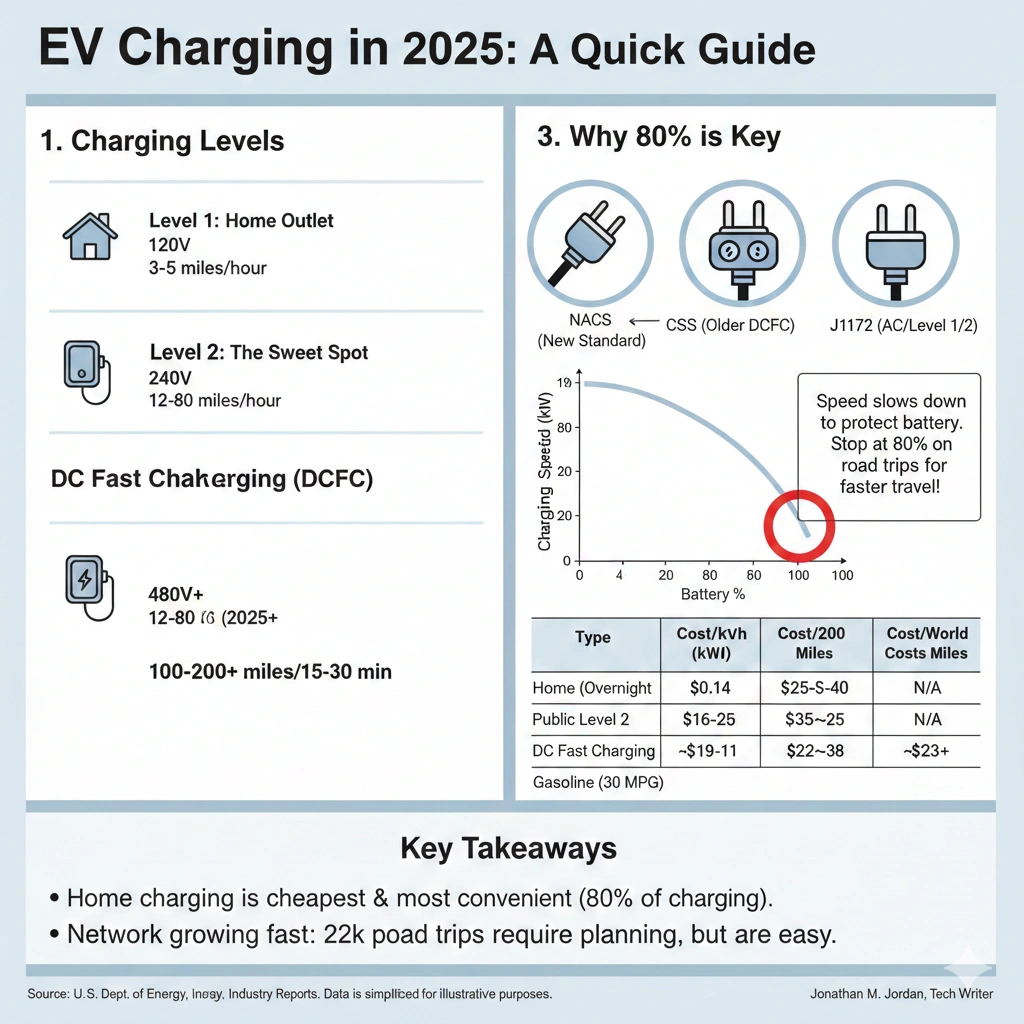
Level 1 charging uses a standard 120-volt household outlet, the same one you’d plug your phone charger into. It’s the slowest option, adding only about 3-5 miles of range per hour of charging. That might sound painfully slow, but here’s the thing: if you plug in when you get home from work and unplug eight hours later, you’ve added 24-40 miles of range—enough for most people’s daily commute.
When Level 1 makes sense:
- You drive less than 40 miles daily
- You have predictable, routine driving patterns
- You’re not in a rush and can charge overnight
- You want zero upfront installation costs
The beauty of Level 1? It’s already in your garage. No special equipment needed beyond the charging cable that comes with your EV.
Level 2 Charging: The Sweet Spot for Most Drivers
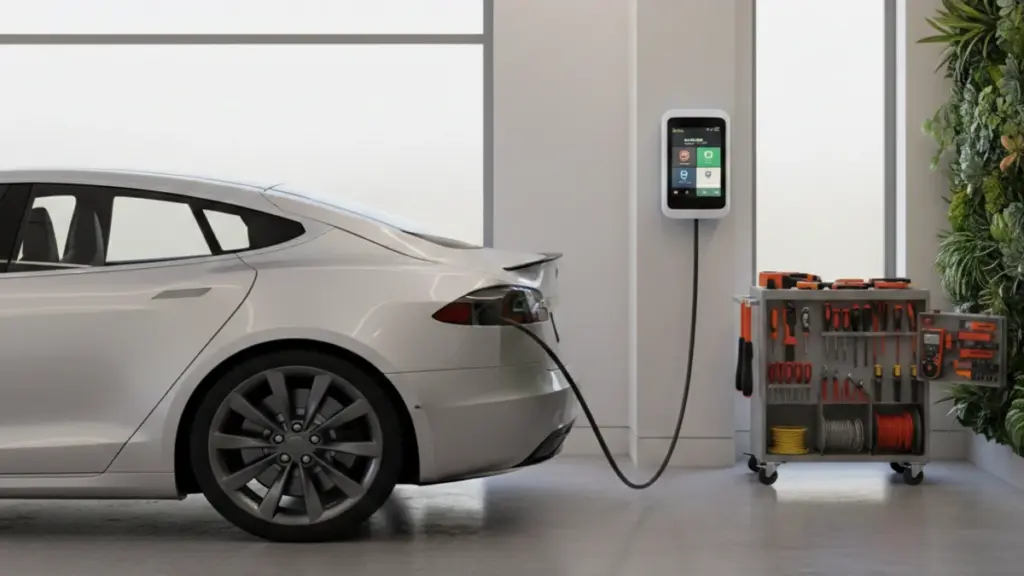
Level 2 chargers use 240-volt power—the same voltage as your electric dryer or oven—and they’re where things get practical. These chargers deliver 12-80 miles of range per hour, depending on the specific unit and your vehicle’s capabilities. Most EV owners install a Level 2 charger at home and rarely think about charging again.
I recently spoke with Sarah Chen, a Tesla Model Y owner in Denver, who told me: “I installed a Level 2 charger in my garage two years ago, and honestly, I’ve used public charging maybe five times since then. I just plug in at night, and my car’s ready every morning with a full battery.”
Home Level 2 chargers typically cost between $400-$1,200 for the equipment, plus $500-$2,000 for professional installation, depending on your electrical panel’s capacity and distance from your parking spot. Many utility companies offer rebates that can cut these costs significantly—sometimes by 50% or more.
Public Level 2 chargers are everywhere: shopping centers, office buildings, hotels, restaurants, and parking garages. While slower than DC fast charging, they’re perfect for topping off while you shop, work, or eat. You’re not there specifically to charge; you’re there anyway, and the charging happens in the background.
DC Fast Charging (DCFC): The Road Trip Enabler
DC fast chargers are the game-changers for long-distance EV travel. These high-powered stations can add 100-200 miles of range in just 15-30 minutes. The latest generation, like Tesla’s V4 Superchargers and Electrify America’s 350 kW stations, can push even more power to compatible vehicles.
Here’s what’s important to understand: DC fast charging isn’t meant for daily use. It’s more expensive per kilowatt-hour than home charging, and frequent fast charging can slightly accelerate battery degradation over many years. Think of it like taking the highway versus neighborhood streets—you use it when you need speed, not for every trip to the grocery store.
Current DC fast charging speeds (2025):
- Standard DCFC (50-150 kW): 10-20 minutes for 80 miles
- High-power DCFC (150-350 kW): 15-20 minutes for 150-200 miles
- Ultra-fast DCFC (350+ kW): 10-15 minutes for 200+ miles (vehicle-dependent)
One crucial thing to know: most EVs charge fastest from 0-80% battery level. After 80%, charging speed tapers significantly to protect the battery. That’s why you’ll often see EV drivers stop charging around 80% on road trips—it’s simply more time-efficient to drive and charge again later than to wait for that last 20%.
The Current State of Charging Infrastructure
Let’s talk about where we actually are in early 2025, beyond the marketing hype and the doomsday predictions.
Network Size and Geographic Coverage
The United States now has over 65,000 public charging stations with approximately 192,000 individual charging ports. For context, there are roughly 145,000 gas stations in the U.S., so we’re approaching comparable station counts (though gas stations typically have many more fueling positions than charging stations have ports).
But averages don’t tell the whole story. Charging infrastructure distribution varies dramatically:
Well-covered areas:
- West Coast (California, Oregon, Washington): Excellent coverage on highways and in urban areas
- Northeast Corridor (Boston to Washington DC): Dense network, multiple providers
- Major metro areas nationwide: Generally well-served with both Level 2 and DCFC options
- Interstate corridors: Most major highways now have DCFC coverage every 50-100 miles
Areas needing improvement:
- Rural Midwest and Great Plains: Growing but still sparse in places
- Mountain West: Good highway coverage, but limited options off main routes
- Deep South: Improving rapidly but historically underserved
- Smaller towns and rural areas nationwide: Limited public charging options
The good news? The Infrastructure Investment and Jobs Act allocated $7.5 billion specifically for EV charging infrastructure, with a focus on filling these gaps. The National Electric Vehicle Infrastructure (NEVI) program requires chargers every 50 miles along designated highway corridors, which is actively being implemented throughout 2025.
The Major Charging Networks
Understanding the key players helps you plan more effectively:
Tesla Supercharger Network
- Over 50,000 Supercharger connectors globally, 20,000+ in North America
- Historically Tesla-exclusive, now opening to other EVs with NACS adoption
- Known for reliability: 99.5%+ uptime in most regions
- Typically located near amenities: restrooms, food, shopping
- Average station size: 8-12 chargers (larger sites have 20-40+)
Electrify America
- Volkswagen-funded network with 980+ stations, 4,200+ chargers in the U.S.
- Focus on highway corridors and metro areas
- Ultra-fast charging up to 350 kW
- Multi-brand compatibility (CCS standard, adding NACS)
EVgo
- One of the oldest networks with 1,000+ locations
- Primarily urban and suburban focus
- Mix of fast charging speeds (50-350 kW)
- Strong presence in California and major cities
ChargePoint
- Largest Level 2 network with over 30,000 stations
- Platform for property owners (many different site hosts)
- Great app for finding nearby chargers
- Variable pricing (set by property owners)
Other notable networks: Blink, FLO, Shell Recharge, EVConnect, and hundreds of smaller regional providers.
The Connector Standard Revolution: NACS Changes Everything
Here’s something that confused EV drivers for years: different cars used different charging plugs. Teslas had their proprietary connector, while most other EVs used the Combined Charging System (CCS) standard. It was like having gas stations where some pumps only worked for certain car brands.
That’s changing dramatically. In a surprise move starting in 2023, Ford, GM, Rivian, Mercedes-Benz, Nissan, Honda, BMW, Volkswagen, and essentially every major automaker announced they’re adopting Tesla’s North American Charging Standard (NACS) connector for future vehicles starting in 2025-2026.
What this means for you:
- New EVs (2025+): Will mostly come with NACS ports, giving native access to Tesla’s extensive Supercharger network plus all other chargers
- Existing non-Tesla EVs: Can use adapters (already available from several manufacturers) to access Tesla Superchargers
- Existing Teslas: Continue working everywhere they currently do
This consolidation is huge. Instead of needing apps for six different networks and worrying about connector compatibility, EV charging is becoming as simple as gas stations—pull up, plug in, charge. The NACS port is also smaller, lighter, and easier to handle than the bulkier CCS connector, which matters when you’re plugging in during a Minnesota winter.
Real-World Charging: What Daily Life Actually Looks Like
Let’s get practical. What does EV charging look like when you’re living with an electric vehicle day to day?
Home Charging: The Foundation
About 80% of EV charging happens at home, according to the U.S. Department of Energy. This is the aspect of EVs that’s most different from gas cars—and once you experience it, you’ll wonder why you spent years of your life standing at gas pumps.
Think about it: your car sits parked 95% of the time. With an EV, that parked time becomes charging time. You plug in when you get home, just like you put your phone on the charger at night, and you wake up to a “full tank” every morning. No special trips to fuel up, no standing in the cold pumping gas, no detours when you’re running late.
The home charging equation:
- Average American drives 40 miles per day
- Level 2 home charger adds 25-40 miles per hour of charging
- Overnight (8 hours) provides 200-320 miles of range
- You’re essentially never empty unless you take an unusual long trip
Marcus Thompson, a Chevy Bolt owner in Chicago, put it this way: “I haven’t thought about ‘where do I charge’ in two years. My car just charges while I sleep. The only time I use public charging is on the occasional road trip to visit family four states away.”
For apartment dwellers and those without dedicated parking, the situation is improving but still inconsistent. Many newer apartment complexes are adding Level 2 chargers, some cities require EV charging in new construction, and workplace charging is growing. But yes, if you can’t charge at home or work, owning an EV is currently more challenging—though not impossible with good public charging access nearby.
Public Charging Etiquette and Best Practices
Public charging comes with its own set of unwritten rules that help keep things running smoothly:
The basics:
- Don’t unplug someone else’s car (unless it’s clearly finished and you’re desperate)
- Move your car promptly when charging is complete (some networks charge idle fees after 5-10 minutes)
- Don’t park in EV charging spots if you’re not charging (yes, even if you drive an EV)
- Plan to charge to 80% on road trips, not 100%—it’s faster and lets others use the charger sooner
- Have a backup plan: if all chargers are occupied or broken, where’s your next option?
Navigation apps that help:
- PlugShare: Community-driven with real-time updates and reviews
- A Better Route Planner (ABRP): Intelligent road trip planning with charging stops
- Your vehicle’s native navigation: Most EVs now include excellent charging integration
- ChargePoint, EVgo, Electrify America apps: For their respective networks
One surprising reality: charger reliability varies. Tesla Superchargers are famously reliable (99%+ uptime), but some third-party networks struggle with broken equipment, payment system glitches, or poor maintenance. Always check PlugShare reviews before relying on an unfamiliar charger, especially on road trips.
Road Tripping in an EV: The Reality in 2025
Can you road trip in an EV? Absolutely. Is it identical to a gas car? No—but it’s different in ways that are both better and worse.
The planning requirement: Unlike gas cars where you just drive and fill up whenever, EV road trips benefit from a bit of planning. You need to know where chargers are along your route, though modern EV navigation systems do this automatically. The Tesla, Rivian, and several other manufacturers’ route planners will map your entire trip, tell you exactly where to stop, and for how long.
The charging stop reality: You’ll stop for 15-30 minutes every 150-250 miles to recharge. This sounds like a lot until you realize that many people already stop that frequently on long drives—for food, restrooms, stretching, or just a break from driving. The difference is your stops are now planned around charger locations rather than random rest stops.
Jennifer Rodriguez, a Ford Mustang Mach-E owner who recently drove from Seattle to San Diego, shared: “I was worried about the charging stops, but honestly? We hit Superchargers at meal times, grabbed lunch while charging, and were back on the road in 25 minutes. The car was ready before we finished eating. It added maybe 45 minutes to our total 20-hour trip.”
Winter considerations: EV range decreases in cold weather—typically by 20-40% in sub-freezing temperatures depending on the vehicle and how much you use cabin heating. This is real and requires planning for winter road trips. The good news: preheat your car while it’s still plugged in at home, and you’ll use less battery for heating during the drive. Most EVs now include heat pumps rather than resistive heating, which significantly improves cold-weather efficiency.
The Future of Charging Infrastructure: What’s Coming
The charging landscape is evolving faster now than at any point in EV history. Here’s what’s already in progress and what’s coming soon.
Massive Expansion in Progress
The combination of government funding (NEVI program), private investment, and automaker commitments is driving unprecedented growth:
- By 2027: The U.S. government’s goal is 500,000 public chargers
- By 2030: Many projections estimate 1-2 million public charging ports
- Major retailers going all-in: Walmart, Target, Starbucks, and others installing thousands of chargers at their locations
- Gas stations evolving: Shell, BP, Chevron, and others adding fast charging (they see the future clearly)
Mercedes-Benz, along with several partners, is building a high-power charging network with 400+ locations across North America by 2027, featuring lounge-like amenities, canopies, and reliability guarantees. Tesla continues expanding Superchargers globally at a rate of 1,500-2,000 new stalls per quarter.
Charging Speed Breakthroughs
Remember when we thought 150 kW was fast? The technology keeps advancing:
- 350 kW chargers: Already deployed and supporting capable vehicles
- 500-600 kW charging: In testing and early deployment
- 800-volt vehicle architectures: Hyundai Ioniq 5/6, Kia EV6, Porsche Taycan, Genesis GV60 charge 10-80% in 18 minutes
- Solid-state batteries: Still 3-5 years away but promise even faster charging with less degradation
Lucid Motors demonstrated 350 miles of range added in 20 minutes with their Air sedan. The Hyundai Ioniq 5 can go from 10% to 80% in 18 minutes under ideal conditions. These aren’t future promises—these vehicles are on the road today.
Bidirectional Charging: Your EV as a Home Battery
Vehicle-to-grid (V2G) and vehicle-to-home (V2H) technology is transitioning from concept to reality. This means your EV can not only receive power but also send it back—to your house during a power outage, or to the grid during peak demand periods (and you get paid for it).
The Ford F-150 Lightning already offers this with the available home integration system, providing backup power for your entire home for days during outages. The new Chevrolet Silverado EV and GMC Sierra EV will have similar capabilities. As more EVs support bidirectional charging, your vehicle becomes both transportation and energy storage.
Think about it: a typical EV battery holds 60-100 kWh of energy. The average American home uses about 30 kWh per day. Your EV could power your house for 2-3 days, or you could sell power back to the grid during expensive peak hours and recharge at night when rates are low. The economics are compelling enough that some utilities are offering special programs and incentives.
Wireless and Autonomous Charging
While still emerging, inductive (wireless) charging is moving toward reality:
- In-ground charging pads: Already available for some luxury EVs (Genesis, BMW)
- Robotaxi charging: Necessary for autonomous vehicle fleets
- Convenience factor: Drive over the pad, automatic charging begins—no plugging in
Don’t expect this to replace plug-in charging broadly for many years, but it’s coming for those who value ultimate convenience and are willing to pay for it.
Cost and Pricing: What You’ll Actually Pay
Understanding charging costs helps you make informed decisions and budget appropriately.
Home Charging Costs
This is the most economical option and why 80% of charging happens at home:
- National average electricity rate: $0.14 per kWh (varies widely by state)
- Average EV efficiency: 3-4 miles per kWh
- Cost per mile: $0.03-$0.05
- Full charge (70 kWh battery): $9.80 at average rates
- Equivalent to: Gas at $1.50/gallon for a 30 mpg car
Many utilities offer time-of-use (TOU) rates with cheaper overnight electricity—sometimes as low as $0.06-$0.08 per kWh. Set your EV to charge after midnight, and your costs drop even further.
Pro tip: Some utilities offer special EV rates. Pacific Gas & Electric (PG&E) in California, for example, has an EV2-A rate that’s 50%+ cheaper overnight. Check your utility’s website—the savings can be substantial.
Public Charging Costs
Public charging is significantly more expensive than home charging but still generally cheaper than gas:
Level 2 public charging:
- Typically $0.20-$0.50 per kWh or $1-$3 per hour
- Often free at some locations (hotels, shopping centers, workplaces)
- Good for topping off while doing other activities
DC fast charging:
- $0.30-$0.60 per kWh depending on network and location
- Tesla Superchargers: average $0.35-$0.45 per kWh
- Electrify America: $0.43-$0.48 per kWh (lower for members)
- EVgo: $0.34-$0.49 per kWh (varies by plan)
- Some networks add time-based fees: $0.12-$0.25 per minute
Real-world example: Charging a 75 kWh battery from 10% to 80% (adding 52.5 kWh) at a Supercharger:
- Cost: 52.5 kWh × $0.40 = $21
- Range added: ~200 miles
- Cost per mile: $0.105
Compare to gas: 200 miles at 30 mpg = 6.67 gallons × $3.50/gallon = $23.35. The EV is cheaper even at fast charging rates.
Subscription Plans and Savings
Most networks offer monthly subscription plans that reduce per-kWh costs:
- Electrify America Pass+: $4/month, saves $0.12 per kWh
- EVgo plans: Various tiers from $7-$13/month with reduced rates
- ChargePoint: Multiple plans depending on usage
Do the math for your situation. If you road trip frequently, subscriptions save money. If you rarely use public charging, pay-as-you-go makes more sense.
Addressing Common Concerns and Questions
Let’s tackle the questions and concerns I hear most often about EV charging infrastructure.
“What if all the chargers are full when I need one?”
This is a legitimate concern at popular locations during peak times—think of the rest stop on Thanksgiving weekend. The reality is it happens occasionally, but far less often than you might expect.
Mitigating factors:
- DC fast charging is quick (15-30 minutes), so turnover is fast
- Most charging stations have multiple stalls (6-20+ at major sites)
- Navigation apps show real-time charger availability
- The network is expanding rapidly, reducing congestion
Best practices:
- Charge during off-peak times when possible (early morning, late evening)
- Have backup chargers identified along your route
- Join the queue if needed—people generally move promptly
As one owner told me: “In three years of EV ownership and regular road trips, I’ve waited for a charger exactly twice—both times less than 10 minutes. It’s really not the issue people think it is.”
“What happens if I run out of charge?”
The same thing that happens when you run out of gas: you need assistance. The difference? EVs give you extensive warnings—your battery percentage is always visible, navigation systems alert you to charging needs, and most EVs warn you at 10%, 5%, and even 1% remaining.
Running out of charge is almost always a choice to ignore multiple warnings, unlike gas cars where the gauge might be less accurate or you might misjudge your remaining range. That said, if it happens:
- Call roadside assistance (included with most EVs for several years)
- Some services can bring mobile charging to you
- A tow to the nearest charger is usually the solution
- Most insurance companies now cover EV-specific scenarios
The honest truth: running out of charge is rare enough that it’s statistically negligible. AAA reports that “out of fuel” calls have historically been 4-5% of their service calls, and EVs have a similar or lower rate.
“Isn’t charging infrastructure just for cities?”
Not anymore. While urban areas have more charging density, highway corridor coverage is now quite good across most of the country. The NEVI program specifically targets rural gaps, requiring chargers every 50 miles along interstate routes.
Some rural areas remain challenging, particularly in the Mountain West and Great Plains, but this is actively being addressed. If you live in a truly remote area, an EV might still be challenging without home charging, but for 90%+ of Americans, infrastructure is no longer a barrier.
“How reliable are public chargers really?”
This varies significantly by network. Tesla Superchargers have an exceptional reliability rate—consistently above 99%. Third-party networks have historically been more problematic, with reliability rates ranging from 75-95% depending on the network and location.
Electrify America has dramatically improved reliability from their early days and now reports 95%+ uptime. Newer stations generally perform better than older ones. Networks are investing heavily in maintenance and remote monitoring.
The reality check: You will occasionally encounter a broken charger. Have a backup plan, especially on road trips. Check PlugShare reviews before depending on an unfamiliar station, and always know where the next charging option is located.
Practical Tips for Navigating the Charging World
Here are the strategies that experienced EV owners use to make charging seamless.
Download These Apps Before Your First Trip
You don’t need a dozen apps, but these are essential:
- PlugShare: Community-driven charger locations, reviews, and real-time availability
- Your car’s native app: Tesla, Rivian, Ford, etc. usually have excellent built-in planning
- A Better Route Planner (ABRP): For detailed road trip planning with charging stops
- Networks you’ll use: Tesla, Electrify America, EVgo, ChargePoint—at least create accounts
Having accounts set up before you need them prevents fumbling with registration while other drivers wait for the charger.
Optimize Your Charging Strategy
For daily driving:
- Charge at home overnight to 80% (preserves battery longevity)
- Only charge to 100% before long trips
- Take advantage of workplace charging when available
- Look for free Level 2 charging at destinations
For road trips:
- Charge to 80%, not 100%, at fast chargers (it’s much faster)
- Align charging stops with meal breaks
- Arrive at chargers with 10-20% remaining, not empty
- Pre-condition your battery while still plugged in before departure
- Factor 10-15% more time than your navigation suggests for buffer
Location-Based Strategies
Where you live and drive dramatically affects your charging experience:
Urban/suburban drivers:
- Prioritize home charging installation
- Explore workplace charging options
- Use destination charging (shopping centers, restaurants) opportunistically
- Fast charging should be backup only
Apartment dwellers:
- Advocate for building charging installation
- Identify reliable nearby public charging
- Consider workplace charging necessity
- Some cities offer residential street charging programs
Rural drivers:
- Home charging becomes non-negotiable
- Plan routes carefully around available chargers
- Consider plug-in hybrid as alternative if home charging isn’t feasible
- Monitor NEVI program expansion in your area
Winter Driving Considerations
Cold weather affects EV range and charging speed. Here’s how to adapt:
- Precondition your car while plugged in (heats battery and cabin using wall power, not battery)
- Expect 20-40% range reduction in extreme cold
- Plan extra charging stops on winter road trips
- Keep your battery charge higher than usual (don’t let it drop below 20% in very cold weather)
- Park in a garage when possible to keep the battery warmer
The battery warming systems in modern EVs help significantly, and range loss is most noticeable in extreme cold (below 20°F). At 40-50°F, the impact is minimal.
Is the Infrastructure Ready for You?
Here’s the bottom line: is EV charging infrastructure ready for mainstream adoption in 2025?
The answer depends on your specific situation:
It’s ready if you:
- Have access to home or workplace charging
- Live in or near a metro area with good coverage
- Drive predictable routes with identified charging options
- Can adapt your road trip style to include 20-30 minute charging stops
- Are comfortable with technology and planning ahead
It’s getting there but still challenging if you:
- Rent without charging access or live in an older apartment
- Live in a truly rural area far from major highways
- Regularly drive long distances in areas with sparse coverage
- Need absolute convenience with zero planning
- Frequently tow heavy loads through mountains (infrastructure density matters more)
The honest assessment: for the majority of Americans—those with suburban homes, regular commutes, and occasional long trips—the infrastructure is absolutely sufficient today. For edge cases (apartment dwellers without workplace charging, extremely rural residents, or those with unusual high-mileage needs), it requires more planning or might not yet be ideal.
But here’s what’s undeniable: the trajectory is clear. Charging infrastructure is expanding faster now than at any point in EV history, with massive government and private investment, standardization around NACS, reliability improvements, and charging speeds getting faster. The question isn’t whether infrastructure will be ready—it’s whether it’s ready for your specific needs right now.
Key Takeaways
Let’s distill this down to what matters most:
- Home charging changes everything: If you can charge at home, 80% of the infrastructure concern disappears. You wake up to a full battery every day.
- Public charging is improving rapidly: From 22,000 ports in 2020 to 192,000+ in early 2025, with 500,000+ targeted by 2027—the network is growing exponentially.
- NACS standardization simplifies the future: One plug for everyone means easier access to Tesla’s reliable Supercharger network and simplified charging overall.
- Road trips require planning but are absolutely doable: Modern navigation handles the planning, and 15-30 minute charging stops align well with natural break needs.
- Cost-effectiveness is real: Home charging costs $0.03-$0.05 per mile compared to $0.12-$0.15 per mile for gas, even with public DC fast charging being more expensive.
- Location and lifestyle matter: Urban/suburban drivers with home charging have an excellent experience now. Apartment dwellers and rural residents face more challenges but have improving options.
The shift to electric transportation is happening whether we’re ready or not—automakers have committed, governments are investing, and consumer demand is growing. The charging infrastructure is evolving in real-time to meet this demand, and while it’s not perfect everywhere yet, it’s already sufficient for millions of drivers and getting better every month.
If you’re considering an EV, don’t let charging anxiety be the sole factor holding you back. Do the research for your specific area and driving patterns, test the infrastructure during a rental period if possible, and make an informed decision based on your actual needs rather than generalized concerns.
The future of transportation is electric, and the infrastructure to support it is being built right now—one charging station at a time.