Picture this: You’re planning a weekend road trip in your electric car, and you’re wondering if you’ll make it to your destination without an extra charging stop. Sound familiar? If you’ve ever felt that little flutter of “range anxiety,” you’re not alone. But here’s the good news—with a few smart charging habits and some insider knowledge, you can squeeze significantly more miles out of every charge.
Let’s dive into the practical strategies that’ll help you maximize your EV’s range, making every electron count. Whether you’re a new EV owner or looking to optimize your current routine, these tips will transform how you think about charging.
Understanding the Battery-Range Connection
Before we jump into the tips, it’s worth understanding what’s actually happening with your battery. Think of your EV’s battery like an athlete—it performs best under certain conditions. When it’s too cold, too hot, or pushed to extremes, efficiency drops. When it’s properly warmed up and maintained in its sweet spot, you’ll see impressive performance.
Your battery management system (BMS) works constantly in the background, but you can work with it rather than against it. The strategies we’re about to explore help your battery operate in its optimal zone, which translates directly to more miles on the road.
Preconditioning: Your Secret Weapon
Here’s something many EV owners don’t take full advantage of: battery preconditioning. This feature is like warming up before exercise—it gets everything ready for peak performance.
What is preconditioning? Simply put, it’s bringing your battery to its ideal operating temperature before you start driving. Most modern EVs (like Tesla, Rivian, and newer models from Ford and GM) allow you to schedule this through their mobile apps.
Why does it matter? A cold battery is less efficient. When you precondition while still plugged in, you’re using grid electricity to warm the battery instead of draining your range. This can add 10-20% more range on cold mornings. That’s like getting an extra 30-50 miles on a long-range EV—just for tapping a button on your phone.
How to do it right:
- Set your departure time in your car’s system the night before
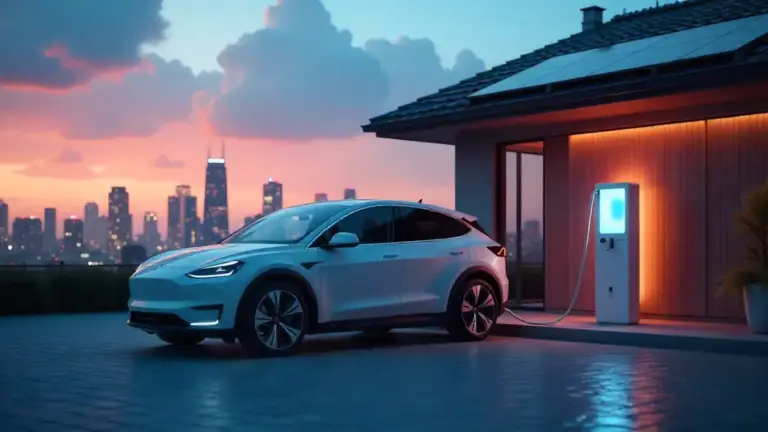
- Make sure your car is plugged in overnight
- The system will warm (or cool, in summer) the battery and cabin just before you leave
- You’ll start your journey with 100% usable range instead of losing miles to heating
I’ve talked to Model 3 owners in Minnesota who swear this single habit made winter EV driving completely stress-free. One driver told me he gained back nearly 40 miles of range on his daily commute just by preconditioning consistently.
Smart Charging Schedules: Timing is Everything
When you charge matters almost as much as how you charge. Here’s where you can get strategic and save money while optimizing battery health.
Off-peak charging benefits: Most utility companies offer time-of-use rates with cheaper electricity during off-peak hours (usually 9 PM to 6 AM). By scheduling your charging for these windows, you’re not just saving 30-50% on charging costs—you’re also helping the grid and often charging when temperatures are cooler, which is gentler on your battery.
The 80/20 rule: You’ve probably heard this one, but it’s worth emphasizing: for daily driving, keep your battery between 20% and 80%. Why? Battery chemistry works best in this range. Constantly charging to 100% or draining to near-zero accelerates degradation over time. Save the 100% charges for road trips when you genuinely need the extra range.
Practical scheduling tips:
- Set your EV to finish charging just before your morning departure, not immediately when you plug in
- If you have a 40-mile commute, you don’t need a full charge every night—charge to 60-70% instead
- Use your car’s app to delay charging start times during expensive peak hours
Think about it like this: if you only drive 200 miles per week, why charge to 100% every single night? You’re just cycling the battery unnecessarily. Charge what you need, when you need it.
Charging Speed Strategy: Slow and Steady Often Wins
Here’s a counterintuitive truth: faster isn’t always better when it comes to charging.
Level 2 (home) charging advantages: Your home Level 2 charger (the 240-volt outlet, similar to your dryer plug) is your best friend for daily charging. It’s gentler on the battery than DC fast charging, costs less, and easily provides enough juice overnight for typical daily driving. Most EVs gain 25-30 miles of range per hour on Level 2, which means a full “tank” while you sleep.
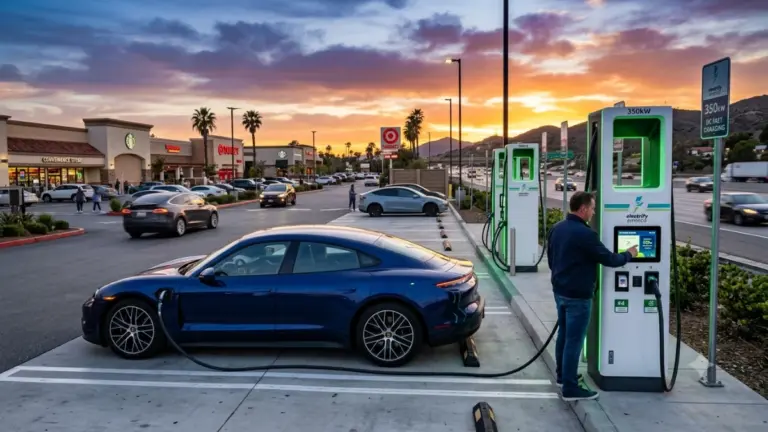
When to use DC fast charging: Save the fast chargers (like Tesla Superchargers, Electrify America, or EVgo) for road trips and emergencies. These are incredibly convenient—adding 150-200 miles in 20-30 minutes—but frequent use can contribute to faster battery degradation over time. It’s like sprinting versus jogging; both get you there, but one is more sustainable for regular use.
The temperature factor: Fast charging generates more heat, and heat is your battery’s enemy. If you must DC fast charge regularly, try to do it when the battery is already warm (after driving) and when outside temperatures are moderate. Your battery management system will throttle charging speed to protect the battery if it gets too hot or too cold, which is why you might notice slower speeds on very cold days.
Driving Habits That Extend Your Range
Charging smart is only half the equation. How you drive makes a massive difference in the miles you get from each charge.
Regenerative braking mastery: This is one of the coolest features of EVs—turning your motor into a generator when you slow down. By anticipating stops and coasting, you’re essentially putting energy back into the battery. Many drivers report getting 15-30% of their energy back through regen alone.
Set your regen to maximum (often called “one-pedal driving”) and you’ll rarely touch the brake pedal. You’ll also develop a smoother, more efficient driving style naturally. It takes about a week to adjust, but once you do, you’ll never want to go back.
Speed and efficiency: Highway driving is where EVs show their Achilles heel compared to city driving. At 75 mph, you’re using significantly more energy than at 65 mph due to wind resistance (which increases exponentially with speed). Dropping your highway speed by just 10 mph can boost your range by 15-20%.
I know, I know—you want to keep up with traffic. But on longer trips, consider whether that extra speed is worth an additional charging stop. Sometimes, arriving 15 minutes later but skipping a 30-minute charge session is actually faster overall.
Climate control wisdom: Heating and cooling your cabin draws directly from your battery. In winter, heated seats and a heated steering wheel use far less energy than blasting the cabin heater. In summer, cooling down by cracking windows at lower speeds can save energy (though at highway speeds, the aerodynamic penalty outweighs the savings—close those windows and use the AC).
Route Planning and Charging Strategy
With the right planning approach, range anxiety becomes a thing of the past.
Use your car’s navigation: Your EV’s built-in navigation system knows more about your battery state than any third-party app. It factors in elevation changes, current traffic, weather, and even predicts your state of charge at each point on your route. Trust it, especially on unfamiliar longer trips.
The “charge to leave” mindset: Instead of thinking “I need to find a charger,” think “Where will I be spending 20-30 minutes anyway?” Charge while having lunch, while grocery shopping, or during a bathroom break. This makes charging a non-event rather than a chore.
Buffer strategy for peace of mind: On road trips, plan to arrive at your destination with 15-20% charge remaining, not 5%. This buffer eliminates stress if you encounter headwinds, unexpected traffic, or detours. You’ll enjoy the drive more when you’re not watching the percentage tick down anxiously.
Seasonal Adjustments
Your charging strategy should evolve with the seasons.
Winter optimization:
- Precondition aggressively—it’s your biggest winter range booster
- Charge to 80-90% for daily driving (you’ll lose 20-30% range in cold weather)
- Park in a garage when possible to keep the battery warmer
- Plan for shorter effective range and more frequent charging stops
Summer considerations:
- Avoid parking in direct sun when possible, especially when charging
- If fast charging, do it earlier in the morning when temperatures are cooler
- Your range will actually improve in moderate summer temperatures (65-75°F is ideal)
- Watch for thermal management systems kicking in during very hot weather
Maintenance Habits for Long-Term Range
Keeping your EV in top shape ensures optimal range for years to come.
Battery health monitoring: Check your battery health periodically through your car’s app or settings. Most EVs will retain 90-95% of original capacity after 100,000 miles with proper charging habits. If you notice unusual degradation, your warranty likely covers it.
Tire pressure vigilance: This one’s easy to overlook but crucial. Underinflated tires can reduce range by 5-10%. Check your tire pressure monthly and keep it at the manufacturer’s recommended PSI (usually found on the driver’s door jamb). EVs are heavier than gas cars, so this matters even more.
Software updates: Your automaker regularly releases updates that can improve battery management and efficiency. Many Tesla owners have seen range increases from software updates alone. Keep your car updated—it’s free range optimization.
Putting It All Together
Maximizing your EV’s range isn’t about obsessing over every percentage point—it’s about developing smart habits that become second nature. Start with preconditioning and the 80/20 charging rule. Those two changes alone will give you noticeable results.
Then layer in smart scheduling, efficient driving techniques, and seasonal adjustments as you get comfortable. Before long, you’ll be getting more miles from your EV than you thought possible, and range anxiety will be a distant memory.
Remember, your EV is a technological marvel with sophisticated systems designed to optimize performance. Your job isn’t to micromanage everything—it’s to work with those systems intelligently. Treat your battery with respect, charge smart, drive smooth, and you’ll be amazed at what your electric car can do.
The future of driving is electric, and with these strategies in your toolkit, you’re ready to make the most of every mile. Happy charging, and even happier driving!