You know that moment when you first sit inside a really impressive car and everything just clicks? The display responds instantly, the seats hug you in all the right places, and you can’t help but think, “Wow, they really thought this through.” That’s exactly how I felt the first time I experienced the interior of a modern electric vehicle. But here’s the thing—not all EV interiors are created equal, and the differences between brands can be downright fascinating.
If you’re shopping for an electric car, you’re probably already thinking about range, charging times, and price tags. But let’s be honest: you’re going to spend a lot of time inside this vehicle. The interior technology isn’t just about flashy screens or fancy buttons—it’s about how the car makes you feel every single day, whether you’re commuting to work or taking a weekend road trip. So let’s dive into what different EV brands are bringing to the table when it comes to interior tech, comfort, and connectivity.
Tesla: The Tech Giant’s Minimalist Command Center
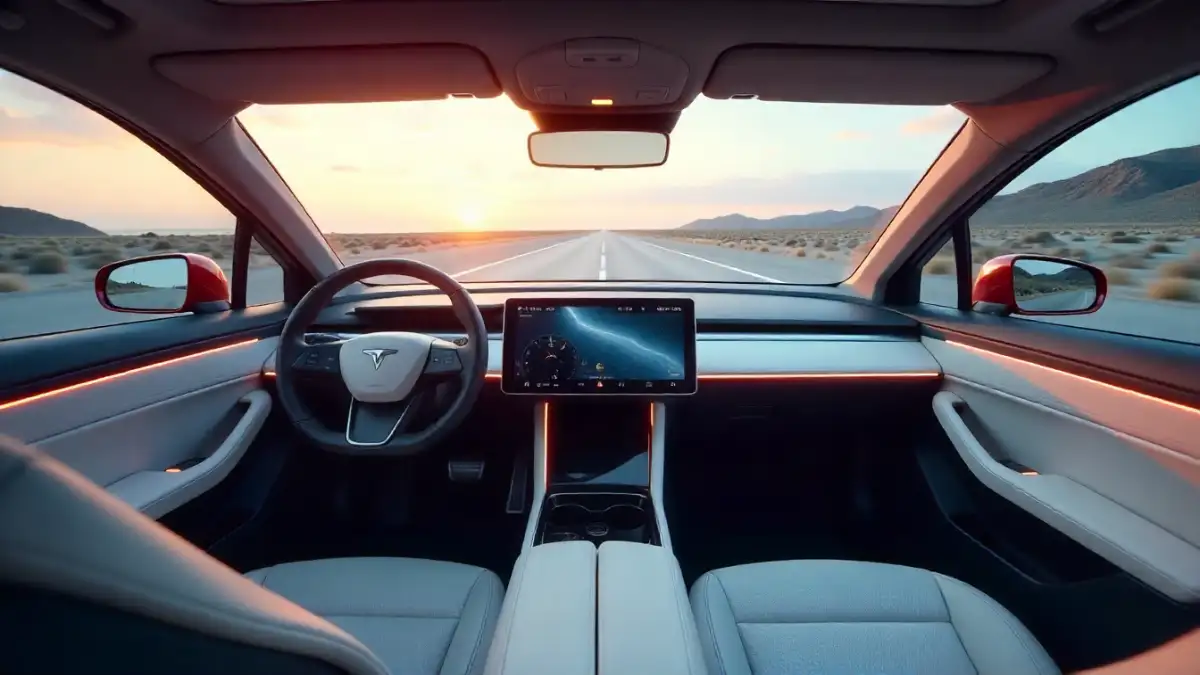
Tesla essentially wrote the playbook for EV interiors, and their approach is unmistakable the moment you open the door. Everything revolves around that massive center touchscreen—15 inches in the Model 3 and Model Y, and a whopping 17 inches in the Model S and Model X. It’s like having an iPad Pro mounted to your dashboard, except it controls absolutely everything.
I mean everything. Want to adjust the air vents? Use the screen. Change the suspension settings? Screen. Even opening the glove compartment requires a tap on that display. Some people love this ultra-minimalist approach, while others miss having physical buttons for frequently-used functions. There’s no right answer here—it really comes down to personal preference.
What Tesla absolutely nails is the software experience. The interface is incredibly responsive, with smooth animations and intuitive menus that actually make sense. Over-the-air updates mean your car literally gets better over time, adding new features and improvements without ever visiting a service center. I’ve heard from Tesla owners who’ve had their cars for years and still get excited about new updates—that’s pretty remarkable when you think about it.
The infotainment system includes all the streaming services you’d expect: Spotify, Netflix, YouTube, and even some games for when you’re charging. The navigation system is deeply integrated with the Supercharger network, automatically routing you to charging stations and preconditioning the battery for optimal charging speeds. It’s this kind of seamless integration that keeps Tesla ahead in the tech race.
Mercedes-Benz EQ: Luxury Meets Cutting-Edge Innovation
If Tesla is the Silicon Valley startup, Mercedes-Benz is the luxury hotel that’s been perfecting hospitality for decades. Step into an EQS or EQE, and you’re immediately surrounded by what Mercedes calls the MBUX Hyperscreen—a curved, 56-inch glass display that stretches across the entire dashboard. Yes, you read that correctly: fifty-six inches of screen real estate.
But Mercedes isn’t just about size for the sake of it. The Hyperscreen is actually three displays seamlessly integrated under one piece of glass: a 12.3-inch driver display, a 17.7-inch central screen, and a 12.3-inch passenger display. The passenger screen is particularly clever—it can show entertainment options without distracting the driver, and it automatically dims certain content when the car detects the driver glancing over. That’s the kind of thoughtful engineering that luxury brands excel at.
The MBUX system uses artificial intelligence to learn your habits and preferences. If you always call your partner on the way home from work, the system will suggest it at the right time. If you prefer certain seat settings for highway driving, it remembers. The voice assistant responds to “Hey Mercedes” and can handle natural language commands—no need to memorize specific phrases.
Comfort-wise, Mercedes goes all-in with features like active ambient lighting (64 colors that can sync with the music or provide visual alerts), massage seats with hot-stone therapy function, and HEPA filtration that keeps the air inside cleaner than outside. The Burmester sound system available in higher trims delivers concert-hall acoustics that audiophiles genuinely appreciate.
BMW iX and i4: The Driver’s Tech Experience
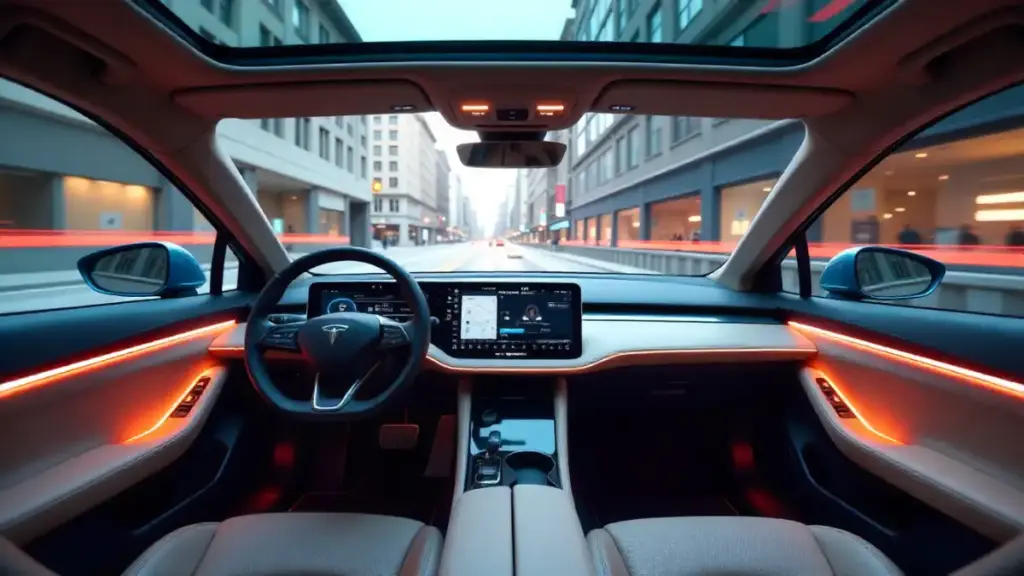
BMW has always positioned itself as “The Ultimate Driving Machine,” and that philosophy extends into their electric lineup. The iX and i4 feature the latest BMW iDrive 8 system, displayed on a curved dual-screen setup that combines a 12.3-inch information display with a 14.9-inch control screen.
What I really appreciate about BMW’s approach is how they’ve managed to blend modern technology with traditional usability. Yes, there’s a large touchscreen, but you also get the iDrive controller knob that’s been a BMW staple for years. Some controls remain as physical buttons—the volume knob, climate controls, and hazard lights don’t require diving into menus. For drivers who want the best of both worlds, BMW strikes a nice balance.
The iDrive 8 system is remarkably customizable. You can configure the display layouts, choose which information appears where, and even change the overall theme from modern to classic to sport. The head-up display is one of the best in the business, projecting information onto the windshield so clearly that you barely need to glance at the instrument cluster.
BMW’s focus on driving dynamics shows up in unexpected places. The iX features active noise cancellation and can actually generate artificial driving sounds inside the cabin, composed by legendary film score creator Hans Zimmer. Whether you like that idea or find it gimmicky depends on your perspective, but it’s undeniably cool that BMW got Hans Zimmer to compose sounds for your electric car.
Connectivity options are extensive, with wireless Apple CarPlay and Android Auto (though wireless Android Auto is BMW’s official standard), 5G connectivity, and BMW’s digital key that lets you unlock and start the car using your smartphone.
Rivian R1T and R1S: Adventure-Ready Tech
Rivian takes a different approach, designing their interiors for people who actually use their vehicles for adventures. The R1T truck and R1S SUV feature a landscape-oriented 15.6-inch touchscreen running Rivian’s custom-built software, and it’s impressively well-executed for a startup company.
The interface feels modern and responsive, with large, easy-to-tap buttons that make sense even when you’re wearing gloves or bouncing along a trail. Rivian includes genuinely useful features like a built-in flashlight in the driver’s door (seriously, why doesn’t every car have this?), under-seat storage that’s perfect for keeping valuables secure, and a gear tunnel that runs through the body of the R1T with its own powered doors.
What impressed me most about Rivian’s tech is how practical it is. The navigation system integrates elevation profiles for your route, showing you where the steep climbs are and how they’ll affect your range. The drive modes aren’t just sport/comfort/eco—you get settings specifically designed for different terrain types, complete with explanations of what each mode actually does.
The sound system, developed with Meridian, punches well above its weight, and the panoramic glass roof creates an open, airy feeling that’s perfect for outdoor enthusiasts. Wireless charging, plenty of USB-C ports, and smartphone connectivity keep everyone charged up on long journeys.
Ford Mustang Mach-E and F-150 Lightning: Familiar Yet Future-Forward
Ford’s electric offerings take a more conservative but highly practical approach. The Mustang Mach-E features a vertically-oriented 15.5-inch touchscreen running Ford’s SYNC 4A system, while the F-150 Lightning uses a landscape 15.5-inch display. Both systems are built on Android Automotive, which means they’re getting the same kind of deep Google integration found in Polestar and some Volvo models.
This Google integration is actually a bigger deal than it might sound. You get Google Maps with full EV routing and real-time charging station availability, Google Assistant for voice commands that actually work reliably, and access to apps through the Google Play Store. It’s like having an Android phone built into your car, with all the benefits that brings.
Ford’s interior design philosophy emphasizes usability. The Mach-E has a proper volume knob (thank you, Ford!), and the F-150 Lightning retains the practical, work-ready interior that F-150 buyers expect, just electrified. The Lightning’s front trunk (or “frunk”) even has power outlets and drainage, so you can literally use it as a cooler for tailgating.
BlueCruise, Ford’s hands-free driving system available on pre-mapped highways, works across both vehicles and represents Ford’s commitment to making advanced driver assistance accessible. The 10-speaker Bang & Olufsen system in the Mach-E delivers surprisingly rich sound, creating an acoustic experience that makes your daily commute genuinely enjoyable.
Hyundai and Kia: Value-Packed Innovation
Don’t sleep on the Korean brands—Hyundai and Kia are absolutely crushing it in the EV interior game. The Hyundai Ioniq 5 and Ioniq 6, along with the Kia EV6 and EV9, all feature dual 12.3-inch curved displays that look remarkably premium for their price points.
What makes these interiors special is the attention to detail. The Ioniq 5 has an available relaxation mode that reclines the seats, dims the lights, and creates a zen-like atmosphere for when you’re charging. The EV9, Kia’s three-row electric SUV, offers swiveling second-row seats that can face the third row, turning the interior into a conversation space when parked.
Both brands include extensive connectivity features: wireless smartphone charging, multiple USB ports, cloud-based connected services, and digital keys that work through your smartphone. The navigation systems provide robust EV routing with charging station information, and over-the-air updates keep the software current.
The sound systems—especially the Meridian premium audio in the Ioniq 5 and the 14-speaker Meridian system in the EV9—deliver surprisingly excellent sound quality. These interiors feel genuinely upscale, with sustainable materials, ambient lighting, and thoughtful storage solutions throughout.
Making Your Choice: What Matters Most to You?
So which brand offers the best interior technology? The honest answer is: it depends on what you value most.
If you want the most advanced, frequently-updated software with the smoothest user experience, Tesla remains hard to beat. For ultimate luxury and comfort with cutting-edge displays, Mercedes-Benz sets the standard. BMW offers the best balance of modern tech and traditional controls for driving enthusiasts. Rivian brings practical, adventure-ready features that genuinely enhance outdoor experiences. Ford provides familiar usability with powerful Google integration. And Hyundai and Kia deliver remarkable value with premium features at mid-range prices.
My advice? Don’t just read reviews—actually sit in these vehicles. Interact with the screens, adjust the seats, try the voice commands, and see how the interface responds. What looks great in photos might feel awkward in practice, and vice versa. Your perfect interior is the one that makes you smile every time you open the door, not the one with the most impressive spec sheet.
The beautiful thing about this current moment in electric vehicle development is that every brand is bringing something unique to the table. Whether you’re a tech enthusiast, a luxury seeker, an adventure junkie, or a practical-minded driver, there’s an EV interior designed with you in mind. The future of driving isn’t just about going electric—it’s about doing it in a space that feels like it was built just for you.