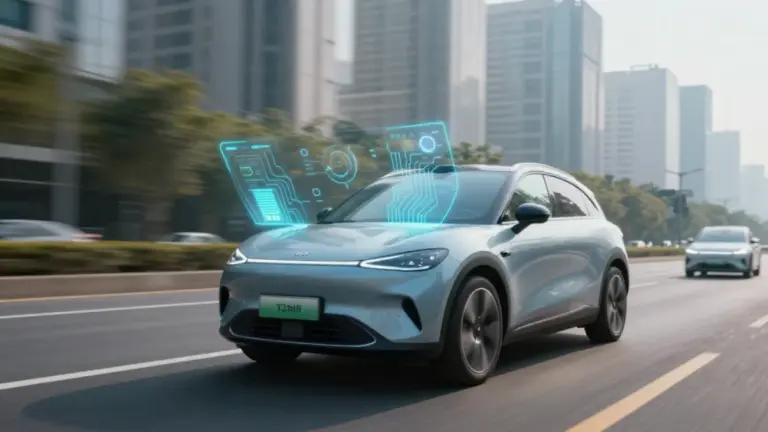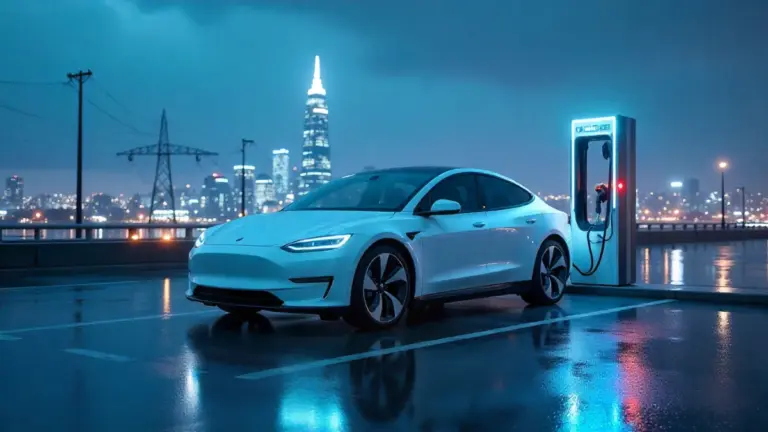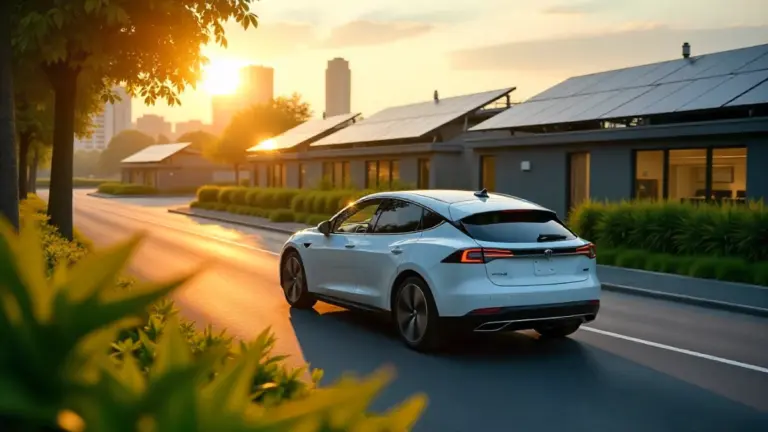
Remember when you had to plug in your smartphone every night, fumbling with cables in the dark? Then wireless charging came along, and suddenly you could just drop your phone on a pad and walk away. Now imagine that same convenience—but for your car. Sounds like science fiction, right? Well, wireless electric car charging is already here, and it might just revolutionize how we think about powering our EVs.
If you’ve been hesitant about making the jump to electric vehicles because you’re tired of dealing with charging cables or worried about forgetting to plug in, wireless charging could be the game-changer you’ve been waiting for. Let’s dive into what this technology is all about, where it stands today, and whether it’s truly the future of EV charging.
What Exactly Is Wireless EV Charging?
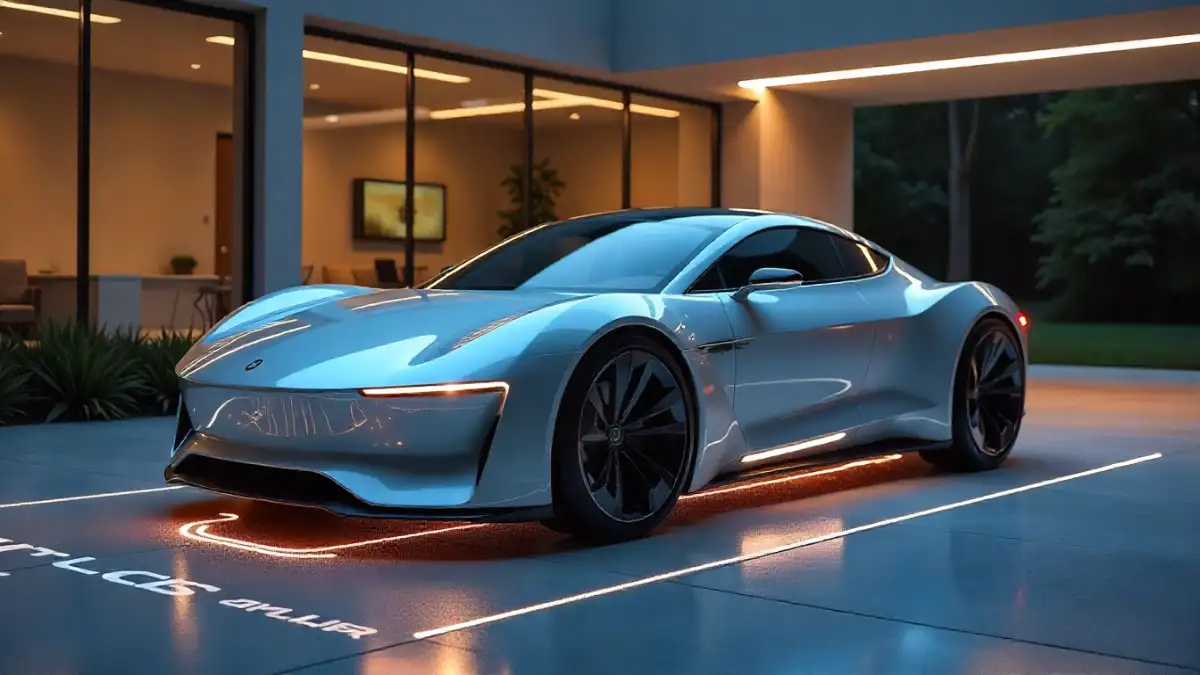
Think of wireless EV charging like a much more powerful version of that charging pad you use for your phone. The technical term is “inductive charging,” but here’s how it works in plain English: you park your car over a charging pad installed in your garage floor or parking spot, and electricity transfers from the pad to a receiver on the underside of your vehicle—no cables required.
The technology uses electromagnetic fields to transfer energy between two coils—one in the ground pad and one attached to your car. When you park in the right spot (usually within a few inches), the system activates automatically and starts charging. Some systems even give you visual or audio cues through your smartphone to help you park in the perfect position.
What’s really clever about this setup is that once it’s installed, you literally don’t have to think about charging anymore. Pull into your garage, get out, and your car starts charging on its own. It’s the kind of seamless experience that could make EV ownership feel as effortless as, well, not having to fuel up at all.
The Benefits That Actually Matter to You
Let’s talk about why wireless charging isn’t just a cool gadget—it’s genuinely useful. First and foremost, there’s the convenience factor. No more trudging out in the rain to plug in your car. No more forgetting to charge overnight and waking up to a low battery. Your car charges automatically every time you park at home, ensuring you start each day with a full battery.
For people with mobility challenges or arthritis, this is more than convenient—it’s transformative. Wrestling with heavy charging cables, especially in cold weather when they’re stiff and awkward, can be genuinely difficult. Wireless charging eliminates that entirely.
There’s also a safety advantage that doesn’t get talked about enough. With no exposed electrical connections, there’s zero risk of electric shock, even in wet conditions. You don’t have to worry about leaving cables exposed to the elements, tripping over them in your garage, or dealing with worn-out connectors that might cause problems.
And here’s something that might surprise you: wireless charging could actually extend your battery’s life. Because the system can be programmed to charge more slowly and consistently, it reduces the stress on your battery compared to rapid DC fast charging. It’s gentler on your battery cells, similar to how slow charging your laptop or phone preserves battery health over time.
For fleet operators and commercial applications, wireless charging opens up interesting possibilities. Imagine electric buses or delivery vans that charge automatically at every stop, keeping batteries topped up throughout the day without driver intervention. Or parking garages where your car charges while you’re at work or shopping, without you having to remember to plug in.
The Reality Check: Current Limitations
Now, I’d love to tell you that wireless charging is perfect and ready to replace every charging cable tomorrow, but that wouldn’t be honest. Let’s talk about the challenges.
The biggest issue right now is efficiency. Current wireless charging systems typically operate at 85-93% efficiency, compared to 95-98% for traditional plug-in charging. That means you’re losing 5-15% of the electricity as heat during transfer. Is it a dealbreaker? Not necessarily—especially if you’re charging at home with solar panels or cheap overnight electricity. But it does mean wireless charging costs slightly more per charge and isn’t quite as environmentally efficient.
Then there’s the cost factor. Installing a wireless charging system isn’t cheap—we’re talking anywhere from $3,000 to $10,000 or more, depending on the system and installation complexity. That’s significantly more expensive than a standard Level 2 wall charger, which typically runs $500-$1,500 installed. You’re paying a premium for that convenience.
Compatibility is another consideration. Unlike standardized plug connectors, wireless charging systems aren’t universally compatible yet. Different manufacturers are using different specifications, power levels, and physical designs. If you buy a wireless charging system for one EV, there’s no guarantee your next electric car will work with it—at least not until industry standards become more established.
Charging speed is also slower compared to the fastest wired options. Most current wireless systems deliver 3.7-11 kW of power, which is fine for overnight charging at home but can’t compete with the 50-350 kW DC fast chargers you’ll find at public charging stations. If you need a quick top-up, you’re still reaching for that cable.
Where the Technology Stands Today
The good news is that wireless EV charging isn’t some distant dream—it’s commercially available right now, though adoption is still limited. Companies like WiTricity, Plugless, and Momentum Dynamics are already selling systems, and several automakers are testing or implementing the technology.
Genesis, Hyundai’s luxury brand, made waves by offering wireless charging as a factory option on the GV60 electric SUV—one of the first mass-market vehicles to do so. BMW has experimented with wireless charging for several years, and other manufacturers like Mercedes-Benz are actively developing their own systems.
The power levels are increasing too. While early systems maxed out at around 3.7 kW (similar to a standard home outlet), newer systems are pushing 11 kW and beyond. Some commercial applications are testing 20 kW+ systems for fleet vehicles that need faster charging between routes.
Perhaps most excitingly, researchers are working on dynamic wireless charging—systems embedded in roadways that could charge your EV while you’re actually driving. Several pilot projects in Europe and Asia are testing this concept, though widespread implementation is still years away and would require massive infrastructure investment.
Standards organizations like SAE International are working on establishing common specifications for wireless charging, which should help with compatibility issues down the road. Once we have industry-wide standards, you’ll be able to buy a wireless charging system with confidence that your next EV will work with it.
Real-World Applications and Use Cases
So where does wireless charging make the most sense right now? If you own your home and park in a dedicated garage or driveway spot every night, you’re the ideal candidate. The convenience of automatic charging every time you park is worth the investment, especially if you plan to keep your EV for many years.
Luxury residential developments and high-end apartment complexes are starting to install wireless charging as a premium amenity. It’s easier to integrate into upscale parking structures than running individual cables to dozens of parking spots, and it appeals to residents who value convenience and cutting-edge technology.
For commercial fleets—think delivery vans, taxis, or shuttle buses that return to a depot regularly—wireless charging is a no-brainer. Drivers don’t have to remember to plug in, fleet managers don’t have to worry about damaged cables, and vehicles can charge automatically between shifts or routes.
Public parking applications are also promising. Imagine parking at the airport for a week and returning to a fully charged car, all without touching a cable. Or parking garages where every spot has wireless charging built in, and you’re billed automatically for the electricity you use. These scenarios are already being piloted in several cities worldwide.

Is Wireless Charging Right for You?
Here’s the honest answer: it depends on your situation and priorities. If you value convenience above all else, have the budget for the installation, and park in the same spot every night, wireless charging could genuinely improve your daily EV experience. The “set it and forget it” nature means you’ll always have a charged car without thinking about it.
On the other hand, if you’re budget-conscious or frequently park in different locations, traditional plug-in charging makes more practical sense right now. You’ll save money upfront, have more flexibility, and get better charging efficiency. There’s nothing wrong with waiting for the technology to mature, prices to drop, and standards to solidify.
For most EV owners, I’d say wireless charging is a “nice to have” rather than a “must-have” at this point. The technology works well and delivers on its promise of convenience, but it’s not yet compelling enough to justify the cost for everyone. That said, if you’re building a new home, renovating your garage, or simply hate dealing with cables, it’s worth serious consideration.
The Road Ahead
Looking forward, I’m genuinely optimistic about wireless charging’s future. As production scales up and more vehicles come with compatible receivers from the factory, costs will come down. Efficiency will improve as technology advances. And standardization will eventually solve the compatibility puzzle.
The real breakthrough will come when wireless charging becomes standard equipment rather than an expensive add-on. Once every EV rolls off the assembly line with a wireless charging receiver already installed, and once charging pads become as common as electrical outlets, we’ll see adoption skyrocket.
We might even see a future where wireless charging is built into parking spots everywhere—at grocery stores, office buildings, and your friend’s driveway. Imagine never thinking about charging at all because your car tops up automatically wherever you park. That level of seamlessness could be the final push that converts the last charging-skeptical drivers to electric vehicles.
Final Thoughts
Wireless electric car charging represents an exciting step toward making EVs even more convenient and user-friendly. While it’s not perfect yet—it costs more, charges slightly slower, and isn’t as efficient as plugging in—it offers genuine benefits in terms of convenience, safety, and simplicity.
Is it the future of EV charging? Probably not the only future, but certainly an important part of it. We’ll likely see a mix of charging methods coexisting: wireless charging for home and fleet use, fast DC charging for road trips, and plug-in charging for situations where it makes more sense.
If you’re considering wireless charging for your EV, do your homework. Research compatible systems, get multiple installation quotes, and think honestly about whether the convenience justifies the cost for your situation. For some drivers, it’ll be absolutely worth it. For others, it makes more sense to wait a few years and see how the technology and market evolve.
One thing’s for certain: the days of fumbling with charging cables in the dark might be numbered. And honestly? That future sounds pretty good to me.
What do you think—would you go wireless, or are you happy with your charging cable? The beauty of the EV world is that we’re getting more choices, not fewer, and that’s something we can all appreciate.
About the Author:
Roy K. Miller is an EV expert passionate about electric mobility, green technology, and the future of transportation. He helps readers and drivers make smarter choices while sharing insights and updates on the latest developments in the EV world.