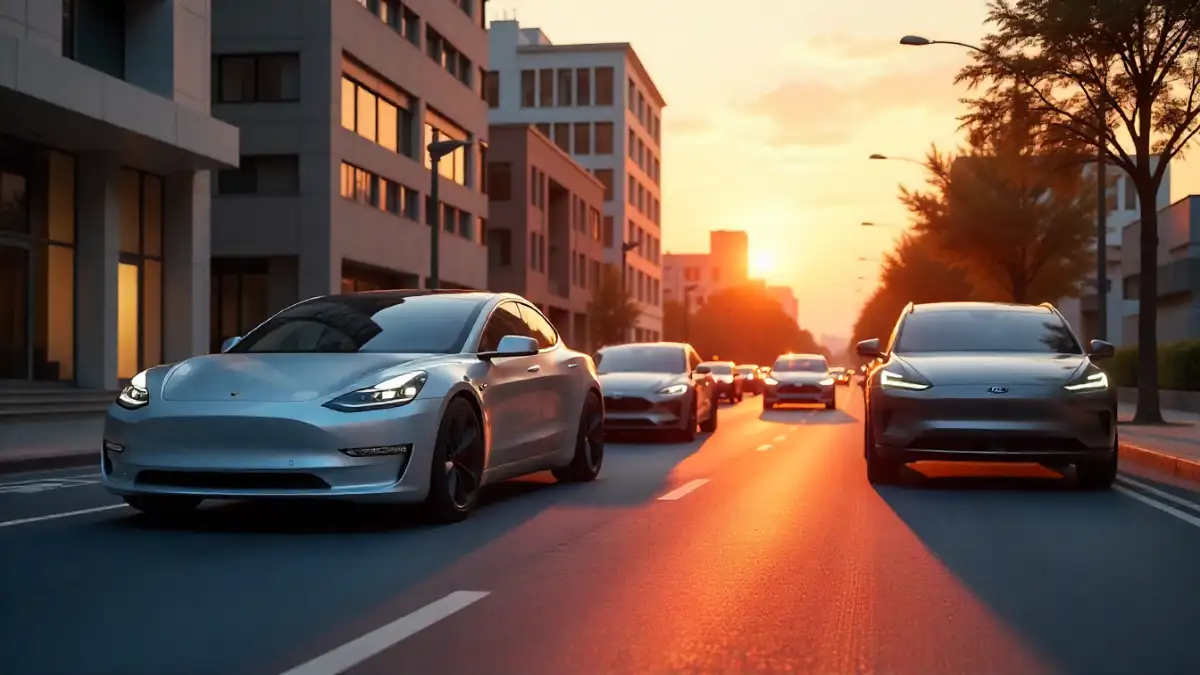
You know what’s wild? Just five years ago, if you wanted an electric car, you basically had three choices: a Tesla, a Nissan LEAF, or… well, that was pretty much it. Fast forward to today, and the EV landscape has exploded like a fireworks show on the Fourth of July. We’re talking luxury sedans, rugged SUVs, zippy hatchbacks, and even electric pickup trucks that can power your entire house during a blackout.
If you’re feeling overwhelmed by all the options out there, I get it. Walking into this market can feel like stepping into a massive buffet when you’re absolutely starving—everything looks good, but where do you even start? That’s exactly why I’ve put together this guide. Whether you’re budget-conscious, craving luxury, or just need something practical to haul the kids and groceries, there’s an EV out there with your name on it. Let’s break down what’s available today and help you figure out which electric ride might be perfect for your garage.
Budget-Friendly EVs: Going Electric Without Breaking the Bank
Here’s the thing about affordable EVs—they’re finally actually affordable. Not that long ago, “budget” and “electric car” were words that didn’t belong in the same sentence. But competition and improving technology have changed the game completely.
The Chevrolet Bolt EV and EUV have become the darlings of the budget EV world, and for good reason. Starting around $27,000, the Bolt gives you approximately 259 miles of range—more than enough for your daily commute and weekend adventures. The slightly larger EUV (that’s “Electric Utility Vehicle”) adds about three grand to the price but gives you more space and available Super Cruise, GM’s hands-free driving tech. It’s like getting a taste of the future without needing a six-figure salary.
Then there’s the Nissan LEAF, the OG of mass-market EVs. With over a decade of refinement under its belt, the LEAF starts around $29,000 and offers up to 212 miles of range in the Plus model. Think of it as the reliable friend who’s been there from the beginning—not flashy, but dependable and well-proven.
The Hyundai Kona Electric deserves a shout-out too. This compact SUV offers about 261 miles of range and starts in the low $30,000s. What I love about the Kona is that it doesn’t scream “I’m electric!”—it just looks like a normal, stylish crossover that happens to be ridiculously efficient.
If you’re really pinching pennies, keep an eye on the used market. Three-year-old Bolts and LEAFs can be found for under $20,000, and since EVs have fewer moving parts than gas cars, you’re less likely to inherit someone else’s mechanical nightmares.
Mid-Range Marvels: Where Value Meets Versatility
This is where things get really interesting. The $35,000 to $55,000 range is basically the sweet spot of the EV market right now—you’re getting serious range, impressive technology, and build quality that’ll make you smile every time you slide behind the wheel.
Let’s start with the Tesla Model 3, which has become the Toyota Camry of electric cars (except, you know, way more fun). Starting around $40,000, the Model 3 offers between 272 and 358 miles of range depending on which variant you choose. The base rear-wheel-drive model is perfect for most people, but if you want jaw-dropping acceleration and all-wheel-drive confidence, the Performance model will pin you to your seat like a fighter jet taking off.
The Ford Mustang Mach-E has completely changed what we think a Mustang can be. Yes, purists had a meltdown when Ford slapped the iconic pony badge on an electric SUV, but honestly? This thing is fantastic. With up to 312 miles of range and styling that turns heads at every stoplight, the Mach-E starts around $40,000 and proves that American automakers are serious about electrification.
Hyundai and Kia are absolutely crushing it in this segment. The Hyundai Ioniq 5 and Kia EV6 are essentially siblings built on the same platform, but each has its own personality. The Ioniq 5 looks like it drove straight out of a 1980s sci-fi movie (in the best way possible), while the EV6 is sleeker and sportier. Both offer around 300 miles of range, ultra-fast charging that can add 200 miles in about 18 minutes, and interiors that feel way more expensive than their $42,000-$48,000 starting prices suggest.
The Volkswagen ID.4 is VW’s big bet on electric mobility. Starting around $39,000, it’s a spacious, comfortable crossover that drives exactly how you’d expect a VW to drive—refined, solid, and confidence-inspiring. With up to 275 miles of range, it’s the practical choice for families who want to go electric without making any compromises.
And we can’t forget the Tesla Model Y, which is basically a taller, roomier Model 3. Starting around $47,000, it offers up to 330 miles of range and enough cargo space to make it a legitimate family hauler. The Model Y has become one of the best-selling vehicles in the world—not just among EVs, but all vehicles—and that tells you something.
Luxury & Performance: When Price Is No Object
Alright, let’s talk about the fun stuff. This is where electric cars stop being practical transportation and start being rolling statements of technological achievement and personal success.
The Tesla Model S is the car that started this whole premium EV revolution. Even after more than a decade on the market, it’s still wildly impressive. The current Model S Plaid is genuinely bonkers—0 to 60 mph in under 2 seconds, a top speed over 200 mph, and up to 396 miles of range. Starting around $75,000 (and reaching well over $100,000 when fully loaded), it’s expensive, but you’re getting supercar performance in a family sedan package.
Mercedes-Benz has entered the chat with the EQS, their electric flagship that makes you feel like you’re sitting in a luxury lounge that happens to be moving. Starting around $105,000, the EQS offers up to 453 miles of range and a mind-blowing 56-inch “Hyperscreen” that spans the entire dashboard. It’s Mercedes craftsmanship meeting cutting-edge EV technology, and the result is spectacular.
BMW’s i4 and iX represent the brand’s serious commitment to electrification. The i4 is essentially an electric 4 Series that offers up to 301 miles of range and drives with the precision and balance BMW is famous for. The iX is their electric SUV flagship, with up to 324 miles of range and an interior that redefines what luxury means in the modern age. Prices start around $56,000 for the i4 and $88,000 for the iX.
Porsche’s Taycan is what happens when a legendary sports car manufacturer decides to build an EV. With face-melting acceleration, handling that defies physics, and build quality that’ll make you weep with joy, the Taycan proves that electric cars can absolutely be driver’s cars. Yes, it starts around $87,000, but we’re talking about a Porsche here—you’re paying for engineering excellence and that intangible magic that makes every drive feel special.
The Lucid Air is the new kid on the luxury block, and boy, did they come out swinging. With up to 516 miles of range in the Dream Edition, it’s the longest-range production EV on the planet. Starting around $70,000 for the base Pure model, Lucid’s first car combines Silicon Valley tech with luxury car refinement in a way that’s giving Tesla some serious competition.
Electric SUVs & Trucks: Size and Substance
Think electric vehicles are just for city commuters? Think again. The EV revolution has come for America’s favorite body styles: trucks and SUVs.
The Rivian R1T has completely reimagined what a pickup truck can be. Starting around $73,000, this adventure-ready electric truck offers up to 400 miles of range, can tow 11,000 pounds, and has a “gear tunnel” storage compartment that runs through the body between the cab and bed. It’s like if a Jeep, a Tesla, and a Swiss Army knife had a baby.
Ford’s F-150 Lightning might be the most important EV on this entire list. Why? Because it’s an electric version of America’s best-selling vehicle for over four decades. Starting around $50,000, the Lightning can power your house during an outage, tow 10,000 pounds, and has a front trunk (or “frunk”) so massive you could use it as a hot tub. Ford sold out the first year’s production in less than 48 hours—that’s how hungry people are for a practical electric truck.
The Cadillac Lyriq brings American luxury to the electric SUV segment. With about 312 miles of range, gorgeous styling, and a starting price around $58,000, it’s Cadillac’s comeback story written in battery cells and electrons.
GMC’s Hummer EV is the definition of “go big or go home.” This absolute unit weighs over 9,000 pounds, produces up to 1,000 horsepower, and can “crab walk” diagonally thanks to four-wheel steering. Starting around $80,000, it’s excessive in all the right ways. You don’t need a Hummer EV—but if you want one, there’s nothing else quite like it.
Compact & City-Friendly: Small but Mighty
Not everyone needs a giant SUV or long-range luxury sedan. Sometimes, you just want something nimble that makes city parking a breeze and doesn’t cost a fortune to charge.
The Mini Cooper Electric is exactly what you’d expect—a peppy, fun-to-drive little runabout that makes every errand feel like an adventure. With about 114 miles of range and a starting price around $30,000, it’s perfect for urban dwellers who rarely venture beyond city limits.
The Mazda MX-30 is quirky and lovable, with suicide doors and about 100 miles of range. It’s not for everyone, but if you’re a Mazda enthusiast who wants to go electric while keeping that Zoom-Zoom spirit, this is your ride.
Across the pond (and increasingly here in the U.S.), the Fiat 500e is bringing Italian style to electric city cars. Cute as a button and practical as a pocket, it’s proof that going electric doesn’t mean sacrificing personality.
What’s Right for You?
Here’s the beautiful truth about the current EV market: there’s legitimately something for everyone. Budget shopper? Check. Luxury seeker? Check. Truck enthusiast? Check. City dweller? Check.
When choosing your electric car, think about your actual needs, not your theoretical ones. Most people drive less than 40 miles per day, which means even a 200-mile range EV will serve you perfectly 95% of the time. For those occasional road trips, fast-charging networks are expanding rapidly, and honestly, a 20-minute charging break every few hours isn’t a bad excuse to stretch your legs and grab a coffee.
Consider your budget not just for purchase price, but for long-term ownership. EVs cost less to maintain (no oil changes, fewer brake jobs thanks to regenerative braking) and less to “fuel” (electricity is cheaper than gas in most places). Factor in available tax credits and local incentives too—that $40,000 EV might effectively cost you $32,500 after federal tax credits.
The electric car market is moving fast, with new models launching every few months. But that doesn’t mean you should wait forever for the “perfect” car. Today’s EVs are already phenomenal, and the one you buy now will serve you wonderfully for years to come.
So, what are you waiting for? The electric future is here, it’s diverse, and it’s ready for you to plug in and drive away. Whether you’re Team Tesla, rooting for the traditional automakers, or excited about upstart companies like Rivian and Lucid, there’s never been a better time to go electric. Your wallet, the environment, and your daily commute will all thank you.
Ready to take the next step? Test drive a few models, talk to actual owners, and trust your gut. The right electric car is out there—you just need to find it.