Understanding electric car resale value is crucial for anyone considering an EV. Many buyers worry their brand-new electric car will lose value fast, but the resale market is evolving, and the reality is far more nuanced than the dramatic headlines suggest.
If you’re considering making the switch to electric, understanding what happens to your car’s value over time isn’t just smart—it’s essential. After all, for most of us, a car represents one of the biggest purchases we’ll make, and knowing you can recoup a decent chunk of that investment later makes the decision a whole lot easier. So let’s dig into what’s really happening with EV resale values and what you can expect when it comes time to sell.
The Current State of EV Depreciation
Here’s where things get interesting. Yes, electric cars have historically depreciated faster than their gasoline counterparts, but the gap is narrowing—and in some cases, it’s practically disappeared. According to recent industry data, EVs were depreciating about 5-7% faster than gas cars annually a few years ago. Fast forward to 2024-2025, and that difference has shrunk considerably for many models.
Why the change? Well, several factors are at play. The used EV market is maturing, buyers are becoming more knowledgeable about battery longevity, and charging infrastructure has improved dramatically. When people aren’t terrified about their battery dying after five years or getting stranded without a charger, they’re more willing to pay fair prices for used EVs.
That said, not all electric cars hold their value equally. Tesla models, particularly the Model 3 and Model Y, have shown surprisingly strong resale values—often retaining 60-70% of their original value after three years. Compare that to some luxury EVs from traditional automakers, which can lose 50% or more in the same timeframe. It’s a bit like the smartphone market: established players with proven track records command better resale prices.
What Makes an EV Hold Its Value?
Think of resale value like a recipe—you need the right ingredients in the right proportions. For electric cars, some factors matter more than you might expect.
Battery health is king. This is the elephant in the room, and it’s the first thing any savvy used EV buyer will ask about. Cars with battery warranties that transfer to the second owner—like Tesla’s 8-year, 120,000-mile warranty—are significantly more attractive. When you can prove your battery still holds 90% or more of its original capacity, you’re golden. Modern battery technology has proven far more durable than early skeptics predicted, with many EVs showing minimal degradation even after 100,000 miles.
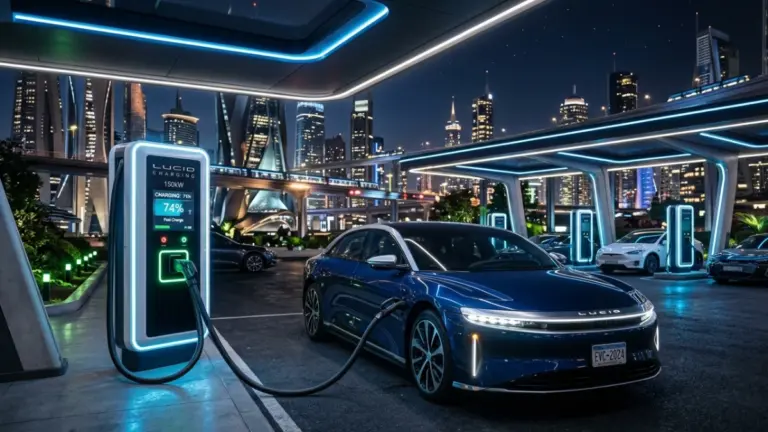
Charging capability matters too. An EV with fast-charging capability (150 kW or higher) is worth noticeably more on the used market than one that maxes out at 50 kW. Why? Because charging speed directly impacts usability, especially for road trips. It’s the difference between a 20-minute coffee break and a 45-minute wait—and buyers know it.
Range is your friend. Here’s a simple truth: EVs with 250+ miles of EPA-rated range hold their value better than those with 150 miles or less. The sweet spot seems to be around 300 miles—enough for most people’s daily needs plus a comfortable buffer. Short-range EVs took a particularly hard hit in resale value as newer models with longer ranges flooded the market.
Brand reputation plays a bigger role than you’d think. Tesla’s reputation for software updates and battery longevity has helped its cars maintain value. Meanwhile, some early EVs from traditional automakers suffered because buyers worried about orphaned technology or discontinued support. Would you want to buy a used EV from a company that stopped making electric cars?
How EVs Compare to Gas Cars Over Time
Let’s do some real-world math here. Say you buy a new gas-powered sedan for $35,000 and a comparable EV for $40,000 (after federal tax credits, they might actually be similar). After three years, that gas car might be worth $21,000—about 60% of its original value. The EV might be worth $24,000—also around 60% retention.
But here’s where it gets interesting: the total cost of ownership calculation. While you owned that EV, you probably saved $3,000-5,000 on fuel and another $1,000-2,000 on maintenance compared to the gas car. Suddenly, even if the EV depreciated slightly faster, you’re still ahead financially.
The depreciation gap also varies wildly by segment. Luxury EVs from brands like Jaguar, Audi, and Mercedes have traditionally depreciated faster than luxury gas vehicles, sometimes losing 60-70% of their value in three years. But mainstream EVs—your Chevy Bolts, Hyundai Ioniq 5s, and Nissan Leafs—are becoming more competitive with their gas equivalents.
One fascinating trend: used EVs are becoming incredibly attractive to budget-conscious buyers who missed out on the new-car tax credits. A three-year-old EV with 30,000 miles might offer the same range and features as a new model but cost $15,000-20,000 less. That’s creating strong demand in the used market, which in turn supports better resale values.
The Wild Cards Affecting EV Resale
Some factors affecting EV resale value are, frankly, unpredictable. Government policy is a big one. Changes to federal or state EV incentives can shift the market overnight. When new EVs become cheaper through better incentives, used EV prices often drop. Conversely, when new car prices spike (as they did in 2021-2022), used values can actually climb.
Technology advancement is another curveball. When a manufacturer releases a new model with significantly better range or charging speed at a similar price, older models can take a hit. It’s like when the iPhone 15 comes out—suddenly the iPhone 12 is worth less, even though it works just fine. But here’s the good news: EV technology is stabilizing. The massive year-over-year improvements we saw from 2015-2020 have slowed, meaning newer models aren’t making older ones obsolete as quickly.
Battery replacement costs also loom in buyers’ minds. While rare, the prospect of a $10,000-20,000 battery replacement scares people. However, as warranties improve and battery costs drop (they’ve fallen by nearly 90% since 2010), this concern is becoming less of a boogeyman. Plus, battery failure rates have proven remarkably low—far lower than engine or transmission failures in gas cars.
Smart Strategies to Maximize Your EV’s Resale Value
Want to get the most out of your electric car when it’s time to sell? Here’s what actually works.
Keep detailed records. Document your battery health checks, software updates, and any service performed. Think of it as a report card for your car—buyers want to see straight A’s. Apps like TezLab or built-in vehicle data can provide printable battery degradation reports that reassure buyers.
Maintain the battery properly. Avoid regularly charging to 100% or letting it drop below 10% if you can help it. Park in moderate temperatures when possible. These habits slow degradation and give you a stronger selling point later. Even showing that you followed best practices matters to informed buyers.
Choose popular colors and configurations. This isn’t EV-specific, but neutral colors (white, black, gray, silver) and mid-level trims tend to sell faster and for more money. That bright purple with the most expensive trim package might be harder to move.
Keep up with software updates. For Tesla and other OTA-capable EVs, having the latest software shows the car is well-maintained and capable of newer features. It’s like keeping your phone updated—it shows you care.
Consider timing. Spring and early summer tend to be stronger markets for EV sales as people think about road trips. Tax refund season also helps. If you can wait for the right time to sell, you might pocket an extra $1,000-2,000.
The Future Looks Brighter Than You Think
Here’s my honest take after watching this market evolve: EV resale values are stabilizing and, in many cases, improving. As more people buy used EVs and have positive experiences, the market becomes less fearful and more rational.
We’re also seeing interesting developments like certified pre-owned EV programs from manufacturers, which include battery health guarantees and extended warranties. These programs help bridge the trust gap and support stronger resale values. Tesla’s used car inventory, for example, comes with limited warranties that make buyers more comfortable.
The elephant in the room—or should I say the battery in the trunk—is becoming less scary as real-world data proves that batteries last longer than anyone expected. Some Teslas with 200,000+ miles still have 90% battery capacity. That’s reassuring for future buyers and supportive of resale values.
What This Means for You
If you’re buying new, choose wisely. Prioritize range, charging speed, and brand reputation. These factors will serve you well when it’s time to sell. Don’t overpay for the absolute top trim if you don’t need it—those luxury features depreciate fast.
If you’re buying used, now is actually a great time. Depreciation has already happened, you can still get the used EV tax credit (up to $4,000 on qualifying vehicles), and you’re buying into proven technology. Just do your homework on battery health and warranty coverage.
The bottom line? EVs are becoming more like traditional cars in terms of depreciation—some hold value well, others don’t, and your specific model, condition, and market timing matter enormously. But the days of catastrophic EV depreciation are largely behind us. The market is maturing, and with it, your investment is becoming more secure.
Is an EV’s resale value as predictable as a Toyota Camry’s yet? Not quite. But we’re getting there, and for many models, the total cost of ownership math works out favorably even with higher depreciation. The key is going in with realistic expectations and making smart choices about which EV you buy.
Your move to electric doesn’t have to mean throwing money away. With the right approach, it can be both environmentally conscious and financially sound. And honestly, isn’t that the best kind of decision?