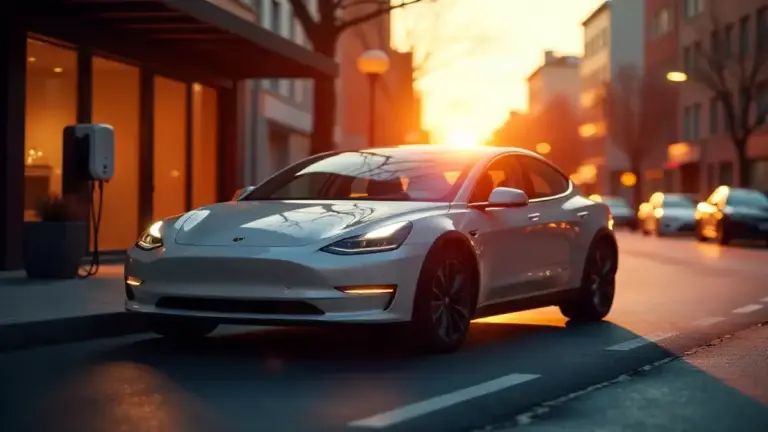
You’ve probably heard the concern before: “What happens when everyone plugs in their electric car at the same time? Won’t the power grid collapse?” It’s a fair question, and honestly, one that keeps energy experts up at night. As someone who’s spent years following the electric vehicle revolution, I can tell you that the relationship between EV charging and our power grid is fascinating, complex, and yes—a bit concerning. But here’s the good news: we’re not heading toward some apocalyptic blackout scenario. Instead, we’re witnessing one of the most interesting infrastructure challenges of our generation, and the solutions being developed are genuinely clever.
Let me walk you through what’s really happening when millions of EVs start plugging into our grid, the challenges this creates, and the innovative solutions that are already being rolled out. Trust me, it’s more interesting than you might think.
Understanding the Grid Challenge: It’s All About Timing
Here’s the thing most people don’t realize: our power grid was designed decades ago for a completely different world. Back then, electricity demand followed predictable patterns—peaks during the day when businesses ran full throttle, and valleys at night when everyone went to sleep. Simple, right?
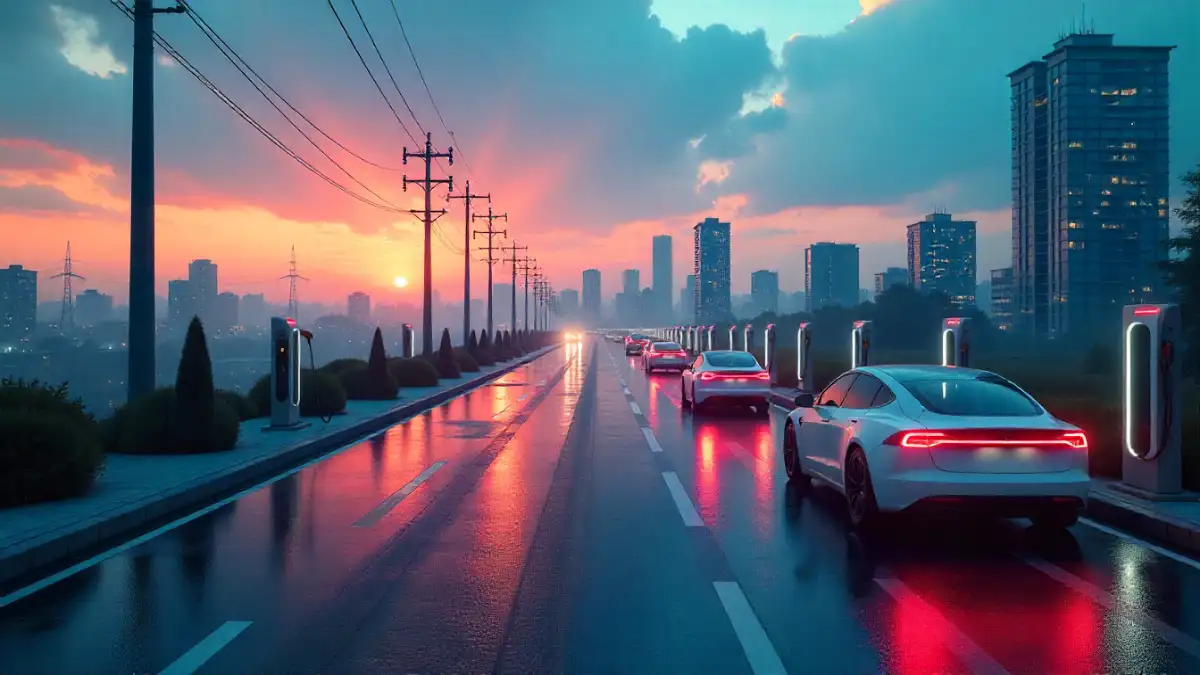
Now enter electric vehicles. When most people get home from work around 6 PM, what’s the first thing they do? They plug in their car. And when does everyone else do the same thing? Exactly—around 6 PM. This creates what energy engineers call “peak demand,” and it’s like everyone deciding to run their air conditioner, electric oven, and washing machine simultaneously, then adding a car charger on top of that.
A typical home EV charger draws about 7-19 kilowatts of power. To put that in perspective, that’s roughly equivalent to running three or four central air conditioning units at once. Now multiply that by thousands of EVs in a neighborhood, and you can see why utility companies are paying attention. Studies from the International Energy Agency suggest that if just 10% of vehicles in a given area were EVs all charging simultaneously during peak hours, local transformers and distribution systems could become seriously stressed.
But here’s what makes this challenge particularly tricky: unlike your air conditioner, which cycles on and off, an EV charger typically runs continuously for several hours. We’re talking about sustained, heavy electrical load right when the grid is already working its hardest.
The Domino Effect: Why Grid Stability Matters
You might be wondering, “Can’t we just build more power plants?” Well, yes and no. The issue isn’t just about total electricity generation—it’s about grid stability and infrastructure capacity.
Think of the power grid like water flowing through pipes. You can have plenty of water in the reservoir (generation capacity), but if the pipes (transmission and distribution lines) can’t handle sudden surges in demand, you’ve got problems. When too many people in a neighborhood start charging their EVs simultaneously, it can overload local transformers—those cylindrical devices you see on utility poles or in green boxes on the sidewalk. These transformers aren’t cheap to replace, and upgrading them across an entire city? We’re talking billions of dollars and years of work.
There’s also the frequency stability issue. The electrical grid operates at a precise frequency—60 Hz in North America, 50 Hz in most other places. Large, sudden loads can cause frequency fluctuations, and if the frequency drifts too far from the target, it can damage sensitive equipment and even cause cascading failures. I’ve spoken with grid operators who describe managing this balance as “conducting an orchestra where every instrument must play in perfect sync.”
The good news? We’re not starting from zero. Utilities have been managing load fluctuations for decades, but EVs represent a quantum leap in the scale of evening demand they’ll need to handle.
Smart Charging: The Game-Changing Solution
This is where things get really interesting. The solution to our grid challenge isn’t just about building more infrastructure—it’s about getting smarter with the infrastructure we already have. Enter smart charging technology, which might be the most elegant solution to our grid challenge yet.
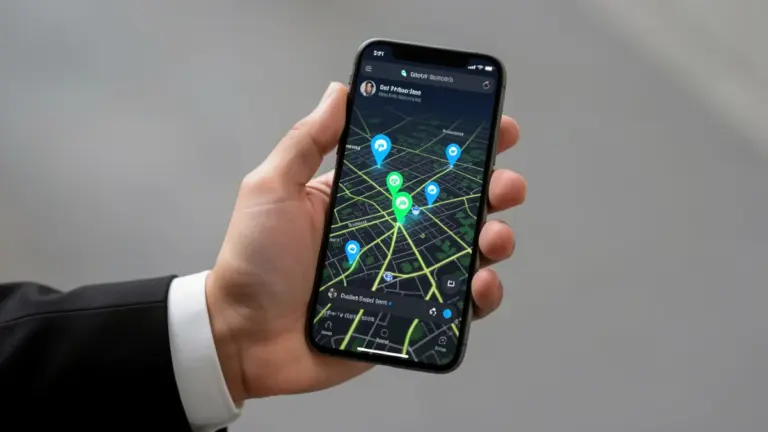
Smart charging allows utilities or charging networks to communicate with your EV and control when and how fast it charges. Before you panic about losing control of your car, let me explain how this actually works in practice.
Imagine you plug in your car at 6 PM with a battery that’s 30% full. You tell your car (via an app) that you don’t need to leave until 7 AM the next morning. That’s 13 hours of potential charging time, but your car only needs about 4 hours to fully charge. With smart charging, the system can wait until 11 PM or midnight—when overall grid demand is low and electricity might be cleaner and cheaper—to start charging your vehicle. You wake up to a fully charged car, the grid avoided peak demand stress, and you probably paid less for the electricity. Everyone wins.
Several programs are already proving this works. In California, Pacific Gas & Electric’s EV charging program offers significant discounts to customers who charge during off-peak hours. We’re talking about electricity rates that drop by 50% or more after 11 PM. In the UK, Octopus Energy’s intelligent charging system has successfully shifted thousands of EV charging sessions to off-peak hours, preventing grid strain while saving customers money.
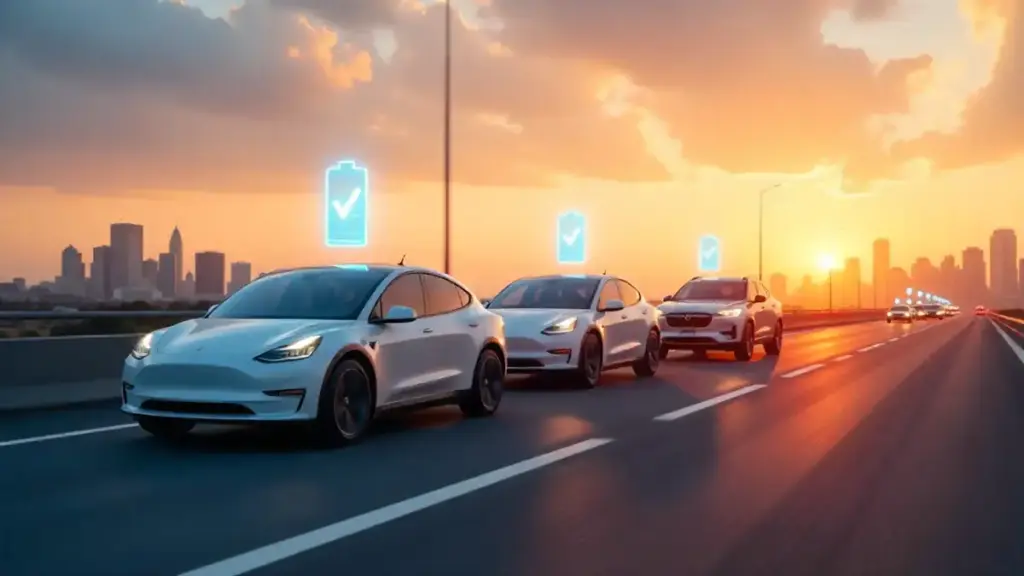
Some systems are getting even more sophisticated. Vehicle-to-Grid (V2G) technology, which I’ll touch on in a moment, allows your EV to actually send power back to the grid during peak demand periods. It’s like your car becoming a temporary power plant.
Vehicle-to-Grid (V2G): Your Car as a Power Bank
Now we’re entering genuinely exciting territory. What if your EV wasn’t just a load on the grid, but could actually help stabilize it? That’s the promise of Vehicle-to-Grid technology, and it could fundamentally change how we think about both cars and energy storage.
Here’s the concept: your EV has a massive battery—typically 60-100 kWh for most modern EVs. For context, the average American home uses about 30 kWh per day. That means your car’s battery could theoretically power your home for two or three days. V2G technology allows that stored energy to flow both ways—into your car when you need to charge, and out of your car when the grid needs support.
Picture this scenario: it’s a scorching summer afternoon, and air conditioners across the city are running full blast. The grid is straining under peak demand. Thousands of EVs sitting in parking lots, fully charged and not in use, could feed electricity back to the grid for a few hours, helping stabilize the system. The car owners get paid for the electricity they provide, and the grid gets the support it needs without firing up expensive and polluting “peaker” power plants.
This isn’t science fiction. In Denmark, V2G trials have been running since 2016. Nissan has partnered with utilities in Japan and Europe to deploy V2G-capable charging stations. Ford’s F-150 Lightning can power your home during an outage with its bi-directional charging capability. We’re watching the early stages of a transformation where cars become integral parts of our energy infrastructure.
The challenge? We need more EVs with bi-directional charging capability, more compatible charging infrastructure, and regulatory frameworks that fairly compensate car owners for providing this service. But the potential is enormous—some studies suggest that if just 10% of EVs in a region participated in V2G programs, it could provide significant grid stabilization benefits while creating a new revenue stream for EV owners.
Infrastructure Investment: Building for the Future
Let’s be honest: smart charging and V2G technology are brilliant solutions, but they’re not silver bullets. We also need significant infrastructure investment. The question isn’t whether we need to upgrade our grid—it’s how we do it smartly and efficiently.
Many utilities are already taking action. Southern California Edison is investing billions in grid upgrades specifically to accommodate EV charging. They’re installing higher-capacity transformers in neighborhoods with high EV adoption rates and upgrading distribution lines to handle increased load. In Europe, countries like Norway—where EVs account for over 80% of new car sales—have been systematically upgrading their electrical infrastructure for years.
But here’s where it gets interesting: thanks to smart charging technology, these upgrades don’t need to be as massive as initially feared. By spreading charging across off-peak hours, we can actually utilize existing grid capacity much more efficiently. It’s like widening a highway not by adding more lanes, but by convincing some drivers to travel at different times.
Renewable energy integration plays a huge role here too. Solar panels generate maximum power during the day, while EV charging demand peaks in the evening. Wind energy, on the other hand, often peaks at night—exactly when smart charging systems prefer to charge vehicles. By coordinating EV charging with renewable energy generation, we can create a cleaner, more efficient energy system.
Some forward-thinking utilities are installing large-scale battery storage systems that charge during the day (when solar is abundant) and discharge in the evening (when demand is high). EVs can then charge overnight using a mix of stored solar energy and wind power. It’s an elegant solution that addresses multiple challenges simultaneously.
Time-of-Use Rates: Following the Money
One of the simplest and most effective tools for managing EV charging is something you might already be familiar with: time-of-use electricity rates. The concept is straightforward—charge more for electricity during peak hours and less during off-peak hours. When done right, these pricing structures naturally incentivize behavior that benefits the grid.
In San Diego, for example, SDG&E offers an EV-specific rate plan where overnight electricity costs about one-third of the daytime rate. The result? Most EV owners in the program automatically schedule their charging for late night or early morning hours. No complex technology required—just basic economic incentives working as intended.
Some utilities are taking this even further with dynamic pricing that changes based on real-time grid conditions. On a mild spring day when demand is low, electricity might be dirt cheap. During a heat wave when the grid is stressed? Prices rise significantly. These price signals help balance supply and demand automatically, with EV owners responding to save money while helping stabilize the grid.
The key is making these pricing structures simple and transparent. Nobody wants to do math at 10 PM to figure out if now is a good time to charge. That’s why most systems integrate with your EV or home charger, automatically optimizing charging schedules based on your electricity rates and when you need your car ready.
Looking Forward: The Road Ahead
So where does all this leave us? Are we headed for a grid crisis as EVs proliferate, or is this a manageable challenge? After researching and writing about this for years, I’m cautiously optimistic.
The concerns about grid capacity are legitimate—we can’t just ignore them and hope everything works out. But the solutions we’re developing are genuinely impressive. Smart charging technology is already proven and increasingly common. V2G systems are moving from pilot programs to real-world deployment. Utilities are investing in infrastructure upgrades and time-of-use rates are shaping charging behavior effectively.
What matters most is coordination. EV manufacturers need to build vehicles with smart charging and V2G capability. Utilities need to continue investing in infrastructure and innovative rate structures. Regulators need to create frameworks that enable new technologies while protecting consumers. And EV owners—that’s potentially you—need to embrace smart charging practices that benefit both your wallet and the grid.
The transition won’t be seamless. There will be growing pains, local grid constraints, and times when the system feels stretched thin. But having watched this space evolve over the past decade, I’m convinced we have the technology and know-how to manage this transition successfully.
Here’s my advice if you’re considering an EV or already own one: sign up for time-of-use rates if available, use smart charging features, and be open to programs that might use your car’s battery to support the grid (with fair compensation, of course). You’re not just driving an electric car—you’re participating in a fundamental transformation of how we generate, distribute, and consume energy.
The power grid of the future will be smarter, cleaner, and more resilient than what we have today. And electric vehicles, rather than breaking the grid, might just be the catalyst that finally forces us to build the energy infrastructure we should have had all along.