Have you ever wished your car could capture the energy it normally wastes and put it back in the tank? Well, if you’re driving an electric vehicle, that’s exactly what’s happening every time you slow down. It sounds almost magical, doesn’t it? But regenerative braking is very real, and it’s one of the coolest technologies that makes EVs more efficient than their gas-guzzling counterparts.
Let me take you through how this fascinating feature works and, more importantly, how you can squeeze every extra mile out of it. Trust me, once you understand regenerative braking, you’ll never look at stopping the same way again.
What Exactly Is Regenerative Braking?
Think of regenerative braking as your EV’s way of being incredibly thrifty with energy. In a traditional gas car, when you hit the brakes, your vehicle converts all that forward motion into heat through friction—essentially throwing away energy you paid good money for. It’s like burning dollar bills to slow down.
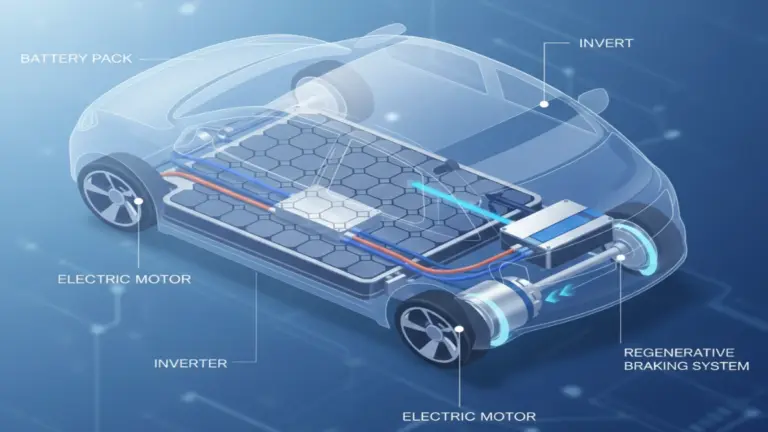
Electric cars, however, flip this script entirely. When you ease off the accelerator or apply the brakes in an EV, the electric motor that normally propels you forward actually reverses its role and becomes a generator. Your car’s momentum spins the motor, which then converts that kinetic energy back into electricity and feeds it directly into your battery. You’re literally recharging while you’re slowing down.
Here’s a comparison that might help: imagine riding a bicycle with a dynamo light. As you pedal and the wheels turn, the dynamo generates electricity to power your light. Regenerative braking works on the same principle, except instead of powering a light, it’s recharging a massive battery pack.
Most modern EVs recover between 60-70% of the kinetic energy that would otherwise be lost during braking. That’s not just impressive from an engineering standpoint—it translates to real-world range gains of 10-25% depending on your driving conditions. In stop-and-go city traffic, where you’re constantly slowing down and speeding up, regenerative braking can add 30 or even 40 miles to your effective range.
How Different EVs Handle Regenerative Braking
Not all regenerative braking systems are created equal, and manufacturers have taken distinctly different approaches to implementing this technology. Understanding your specific vehicle’s system helps you maximize its benefits.
One-Pedal Driving Systems
Cars like the Nissan Leaf, Chevrolet Bolt, and Tesla Model 3 offer what’s called “one-pedal driving.” When you lift your foot off the accelerator, the car doesn’t just coast—it immediately begins regenerative braking with significant force. Lift completely, and in many cases, the car will slow down enough to come to a complete stop without ever touching the brake pedal.
I remember the first time I drove a Tesla with maximum regenerative braking enabled. It felt bizarre initially, almost like the car was fighting me. But after about 20 minutes, it became intuitive. Now, when I drive a regular car, I find myself unconsciously expecting it to slow down when I lift off the gas. That’s how natural one-pedal driving becomes.
Adjustable Regeneration Levels
Many EVs, including the Hyundai Ioniq 5, Kia EV6, and Ford Mustang Mach-E, let you dial in how aggressively the regenerative braking engages. You might have paddle shifters behind the steering wheel or a setting in the car’s menu system that lets you choose anywhere from minimal regeneration (the car coasts like a traditional vehicle) to maximum regeneration (strong one-pedal driving).
This flexibility is fantastic because you can adapt to different driving situations. Cruising on the highway with minimal regeneration lets you coast efficiently. Navigating city streets with maximum regeneration means barely touching the brake pedal all day.
Blended Braking Systems
Some manufacturers, particularly luxury brands like Audi and Mercedes-Benz, use “blended” systems where regenerative braking is seamlessly integrated with traditional friction brakes. When you press the brake pedal, the car uses regenerative braking first, only engaging the physical brake pads when you need more stopping power than regeneration alone can provide.
The beauty of this approach? You don’t need to learn a new driving style. The car feels entirely conventional, but you’re still capturing energy with every stop.
Maximizing Regenerative Braking Benefits: Practical Tips
Knowing how regenerative braking works is one thing. Actually using it to extend your range? That takes a bit of strategy and practice. Here are techniques I’ve learned that genuinely make a difference.
Anticipate Traffic Flow
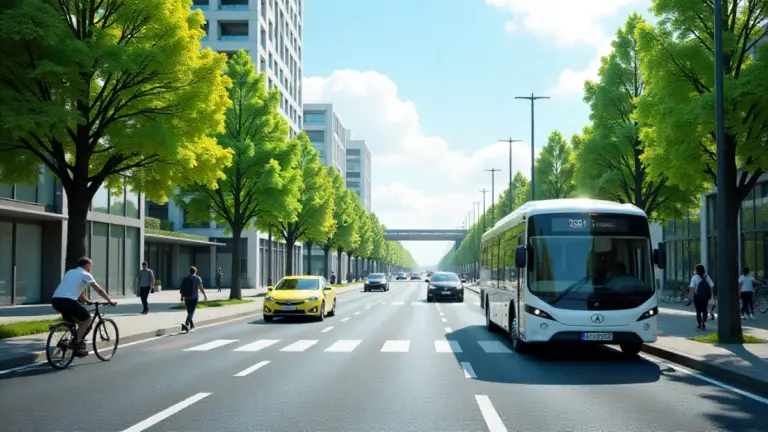
The key to maximizing regeneration is looking ahead. When you see a red light or stopped traffic in the distance, don’t wait until the last moment to brake. Instead, lift off the accelerator early and let regenerative braking do the work gradually. Not only does this capture more energy, but it’s also easier on your battery and gives you a smoother, more comfortable ride.
Think of yourself as a pilot making gentle adjustments rather than a race car driver making abrupt moves. The more gradual your deceleration, the more efficiently your motor can convert that kinetic energy back into stored electricity.
Use Maximum Regeneration in the City
If your EV has adjustable regeneration levels, crank it up to maximum when you’re driving in urban environments. Cities are perfect for regenerative braking—you’ve got stop signs, traffic lights, and constant speed changes. With strong regeneration, you can often drive entire city routes using only the accelerator pedal, letting the car slow itself naturally while recovering energy.
I’ve driven my EV through downtown areas where I’ve gained range rather than lost it, simply because the regenerative braking captured so much energy from all that stopping. It feels wonderfully efficient, like the city itself is helping charge your car.
Coast Strategically on Highways
Here’s where things get a bit counterintuitive. On highways and open roads, you don’t want aggressive regenerative braking. Why? Because coasting—just letting the car roll without power or braking—is actually more efficient when you’re trying to maintain speed.
If you need to slow down gradually on the highway, consider reducing your regeneration level or lightly applying the accelerator to coast. Save the strong regenerative braking for when you actually need to slow down significantly, like approaching an exit or traffic backup.
Master Descending Hills
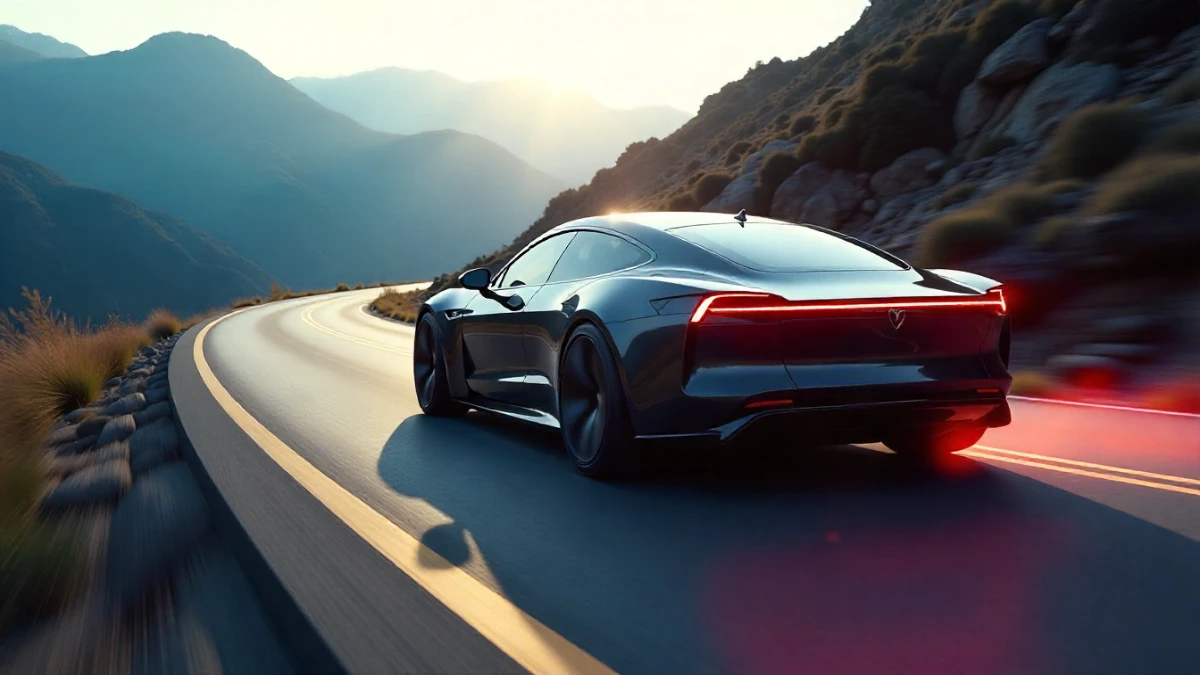
Downhill driving is where regenerative braking truly shines. On long descents, your EV can actually gain significant charge. I’ve had experiences driving down mountain passes where my battery percentage increased despite the car being in motion—essentially getting free miles from gravity.
Many EVs have a specific “hill descent” mode or allow you to increase regeneration on the fly using paddle shifters. Use these features on steep descents. Not only will you capture more energy, but you’ll also maintain better control without overheating your brake pads the way traditional vehicles do.
Understanding the Limitations
Let’s be honest about what regenerative braking can’t do, because understanding limitations helps you use the technology more effectively.
Cold Weather Challenges
When your battery is cold, it can’t accept charge as quickly or efficiently. This means regenerative braking is significantly reduced in freezing temperatures until your battery warms up. Many EVs will display a warning like “limited regeneration” on cold mornings.
The workaround? If possible, precondition your battery before driving (many EVs can do this while plugged in), or simply be aware that you’ll need to use your friction brakes more until things warm up. After 10-15 minutes of driving, regeneration typically returns to normal.
Full Battery Restrictions
Here’s something that surprises new EV owners: when your battery is at 100% charge, regenerative braking essentially stops working. Why? Because there’s nowhere for the recovered energy to go—your battery is full.
This is why many EV owners charge to only 80-90% for daily driving. It’s better for battery longevity anyway, but it also means you have regenerative braking available from the moment you start driving, which is especially important if you live at the top of a hill.
Highway Speed Limitations
Regenerative braking becomes less effective at higher speeds because there’s a limit to how much power the motor can generate and how quickly the battery can absorb it. At highway speeds, you’ll need to use your friction brakes for any sudden or emergency stops.
That said, for normal highway deceleration—like slowing from 70 to 50 mph—regenerative braking still captures useful energy. It just won’t bring you to a complete stop the way it does at city speeds.
The Real-World Range Impact
So how much difference does regenerative braking actually make to your real-world range? The answer depends heavily on your driving style and environment, but the numbers are compelling.
In city driving, where you’re constantly stopping and starting, regenerative braking can extend your range by 20-30%. If your EV has an EPA-rated range of 250 miles, that’s an extra 50-75 miles just from efficiently recovering braking energy. Over a year of daily commuting, that adds up to thousands of miles of “free” range.
Highway driving sees more modest gains—typically 5-10% range extension—simply because you’re braking less frequently. But even these gains matter. On a long road trip, that extra 10% could mean skipping a charging stop altogether.
I’ve kept detailed logs of my own EV’s efficiency, and I’ve consistently found that my real-world range exceeds the EPA estimate by about 15% in mixed driving, with regenerative braking being a major factor. Learning to drive smoothly and anticipate traffic has genuinely made me a more efficient, relaxed driver.
Looking Ahead: The Future of Regenerative Braking
The technology continues to evolve. Newer EVs are incorporating more sophisticated systems that use GPS data, traffic information, and even cameras to automatically adjust regeneration levels based on road conditions ahead. Imagine your car automatically increasing regeneration as it detects you’re approaching a red light or slower traffic.
Some manufacturers are also developing even more efficient systems that can recover greater percentages of kinetic energy, pushing beyond that 70% threshold. As battery technology improves and can accept charge faster, regenerative braking will become even more effective.
Your Regenerative Braking Action Plan
Ready to make the most of this technology? Here’s what you should do starting tomorrow:
First, spend a few days experimenting with your EV’s regeneration settings. Try maximum regeneration for a full day of city driving. See how it feels. Most people find they prefer stronger regeneration once they get used to it, but find what works for your comfort and driving style.
Second, practice looking farther ahead while driving. Train yourself to anticipate stops and slowdowns at least 5-10 seconds before they happen. This one habit will dramatically improve your regenerative braking efficiency.
Third, check your EV’s display or app for efficiency data. Most EVs show you how much energy regenerative braking is recovering. Watch these numbers and see how different driving styles affect them. It’s like a game where higher scores mean more range.
Finally, embrace the smoothness. The beauty of regenerative braking isn’t just the range extension—it’s the refined, controlled way your car slows down. You’ll find yourself becoming a smoother, more anticipatory driver, which is safer and more relaxing for everyone in the car.
Regenerative braking isn’t just a neat party trick or marketing gimmick. It’s a fundamental advantage that makes electric cars more efficient and practical for everyday driving. Every time you slow down, you’re turning what would be wasted energy into extra miles. That’s not just smart engineering—it’s borderline brilliant.
So the next time you’re coasting to a stop in your EV, take a moment to appreciate what’s happening. Your car is quietly, efficiently putting energy back where it belongs—ready to power your next adventure. And that? That’s the future of driving, happening right under your feet.