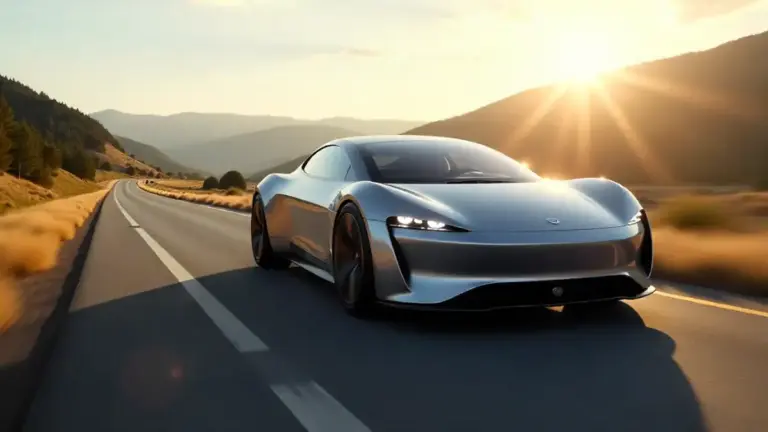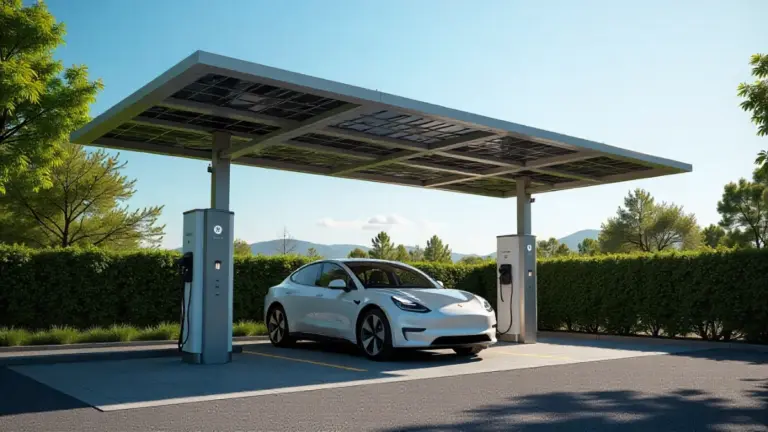
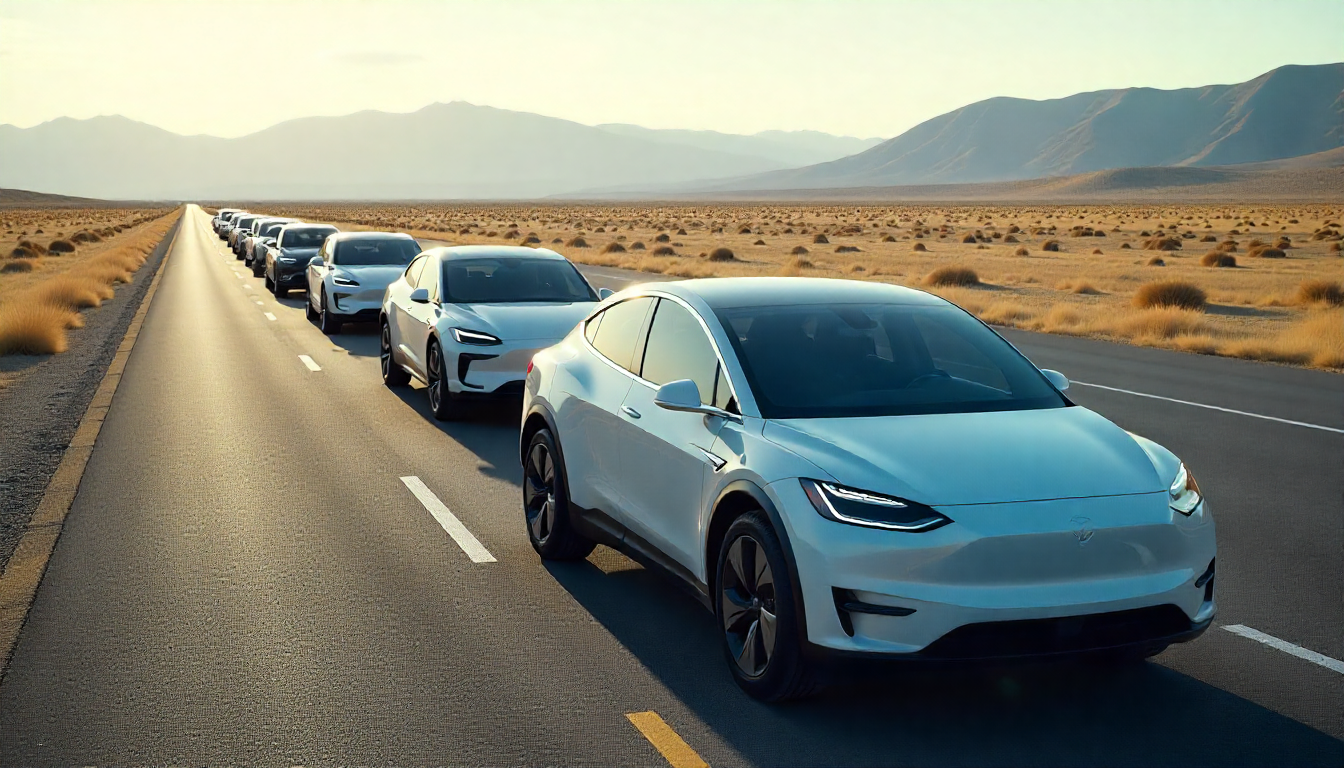
Picture this: You’re planning a road trip, and the first question that pops into your mind isn’t “Where should we stop for lunch?” but rather “Can my EV make it there on a single charge?” If you’ve ever felt that little flutter of range anxiety, you’re not alone. This electric car range comparison explores how far today’s top EVs can really go on a single charge — because range remains one of the biggest factors people consider when shopping for an electric vehicle.
The good news? Today’s electric cars have come a long way from their early predecessors. We’re talking real-world ranges that rival—and sometimes exceed—what you’d get from a tank of gas. But not all EVs are created equal, and understanding which models offer the best range for your needs can make all the difference between electric vehicle bliss and buyer’s remorse.
In this guide, we’ll dive deep into the range and battery performance of top electric cars across different categories. Whether you’re eyeing a sleek sedan for your daily commute, an SUV for family adventures, or even an electric truck for work and play, I’ll help you understand what these numbers really mean and which vehicles are leading the pack.
Understanding EV Range: What the Numbers Really Tell You
Before we jump into specific models, let’s talk about what “range” actually means in the EV world. You’ve probably seen those EPA range estimates plastered all over manufacturer websites and dealer lots. These figures come from standardized testing, but here’s the thing: your real-world range will vary based on a bunch of factors.
Think about how your smartphone battery drains faster when you’re streaming video versus just sending texts. Electric cars work similarly. Aggressive acceleration, highway speeds, extreme temperatures, and even using the heat or air conditioning can all impact how far you’ll actually go on a charge. In my experience, it’s wise to expect about 10-20% less range than the EPA estimate in everyday driving, especially if you live somewhere with harsh winters or scorching summers.
Battery capacity, measured in kilowatt-hours (kWh), is like the size of your gas tank. A bigger battery generally means more range, but it also adds weight and cost. The real magic happens when automakers balance battery size with vehicle efficiency—that’s when you get the sweet spot of impressive range without breaking the bank.
Sedans: Efficiency Meets Elegance
Sedans have traditionally been the bread and butter of the EV market, and they continue to offer some of the most impressive range figures you’ll find.
Tesla Model S Long Range sits at the top of the heap with an EPA-estimated range of up to 405 miles. That’s enough to drive from Los Angeles to San Francisco with charge to spare. Its 100 kWh battery pack, combined with Tesla’s refined aerodynamics and powertrain efficiency, makes it a true road trip champion. I’ve talked to Model S owners who regularly exceed 350 miles in mixed driving conditions—that’s pretty remarkable.
The Mercedes-Benz EQS 450+ isn’t far behind, offering up to 350 miles of range from its 107.8 kWh battery. What makes the EQS special is its focus on luxury and comfort alongside that impressive range. The interior is like a rolling living room, and the whisper-quiet cabin makes long drives feel effortless. Real-world reports suggest it delivers consistently near its EPA rating, especially in moderate climates.
If you’re looking for something more affordable without sacrificing too much range, the Hyundai Ioniq 6 is a standout performer. With up to 361 miles of range from its 77.4 kWh battery (in the Long Range RWD configuration), it punches well above its price point. Its ultra-slippery aerodynamics—seriously, it looks like it could slip through the air like a fish through water—help it achieve efficiency that rivals vehicles costing twice as much.
The BMW i4 eDrive40 offers a solid 301 miles of range and brings that signature BMW driving dynamics to the electric world. It’s proof that going electric doesn’t mean sacrificing the joy of driving. The 83.9 kWh battery provides enough juice for most people’s weekly driving without needing to charge at all.
SUVs: Family-Friendly Range Without Compromise
SUVs present a unique challenge for electric vehicle designers. You need a bigger battery to move more weight, but you also need to keep the price reasonable and the efficiency acceptable. Several manufacturers have nailed this balance.
Tesla Model X Long Range leads the pack with up to 348 miles of range. That 100 kWh battery has to work harder moving this bigger, heavier vehicle, but Tesla’s engineering prowess shows through. The falcon-wing doors are cool and all, but the real party trick is getting this much range out of a three-row SUV that can haul seven people and all their gear.
The BMW iX xDrive50 delivers 324 miles from its massive 111.5 kWh battery pack. This is BMW’s flagship electric SUV, and it shows in every detail. The range is complemented by fast charging capability—you can add about 90 miles in just 10 minutes at a high-speed charger. That’s about as long as a typical bathroom and coffee break on a road trip.
Mercedes-Benz EQE SUV 350+ comes in at 285 miles, which might not sound as impressive as some competitors, but it’s more than adequate for most people’s needs. What you’re getting here is Mercedes luxury, build quality, and a refined driving experience. The 90.6 kWh battery charges relatively quickly, and the vehicle’s efficiency means you’re not constantly hunting for chargers.
Rivian R1S offers multiple battery configurations, with the Large pack delivering around 330 miles and the Max pack pushing toward 400 miles. This adventure-ready SUV is built for taking the family off-grid (literally), and that range means you can reach remote campgrounds without range anxiety. I love that Rivian designed this with real outdoor enthusiasts in mind—the range figures hold up remarkably well even when you’re driving on rough terrain or towing.
The Kia EV9 is a newer entry that’s making waves with up to 304 miles of range from its 99.8 kWh battery. It’s one of the most spacious three-row electric SUVs you can buy, and that range makes it genuinely practical for families who do a lot of driving. Plus, Kia’s reputation for reliability and their excellent warranty give buyers peace of mind.
Trucks: Proving Electric Can Do Heavy Duty
Electric trucks were once considered impossible, but today’s offerings are proving that electric powertrains might actually be better suited for truck duty than traditional engines. That instant torque? Perfect for towing and hauling.
Rivian R1T was one of the first electric trucks to market, and it remains one of the best. The Large pack configuration offers around 330 miles of range, while the Max pack approaches 400 miles. Here’s what impressed me most: even when towing, the R1T’s range calculator adjusts in real-time to show you accurate estimates. Towing will cut your range significantly (expect about 50% reduction with a heavy load), but the truck is honest about it and helps you plan accordingly.
Ford F-150 Lightning comes in multiple battery configurations. The standard-range battery delivers about 240 miles, while the extended-range battery pushes to 320 miles. Ford made a smart choice making the Lightning look almost identical to the gas F-150—it doesn’t shout “I’m electric!” but rather says “I’m the truck you know and trust, just better.” The extended-range model’s 131 kWh battery is one of the biggest in the consumer EV market.
GMC Hummer EV Pickup takes a different approach with its absolutely massive 212.7 kWh battery pack (the largest in any production EV), delivering 329 miles of range. Now, you might think “Wait, that battery is huge but the range isn’t proportionally bigger?” You’d be right—this truck weighs over 9,000 pounds, so it needs that enormous battery just to achieve decent range. It’s the Hummer philosophy applied to EVs: go big or go home.
Chevrolet Silverado EV is General Motors’ more practical electric truck offering, with the Work Truck version providing up to 450 miles of range and the RST First Edition offering around 400 miles. That’s seriously impressive for a full-size truck. GM’s Ultium platform really shines here, showing that American automakers can compete with anyone in the EV space when they commit to it.
Tesla Cybertruck finally arrived with range figures of 250-340 miles depending on the configuration. The tri-motor Cyberbeast version delivers about 320 miles, while the dual-motor all-wheel-drive version extends to around 340 miles. Love it or hate it (the design definitely polarizes), the Cybertruck brings Tesla’s charging network advantage and efficiency know-how to the truck market.
Comparing Battery Performance: It’s Not Just About Size
When you’re comparing electric cars, don’t just look at the range number and the battery size. Efficiency—measured in miles per kilowatt-hour (mi/kWh)—tells you how well a vehicle uses its battery capacity.
The Hyundai Ioniq 6, for example, achieves around 4.7 mi/kWh in optimal conditions. That’s phenomenal efficiency that helps it achieve its impressive range without an absolutely massive battery. Compare that to the GMC Hummer EV, which gets around 1.5 mi/kWh—it needs that enormous battery because it’s moving a lot more weight and pushing through a lot more air.
Neither approach is wrong; they just serve different purposes. If you’re mainly commuting and want low charging costs, efficiency matters a lot. If you need serious capability and don’t mind higher charging costs, a less efficient but more capable vehicle might be your best bet.
Charging Speed: The Other Half of the Range Equation
Here’s something that doesn’t get talked about enough: your effective range isn’t just about the battery size—it’s also about how quickly you can recharge. A vehicle with 250 miles of range that can add 200 miles in 15 minutes is arguably more practical for road trips than one with 350 miles that takes 45 minutes to add the same amount.
Most modern EVs can accept DC fast charging at rates between 150-350 kW, with some of the latest models pushing even higher. The Tesla Model S can charge at up to 250 kW, while the Hyundai Ioniq 6 and Kia EV9 can handle up to 350 kW on the right charger. The Silverado EV supports up to 350 kW charging as well, which is crucial for a vehicle this size.
Battery thermal management plays a huge role here. Vehicles with sophisticated cooling systems (like Tesla’s models) can maintain faster charging speeds for longer, while some others may throttle charging speeds to protect the battery in extreme conditions.
Real-World Considerations: Making the Numbers Work for You
So how do you choose? Start by honestly assessing your driving patterns. Most people drive less than 40 miles per day, meaning even a vehicle with 250 miles of range would only need charging once or twice a week.
If you’re like me and occasionally take longer trips, look for vehicles with both good range and fast charging capability. The sweet spot for most buyers is around 300 miles of EPA range—enough to handle daily driving all week and make most regional trips without stopping to charge.
Consider your climate too. If you live somewhere with harsh winters, budget for about 30-40% range loss on the coldest days. That 300-mile EV might only give you 180-200 miles when it’s freezing outside. Conversely, if you’re in a moderate climate, you might actually exceed EPA estimates with efficient driving.
Think about home charging as well. If you can install a Level 2 home charger (240V), you can add 25-30 miles of range per hour of charging. That means you wake up every morning to a “full tank.” In this scenario, the difference between 300 and 400 miles of range matters less because you’re rarely depleting the battery significantly anyway.
The Bottom Line: Choose the Range That Fits Your Life
After comparing all these models, here’s what I’ve learned: there’s no one-size-fits-all answer to how much range you need. A city dweller with a short commute and home charging might be perfectly happy with a 250-mile EV, while someone who frequently drives long distances might consider 350+ miles essential.
The electric vehicle market has matured to the point where you have real choices across every segment. Sedans like the Tesla Model S and Hyundai Ioniq 6 prove you don’t have to sacrifice range for efficiency. SUVs like the BMW iX and Rivian R1S show that families don’t need to compromise. And trucks like the F-150 Lightning and Silverado EV demonstrate that electric powertrains can handle serious work.
My advice? Test drive a few models in your target range. Pay attention not just to the range number, but to how the vehicle’s efficiency, charging speed, and real-world performance fit your lifestyle. Talk to current owners if you can—they’ll give you the unfiltered truth about what it’s really like to live with their vehicle.
The era of range anxiety is rapidly becoming a thing of the past. With today’s electric cars offering 300+ miles on a charge and charging networks expanding every day, the question isn’t whether EVs have enough range—it’s which one has the right range for you.