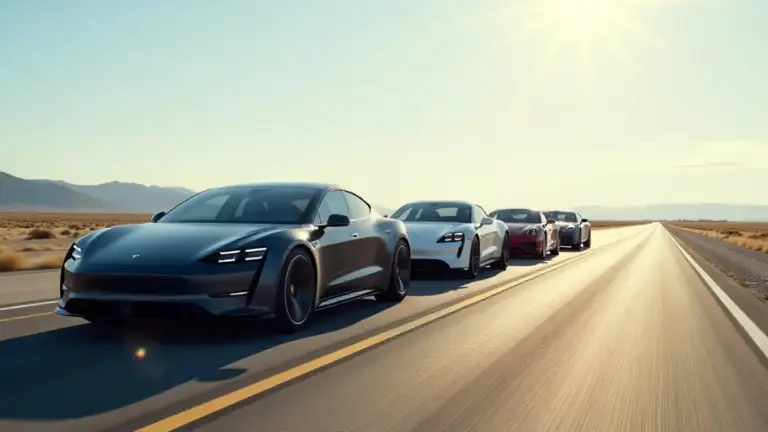
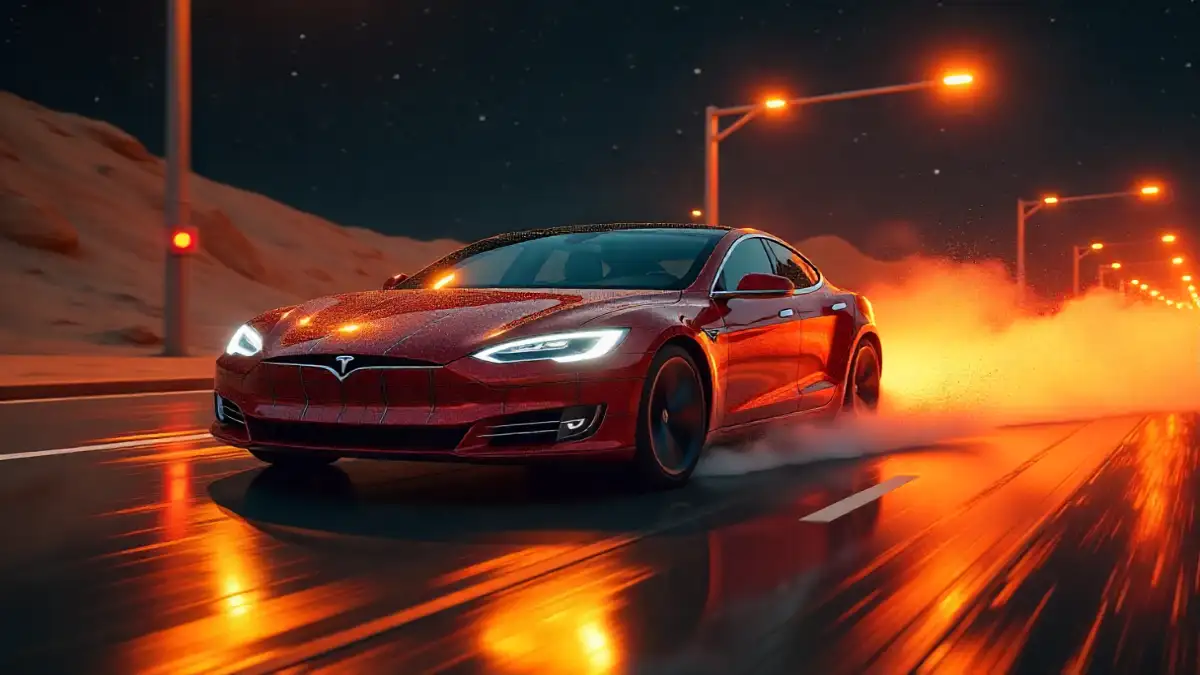
Have you ever been sitting at a red light next to a Tesla and wondered what would happen if you both floored it when the light turned green? That moment perfectly captures the thrill of electric car acceleration—a driving experience that’s faster, smoother, and more powerful than most gas cars. Unless you’re in a supercar, you’ll probably be left in the dust. The acceleration capabilities of modern EVs aren’t just impressive—they’re mind-blowing, rewriting everything we thought we knew about quick cars.
The thing is, most people still think of electric cars as those slow, golf cart-like vehicles from the early days. But that’s like comparing your smartphone to a rotary phone. The technology has evolved so dramatically that today’s EVs are leaving some of the most iconic sports cars in their rearview mirrors. Let me walk you through just how quick these electric machines really are, and more importantly, what this means for your daily driving experience.
The Numbers Don’t Lie: EV vs. Gas Acceleration
Let’s start with the hard facts, because they’re pretty stunning. The Tesla Model S Plaid can rocket from 0 to 60 mph in just 1.99 seconds. Yes, you read that right—under two seconds. To put that in perspective, that’s faster than a Bugatti Chiron, which costs about ten times more. Even more affordable EVs are impressively quick: the Tesla Model 3 Performance hits 60 mph in 3.1 seconds, while the BMW i4 M50 does it in 3.7 seconds.
Compare that to some popular gas-powered cars, and the difference becomes clear. A Honda Civic Si, which many consider a sporty car, takes 6.8 seconds to reach 60 mph. Even the legendary Ford Mustang GT, with its rumbling V8, needs 4.3 seconds to hit the same mark. The Porsche 911 Carrera, a true sports car icon, manages it in 4.2 seconds—respectable, but still slower than many family-oriented EVs.
But here’s what’s really interesting: it’s not just the premium EVs that are quick. The Chevrolet Bolt EV, which you can buy for around $30,000, accelerates from 0-60 in 6.5 seconds. That might not sound earth-shattering, but it’s quicker than a Toyota Camry V6 and costs significantly less to operate.
Why Are Electric Cars So Quick?
You might be wondering, “How is this possible?” The answer lies in the fundamental differences between electric motors and internal combustion engines. When you press the accelerator in a gas car, several things need to happen: fuel needs to mix with air, spark plugs need to fire, pistons need to compress and expand, and power needs to travel through a complex transmission system. It’s like asking a full orchestra to start playing—there’s a brief moment of coordination before the music begins.
Electric motors, on the other hand, are more like a light switch. The moment you press the pedal, maximum torque is available instantly. There’s no waiting for engines to rev up, no gear changes, no delay. It’s immediate, seamless, and incredibly efficient. This instant torque delivery is what makes electric cars feel so responsive, especially in city driving where quick acceleration from stoplights matters most.
Think of it this way: if acceleration were a conversation, gas engines would be like someone who takes a moment to think before speaking, while electric motors are like someone who always has the perfect response ready instantly.
Real-World Driving: Where Electric Acceleration Shines
Now, those 0-60 times are fun to talk about, but let’s be honest—how often are you actually flooring it from a complete stop? The real magic of electric acceleration happens in everyday driving situations, and this is where EVs truly excel over their gas counterparts.
Picture this: you’re merging onto a busy highway, and there’s a gap in traffic that’s closing fast. In a traditional car, you’d press the gas, wait for the engine to downshift (if it’s an automatic), feel the engine rev up, and then finally get the acceleration you need. In an EV, the response is instantaneous. No hesitation, no waiting—just immediate, smooth power that gets you safely into that gap.
The same advantage applies when you’re passing a slow-moving truck on a two-lane road. That burst of acceleration you need to get around safely? It’s there immediately in an electric car. This isn’t just about performance bragging rights—it’s about safety and confidence behind the wheel.
I’ve spoken with countless EV owners who tell me the same thing: once you experience that instant response, going back to a gas car feels sluggish and unresponsive. It’s not that gas cars are bad; it’s just that electric acceleration spoils you with its immediacy and smoothness.
The Smoothest Power Delivery You’ve Ever Experienced
Here’s something the 0-60 times don’t capture: the quality of the acceleration. Electric cars don’t just accelerate quickly; they accelerate smoothly. There’s no engine vibration, no gear changes, no interruption in power delivery. It’s like being pushed forward by an invisible, perfectly steady hand.
This smooth acceleration isn’t just a luxury feature—it has practical benefits. Passengers are more comfortable, there’s less wear on mechanical components, and the driving experience is more refined. It’s particularly noticeable in stop-and-go traffic, where the seamless acceleration and regenerative braking create a more relaxed driving experience.
Many people describe their first EV acceleration as feeling “futuristic” or “like being on a roller coaster,” but in the best possible way. Unlike the aggressive, jerky acceleration you might get from a high-performance gas car, electric acceleration feels controlled and effortless, even when it’s incredibly quick.
What This Means for Different Types of Drivers
If you’re a performance enthusiast, the acceleration capabilities of modern EVs open up a world of possibilities that were previously reserved for expensive sports cars. Track days, autocross events, and spirited weekend drives take on a whole new dimension when you have instant torque and lightning-quick acceleration at your disposal.
For families, the quick acceleration of EVs translates to safer highway merging, more confident passing, and an overall more capable driving experience. It’s reassuring to know that when you need to get out of a potentially dangerous situation quickly, your car will respond immediately.
Commuters benefit perhaps most of all. The instant torque makes city driving more enjoyable and less stressful. Every green light, every merge, every time you need to accelerate feels effortless and smooth. It transforms the daily grind of stop-and-go traffic from a chore into something almost enjoyable.
The Future Is Getting Even Quicker
As impressive as today’s electric car acceleration is, we’re just getting started. Advances in battery technology, motor design, and vehicle aerodynamics are pushing the boundaries even further. The upcoming Tesla Roadster claims it will reach 60 mph in 1.9 seconds, while the Rimac Nevera has already achieved 1.85 seconds.
But it’s not just about the supercars. Mass-market EVs are getting quicker too, as the technology becomes more affordable and widespread. The new generation of electric vehicles from traditional automakers like Ford, GM, and Volkswagen are proving that quick acceleration isn’t just a Tesla thing—it’s an electric vehicle thing.
Even more exciting is the potential for software updates to improve performance. Some EVs can literally get quicker overnight through over-the-air updates that optimize motor control algorithms or unlock additional power. Try doing that with your gas car!
Making the Mental Shift
If you’re still thinking of electric cars as slow, efficient appliances, it’s time to update that mental picture. Today’s EVs combine environmental responsibility with genuine driving excitement in a way that seemed impossible just a few years ago. The instant torque, smooth power delivery, and impressive acceleration figures aren’t just marketing gimmicks—they represent a fundamental improvement in the driving experience.
The next time you see an electric car at a stoplight, remember: there’s a good chance it can out-accelerate whatever you’re driving, all while producing zero local emissions and costing a fraction as much to fuel. That’s not just impressive—that’s revolutionary.
Whether you’re motivated by performance, efficiency, or environmental concerns, the acceleration capabilities of modern electric vehicles prove that you don’t have to compromise. In fact, you might just discover that electric acceleration spoils you for anything else. Once you experience that instant, smooth, silent surge of power, traditional cars start to feel like they’re stuck in the past—because in many ways, they are.