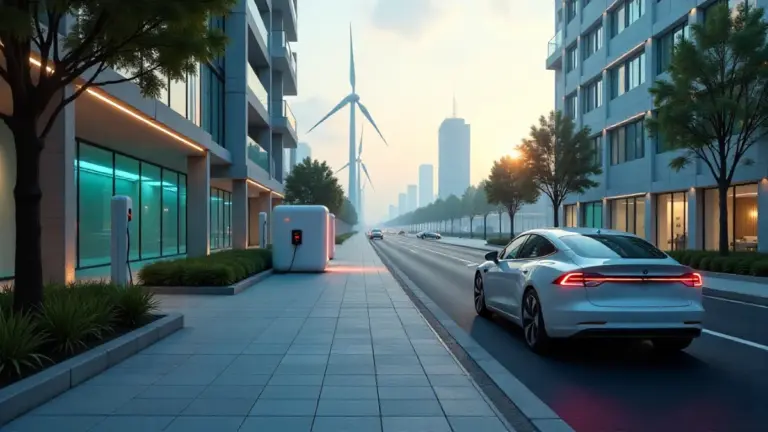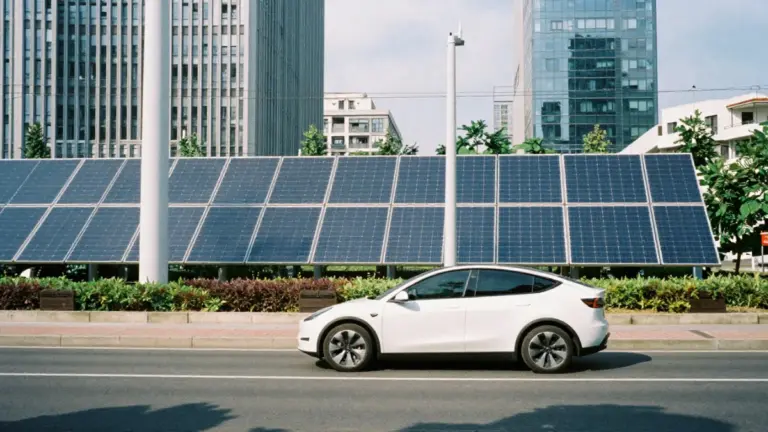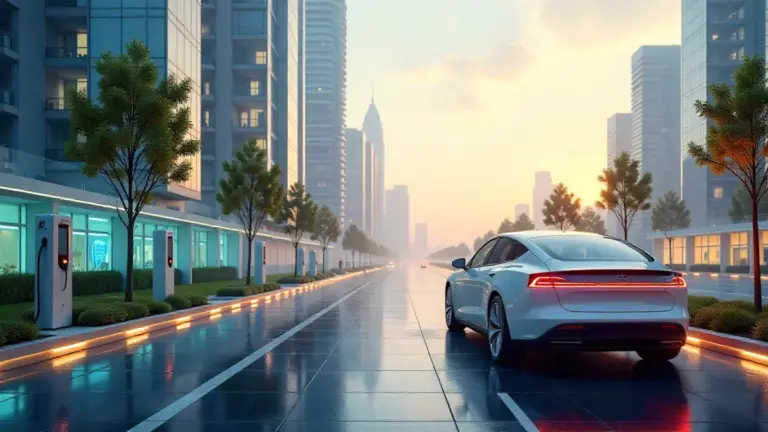
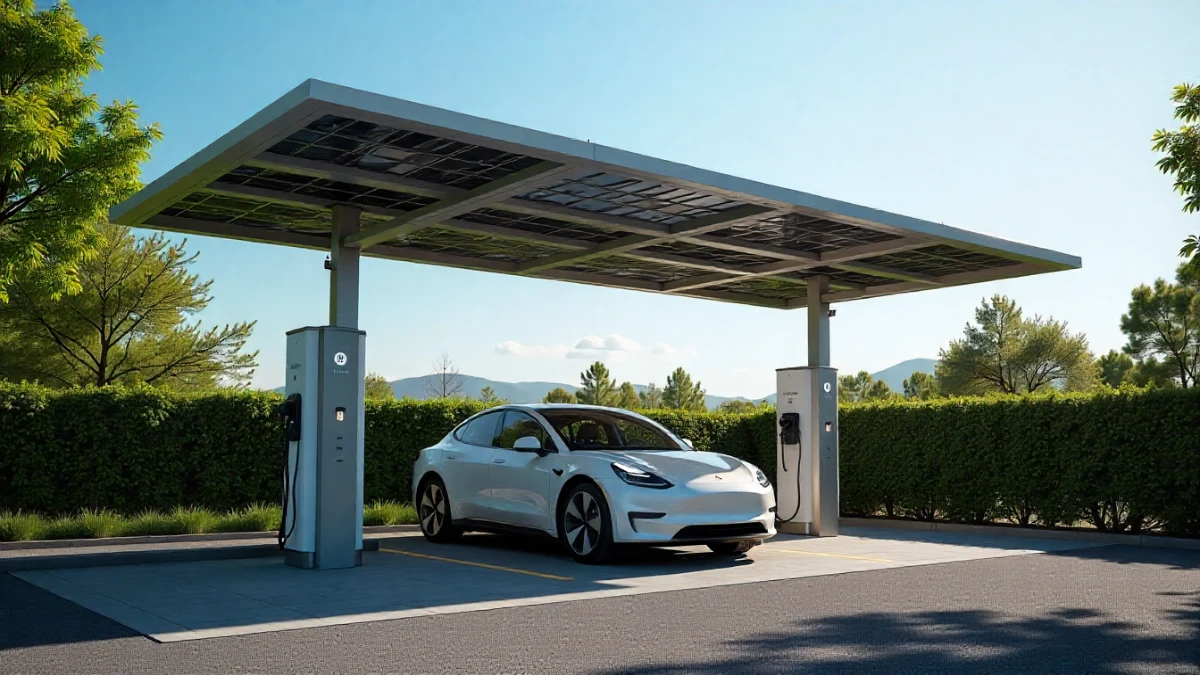
You’ve probably seen them—sleek charging stations with solar panels overhead, promising completely clean, sun-powered energy for your electric vehicle. They look futuristic, they sound amazing, and honestly, who wouldn’t want to charge their EV with free energy from the sun? But here’s the question nobody seems to ask: Do these solar-powered charging stations actually live up to the hype, or are they more marketing magic than practical solution?
Let me walk you through everything I’ve learned about solar EV charging stations. We’ll dig into how they really work, crunch some numbers on costs and benefits, and figure out whether they’re a game-changer for the EV revolution or just a nice idea that doesn’t quite add up yet. Spoiler alert: the answer is more nuanced than you might think.
How Solar-Powered Charging Stations Actually Work
First things first—let’s clear up what we’re actually talking about here. A solar-powered EV charging station isn’t just a regular charger with some solar panels slapped on top. Well, sometimes it is, but the good ones are more sophisticated than that.
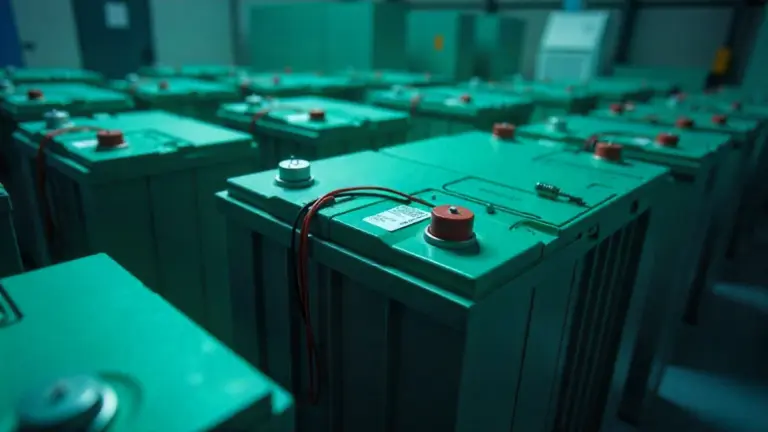
The basic setup includes solar panels (obviously), an inverter to convert DC power from the panels into AC power your car can use, and usually a battery storage system. That battery part is crucial, and here’s why: solar panels only generate electricity when the sun’s shining, but you might want to charge your car at night or on a cloudy day. The battery stores excess energy for later use, kind of like how your phone’s battery lets you use it even when it’s not plugged in.
Some installations are “grid-tied,” meaning they’re connected to the regular electrical grid. When the sun’s blazing and the panels are producing more power than needed, the excess goes back to the grid. When it’s dark or demand is high, the station pulls from the grid. Think of it as a two-way street—you’re both giving and taking.
Other setups are completely off-grid, relying entirely on solar panels and battery storage. These are perfect for remote locations where running electrical lines would cost a fortune, but they come with their own challenges. What happens during a week of cloudy weather? You get the picture.
The Math: Does the Sun Really Have Enough Juice?
Here’s where things get interesting. Let’s talk numbers, because the engineering reality of solar charging is pretty eye-opening.
A typical EV like a Tesla Model 3 has a 75 kWh battery. To fully charge it from empty, you need—you guessed it—75 kilowatt-hours of electricity. Now, a standard residential solar panel produces about 300-400 watts in ideal conditions. So how many panels do you need to charge that Tesla?
Under perfect conditions (bright sunny day, panels positioned optimally), you’d need roughly 20-25 solar panels running for about 4-5 hours to generate enough juice for one full charge. And that’s assuming ideal conditions, which, let’s be honest, don’t happen every day.
Here’s the reality check: most solar-powered charging stations you see in parking lots have maybe 6-12 panels. Those canopies look impressive, but they’re not producing nearly enough power to charge multiple vehicles throughout the day. They’re supplementing grid power, not replacing it.
Does that make them pointless? Not at all. Even if they’re only providing 30-50% of the charging energy from solar, that’s still a significant reduction in grid demand and carbon emissions. But it’s important to be realistic about what they can and can’t do.
The Environmental Impact: Greener Than Grid Power?
You might be thinking, “But Roy, isn’t the whole point that they’re cleaner than regular charging?” And you’d be absolutely right to ask. But the answer depends on where you live.
If your local power grid is already running on 70% renewable energy (lucky you!), then adding solar panels to a charging station makes less of an environmental difference than it would in a coal-heavy region. In places like West Virginia, where coal still dominates the grid, solar charging stations make a massive impact on your vehicle’s true carbon footprint.
Here’s something most people don’t consider: the environmental cost of manufacturing and installing these systems. Those solar panels, batteries, and inverters all require energy and resources to produce. It typically takes 2-4 years of operation for a solar charging station to offset its own manufacturing carbon footprint. After that break-even point, though, it’s all environmental benefit.
The battery storage component is particularly important from an environmental perspective. By storing excess solar energy, these stations can help balance the grid during peak demand times, reducing the need for “peaker plants”—those natural gas plants that only fire up when electricity demand spikes. That’s a hidden environmental benefit that doesn’t get talked about enough.
The Cost Reality: Investment vs. Payback
Let’s talk money, because that’s often what it comes down to for businesses and municipalities considering these installations.
A commercial solar-powered charging station with adequate battery storage can cost anywhere from $50,000 to $150,000+ depending on capacity and features. That’s not pocket change. A comparable grid-powered station might cost $15,000-$30,000. So why would anyone spend the extra money?
The payback period varies wildly. In sunny states like California, Arizona, or Nevada, with high electricity rates and good solar incentives, you might see payback in 7-10 years. In cloudier regions with lower electricity costs, it could take 15-20 years. And considering the lifespan of solar panels is typically 25-30 years, that’s cutting it close.
But here’s where it gets more interesting: electricity rates are going up, not down. As EV adoption increases, grid demand will rise, likely pushing rates even higher. That solar charging station that seemed like a marginal investment today might look pretty smart in 10 years when electricity costs have doubled.
There are also significant tax incentives and rebates available in many areas. The federal Investment Tax Credit (ITC) can cover up to 30% of solar installation costs. Many states and utilities offer additional incentives. When you factor these in, the economics suddenly look a lot more attractive.
Where Solar Charging Makes Perfect Sense
Despite the challenges, there are scenarios where solar-powered charging stations are absolute no-brainers.
Remote locations top the list. Think about highway rest stops in rural areas, national parks, or desert regions where running power lines would cost hundreds of thousands of dollars. A self-contained solar charging station suddenly becomes the cheaper option. Places like Death Valley or rural Wyoming have started installing these, and they’re perfect for the application.
Workplace charging is another sweet spot. Your employees’ cars sit in the parking lot all day while the sun is shining—that’s optimal timing. Companies can install solar carports that provide shade for vehicles while generating charging power. It’s a visible commitment to sustainability that employees and customers appreciate, and the charging happens during peak solar production hours.
Emergency preparedness is an often-overlooked benefit. When the grid goes down during natural disasters, solar charging stations with battery storage can keep operating. As we’ve seen during California wildfires and Texas ice storms, grid reliability isn’t something we can take for granted anymore.
The Technology Is Getting Better—Fast
Here’s the exciting part: the technology is improving rapidly, and costs are dropping. Solar panel efficiency has increased from around 15% to over 22% for commercial panels in just the past decade. That means more power from fewer panels.
Battery technology is advancing even faster. The latest lithium-iron-phosphate (LiFePO4) batteries last longer, charge faster, and cost less than previous generations. Some new installations are using second-life EV batteries—taking batteries from retired electric vehicles and repurposing them for stationary storage. It’s recycling at its finest.
Smart charging technology is also making a huge difference. Modern systems can predict weather patterns, adjust charging schedules based on solar production forecasts, and even communicate with vehicles to optimize charging times. If your car doesn’t need to be fully charged until tomorrow morning, why not wait for peak solar production hours?
Vehicle-to-Grid (V2G) technology is on the horizon too. Imagine your EV not just receiving power from solar panels, but also serving as a mobile battery that can feed power back to your home or the grid during peak demand. It’s not widespread yet, but some pilot programs are showing impressive results.
The Verdict: Hype, Hope, or Reality?
So, are solar-powered charging stations the future of EV charging? The honest answer is: they’re part of the future, but not the entire future.
For most urban and suburban areas with reliable grid power, solar charging stations work best as a supplement to grid power rather than a replacement. They reduce environmental impact, help balance grid demand, and make a visible statement about sustainability commitments. But they’re not going to power all our charging needs with sunshine alone—at least not yet.
For remote locations, emergency backup, and specific use cases like workplace charging, they’re already an excellent solution that makes both environmental and economic sense.
The real magic happens when we think bigger. Imagine a future where every parking lot canopy, every carport, and every rest stop generates solar power. Where millions of EVs with bidirectional charging act as distributed battery storage for the grid. Where smart systems balance solar production, battery storage, and grid power seamlessly. That’s not science fiction—it’s where we’re headed.
What This Means for You
If you’re an EV owner wondering whether to seek out solar charging stations: use them when available, but don’t worry if they’re not everywhere yet. The electricity charging your car is getting cleaner every year as grids add more renewable sources.
If you’re a business owner considering installation: run the numbers for your specific location, factor in available incentives, and think long-term. The economics are improving rapidly, and the PR value of visible sustainability commitments is real.
If you’re a homeowner with an EV: a home solar system with enough capacity to charge your car is often more cost-effective than public charging stations, solar or otherwise. You might not be able to install a commercial-scale setup, but a modest home system can offset a significant portion of your charging costs.
The bottom line? Solar-powered charging stations aren’t perfect, and they’re not a magic solution to all our energy needs. But they’re a valuable piece of the puzzle as we transition to cleaner transportation. The technology is real, it’s improving, and in the right applications, it already makes perfect sense.
The sun’s been powering life on Earth for billions of years. Now it’s starting to power our cars too. That’s pretty cool, even if it comes with some practical limitations.