Here’s a question that might surprise you: What if I told you that the car in your driveway pumps more greenhouse gases into the atmosphere each year than your entire household’s electricity use? It’s true. This is exactly why electric mobility has become one of the most talked-about climate solutions.
I’ve spent years covering the automotive industry. I’ve talked with EV owners, engineers, and climate scientists. The real story is more nuanced than the headlines suggest. Electric vehicles aren’t a magic wand that instantly solves climate change. But they’re not greenwashing either. The truth lies somewhere in between—and understanding that truth matters.
In this article, we’ll cut through the noise. You’ll discover the real emissions reductions EVs provide. We’ll explore where they fall short. You’ll learn what the future holds for clean transportation. Whether you’re considering buying an electric car or simply curious about their environmental impact, you’ll walk away with a clear, fact-based understanding.
The Transportation Emissions Crisis: Why We Can’t Ignore Cars Anymore
Let’s start with the uncomfortable truth. Transportation is the largest source of greenhouse gas emissions in the United States. It accounts for roughly 28% of total emissions in 2024. Within that slice of the pie, passenger cars and light-duty trucks represent about 58% of transportation emissions. The vehicles we drive to work, to the grocery store, and on road trips are major contributors to climate change.
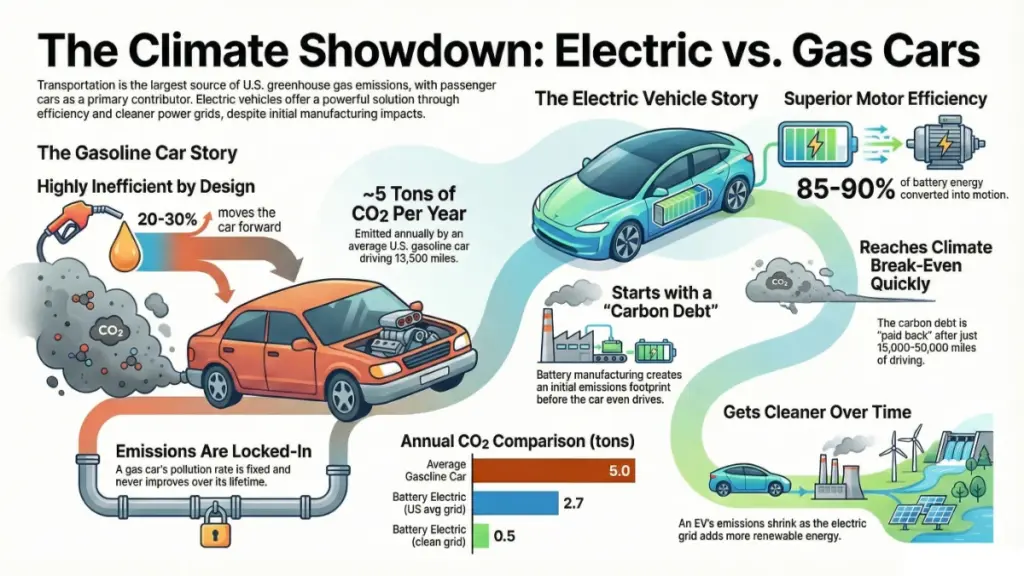
Think about it this way: every gallon of gasoline your car burns releases about 20 pounds of carbon dioxide. For the average American driving around 13,500 miles per year in a vehicle that gets 25 miles per gallon, that’s roughly 10,800 pounds. That’s over 5 tons of CO2 annually from just one car.
The climate science is clear. We need to dramatically reduce these emissions if we want to limit global warming to 1.5 degrees Celsius above pre-industrial levels. According to the Intergovernmental Panel on Climate Change, that means cutting global emissions by about 45% by 2030. We must reach net-zero by 2050. Transportation emissions must be part of that equation.
Why Gasoline Cars Are Climate Culprits
Internal combustion engines are remarkably inefficient. Here’s what happens with the energy in a gallon of gas:
- Only about 20-30% of the energy actually moves the car forward
- Roughly 70-80% is lost as heat through the engine, exhaust, and friction
- Additional energy is consumed by accessories like air conditioning and power steering
This inefficiency means we’re burning massive amounts of fossil fuels to achieve relatively modest transportation. Unlike power plants, which can at least theoretically capture their emissions, every tailpipe releases CO2 directly into the atmosphere. No filter. No capture. No mitigation.
How Electric Vehicles Actually Change the Climate Equation
Electric vehicles operate on a fundamentally different principle. This makes them inherently more climate-friendly than gas cars—even when you account for how the electricity is generated. The key difference? Efficiency and flexibility in energy production.
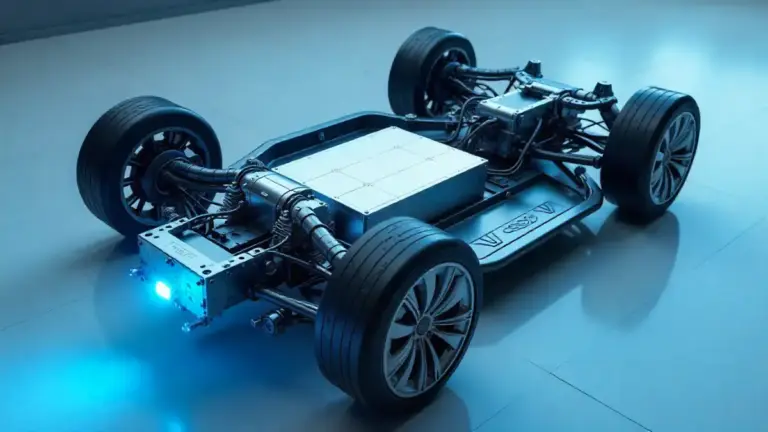
An electric motor converts about 85-90% of the electrical energy from the battery into motion. Compare that to the 20-30% efficiency of a gasoline engine. You can immediately see why EVs need less total energy to travel the same distance. This efficiency advantage translates directly into lower emissions, even when the electricity comes from fossil fuel sources.
The Numbers Behind EV Emissions
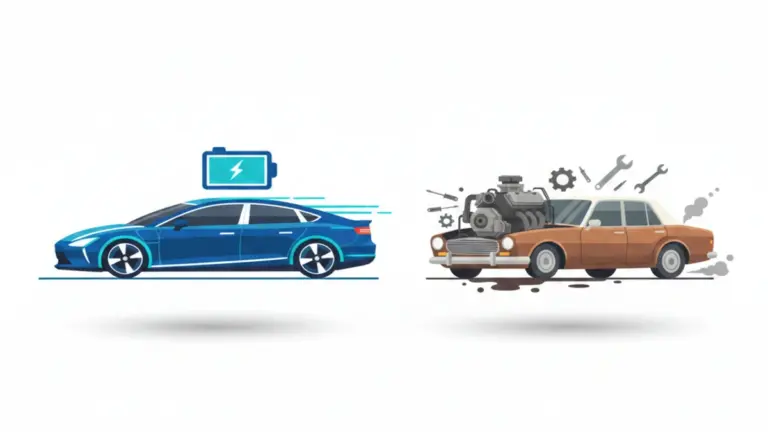
According to data from the US Department of Energy and Environmental Protection Agency, the average electric vehicle in the United States produces about 2.5 to 3 tons of CO2 equivalent per year. A typical gasoline car produces 5 tons. That’s roughly a 40-50% reduction in emissions. And that’s using today’s grid mix, which still includes significant coal and natural gas.
The Grid Gets Cleaner Every Year
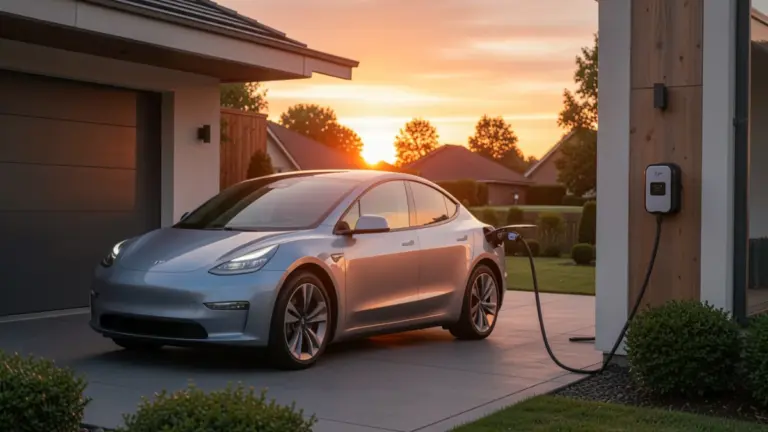
Here’s where it gets really interesting. Unlike a gas car that’s locked into burning fossil fuels for its entire lifespan, an EV gets cleaner as the electric grid improves. In 2024, renewable energy sources like wind and solar accounted for about 24% of US electricity generation. That’s up from just 10% a decade ago. As more renewable capacity comes online—and it’s being added at record rates—every EV on the road automatically becomes even more climate-friendly.
This is like having a car that improves its environmental performance every year. A gas car you bought in 2020 will still produce the same emissions in 2030. An EV you bought in 2020 will have a significantly lower carbon footprint in 2030 thanks to grid improvements. The car itself hasn’t changed, but its impact has.
Real-World Emissions Comparison
Let’s look at how different vehicle types stack up in terms of annual CO2 emissions based on 2024-2025 data:
| Vehicle Type | Annual CO2 (tons) | % vs. Gas Car |
| Average Gasoline Car | 5.0 | Baseline |
| Hybrid (Non-Plug-in) | 3.2 | -36% |
| Plug-in Hybrid | 1.8 | -64% |
| Battery Electric (US avg grid) | 2.7 | -46% |
| Battery Electric (clean grid) | 0.5 | -90% |
Note: Data based on 13,500 miles annual driving. Clean grid refers to states with high renewable energy penetration like California or Washington.
The Battery Manufacturing Question: Addressing the Carbon Debt
One of the most common concerns I hear is this: “Doesn’t making the battery create so much pollution that it cancels out any benefits?” It’s a fair question. The answer is both yes and no. Manufacturing EV batteries does create emissions. But not nearly enough to negate the lifetime benefits.
Understanding the Manufacturing Impact
Let’s talk specifics. Producing a lithium-ion battery pack does generate emissions. The range is roughly 60 to 150 kilograms of CO2 per kilowatt-hour of battery capacity. This depends on where and how the battery is made. For a typical 75 kWh battery pack, that translates to about 4.5 to 11 tons of CO2 during manufacturing.
That sounds like a lot—and it is. But here’s the critical context: numerous peer-reviewed lifecycle analyses show that an electric vehicle pays back this carbon debt relatively quickly. In regions with cleaner electricity grids, an EV breaks even in just 15,000 to 25,000 miles of driving. Even in areas heavily dependent on coal power, the payback period is typically under 50,000 miles.
The Lifetime Perspective
Think about it from a lifecycle perspective. The average car on American roads travels about 200,000 miles over its lifetime. If an EV breaks even at 25,000 miles, it operates with lower total emissions for the remaining 175,000 miles. That’s 87% of its useful life spent with a smaller climate footprint than a gas car.
Manufacturing Is Getting Cleaner
The emissions from battery production aren’t static. They’re declining rapidly as manufacturers improve their processes and transition to renewable energy. Tesla’s Gigafactory in Nevada uses significant solar and wind power for its operations. Several battery manufacturers in Europe and Asia now produce cells with 30-50% lower carbon intensity than the industry average just five years ago.
Additionally, new battery chemistries are reducing the need for cobalt and other materials with high environmental costs. Lithium iron phosphate batteries, now common in many lower-cost EVs, use more abundant materials. They have a smaller manufacturing footprint than traditional nickel-cobalt chemistries.
Why Where You Live Matters for EV Climate Impact
Here’s something that often gets lost in the EV debate: the climate benefit varies significantly depending on where you plug in. This isn’t about whether EVs are better than gas cars—they are, virtually everywhere. Rather, it’s about how much better they are.
Clean Grid States Lead the Way
In states like California, Washington, or Vermont, renewable energy makes up a large portion of the electricity mix. An EV in these regions produces about 90% less emissions than a comparable gasoline vehicle. Driving an EV here is almost equivalent to driving a car that gets over 100 MPG in terms of climate impact.
Coal-Heavy States Still See Benefits
In states that still rely heavily on coal for electricity generation, the benefit is smaller but still substantial. Even in West Virginia—one of the most coal-dependent states—an EV produces roughly 30-35% fewer emissions than a gas car. The efficiency advantage of electric motors is so significant that EVs come out ahead even when charged with relatively dirty electricity.
Remember, grid composition is constantly improving. Coal plants are being retired at an accelerating pace across the United States. They’re being replaced primarily by natural gas and renewable energy. This means that even if you live in a coal-heavy state today, your EV’s climate footprint will automatically shrink as the grid gets cleaner.
Electric Mobility Beyond Passenger Cars: Buses, Trucks, and Two-Wheelers
When we talk about electric mobility’s climate impact, passenger cars get most of the attention. But the bigger picture includes buses, delivery trucks, and even electric bikes and scooters. In many ways, these other forms of electric mobility offer even more compelling climate benefits.
Electric Buses Transform Urban Transit
Electric buses are becoming increasingly common in cities worldwide. A single diesel transit bus can emit 25 tons of CO2 annually. An electric bus reduces that figure to about 7 tons—even accounting for electricity generation. Cities like Shenzhen, China have already electrified their entire bus fleet of over 16,000 vehicles. This removes an estimated 440,000 tons of CO2 from the atmosphere each year.
Delivery Vans Lead Commercial Adoption
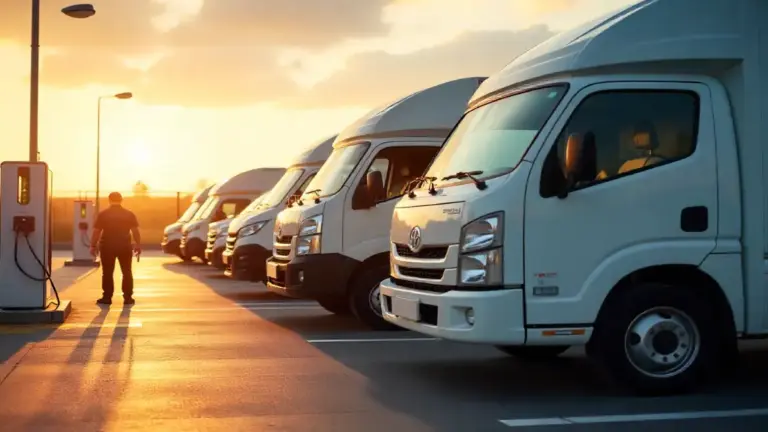
Electric delivery vans and medium-duty trucks are another promising area. Companies like Amazon, UPS, and FedEx are rapidly expanding their electric fleets. They recognize both the climate benefits and the long-term cost savings. These vehicles have predictable routes and return to central depots for charging. This makes them ideal candidates for electrification.
Micromobility Makes a Macro Impact
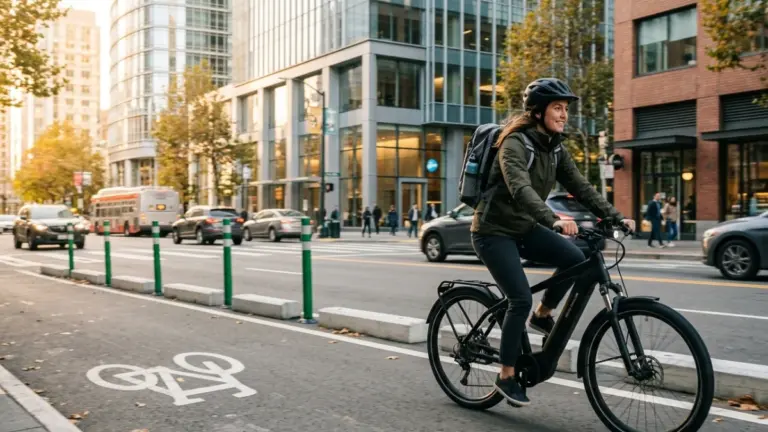
Don’t overlook electric bikes and scooters. In urban areas, these vehicles can replace many short car trips. Short trips are particularly inefficient in gas cars because engines don’t have time to warm up to optimal operating temperature. An electric bike uses about 1-2% of the energy of a car to travel the same distance. This makes it an extraordinarily efficient form of transportation from a climate perspective.
The Honest Truth: Where Electric Mobility Falls Short
If we’re going to have an honest conversation about electric mobility and climate, we need to acknowledge the limitations. EVs aren’t a complete solution. They’re a significant improvement over gasoline cars. But they come with their own set of challenges that we shouldn’t ignore.
Resource Extraction Concerns
Mining lithium, cobalt, nickel, and other battery materials has environmental and social costs. These impacts are generally less severe than the ongoing environmental damage from oil extraction and combustion. But they’re still significant. We’re essentially trading one set of extraction challenges for another. The difference is the new set is smaller and more manageable.
The Urban Planning Problem
EVs don’t address all the problems associated with car-dependent transportation. They still contribute to urban sprawl, traffic congestion, and the enormous amount of space cities dedicate to parking. A Tesla stuck in traffic produces zero tailpipe emissions. But it’s still taking up road space and contributing to the broader inefficiencies of car-centric urban design.
Adoption Pace Challenges
The current pace of EV adoption, while accelerating, isn’t fast enough to meet aggressive climate targets. Even with optimistic projections, it will take decades to fully replace the existing fleet of gas-powered vehicles. Every year of delay means more CO2 accumulating in the atmosphere.
The Need for Broader Solutions
EVs are most effective as part of a broader strategy. This includes improved public transit, better urban planning, and policies that reduce the overall need for vehicle travel. If we simply swap every gas car for an electric one without rethinking our communities and transportation systems, we’re missing an opportunity for even greater climate benefits.
Looking Ahead: The Accelerating Climate Benefits of Electric Mobility
Despite the challenges, the trajectory for electric mobility’s climate impact is remarkably positive. Several converging trends suggest that the benefits will only grow stronger in the coming years.
Rapid Grid Decarbonization
The electric grid is decarbonizing faster than most experts predicted even five years ago. Wind and solar installations are breaking records globally. The cost of renewable energy continues to fall. The International Energy Agency projects that renewable sources could provide up to 50% of global electricity by 2030. This would dramatically improve the climate credentials of every EV on the road.
Battery Technology Advances
Battery technology is advancing rapidly on multiple fronts. New chemistries promise higher energy density, faster charging, longer lifespan, and lower manufacturing emissions. Solid-state batteries could enter production in the late 2020s. They may reduce battery-related emissions by as much as 40% compared to current lithium-ion technology.
The Recycling Revolution
Battery recycling infrastructure is also maturing. As the first generation of EV batteries reaches end-of-life, companies are developing sophisticated recycling processes. These can recover over 95% of battery materials. This circular approach will significantly reduce the need for virgin material extraction. It will also lower the carbon footprint of future batteries.
Vehicle-to-Grid Integration
Vehicle-to-grid technology represents another exciting frontier. Imagine millions of EV batteries that can store excess renewable energy when parked and plugged in. They could feed it back to the grid when needed. This capability could help solve one of the biggest challenges with wind and solar power—intermittency. It would create additional value for EV owners while accelerating the transition to clean energy.
The Bottom Line on Electric Mobility and Climate
What’s the final verdict on electric mobility’s impact on climate? After reviewing the data, talking with experts, and watching the technology evolve over years, here’s what I can tell you with confidence:
Electric vehicles are not a climate panacea. But they are a crucial piece of the puzzle. Even with today’s grid mix, they produce significantly fewer emissions than gasoline cars over their lifetime. As the grid continues to decarbonize and battery technology improves, that advantage will only grow.
The manufacturing emissions from batteries are real but manageable. EVs typically pay back this carbon debt within the first 20,000 to 50,000 miles of driving. This depends on local electricity sources. After that, they operate with a substantially smaller climate footprint for the remainder of their useful life.
Location matters, but not as much as you might think. EVs provide climate benefits virtually everywhere. The magnitude varies, but grids everywhere are getting cleaner. An EV becomes a better climate choice with each passing year.
Perhaps most importantly, electric mobility opens pathways to even deeper emissions reductions. Combined with renewable energy, smart charging, vehicle-to-grid technology, and better urban planning, it’s transformative. It’s not just about swapping one type of car for another. It’s about fundamentally rethinking how we power and organize transportation.
If you’re considering an electric vehicle, know that you’re making a meaningful contribution to climate solutions. It’s not the only thing we need to do. We also need policy changes, infrastructure investments, and continued innovation. But it’s a significant step in the right direction. Unlike many climate solutions that require sacrifice, EVs often provide a better driving experience while reducing your environmental impact.
The road to a sustainable transportation future is long. But electric mobility has proven it can deliver real, measurable climate benefits today while continuing to improve tomorrow. That’s not just good news. It’s exactly the kind of practical progress we need.