Picture this: you’re driving home from work, passing yet another gas station with prices that make you wince. Meanwhile, your neighbor pulls into their driveway, plugs in their electric car, and goes inside—spending about the equivalent of $1.50 for a “full tank.” Sound too good to be true?
Actually, it’s not.
The electric vehicle revolution is here, and it’s bringing benefits that go far beyond just saving money at the pump. After spending the past five years covering the automotive industry and test-driving dozens of EVs, I’ve watched electric cars evolve from niche curiosities to practical, powerful vehicles that are genuinely better than their gas-powered counterparts in almost every measurable way.
In this comprehensive guide, you’ll discover exactly why electric cars are rapidly becoming the smart choice for millions of drivers. Throughout this article, we’ll explore the financial savings, environmental impact, performance advantages, and practical benefits that are making EVs the fastest-growing segment in the automotive industry. Whether you’re considering your first electric vehicle or simply curious about what all the excitement is about, you’re in the right place.
1. Lower Operating Costs: The Financial Case for Going Electric
Let’s start with the question on everyone’s mind: how much money can you actually save? The answer might surprise you. While electric cars often have higher upfront costs, the total cost of ownership tells a very different story.
Dramatically Reduced Fuel Costs
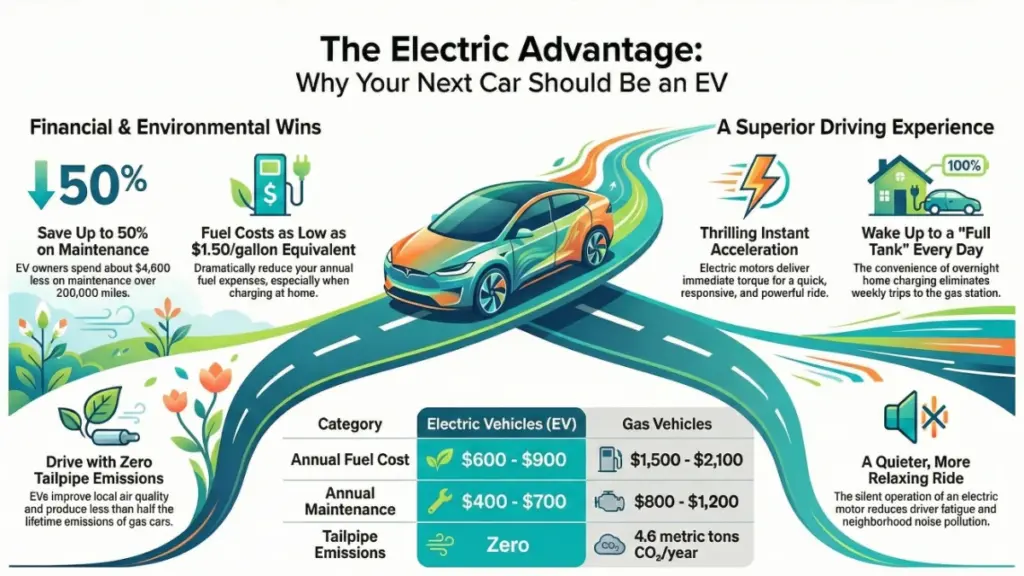
According to the U.S. Department of Energy, the average cost to fuel an electric vehicle is approximately $1.50 per gallon equivalent, compared to $3.50 to $4.50 for gasoline as of early 2025. For a typical driver covering 12,000 miles annually, that translates to savings of $800 to $1,200 per year just on fuel.
If you charge at home during off-peak hours, costs can drop even further. Many EV owners report paying the equivalent of less than $1 per gallon, especially when using solar panels or time-of-use electricity rates.
Minimal Maintenance Requirements
Electric vehicles have far fewer moving parts than traditional cars. There are no oil changes, no spark plugs, no transmission fluid, and no exhaust systems to maintain. This simplicity leads to maintenance costs that are 40–50% lower over the vehicle’s lifetime.
Consumer Reports found that EV owners spend an average of $4,600 less on maintenance and repairs over the first 200,000 miles compared to gas-powered vehicles.
Federal and State Incentives
The federal government currently offers tax credits of up to $7,500 for qualifying new electric vehicles and up to $4,000 for used EVs. Many states add additional rebates and incentives that further reduce the purchase price.
When combined, these incentives can make electric vehicles as affordable—or even cheaper—than comparable gas-powered cars.
2. Environmental Impact: Driving Toward a Cleaner Future
Transportation accounts for nearly 29% of greenhouse gas emissions in the United States. Electric vehicles offer a clear solution to reducing this impact.
Zero Tailpipe Emissions
Electric vehicles produce zero tailpipe emissions. No carbon monoxide, no nitrogen oxides, and no particulate matter polluting the air. This is especially important in urban areas where air quality directly affects public health.
Studies show that EVs produce less than half the lifetime emissions of gasoline cars, even when accounting for battery production and electricity generation.
Cleaner Energy Over Time
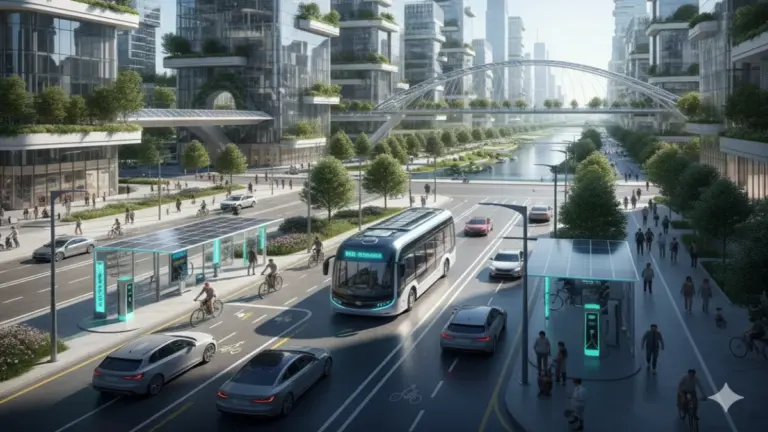
As electrical grids add more renewable energy sources like solar and wind, electric vehicles automatically become cleaner without any change from the driver. In states with high renewable energy usage, EVs already run on more than 50% clean energy.
Reduced Noise Pollution
Electric motors operate quietly, reducing traffic noise in cities and neighborhoods. This leads to better sleep quality, reduced stress, and improved overall well-being.
3. Superior Performance: The Thrill of Instant Torque
Electric cars offer a driving experience that surprises many first-time drivers.
Instant Acceleration
Electric motors deliver full torque instantly. There is no delay, no gear shifting, and no engine revving. Even affordable EVs feel quick and responsive, while performance models rival high-end sports cars.
Better Handling
Battery packs are mounted low in the vehicle, lowering the center of gravity. This results in better balance, improved cornering, and greater stability.
One-Pedal Driving
Regenerative braking allows many EVs to slow down simply by lifting off the accelerator. This recaptures energy, reduces brake wear, and makes driving smoother and more intuitive.
4. Everyday Convenience: Charging at Home Changes Everything
One of the biggest lifestyle benefits of owning an EV is home charging.
Plug in at night, and wake up every morning with a full battery. No more gas station stops, no fumes, and no wasted time.
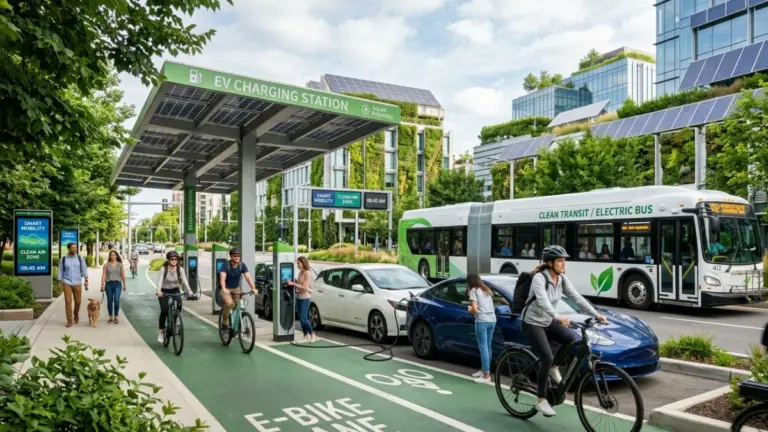
A typical home charger adds 25–40 miles of range per hour. Since most people drive less than 40 miles per day, charging easily keeps up with daily needs.
Public charging networks are also expanding rapidly, with fast chargers capable of adding hundreds of miles of range in under 30 minutes.
5. Health and Lifestyle Advantages
Electric vehicles improve air quality, reduce noise, and contribute to better public health—especially in dense urban areas.
They also provide a quieter, more relaxing driving experience and help reduce dependence on imported oil. For homeowners with solar panels, EVs offer true energy independence.
Electric vs. Gas: Key Comparison
| Category | Electric Vehicles | Gas Vehicles |
|---|---|---|
| Fuel Cost (Yearly) | $600–$900 | $1,500–$2,100 |
| Maintenance | Lower | Higher |
| Emissions | Zero | High |
| Acceleration | Faster | Slower |
| Noise | Very quiet | Loud |
6. Addressing Common Concerns
Modern EVs offer 250–400 miles of range, which covers daily driving needs easily. Battery warranties typically last 8 years or more, and real-world data shows long battery life with minimal degradation.
Cold weather can reduce range, but preconditioning and home charging make this manageable.
7. The Future Is Electric
EV prices continue to fall, charging speeds are improving, and new battery technologies promise longer ranges and faster charging. By the end of the decade, electric vehicles are expected to dominate new car sales.
Final Thoughts
Electric vehicles are no longer an experiment—they are a better solution today. They cost less to run, perform better, reduce pollution, and offer unmatched convenience.
Choosing an electric car means choosing a cleaner, quieter, and more sustainable future.
Once you experience driving electric, you’ll wonder why you didn’t make the switch sooner.
Welcome to the electric revolution.