Federal EV tax credits ended in 2025, but buyers in 2026 can still save thousands through state rebates, utility incentives, and a remaining home charger credit. A new auto loan interest deduction also helps offset costs. Smart buyers who stack incentives can still unlock $3,000–$10,000 in savings despite the loss of federal purchase credits.
Government Incentives for Electric Cars: What’s Still Available in 2026
The federal tax credit is gone — but real savings still exist. Here’s exactly where to find them and how to stack them smartly.
Quick answer: The $7,500 federal EV tax credit expired on September 30, 2025, after Congress passed the One Big Beautiful Bill Act. If you’re buying an EV in 2026, you won’t receive a federal purchase credit — unless you signed a binding contract and made a payment before that deadline. However, one federal incentive still exists (the home charger credit, through June 30, 2026), and more than 30 states still offer their own EV rebates. With smart stacking, buyers in the right states can still save $3,000 to $10,000 or more.
I’ll be honest with you: when I first heard the federal EV tax credit was being eliminated seven years ahead of schedule, I had to double-check my sources. This was one of the most meaningful consumer incentives for clean transportation that the U.S. had ever created — up to $7,500 off a new electric vehicle, right at the point of sale. And now it’s gone.
But here’s the thing I’ve learned after years of covering EV news: the story is rarely as simple as the headlines make it. Yes, the big federal credit is dead. No, you’re not completely on your own. State programs, utility rebates, a brand-new loan interest deduction, and one surviving federal credit for home chargers mean that savvy buyers can still knock serious money off the cost of going electric in 2026.
In this article, I’ll walk you through exactly what changed, what’s still on the table, and — most importantly — how to stack the remaining incentives to get the best deal possible. Let’s dig in.
What Happened to the Federal EV Tax Credit?
The Inflation Reduction Act of 2022 created what many considered the most generous EV incentive program in U.S. history. It offered up to $7,500 for new electric vehicles, up to $4,000 for used EVs, and was originally scheduled to run through December 31, 2032. Car buyers, automakers, and EV advocates built their entire purchasing strategies around it.
Then came the One Big Beautiful Bill Act (OBBBA), signed into law on July 4, 2025. Among its many provisions, it terminated both the new clean vehicle credit and the used clean vehicle credit — effective September 30, 2025. That’s a full seven years early.
⚠Important deadline: If you signed a binding purchase contract and made a payment (even a small deposit or trade-in) on or before September 30, 2025, you may still claim the old IRA credit when you take delivery — even if delivery happened in 2026. You’ll need a signed contract, proof of payment, and a time-of-sale report filed by your dealer with the IRS. File it using Form 8936. When in doubt, consult a tax professional.
For everyone else buying in 2026, that chapter is closed. So let’s focus on what’s actually open.
The One Federal Incentive That’s Still Alive (But Not for Long)
There’s one federal EV-related credit still on the books, and the clock is ticking. The Section 30C Alternative Fuel Vehicle Refueling Property Credit — commonly known as the EV charger tax credit — remains available for home charging equipment installed and placed in service before June 30, 2026.
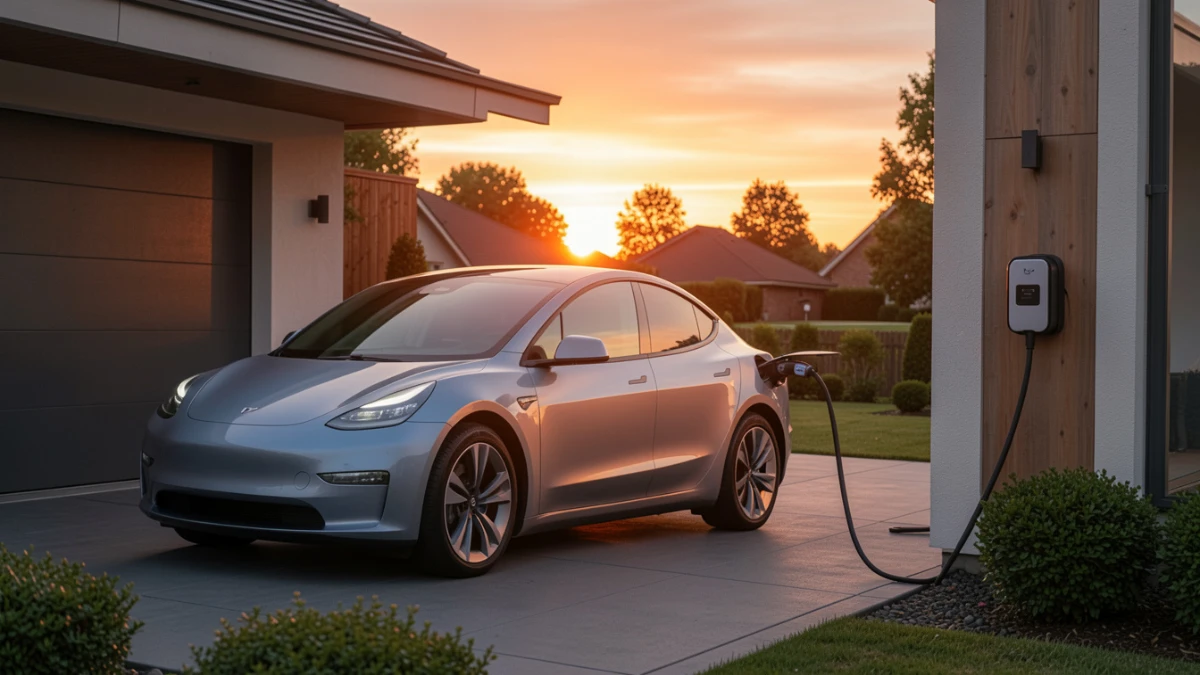
Here’s how it works: if you install a Level 2 (240-volt) charging station at your home, you can claim a credit equal to 30% of the total cost — including parts, components, and installation labor — up to a maximum of $1,000. For a charger that costs around $1,500 installed, you’d effectively get $450 back from the IRS. That’s real money, even if it’s not the eye-catching $7,500 of years past.
⚠Location restriction: Your home must be in an eligible census tract — either a low-income community or a non-urban area as designated by Treasury guidelines — to qualify for the 30C credit. Use the IRS or Argonne National Laboratory tools to check your census tract before making any installation decisions.
There’s also a business version of this credit for commercial charging infrastructure, which is worth exploring if you’re a fleet operator or small business owner. But for most individual buyers reading this, the residential charger credit is the only remaining federal EV incentive — and it disappears on June 30, 2026. If you’re planning a home charger installation, act sooner rather than later.
The New Auto Loan Interest Deduction — A Replacement of Sorts
Here’s something most people aren’t talking about yet, and it’s worth paying close attention to. The same OBBBA legislation that killed the EV purchase credit introduced a new vehicle loan interest deduction. Eligible buyers can deduct up to $10,000 per year in interest paid on a qualifying new vehicle loan.
This applies to new American-made vehicles purchased with a qualifying loan originated between January 1, 2025 and December 31, 2028 — and it covers EVs. It’s not a one-time credit like the old 30D was; instead, it’s an annual deduction on your taxes for as long as you hold the loan (within the program window).
Roy’s take: I want to be upfront here — this deduction is not the same as a $7,500 credit at the point of sale. A deduction reduces your taxable income, not your tax bill dollar-for-dollar. Whether it’s worth as much as the old credit depends heavily on your tax bracket. A buyer in the 22% bracket deducting $10,000 in interest saves about $2,200 in taxes that year — meaningful, but not a direct replacement. That said, over several years, it can add up to a substantial benefit. Worth running the math with your accountant.
State Incentives: Where the Real Action Is in 2026
With the federal credits gone, state programs have become the primary source of upfront EV savings. More than 30 states still offer at least one EV-related incentive, and in states like California, Colorado, and New Jersey, the savings can be genuinely impressive — especially if you qualify for income-based tiers.
In some states, a well-researched buyer can still save $5,000 to $10,000 or more by stacking a state rebate, a utility program, and manufacturer discounts — without a single dollar of federal help.
The strongest state programs right now
| State | Incentive | Key Notes |
|---|---|---|
| California | Up to $7,500 (income-qualified) | Clean Vehicle Rebate Project; up to $12,000 for low-income via Clean Cars 4 All, which also includes home charger assistance. |
| Colorado | Up to $5,000 | State tax credit for new EVs. Additional rebates via Vehicle Exchange Colorado for income-qualified buyers. Stacked savings can exceed $11,000. |
| New Jersey | Up to $4,000 | Charge Up NJ point-of-sale rebate. Also includes a full sales tax exemption. One of the strongest state programs available; watch for funding reopening announcements. |
| New York | Up to $2,000 | NYSERDA Drive Clean Rebate; applied at dealership. Over 60 eligible models. Additional utility incentives available on top. |
| Oregon | Up to $7,500 (suspended) | Charge Ahead Rebate suspended December 2025 due to high demand. Keep an eye out for new funding announcements in 2026. |
| Pennsylvania | Up to $3,000 | For EVs priced at $45,000 or less. Income caps apply; up to $4,000 additional for lower-income applicants (150% federal poverty level). |
| Rhode Island | Up to $3,000 | DRIVE EV Rebate for new battery EVs and fuel-cell vehicles. Also available for leases. |
| Connecticut, Maine, Massachusetts | Varies | Active programs with point-of-sale rebates. Check state energy office for current funding status. |
Programs change fast: State incentive programs are frequently updated, paused for funding, or reopened with new money. Oregon’s program suspended mid-year. Maryland’s funding ran out. Washington’s sales tax exemption expired in July 2025. Always verify directly with your state energy office or the DOE’s Alternative Fuels Data Center (AFDC) database before counting on a rebate.
Image suggestion: A color-coded U.S. map showing states with active EV incentive programs (green), states with limited/paused programs (amber), and states with no state-level EV purchase incentive (gray). Use 2026 data.
Don’t Overlook Utility Rebates — The Most Underrated Savings
Here’s something I mention to every EV shopper I talk to: call your utility company. I know it sounds old-fashioned, but many people leave hundreds — sometimes over a thousand — dollars on the table simply because they didn’t know their utility offers EV or charger incentives.
Utility rebates typically range from $200 to $2,500 and can be used for the vehicle purchase itself, home charger installation, or enrollment in a time-of-use rate plan that dramatically reduces your per-mile charging costs. These programs operate completely independently of state or federal incentives, which means they can usually be stacked on top of everything else.
A few real-world examples worth noting: Austin Energy in Texas offers a rebate covering up to 50% of the cost to purchase and install a qualified Level 2 home charging station — up to $1,200 for compatible chargers. Xcel Energy customers in Colorado can stack utility charger rebates on top of the state’s already generous $5,000 EV credit, with combined savings potentially exceeding $11,000. Your utility may not be this generous, but you won’t know until you ask.
How to Stack Incentives the Smart Way
This is where things get interesting — and where a little homework genuinely pays off. The buyers who do best in 2026 are the ones who treat EV incentives like a puzzle, layering multiple programs to maximize their total discount.
Here’s a practical example of what smart stacking looks like:
- State rebate: $4,000 (New Jersey’s Charge Up NJ) + NJ sales tax exemption
- Utility EV incentive: $500 rebate from your local provider
- Home charger (Section 30C): ~$450 federal credit on a $1,500 charger installation
- Manufacturer incentive: $1,000–$3,000 (many brands have increased discounts since the federal credit ended)
- Loan interest deduction: ~$2,200 first-year tax savings (22% bracket on $10,000 interest)
Total combined savings in that scenario: roughly $8,000–$10,000 — entirely without the old federal purchase credit.
ℹStacking rules: Many programs allow stacking, but not all. Some state rebates prohibit combining with other rebates or require income documentation. Always read the fine print for each program and confirm compatibility before assuming you can layer them.
What about leasing?
Leasing deserves a mention here because it still offers a pathway to indirect savings. Leasing companies can sometimes still benefit from commercial vehicle credits and pass those savings on to consumers through lower monthly payments. When negotiating a lease in 2026, ask specifically whether the dealer is advertising any manufacturer lease support — this often replaces what the federal credit used to do. Not all dealers pass these savings on automatically, so it’s worth pushing for clarity.
Practical Steps: How to Find Every Incentive You Qualify For
Between state programs, utility rebates, manufacturer deals, and the charger credit, the incentive picture in 2026 is genuinely fragmented. But it’s navigable. Here’s the process I’d recommend:
- 1 Start with the DOE AFDC database at afdc.energy.gov — it’s the most comprehensive and regularly updated tool for finding state and local incentives by ZIP code. Treat results as a starting shortlist, then verify funding status directly.
- 2 Visit your state energy office website for official program details, income eligibility requirements, and current funding availability. Don’t rely solely on third-party aggregators — they can lag behind program changes.
- 3 Call or check your electric utility’s website for EV and charger rebates. Ask specifically about time-of-use rate plans — these can reduce your overnight charging costs by 30–50% compared to standard rates.
- ! Check your home’s census tract before banking on the Section 30C charger credit. Use the IRS or Argonne Lab tools to confirm eligibility — it’s location-restricted to low-income and non-urban census tracts.
- 5 Ask dealers directly about manufacturer incentives and any lease support programs. With federal credits gone, many automakers have increased their own discounts to keep EV sales competitive — but they won’t always advertise this proactively.
- 6 Consult a tax professional if you’re planning to claim the loan interest deduction or if your situation involves any binding contract from before September 30, 2025. The rules are specific and worth getting right.
Is It Still Worth Buying an EV in 2026?
I get this question constantly, and my honest answer is: yes, for the right buyer — but the math has changed.
The case for EVs was never purely about the tax credit. Lower fuel costs, significantly reduced maintenance expenses, smoother performance, and improving range all remain genuine advantages. The Department of Energy’s own data shows that EV ownership typically costs less per mile to fuel than a comparable gas vehicle, and maintenance savings on things like oil changes, brake pads (thanks to regenerative braking), and exhaust systems add up meaningfully over time.
What’s different now is that the upfront cost advantage has shrunk, particularly for buyers in states without strong rebate programs. If you live in a state with no incentives and don’t qualify for the charger credit, you’re buying on the vehicle’s merits alone — which is fine, but you should go in with clear eyes.
On the other hand, if you’re in California, Colorado, New Jersey, New York, or another state with active programs, and you’re willing to spend a few hours researching incentives and stack them thoughtfully? The economics remain compelling. Used EVs are also worth a hard look right now — prices on three-to-six-year-old models have dropped sharply as the market adjusts, and some state and local programs now specifically target used EVs for income-qualified households.
Key Takeaways
Here’s what you need to remember about government incentives for electric cars in 2026:
- The $7,500 federal EV purchase credit is gone, eliminated by the One Big Beautiful Bill Act and expired September 30, 2025. If you signed a binding contract before that date, you may still claim it — consult a tax professional.
- The Section 30C home charger credit (30% of cost, up to $1,000) is the last remaining federal EV incentive — but it expires June 30, 2026. Act quickly if you need a home charger.
- A new auto loan interest deduction (up to $10,000/year) applies to qualifying new American-made vehicles through 2028. It’s not a credit, but it can add up meaningfully over the loan term.
- More than 30 states still offer active EV incentives. California, Colorado, New Jersey, and New York have the strongest programs. Always verify funding status before counting on a rebate.
- Utility rebates are frequently overlooked and can be stacked with state programs. Call your utility company — a quick conversation could save you $500 to $2,500.
- Smart stacking of state, utility, manufacturer, and loan incentives can still yield $3,000 to $10,000 in total savings for well-prepared buyers in incentive-friendly states.
The EV incentive landscape looks very different than it did two years ago. But for informed buyers willing to do their homework, going electric in 2026 still makes solid financial sense — especially when you factor in the long-term fuel and maintenance savings that come with every mile driven.