Electric cars in 2025 offer lower fuel and maintenance costs, cleaner driving, quieter performance, and growing charging infrastructure. With emissions up to 60% lower than gas vehicles and thousands saved over ownership, EVs are becoming a practical choice for everyday drivers. Improved technology, safety, and home charging convenience make switching to electric more appealing than ever.
Electric Car Benefits: What Every Driver Should Know in 2025
From slashing your fuel bill to breathing cleaner air, the advantages of going electric have never been stronger — or better supported by data. Here’s the full picture.
Picture this: you wake up on a Monday morning, walk to your garage, and your car already has a full “tank.” No detour to a gas station, no fumbling for your credit card in the cold. You just drive. That’s a small but telling snapshot of what owning an electric vehicle actually feels like — and it’s just the beginning of the story. If you’re weighing whether to make the switch in 2025, you’re asking at exactly the right moment. Global EV sales surpassed 20 million units in 2025 for the first time, meaning more drivers than ever are voting with their wallets. The question isn’t really “are EVs worth it?” anymore. It’s “what exactly am I getting for my money?” Let’s break it down — honestly, practically, and with the freshest numbers available.
20.7MGlobal EVs sold in 2025
$1,000+Avg. annual fuel savings
40–60%Fewer lifetime emissions vs. gas
30–50%Lower maintenance costs
The financial case is stronger than ever
Let’s get the big objection out of the way first: yes, electric vehicles typically cost more to buy upfront. The average transaction price for an EV in 2025 sits around $55,500, compared to roughly $49,700 for a gas-powered car. That’s a real gap. But when you zoom out to total ownership cost, the math shifts considerably in the EV’s favor.
Fuel savings add up fast
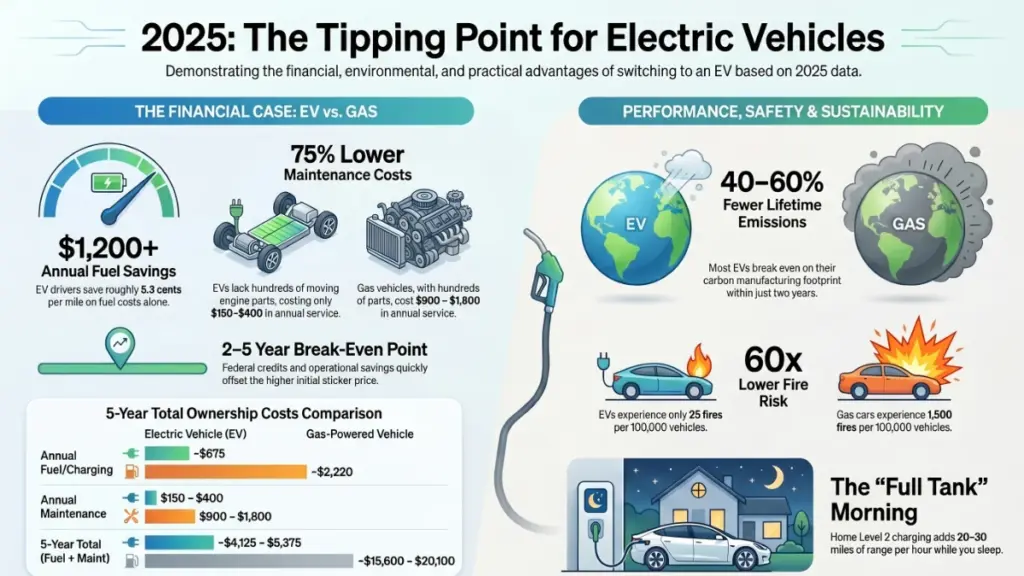
The U.S. Department of Energy has long shown that electricity costs roughly half as much per mile as gasoline, and recent data sharpens that picture further. According to Coltura’s Q4 2025 analysis, EV drivers saved an average of 8.3 cents per mile on combined fuel and maintenance compared to gas car owners — with fuel alone accounting for 5.3 cents of that gap. For someone driving 15,000 miles a year, that’s over $1,200 back in your pocket every twelve months, just from not buying gas.
Charge at home on a time-of-use utility rate — off-peak electricity can drop to around $0.08 per kWh in some markets — and that figure climbs even higher. It’s genuinely the closest thing to free fuel most of us will ever experience.
Maintenance: far fewer things to break
This is arguably the most underappreciated benefit. A gasoline engine has hundreds of moving parts: pistons, valves, a timing chain, a cooling system, an exhaust system. An electric motor has one moving part. That simplicity translates directly into your service bill.
Real-world 2025 data from Recharged shows that a typical mid-size gas sedan costs between $900 and $1,800 per year in routine maintenance — oil changes, brake fluid, spark plugs, filters. A comparable EV? More like $150 to $400 annually. Over a five-year period, that’s a potential difference of $4,500 to $9,000 staying in your account rather than going to your mechanic.
| Cost Category | Electric Vehicle | Gas Vehicle |
|---|---|---|
| Annual fuel / charging | ~$675 | ~$2,220 |
| Annual maintenance | $150–$400 | $900–$1,800 |
| 5-year fuel total | ~$3,375 | ~$11,100 |
| 5-year maintenance total | $750–$2,000 | $4,500–$9,000 |
| Federal tax credit (new) | Up to $7,500 | None |
| Break-even vs. higher upfront cost | 2–5 years (typical) | — |
When a 2025 study compared the five-year total cost of a Tesla Model Y against a comparable BMW X3, the EV came out roughly $8,000 cheaper over that window once fuel, maintenance, and incentives were factored in. The sticker price gap disappears faster than most people expect.
The environmental benefits are real — and growing
Skeptics sometimes argue that EVs just “move the emissions to the power plant.” It’s a fair question worth answering with current data rather than hand-waving.
A landmark 2025 study published in PLOS Climate by researchers at Duke University found that battery electric vehicles break even on lifecycle carbon emissions — including battery manufacturing — after just two years of driving. From that point forward, every mile driven in an EV represents a net reduction in carbon output compared to an equivalent gas vehicle.
“Battery electric cars in Europe are getting cleaner faster than we expected and outperform all other technologies, including hybrids and plug-in hybrids.” — Dr. Marta Negri, International Council on Clean Transportation, July 2025
The headline numbers, according to MIT research finalized in early 2025: in most U.S. locations, driving a battery EV reduces emissions by 40 to 60 percent compared to a similar gas car — with bigger benefits in urban areas. And that percentage keeps improving as the electrical grid gets cleaner. Renewables now account for a rising share of U.S. electricity generation, meaning the EV you buy today will actually get greener over its lifetime without any changes on your end.
The Union of Concerned Scientists adds a striking data point: today, 97 percent of Americans live where driving an average EV produces fewer climate emissions than even a 57-MPG gas car. A decade ago, that figure was only 45 percent. The grid has changed the game.
Air quality you can feel
Beyond carbon, there’s a direct public health dimension. The same Duke study found that the economic value of environmental damage from gas vehicles over their lifetime currently runs 2 to 3.5 times higher than for EVs — a figure that accounts for both climate change and harmful air pollutants like nitrogen oxides and fine particulate matter. Widespread EV adoption is estimated to prevent thousands of premature deaths annually from improved air quality alone.
Driving an EV is simply more enjoyable
Here’s something the spec sheets don’t fully capture until you feel it: electric cars are just more fun to drive in everyday conditions. Ask any EV owner what they’d miss most if they went back to gas, and a huge number will mention the way the car accelerates.
Electric motors deliver 100 percent of their torque from a dead stop — the instant you press the accelerator, the power is there. No rev range to hit, no gear to find. A Tesla Model 3 Long Range does 0–60 mph in about 4.2 seconds. A Hyundai Ioniq 6 handles it in under five. Even the more affordable Chevy Equinox EV moves briskly enough that merging on the highway never feels like a prayer.
Silence, handling, and the small daily stuff
The cabin is remarkably quiet. Without an engine firing cylinders, road noise dominates rather than engine noise — which sounds minor until you’ve driven 200 miles on an interstate without fatigue from constant mechanical drone.
Because the heavy battery pack sits low in the chassis, EVs have a low center of gravity that most drivers notice in cornering. Cars like the BMW i4 and Porsche Taycan feel planted in a way that’s hard to achieve in a traditional body-over-engine layout.
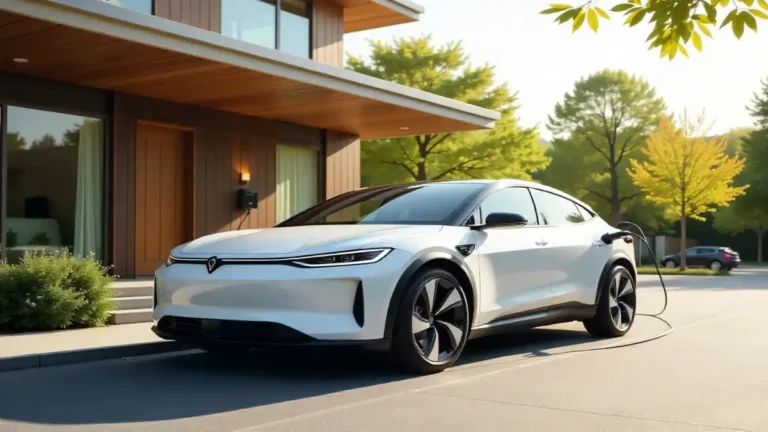
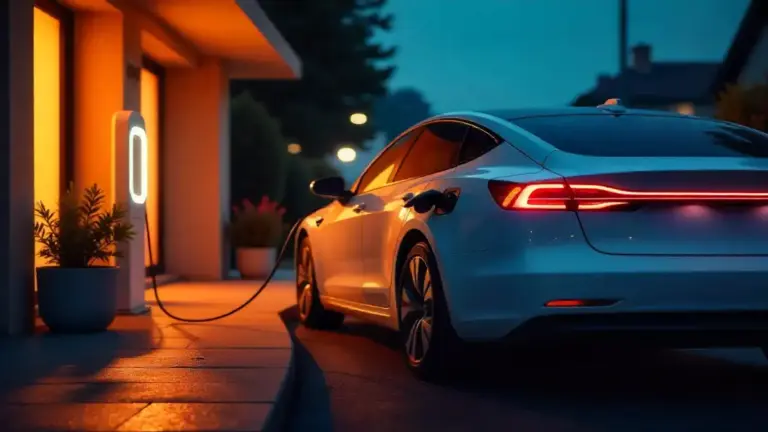
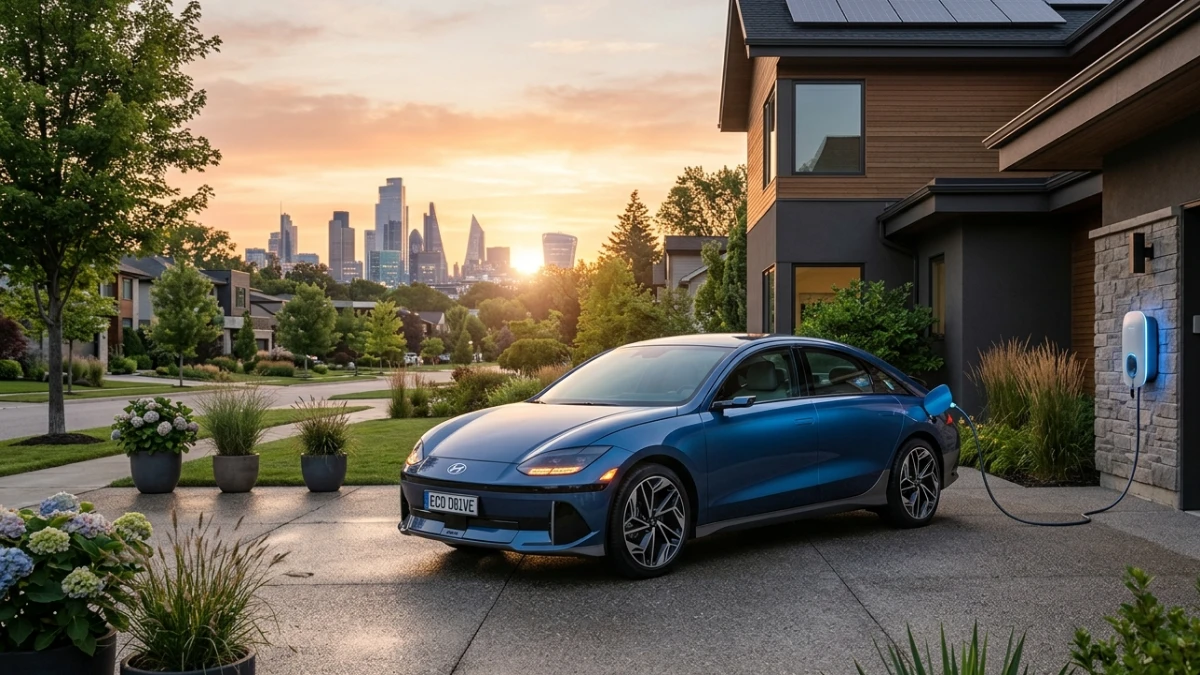
And then there’s the everyday convenience factor. Most EV owners do the vast majority of their charging at home overnight on a Level 2 charger — which means leaving the house each morning with a full battery. No gas station runs. No forgetting to fill up. It’s a tiny quality-of-life upgrade that becomes quickly addictive.
Charging infrastructure has crossed a critical threshold
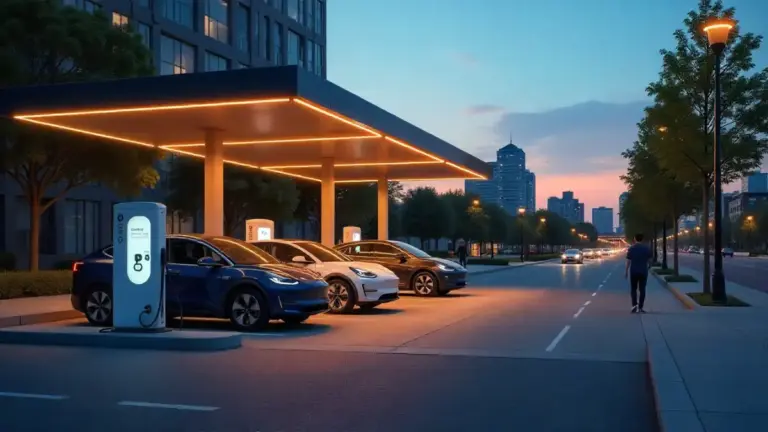
Range anxiety — the fear of running out of power before reaching a charger — was a legitimate concern when EVs were new. In 2025, it’s largely a concern for people who haven’t checked the map recently.
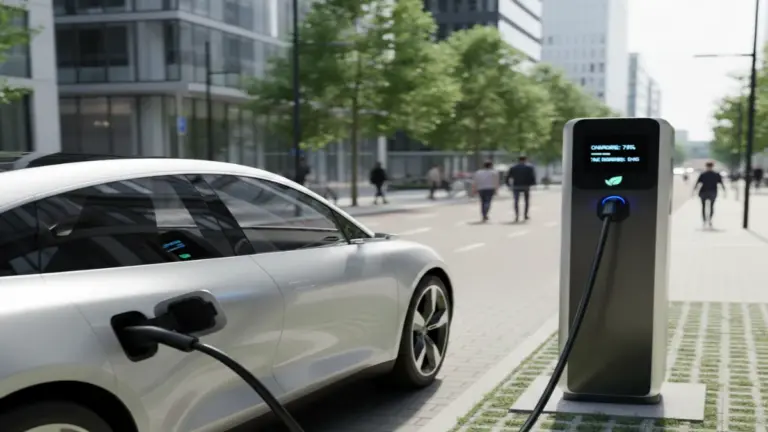
Public charging installations have now surpassed 5 million devices worldwide, with ultra-fast chargers (150 kW and above) growing roughly 50 percent in 2024 alone. In the United States, there are over 61,000 public charging stations with more than 168,000 individual outlets, according to the Department of Energy and Pew Research Center data. The $7.5 billion federal infrastructure investment from the Bipartisan Infrastructure Law is still in the process of deploying, meaning that network will only expand further.
Planning a road trip?
Apps like PlugShare, ChargePoint, and the built-in navigation on most modern EVs will route you through charging stops automatically, factoring in your current battery level, weather conditions, and charger availability in real time. The experience is far closer to a GPS-guided rest stop than a stressful scramble.
Home charging changes the equation entirely
The real infrastructure story for most EV owners isn’t public charging — it’s the Level 2 charger in their garage. A standard Level 2 home charger (240V, like a dryer outlet) adds roughly 20–30 miles of range per hour of charging. Most people drive less than 40 miles a day, which means a few hours of overnight charging keeps the battery topped up with ease. The upfront cost of charger installation typically runs $500–$1,500 depending on your electrical setup — a one-time expense that pays back quickly in convenience and lower off-peak electricity rates.
Safety, technology, and the smart-home connection
Electric vehicles are disproportionately represented among the highest safety ratings in the industry. Part of that is structural: the absence of a large engine block up front creates a longer crumple zone, and the low center of gravity reduces rollover risk. But the technology integration piece is equally significant.
Most EVs on the market today ship with over-the-air software updates — the car you buy gets better over time, just like your phone. Tesla has famously extended range, added autopilot features, and fixed bugs through OTA updates on vehicles already on the road. Ford, GM, Rivian, and Hyundai/Kia have all followed suit.
Fire risk: setting the record straight
One concern that circulates regularly is the fire risk of lithium-ion batteries. The data tells a reassuring story: battery-electric cars experience roughly 25 fires per 100,000 vehicles, compared to about 1,500 for gasoline vehicles and over 3,400 for hybrids, according to consolidated insurer and EV FireSafe data. That’s not a typo — EVs are statistically far less likely to catch fire than the cars most of us grew up driving.
- Over-the-air updates — your car improves without a service visit
- Vehicle-to-home (V2H) — some EVs can power your house during an outage
- Advanced driver assistance — lane keeping, adaptive cruise, and automated parking are common
- Remote pre-conditioning — warm or cool the cabin before you get in, from your phone
- Energy monitoring — detailed apps that track charging history, cost-per-mile, and grid carbon intensity
What’s actually available to buy right now
The days of the EV market meaning “Tesla or nothing” are well behind us. The choice of electric vehicles in 2025 has expanded to nearly every segment and price point.
| Model | Segment | Range (est.) | Starting Price |
|---|---|---|---|
| Chevy Equinox EV | Compact SUV | ~319 mi | ~$35,000 |
| Hyundai Ioniq 6 | Sedan | ~361 mi | ~$38,600 |
| Tesla Model Y | Mid-size SUV | ~320 mi | ~$43,990 |
| Ford Mustang Mach-E | Crossover | ~312 mi | ~$40,000 |
| Rivian R1T | Pickup Truck | ~314 mi | ~$67,500 |
| BMW i4 M50 | Performance Sedan | ~270 mi | ~$72,900 |
Prices shown before any applicable federal tax credit (up to $7,500 for qualifying new EVs, available at point of sale). State incentives in places like California, New York, and Colorado can add further reductions. If you’re buying used, EVs with two or more years on the clock often represent exceptional value, combining lower depreciated prices with the already-proven reliability record of electric drivetrains.
The bottom line: what to take away
After covering this segment for years, I can tell you that the conversation around electric cars has fundamentally shifted. It’s no longer about whether EVs are viable — it’s about choosing the right one for your specific situation.
- EVs save most drivers over $1,000 a year on fuel, and significantly more on maintenance over time
- Lifetime carbon emissions are 40–60% lower than comparable gas vehicles, improving as the grid cleans up
- The driving experience — instant torque, a quiet cabin, waking up to a full battery — is genuinely better for daily use
- Public charging has crossed a critical mass, and home charging eliminates most range anxiety entirely
- Fire risk is dramatically lower than gas cars; safety ratings tend to be top-tier
None of this means an EV is right for every household right now. If you drive long distances daily, live in an apartment without charging access, or tow heavy loads regularly, there are still real trade-offs to weigh. But for the majority of American drivers, the benefits in 2025 are substantial, well-documented, and growing. The question isn’t whether EVs are good. It’s whether one is good for you — and the answer is getting easier to say yes to every year.