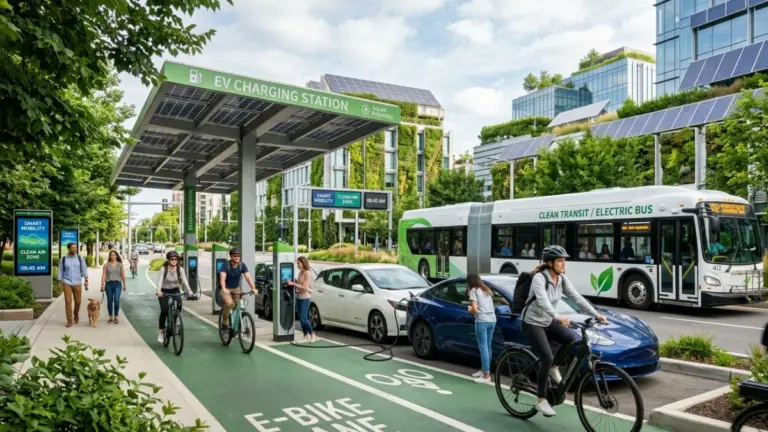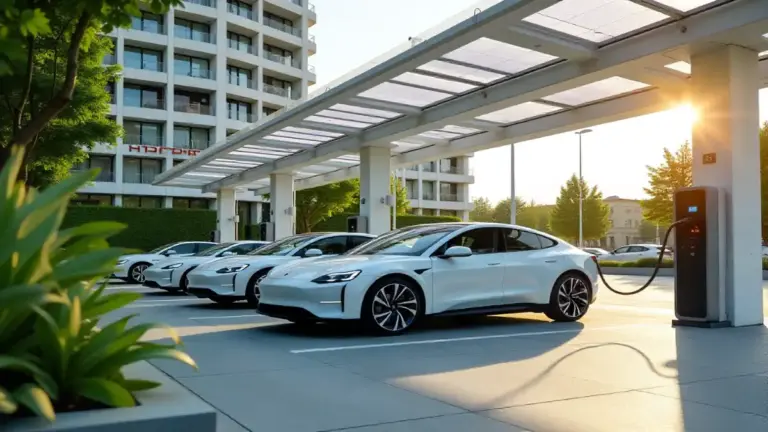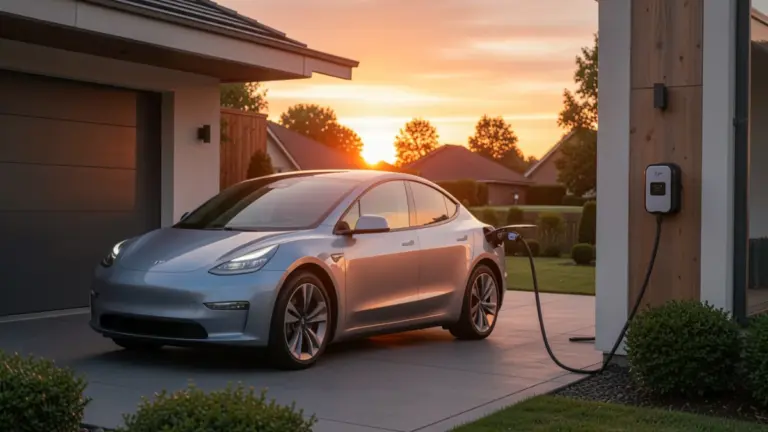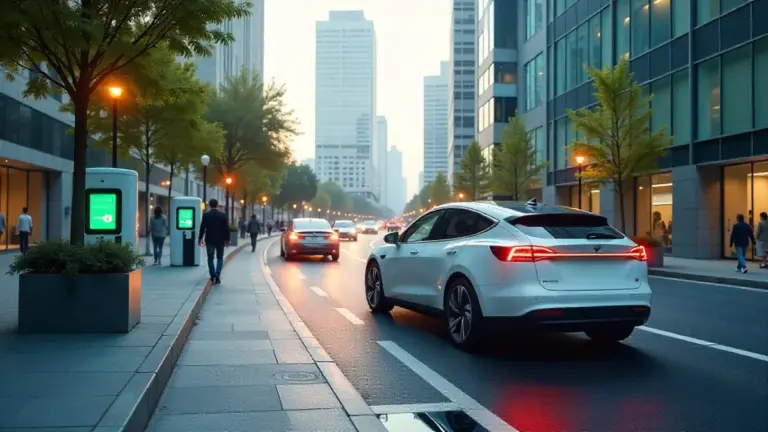

Remember when electric cars were just quirky science experiments that only tech enthusiasts talked about? Well, those days are long gone. In 2025, we’re living in an era where electric mobility isn’t just a buzzword—it’s becoming the foundation of how we move around our cities and beyond. Whether you’re a business owner thinking about electrifying your fleet, a city planner reimagining urban transport, or simply someone curious about where we’re headed, the transformation happening right now is nothing short of remarkable.
Let me walk you through what’s really changing the game in sustainable transportation this year, and trust me, some of these developments might surprise you.
The EV Charging Revolution: Faster, Smarter, Everywhere
Here’s something that used to keep potential EV buyers up at night: range anxiety. But in 2025, the charging infrastructure has evolved so dramatically that this concern is becoming a relic of the past.
Ultra-fast charging stations are now popping up everywhere—not just along highways, but in grocery store parking lots, shopping centers, and even at your favorite coffee shop. We’re talking about chargers that can deliver 200 miles of range in just 10 minutes. That’s barely enough time to grab a latte and check your emails. Companies like Tesla, Electrify America, and newer players are racing to deploy these high-powered stations, and the competition is working in our favor.
But here’s where it gets really interesting: smart charging technology. Your EV can now communicate with the grid to charge when electricity is cheapest and cleanest—usually during off-peak hours when renewable energy is abundant. Some systems even let you sell excess energy back to the grid during peak demand times. Imagine your car not just saving you money on gas, but actually earning you a bit of income while it sits in your garage. That’s the power of Vehicle-to-Grid (V2G) technology, and it’s moving from concept to reality in 2025.
Wireless charging is also making serious headway. While it’s not everywhere yet, several cities are testing inductive charging pads embedded in parking spaces and even sections of roadway. Park your car, and it charges automatically—no plugging in required. It feels almost magical, like something out of a sci-fi movie, but it’s happening now.
Battery Breakthroughs: Longer Range, Faster Charging, Lower Costs
Let’s talk about the heart of any electric vehicle: the battery. And honestly, the progress here has been extraordinary.
Solid-state batteries are finally entering production vehicles. These game-changers offer significantly higher energy density than traditional lithium-ion batteries, which translates to longer range in a lighter, more compact package. Some manufacturers are now offering EVs with 500+ mile ranges on a single charge—that’s farther than most people drive in a week. The fear of running out of juice on a long road trip? Increasingly obsolete.
What’s equally exciting is how fast battery costs are dropping. Just a few years ago, EV batteries cost around $130-150 per kilowatt-hour. In 2025, we’re seeing prices below $100 per kWh for many manufacturers, with some projecting costs as low as $80 per kWh by next year. This isn’t just technical progress—it’s the economic tipping point that makes EVs genuinely competitive with gas-powered vehicles on sticker price alone, not just over the vehicle’s lifetime.
Battery recycling has also matured into a sophisticated industry. Companies are recovering over 95% of valuable materials from old batteries, creating a circular economy that reduces the environmental impact and helps stabilize raw material prices. When you buy an EV in 2025, you’re investing in a vehicle whose battery will likely be recycled into new batteries or energy storage systems at the end of its life. That’s sustainability in action.
Mobility-as-a-Service (MaaS): Your Transportation, Reimagined
Here’s a question: when was the last time you thought about how many different apps you use just to get around? Uber for rides, Transit for bus schedules, Lime for scooters, Zipcar for car rentals—it can feel overwhelming.
Enter Mobility-as-a-Service, or MaaS. Think of it as the ultimate transportation super-app that brings everything together in one seamless experience. In 2025, MaaS platforms are becoming incredibly sophisticated, letting you plan, book, and pay for your entire journey—combining electric buses, shared e-bikes, ride-hailing, and even electric car-sharing—all in a single transaction.
Cities like Helsinki, Singapore, and Los Angeles have embraced comprehensive MaaS platforms that prioritize electric and sustainable transport options. You open one app, input your destination, and it shows you the fastest, cheapest, or greenest route using whatever combination of transport makes sense. Maybe it’s an e-scooter to the train station, then a shared electric autonomous shuttle to your final destination. The system handles everything, and you pay one monthly subscription or per-trip fee.
What’s brilliant about this model is how it reduces car ownership. Why own a car that sits idle 95% of the time when you can access exactly the transportation you need, when you need it, all electric and sustainable? For cities, this means fewer vehicles on the road, less congestion, reduced emissions, and more livable urban spaces. For individuals, it often means lower transportation costs and more flexibility.
Autonomous Electric Vehicles: The Self-Driving Future Arrives
I’ll be honest—fully autonomous vehicles available to everyone? We’re not quite there yet in 2025. But we’re closer than you might think, and the progress is accelerating.
What we are seeing is Level 3 and Level 4 autonomy becoming more common in specific scenarios. Robotaxis operating in designated areas of cities like San Francisco, Phoenix, and Beijing are now handling thousands of rides daily with minimal human intervention. Companies like Waymo, Cruise, and Baidu’s Apollo are expanding their service zones, and crucially, these autonomous fleets are predominantly electric.
The synergy between autonomous technology and electric powertrains makes perfect sense. EVs have fewer moving parts, require less maintenance, and can be centrally monitored and updated over-the-air—exactly what you want in an autonomous fleet. Plus, the operational costs are significantly lower, making the economics of robotaxi services increasingly attractive.
For long-haul trucking, electric autonomous trucks are beginning pilot programs on major freight corridors. These trucks can drive through the night, recharging at dedicated stations along the route, potentially revolutionizing logistics while dramatically cutting emissions from one of the most polluting sectors.
The safety record so far is encouraging. Autonomous electric vehicles in controlled environments are demonstrating accident rates well below human drivers. That doesn’t mean we should get complacent—there are still edge cases and ethical considerations to work through—but the trajectory is promising.

The Great Fleet Electrification: Businesses Go Green
If you want to see where transportation is really heading, look at what businesses are doing with their fleets. And in 2025, the shift to electric is accelerating faster than almost anyone predicted.
Major logistics companies like Amazon, UPS, and FedEx are rolling out thousands of electric delivery vans. Amazon alone has committed to 100,000 custom electric delivery vehicles from Rivian, and they’re already operating in cities across North America and Europe. These aren’t PR stunts—the economics simply make sense. Lower fuel costs, reduced maintenance, and increasingly favorable regulations make electric fleets a smart business decision.
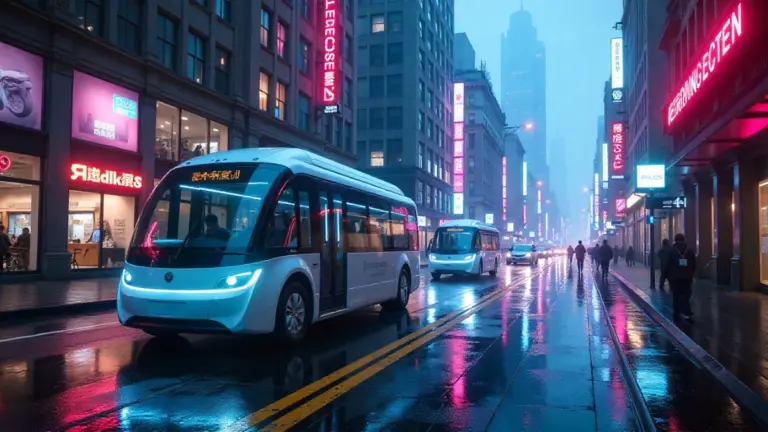
Municipalities are electrifying public transit at an impressive pace. Electric buses are becoming the norm rather than the exception in major cities. Cities like Los Angeles, London, and Shenzhen have committed to fully electric bus fleets, and the air quality improvements are measurable and meaningful. If you live in a city with electric buses, you’ve probably noticed how much quieter and cleaner the streets feel.
Corporate car fleets are going electric too. Companies are finding that offering employees electric vehicles as company cars is both a recruitment perk and a way to meet sustainability targets. The combination of improving range, expanding charging infrastructure, and generous tax incentives in many regions makes this transition increasingly straightforward.
For businesses considering this shift, the calculation is getting easier every year. Factor in total cost of ownership—purchase price, fuel, maintenance, and resale value—and electric fleets often come out ahead within just a few years. Add in the reputational benefits of demonstrated climate commitment, and the case becomes compelling.
Policy and Infrastructure: The Framework for Change
None of this transformation happens in a vacuum. Government policies and infrastructure investments are creating the foundation for electric mobility to flourish.
In 2025, we’re seeing unprecedented coordination between federal, state, and local governments to support the transition. The U.S. is deploying a national network of 500,000 public charging stations, funded by infrastructure legislation. Europe continues to lead with aggressive emissions regulations and comprehensive charging networks. China remains the world’s largest EV market, with policies that strongly favor electric vehicle adoption.
Zero-emission zones are expanding in city centers worldwide. These areas restrict or ban internal combustion vehicles, creating spaces where only electric vehicles, e-bikes, and pedestrians are welcome. The result? Quieter streets, cleaner air, and more pleasant urban environments.
Tax incentives remain generous in many regions. Federal tax credits of up to $7,500 in the U.S., combined with state and local incentives, can reduce the cost of a new EV by $10,000 or more. Many states also offer additional perks like HOV lane access, free parking, and reduced registration fees.
Building codes are evolving too. New residential and commercial buildings in many jurisdictions must include EV charging infrastructure or be “EV-ready” with the wiring in place for easy installation. This forward-thinking approach ensures that charging capability becomes as standard as electrical outlets.
What This Means for You: Taking Action on Sustainable Transportation
So, where does all this leave you? Whether you’re considering your next vehicle purchase, running a business, or just trying to reduce your environmental footprint, here are some practical takeaways.
If you’re buying a car: 2025 is an excellent time to go electric. The technology is mature, the infrastructure is expanding rapidly, and the options are incredible—from affordable compact cars to luxurious SUVs and powerful trucks. Calculate your total cost of ownership over five years, factor in available incentives, and you might be surprised how competitive EVs have become.
If you’re a business owner: Start planning your fleet electrification strategy now. Begin with vehicles that have predictable routes and return to base daily—perfect for electric. The operational savings can be substantial, and your stakeholders increasingly expect environmental leadership.
If you’re a city dweller: Embrace multi-modal transportation. Try MaaS platforms if they’re available in your area. Combine electric car-sharing with public transit, e-bikes, and walking. You’ll often find it’s more convenient and affordable than owning a car.
If you’re a policy advocate: Push for continued investment in charging infrastructure, especially in underserved communities. Support policies that make sustainable transportation accessible to everyone, not just wealthy early adopters.
The transformation to electric mobility and sustainable transportation isn’t some distant future—it’s happening right now, in 2025, all around us. The technology works, the economics are improving, and the environmental benefits are undeniable. Every electric vehicle on the road, every electric bus serving your community, every charging station installed is a small piece of a much larger solution to climate change and urban pollution.
This isn’t about perfection. Electric vehicles aren’t zero-impact—they require energy and resources to build and operate. But they represent a massive improvement over what came before, and they’re getting better every year. The question isn’t whether we should transition to electric mobility—it’s how quickly we can make it happen while ensuring it’s equitable and accessible to all.
The future of transportation is electric, connected, and sustainable. And honestly? It’s pretty exciting to be living through this moment of transformation. The choices we make today—as individuals, businesses, and societies—will shape how we move for generations to come. Let’s make them count.