Remember when electric cars felt like science fiction? When the idea of swapping a battery in minutes instead of charging for hours sounded like something from a distant future? Well, buckle up—because that future is arriving faster than most of us expected. As someone who’s been tracking the EV world for years, I can tell you that 2025 to 2030 isn’t just about more electric cars on the road. It’s about fundamentally rethinking how we move, who owns vehicles, and what our cities look like.
Let me take you through the conversations that are lighting up industry forums, Reddit threads, and LinkedIn posts right now. These aren’t just predictions from analysts in ivory towers—they’re real debates happening between engineers, city planners, early adopters, and yes, skeptics who are asking the tough questions we all should be asking.
Battery Swapping: The Comeback Nobody Saw Coming
Here’s something that might surprise you: battery swapping is back, and this time it might actually work.
If you’ve been around the EV space for a while, you remember Better Place—the company that spectacularly crashed and burned trying to make battery swapping a thing back in 2013. Most of us wrote off the concept entirely. But guess what? In 2025, it’s having a serious moment, especially in Asia.
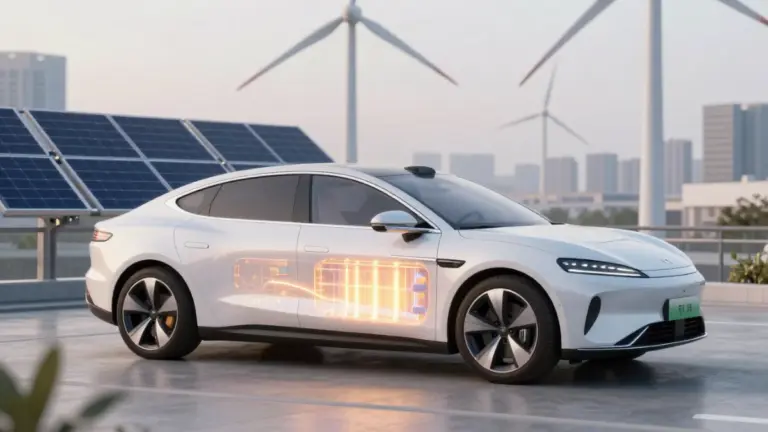
NIO, the Chinese EV maker, has already built over 2,000 battery swap stations across China and Europe. Picture this: you drive into a station, and in less time than it takes to grab a coffee, your depleted battery is automatically swapped for a fully charged one. Three to five minutes, and you’re back on the road. No waiting, no range anxiety, no downloading another charging app.
The beauty of this system goes beyond convenience. Think about it—you don’t have to own your battery anymore. You can subscribe to a service that gives you access to the latest battery technology without buying a whole new car. Your 2025 EV could have 2028 battery tech. That’s like upgrading your phone’s battery without replacing your phone.
Of course, there are hurdles. Standardization is the big one. If every manufacturer designs their own proprietary battery system, we’ll end up with the automotive equivalent of the VHS versus Betamax war. The industry needs to agree on common battery form factors, and frankly, that kind of cooperation doesn’t come naturally to carmakers who view their battery tech as competitive advantages.
But in dense urban areas—particularly in India, Southeast Asia, and parts of China where space is precious and charging infrastructure is still catching up—battery swapping is solving real problems for taxi drivers, delivery fleets, and ride-share vehicles who can’t afford downtime.
Wireless Charging Roads: From Fantasy to Field Tests
Now, let’s talk about something that sounds even more futuristic: roads that charge your car while you drive.
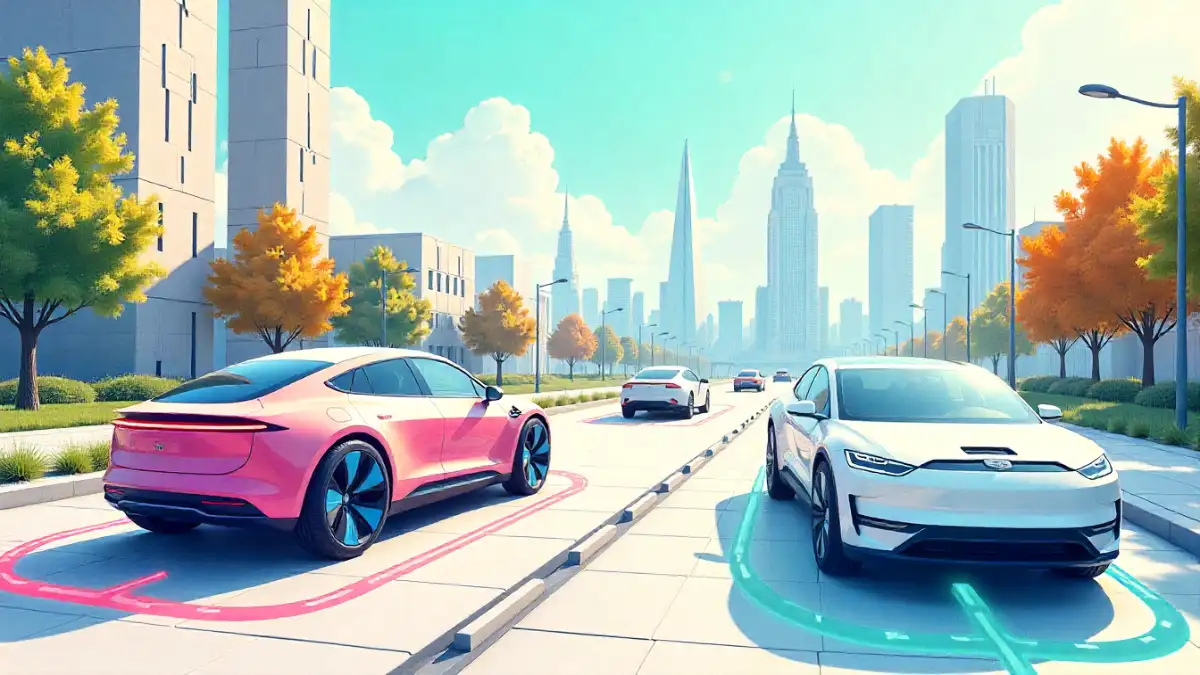
I know, I know—it sounds like something from a sci-fi movie. But dynamic wireless charging, also known as electric road systems (ERS), is moving from lab experiments to actual pilot projects. Sweden, Germany, and parts of the United States are testing road segments embedded with charging coils that transfer power to vehicles driving over them.
Imagine driving your electric truck on a highway and watching your battery percentage stay steady—or even increase—because the road itself is charging you. No stops, no cables, no waiting. For long-haul trucking, this could be transformative. Electric trucks struggle with range and payload trade-offs because massive batteries are heavy and expensive. But if highways can top up your battery as you drive, you need less battery capacity, which means lighter trucks that can carry more cargo.
The technology works through electromagnetic induction—similar to how your wireless phone charger works, just scaled up massively. The efficiency isn’t perfect (you lose some energy in the transfer), and the infrastructure costs are eye-watering. We’re talking about retrofitting or building roads with embedded charging systems.
But here’s the thing: if you look at the total cost of ownership over decades, especially for high-traffic commercial routes, the math might actually work. Countries are exploring how to fund this—congestion pricing, commercial vehicle tolls, public-private partnerships. It’s complicated, but so was building the interstate highway system.
The real question isn’t whether the technology works (it does), but whether we can deploy it at scale before battery technology makes it unnecessary. That’s the race we’re watching unfold in real-time.
Gen Z and the End of Car Ownership (Maybe)
Here’s where things get really interesting from a cultural perspective. Generation Z—roughly people born between 1997 and 2012—is fundamentally changing how we think about vehicle ownership. And electric vehicles are right at the center of this shift.
If you’re over 35, you probably remember the thrill of getting your first car. That sense of freedom and independence was almost universal. But talk to a 22-year-old in a major city today, and you might hear a very different story. Many of them aren’t rushing to buy cars. They’re Ubering, taking transit, using car-sharing services, and—when they do drive—they’re increasingly interested in subscription models over ownership.
This isn’t just anecdotal. Studies show that younger urban dwellers are delaying car purchases or skipping them entirely. And when they do engage with vehicles, they want flexibility. Electric car subscription services are popping up specifically to serve this mindset—you can drive a compact EV during the week for commuting and swap to an electric SUV for a weekend trip.
The environmental consciousness of Gen Z plays into this too. They’re more likely to calculate the carbon footprint of their transportation choices. They’re asking questions like: “If I only need a car twice a week, does it make sense to have one sitting in a parking spot the other five days?” Shared electric mobility—whether it’s EVs in a car-sharing pool or electric bikes and scooters—aligns better with their values and lifestyle.
For automakers, this is both a threat and an opportunity. The threat? Fewer individual car sales. The opportunity? Recurring revenue from mobility-as-a-service models, fleet sales to sharing platforms, and building brand loyalty with a generation that might eventually buy when their circumstances change.
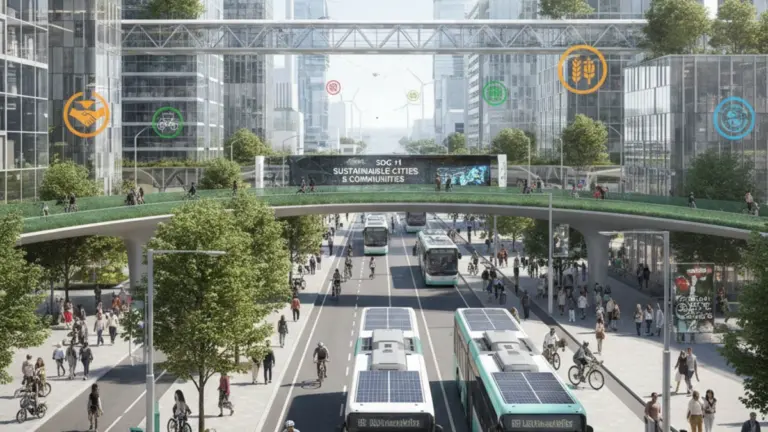
Cities are adapting too. Instead of building massive parking structures, some are investing in electric mobility hubs—places where you can grab an e-bike, an e-scooter, or a shared EV, all from the same location. It’s convenience meets sustainability, and it’s exactly what younger users are demanding.
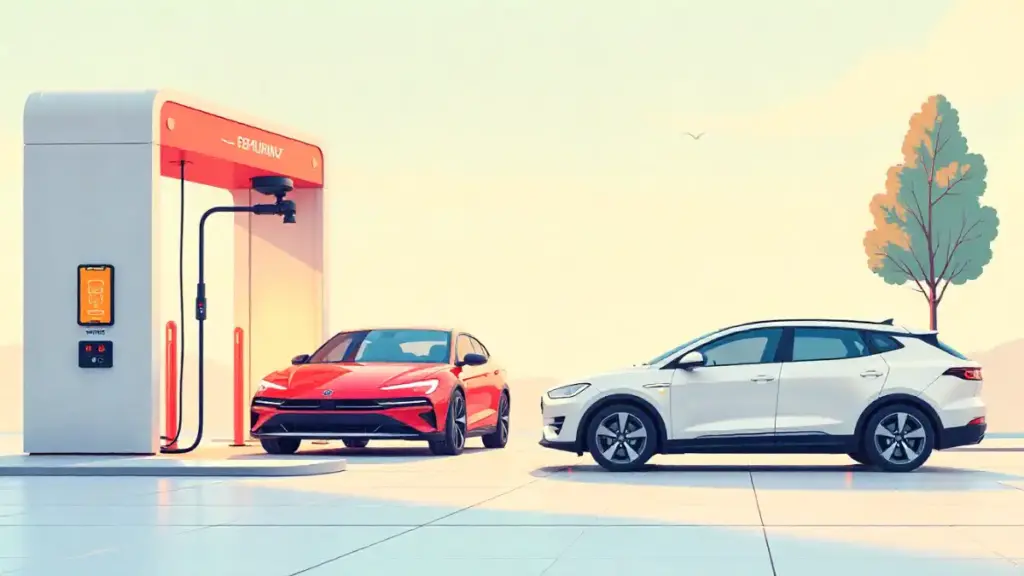
Autonomous EV Fleets: Closer Than You Think
Let’s address the elephant in the room—or should I say, the driverless car on the street? Autonomous electric vehicle fleets are no longer a question of “if” but “when” and “where.”
Companies like Waymo and Cruise are already operating robotaxi services in cities like San Francisco, Phoenix, and Los Angeles. Yes, there have been hiccups—incidents that made headlines and raised safety concerns. But the technology is advancing rapidly, and importantly, it’s advancing alongside electrification.
Think about the logic here: if you’re building a fleet of vehicles that will drive 24/7, covering massive mileage every year, operating costs become crucial. Electric vehicles have lower maintenance costs (fewer moving parts) and lower fuel costs than gas vehicles. Combine that with no driver salary, and suddenly the unit economics of autonomous ride-sharing start to make sense.
Between 2025 and 2030, we’re likely to see these services expand from a handful of cities to dozens, particularly in regions with favorable regulations and weather conditions. The vehicles will get better at handling complex scenarios—construction zones, emergency vehicles, unpredictable pedestrians (looking at you, jaywalkers).
But here’s what keeps me up at night, and what’s hotly debated in industry circles: what happens to all the human drivers? Taxi drivers, truck drivers, delivery drivers—these are millions of jobs worldwide. The transition to autonomous EVs needs to be managed thoughtfully, with retraining programs and social safety nets. Otherwise, we’re trading environmental progress for economic disruption that could destabilize communities.
There’s also the infrastructure question. Autonomous EVs need charging infrastructure that’s accessible without human intervention—automated plug-in systems, wireless charging, or those battery swap stations we talked about earlier. Cities will need to rethink parking, drop-off zones, and traffic management as these fleets grow.
The Next Wave of EV Models: Diversity and Accessibility
Remember when your EV choices were basically a Tesla or… a Nissan Leaf? Those days are ancient history. Between 2025 and 2030, the variety of electric vehicles hitting the market is staggering.
We’re talking electric pickup trucks for people who need serious towing and hauling capability (looking at you, Ford F-150 Lightning and Chevy Silverado EV). Affordable compact EVs priced under $30,000 that make electric driving accessible to middle-class families. Luxury electric SUVs with 400+ mile ranges. Electric vans for businesses. Electric sports cars that’ll smoke almost anything at a stoplight. Even electric RVs for adventurous retirees.
Chinese manufacturers like BYD are flooding global markets with diverse, affordable options. European brands are rolling out electric versions of beloved models. American automakers are finally getting serious about EVs beyond compliance cars. Korean manufacturers are pushing design and technology boundaries.
This diversity matters because electric mobility isn’t one-size-fits-all. A rural rancher in Montana has different needs than a suburban parent in New Jersey or a delivery driver in Chicago. The more variety we have, the more people can find an EV that actually fits their life—not just settle for whatever’s available.
We’re also seeing innovation in battery chemistry. Lithium iron phosphate (LFP) batteries are gaining ground because they’re cheaper, safer, and use more abundant materials, even if they don’t have quite the energy density of traditional lithium-ion. Solid-state batteries—long promised, always “just a few years away”—might actually start appearing in premium models toward the end of this period.
And here’s something that doesn’t get enough attention: the used EV market is maturing. Those early Teslas and Chevy Bolts are now 5-10 years old, and they’re still running strong. As more people realize that EVs don’t disintegrate after 100,000 miles, and as certified pre-owned programs proliferate, electric mobility becomes accessible to buyers who could never afford a new EV.
The Infrastructure Challenge: Chicken, Meet Egg
Of course, none of these trends mean much if you can’t reliably charge your vehicle. And this is where the conversation gets heated in every online forum and industry conference.
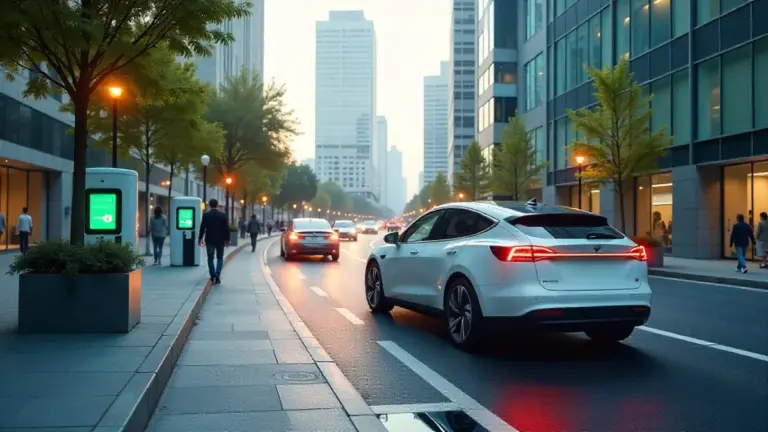
The charging infrastructure is improving—there’s no question about that. We’ve gone from a scattered network of incompatible chargers to more unified standards (in most regions, anyway—Tesla’s NACS connector drama notwithstanding). Fast chargers are getting faster, with 350kW chargers that can add 200 miles of range in 15 minutes becoming more common.
But here’s the brutal truth: we’re still not building fast enough. In many suburban and rural areas, public charging is sparse. In cities, apartment dwellers face major challenges installing home chargers. The grid infrastructure in some regions isn’t ready for the load that millions of EVs will demand.
And then there’s the payment and user experience mess. Have you ever tried using multiple charging networks? It’s like needing a different app, account, and payment method for every gas station brand. It’s maddening. The industry is slowly moving toward more seamless payment systems and roaming agreements, but we’re not there yet.
The good news? Governments worldwide are investing billions in charging infrastructure as part of climate commitments. Private companies see the opportunity and are building out networks. Workplace charging is becoming more common. Apartment buildings are retrofitting parking structures. The momentum is building.
What This Means for You
So where does all this leave us—you and me, actual people trying to make transportation decisions in 2025 and beyond?
First, if you’ve been on the fence about electric vehicles, know that the next five years will bring options you’ve never had before. More choices, better technology, and yes, more infrastructure. The kinks aren’t all worked out, but they’re being ironed out faster than most people realize.
Second, think about your actual needs, not hypothetical scenarios. Yes, that annual road trip to visit relatives matters, but if you drive locally 98% of the time, an EV with 250 miles of range and home charging might be perfect. Don’t let edge cases prevent you from enjoying benefits 95% of the time.
Third, stay open to new models of mobility. Maybe full ownership isn’t your best option anymore. Maybe that subscription service or sharing platform actually fits your life better and saves you money. The point of all this innovation is giving you choices—use them.
And finally, engage with these conversations. The future of mobility isn’t being decided in boardrooms alone. It’s being shaped by real users demanding better solutions, cities experimenting with new approaches, and communities pushing back on plans that don’t serve them. Your voice matters.
The Road Ahead
Electric mobility between 2025 and 2030 isn’t just about swapping gasoline for batteries. It’s about reimagining transportation from the ground up—how we power vehicles, who owns them, how we share them, and what infrastructure we need to make it all work.
Will battery swapping become standard or remain a niche solution? Will wireless charging roads prove economically viable at scale? Will autonomous EV fleets replace personal car ownership in cities? Will Gen Z’s preference for sharing over ownership reshape the entire automotive industry?
Honestly? We don’t know yet. And that’s what makes this moment so fascinating. We’re living through a genuine transformation, with multiple possible futures competing for dominance. The decisions made in the next five years—by engineers, policymakers, investors, and yes, everyday consumers—will determine which path we take.
What I can tell you is this: the electric mobility future won’t look like today’s world with the engines swapped out. It’s going to be weirder, more diverse, more flexible, and hopefully more sustainable than most of us can imagine right now.
And honestly? I can’t wait to see how it unfolds.