
You know that moment when your phone battery drops from 30% to 15% in what feels like seconds? Now imagine that happening with your car. It’s the kind of thing that keeps potential EV buyers up at night. But here’s the truth: EV battery life is nothing like your smartphone battery, and the fears surrounding it are often way overblown.
I’ve spent years following the EV revolution, and one question comes up more than any other: “How long will the battery actually last?” It’s a fair concern—after all, the battery is the heart of an electric vehicle, and replacing it sounds expensive and complicated. But what if I told you that most EV batteries are outlasting the cars they’re built into? Let’s dive into what you really need to know about electric car battery life, from the science behind them to the real-world factors that determine how long they’ll keep you on the road.
Understanding Electric Car Battery Types
Not all EV batteries are created equal, and knowing the differences can help you make smarter decisions when shopping for an electric car.
The vast majority of modern electric vehicles use lithium-ion batteries—the same basic technology in your laptop or phone, but engineered on a much larger and more sophisticated scale. Within this category, there are several chemistry variations. Lithium Nickel Manganese Cobalt Oxide (NMC) batteries are probably the most common, offering a solid balance of energy density, power, and longevity. You’ll find these in vehicles like the Chevy Bolt, many Tesla models, and numerous European EVs.
Then there’s Lithium Iron Phosphate (LFP), which Tesla has been using in some of their standard-range models. LFP batteries are incredibly durable and stable, though they typically store a bit less energy per pound than NMC batteries. Think of them as the marathon runner of battery types—they might not sprint as fast, but they’ll keep going for the long haul with remarkable consistency.
Some manufacturers, particularly Nissan with the Leaf, have used Lithium Manganese Oxide batteries, while others are experimenting with newer chemistries. And on the horizon? Solid-state batteries promise even better performance and safety, though they’re still a few years away from mass production.
The chemistry matters because it affects everything from charging speed to degradation rate. But here’s the good news: regardless of type, today’s EV batteries are engineered with sophisticated thermal management systems and smart software that protects them from the kinds of stress that kill batteries quickly.
How Long Do EV Batteries Actually Last?
Let’s cut to the chase: most EV batteries are lasting much longer than early skeptics predicted, and the data backs this up.
Most manufacturers warranty their batteries for 8 years or 100,000 miles, and some go even further—Hyundai offers 10 years or 100,000 miles on many of their electric models. But here’s the kicker: the warranty is typically just the minimum guarantee. Real-world data shows that batteries are frequently outlasting these warranties by a significant margin.
A 2020 study analyzing data from thousands of Tesla vehicles found that after 200,000 miles, most batteries still retained around 90% of their original capacity. Let that sink in for a moment—we’re talking about a battery that’s traveled the distance equivalent of driving around Earth eight times, and it’s still performing at 90% efficiency. Another analysis of Nissan Leaf batteries showed similar durability trends, with many first-generation Leafs from 2011 still on the road today.
What does degradation actually look like in practice? Instead of your battery suddenly dying like a phone that won’t turn on, EV batteries degrade gradually. You might notice that your 250-mile range vehicle now shows 235 miles on a full charge after several years. The car still works perfectly fine—you’ve just got slightly less range than when it rolled off the lot. For most drivers doing daily commutes, this gradual decrease is barely noticeable.
And here’s something many people don’t realize: the degradation rate isn’t linear. Batteries typically lose capacity faster in the first year or two, then the degradation rate slows down significantly. It’s like breaking in a new pair of shoes—there’s an initial adjustment period, then things stabilize.
Factors That Affect Battery Longevity
If you want your EV battery to last as long as possible, understanding what impacts its health is crucial. The good news? Most of these factors are within your control.
Temperature is probably the biggest player in battery degradation. Extreme heat is particularly harsh on lithium-ion batteries, which is why EVs sold in Arizona or Nevada might experience slightly faster degradation than those in milder climates. This is also why most modern EVs come with active thermal management systems—essentially air conditioning for your battery pack. Cold weather affects range in the short term (you’ll notice fewer miles per charge in winter), but it’s less damaging to long-term battery health than sustained heat.
Your charging habits matter more than you might think. Constantly charging to 100% and draining to 0% puts stress on the battery chemistry. Think of it like constantly redlining your gas engine—sure, it works, but you’re not doing it any favors. Most EV manufacturers recommend keeping your daily charge between 20% and 80% for regular use, only charging to 100% when you need the extra range for a long trip. My neighbor who follows this rule religiously with his Model 3? He’s at 120,000 miles with minimal degradation.
Fast charging frequency is another consideration. While DC fast charging is incredibly convenient for road trips, doing it multiple times daily can generate more heat and stress compared to regular Level 2 charging at home. That said, modern EVs are smart—they manage charging rates to protect the battery. The occasional Supercharger session won’t ruin your battery; it’s the daily habit that might accelerate wear slightly.
How you drive also plays a role, though less dramatically than you might expect. Aggressive acceleration and heavy regenerative braking aren’t as harmful as once thought, thanks to sophisticated battery management systems. However, consistently driving at high speeds does drain the battery faster, and more charge cycles mean slightly more wear over time.
Finally, simply letting your EV sit for extended periods at very high or very low charge states isn’t ideal. If you’re parking your car for weeks or months, most manufacturers recommend leaving it at around 50% charge. This keeps the battery chemistry in its happiest state.
Extending Your EV Battery’s Life: Practical Tips
Want to maximize your battery’s longevity? Here are some practical, real-world strategies that actually work.
First, embrace the 20-80 rule for daily driving. Set your car’s charge limit to 80% for your regular routine, and only bump it up to 100% the night before a long trip. Most EVs let you set this as a default, so you don’t have to remember to adjust it manually. This simple habit can significantly reduce stress on your battery over years of ownership.
Park smart when you can. If you’ve got options, choose the shaded parking spot or the garage over the sunny street spot, especially in summer. Your battery will thank you. In extreme cold, if your EV has a preconditioning feature, use it while the car’s still plugged in—this warms the battery using grid power rather than draining your range.
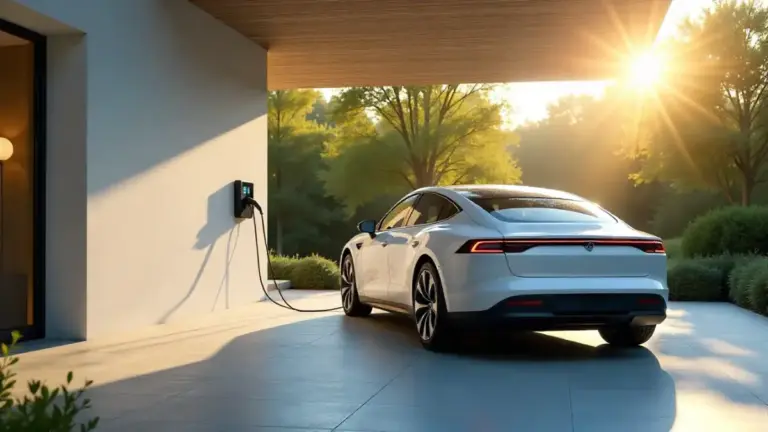
When it comes to charging, slow and steady wins the race for daily use. That Level 2 charger in your garage or carport is your battery’s best friend. Save the fast chargers for when you genuinely need the speed—road trips, emergencies, or when you forgot to plug in overnight and need a quick top-up before work.
Stay updated with software. Many EV manufacturers push over-the-air updates that include battery management improvements. Tesla, Rivian, and others have actually improved battery performance through software updates after purchase. Make sure your car is connected to WiFi and accepting these updates.
And here’s one that might surprise you: use your EV regularly. Batteries don’t like sitting idle for months at a time. If you have multiple vehicles and only drive your EV occasionally, try to take it out at least once every few weeks and keep it plugged in when parked for extended periods.
The Bottom Line: Should Battery Life Worry You?
Let me be straight with you: if you’re considering an electric car but battery longevity has you on the fence, the data suggests you can relax a bit.
The average American drives about 14,000 miles per year. At that rate, even with conservative estimates of battery degradation, you’re looking at well over a decade before you’d notice any significant impact on your daily driving. And by then? Battery replacement costs are dropping rapidly—some estimates suggest they’ve fallen by nearly 90% in the last decade—and you might even decide it’s time for a new car anyway.
More importantly, modern EV batteries are protected by increasingly sophisticated management systems that do most of the work for you. Your car is actively monitoring temperatures, balancing cells, and optimizing charging in ways that weren’t possible even five years ago. The technology is evolving fast, and batteries are getting better, not worse.
Are there things you can do to help your battery last longer? Absolutely, and I’ve covered those above. But should you stress about babying your battery to the point where you’re not enjoying your car? Definitely not. The whole point of electric vehicles is that they’re supposed to be easier to own and maintain than gas cars—and with far fewer moving parts to break, that’s largely true.
So here’s my take: buy the EV that fits your needs and budget, follow the basic best practices for battery care, and then just drive it. The battery will likely outlast your ownership, and even if it doesn’t, you’ll have saved thousands on gas and maintenance in the meantime. That’s not just optimism—it’s what the real-world data is showing us.
Roy K. Miller is an EV expert passionate about electric mobility, green technology, and the future of transportation. He helps readers and drivers make smarter choices while sharing insights and updates on the latest developments in the EV world.