Remember when electric cars were just about swapping gas for batteries? Those days are long gone. In 2025, we’re witnessing something far more fascinating: a complete reimagining of how we move, powered not just by electricity, but by smarter technology, changing attitudes, and cities that are finally catching up to the future.
I’ve been tracking electric mobility trends for years, and what’s happening right now feels different. It’s not just about better batteries or longer ranges anymore—though those are improving too. We’re seeing entire transportation ecosystems transform, from how delivery drivers swap batteries in minutes to how your teenager thinks about car ownership (spoiler: they might not want to own one at all).
Let’s dive into five major shifts that are reshaping sustainable transportation in 2025, based on conversations happening across industry forums, LinkedIn discussions with engineers and policymakers, and real-world feedback from Reddit communities where actual EV owners and skeptics duke it out daily.
The Battery Revolution: Beyond Just Bigger Packs
Here’s something that might surprise you: the biggest battery breakthrough in 2025 isn’t about cramming more cells into your car. It’s about making batteries work harder, smarter, and more flexibly.
Battery swapping is finally having its moment—but not quite how we imagined. While passenger cars are still mostly sticking with charging, commercial fleets are embracing swappable batteries like never before. Think delivery vans, taxi services, and ride-share vehicles that can’t afford 30-minute charging breaks. In cities like Beijing and Bangalore, drivers pull into swap stations and exchange depleted battery packs for fully charged ones in under five minutes. It’s like the old gas station experience, but electric.
Why does this matter to you, even if you’re not driving a delivery van? Because it proves that range anxiety—that nagging worry about running out of juice—isn’t just solved by bigger batteries. Sometimes the solution is simply making energy more accessible and convenient. It’s changing how fleet managers think about electric transitions, removing one of the last major barriers.
On the passenger car front, we’re seeing solid-state batteries inch closer to reality. Companies like Toyota and QuantumScape are moving from lab prototypes to pre-production models. These batteries promise 50% more range, faster charging, and crucially, better safety profiles because they’re less prone to thermal runaway. Will you see one in a $30,000 sedan tomorrow? Probably not. But by 2027? That’s looking increasingly realistic.
The other game-changer? Bidirectional charging technology is becoming standard rather than optional. Your EV isn’t just a car anymore—it’s a mobile power bank. During power outages, it can run your home essentials for days. Some utility companies are even offering credits if you let them tap your car’s battery during peak demand hours. It’s turning the traditional energy model on its head: instead of just consuming power, your vehicle helps stabilize the grid.
Smart Cities Meet Smart Mobility
Walk through any major city planning conference in 2025, and you’ll hear one phrase repeated like a mantra: “integrated mobility ecosystem.” It sounds like corporate buzzword bingo, but stick with me—this one’s actually exciting.
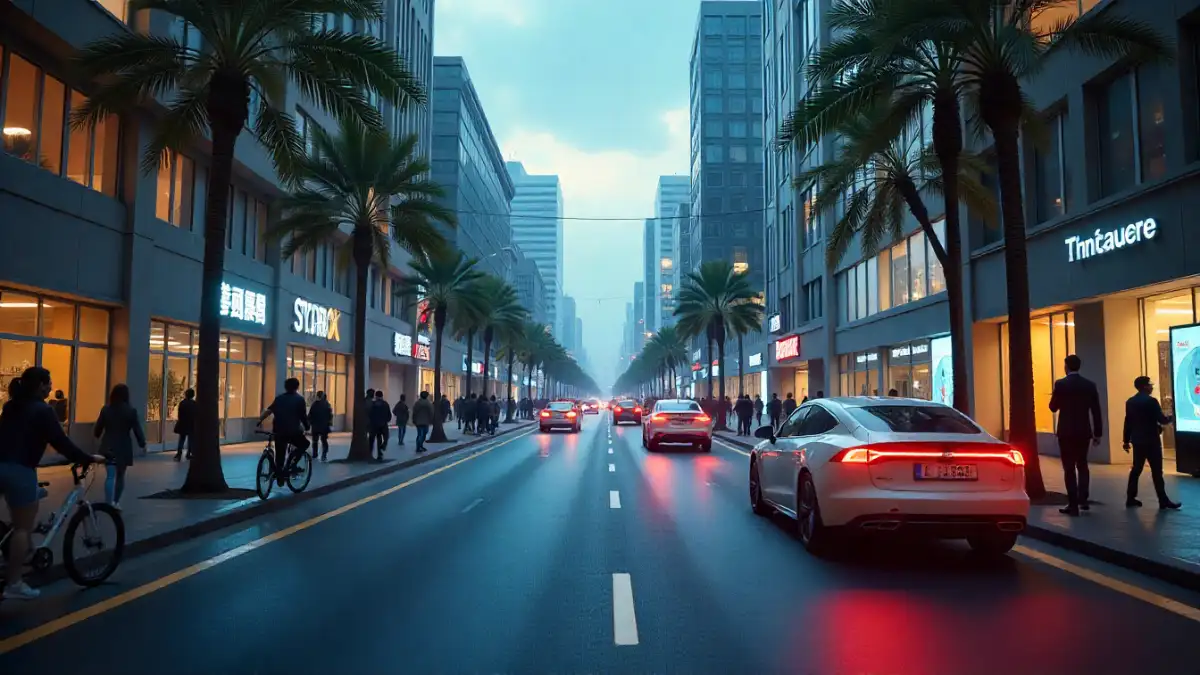
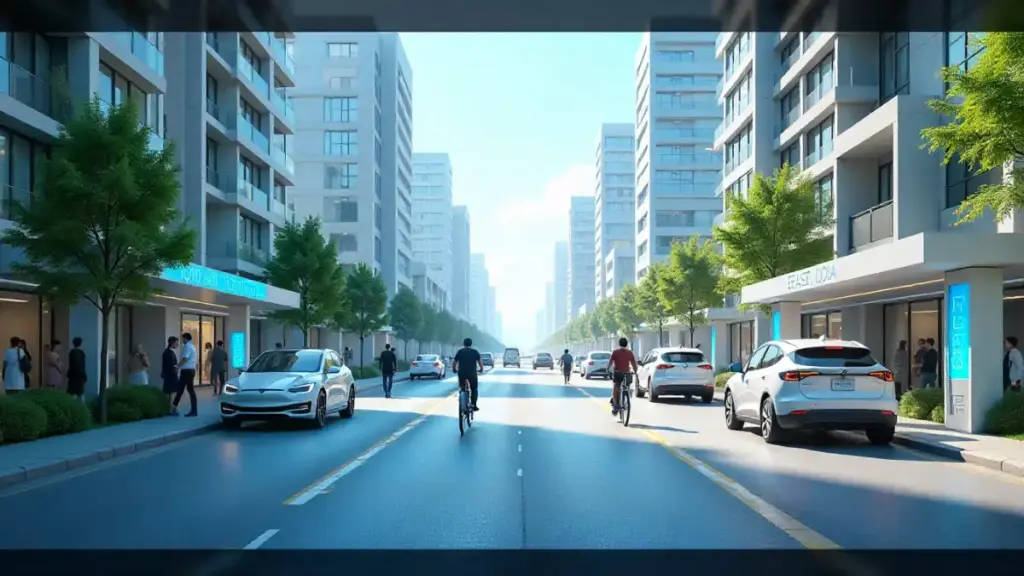
Cities are finally realizing that electric vehicles don’t exist in isolation. They need charging infrastructure, yes, but they also need to work seamlessly with public transit, bike lanes, pedestrian zones, and even traffic management systems. The smartest cities aren’t just building EV chargers—they’re building mobility hubs.
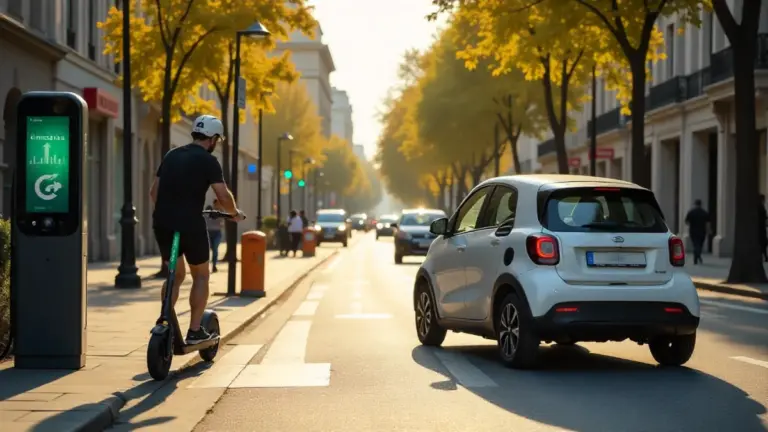
Picture this: You drive your EV to a hub on the city’s edge, plug it in (where it’s actually charging with renewable energy), then hop on rapid transit, an e-scooter, or a shared autonomous shuttle for the last mile. Your car isn’t sitting in expensive downtown parking all day; it’s potentially even earning you money by providing vehicle-to-grid services or being part of a peer-to-peer car sharing platform.
Places like Oslo, Singapore, and Amsterdam are leading this charge. They’re using real-time data to optimize everything: dynamic pricing for parking (cheaper rates for EVs during off-peak charging times), traffic light synchronization that reduces stop-and-go driving (which wastes energy for any vehicle but especially matters for EVs optimizing regenerative braking), and mobile apps that show you whether to drive, take transit, or grab a bike based on current conditions.
What makes 2025 different from past “smart city” promises? The infrastructure is actually being built, and more importantly, people are actually using it. It’s not theoretical anymore. When I browse through urban planning discussions on LinkedIn, I’m seeing traffic engineers share actual usage data, not just glossy renderings.
And here’s the kicker: this integrated approach is making electric mobility more appealing even to people who don’t own EVs. When your city provides reliable, electric-powered alternatives to driving everywhere, personal car ownership—electric or otherwise—becomes less of a necessity and more of a choice.
The Generational Divide: How Age Shapes EV Adoption
Let’s talk about something fascinating that doesn’t get enough attention: younger generations think about transportation completely differently than their parents.
If you’re a Boomer or Gen X, you probably remember the freedom of getting your first car. It was a rite of passage, a symbol of independence. You likely still feel attached to the idea of owning your vehicle, maintaining it yourself, maybe even knowing what’s under the hood.
Now ask a Gen Z college student what they want. Odds are, they’ll shrug and say something like, “I just need to get from point A to point B reliably and cheaply. Owning a car sounds expensive and like a hassle.”
This isn’t just anecdotal—it’s showing up everywhere in mobility data. Younger users are embracing shared EVs, subscription services, and multi-modal transportation at rates that would’ve seemed impossible a decade ago. They’re comfortable summoning a ride through an app, renting an e-bike for errands, or subscribing to a car service that lets them drive different vehicles depending on their needs.
On Reddit’s EV communities, you see this generational split play out in real-time. Older enthusiasts debate charging infrastructure and highway road trips. Younger users ask about the best car-sharing apps in their city and whether they should even bother getting a driver’s license.
Here’s why this matters for the future of sustainable transportation: If owning a car becomes less culturally important, it opens up entirely new possibilities. Shared autonomous EVs could serve multiple people per day instead of sitting idle in driveways 95% of the time. Vehicle-as-a-service models reduce the individual’s upfront cost barrier—you don’t need $40,000 for an EV purchase when you can access one for $15 per trip or $400 per month with no maintenance worries.
But it’s not just about young people being different. Many older drivers are discovering they actually prefer the simplicity of electric vehicles: fewer maintenance hassles, lower running costs, and the quiet, smooth driving experience. The difference is in ownership models and lifestyle integration, not the technology itself.
Real Sustainability: Beyond the Tailpipe
Okay, let’s address the elephant in the room—or rather, the coal plant powering your “zero-emission” vehicle. One of the most heated debates in 2025 isn’t whether EVs are better for the environment (they are), but how much better, and what we’re conveniently ignoring.
If you spend any time on environmental forums or skeptical subreddits, you’ve seen the arguments: “EVs just shift pollution to power plants!” “Battery mining destroys ecosystems!” “The lifecycle emissions aren’t that different!”
Here’s the honest truth: these critics aren’t entirely wrong, but they’re missing the bigger picture.
The grid is getting cleaner, fast. In 2025, renewable energy is providing nearly 35% of US electricity, and in some states like California and Iowa, it’s over 50%. This means every year you drive your EV, it effectively gets “cleaner” without you doing anything, because the energy mix powering it improves. A gas car’s emissions are locked in for its entire life. An EV’s emissions decrease over time as the grid decarbonizes.
But let’s talk about batteries, because that’s where the conversation gets interesting. The industry is finally getting serious about ethical sourcing and circular economy principles. Companies are mapping their supply chains, investing in mines with better labor standards, and crucially, designing batteries for easier recycling. By 2025, several manufacturers are incorporating recycled battery materials into new packs, reducing the need for virgin mining.
The next frontier? Second-life battery applications. When an EV battery drops below 80% capacity—no longer ideal for a car demanding quick acceleration—it’s still perfectly useful for stationary storage. Decommissioned EV batteries are being repurposed into home energy systems and grid-scale storage installations, extending their useful life by 10-15 years before recycling.
Is this perfect? No. Are we still figuring out the best approaches? Absolutely. But the trajectory is encouraging. The conversation has shifted from “Are EVs really green?” to “How do we make them as sustainable as possible across their entire lifecycle?” That’s progress.
Here’s my take after talking with dozens of environmental engineers and sustainability experts: Perfect is the enemy of good. Yes, we should push for cleaner battery production, better recycling, and renewable energy. But waiting for a perfect solution while continuing to burn gasoline is like refusing to eat vegetables because they’re not organic—you’re missing the bigger health picture.
Last-Mile Innovation: Where the Rubber Meets the Road
Let’s zoom in on something you encounter every day without thinking about it: the last mile problem. It’s how your Amazon package gets from the depot to your door, how you get from the train station to your office, how that burrito arrives still warm.
This “last mile” is responsible for a disproportionate amount of urban traffic, pollution, and frustration. It’s also where some of the most creative electric mobility solutions are happening in 2025.
E-cargo bikes are exploding in popularity for urban deliveries. Companies like UPS and DHL are deploying fleets of electric-assist cargo bikes that can navigate bike lanes, pedestrian zones, and narrow European streets where vans can’t go. They’re faster for dense urban deliveries, cheaper to operate, and create zero local emissions. Some models can carry up to 400 pounds of packages—that’s a lot of burritos.
Micro-mobility isn’t just scooters anymore. Yes, e-scooters are everywhere, but we’re seeing incredible innovation in form factors: enclosed e-bikes for weather protection, cargo trikes for families, and even tiny electric vehicles that blur the line between golf cart and car. These vehicles are perfect for trips under five miles—which, by the way, represents about 60% of all car trips in America.
The most interesting development? Cities are actually adapting infrastructure to support these vehicles. Protected bike lanes, micro-mobility parking zones, and cargo loading areas specifically designed for e-bikes. It’s not perfect, and infrastructure is still catching up in most places, but the momentum is undeniable.
On the personal side, e-bikes are converting car trips at surprising rates. I’ve seen countless stories from Reddit users who bought an e-bike for fun and then realized they stopped driving to the grocery store, the gym, or even commuting to work. One user calculated they drove 4,000 fewer miles in a year—that’s like eliminating two tons of CO2, equivalent to planting 100 trees.
Here’s what makes last-mile EVs so powerful: the barrier to entry is tiny compared to cars. A decent e-bike costs $1,500-$3,000. An e-cargo bike might be $4,000-$6,000. These aren’t car-replacement prices; they’re impulse-buy-and-try-it prices. And once people try them, adoption rates are remarkably high.
What This All Means for You
So, where does this leave us as we navigate 2025’s electric mobility landscape?
Here’s the reality: sustainable transportation isn’t one solution anymore—it’s a menu of options that finally gives you real choices. Maybe you drive a personal EV for long trips but use a shared e-scooter for quick errands. Maybe you subscribe to an EV service instead of buying. Maybe you don’t own a car at all because your city’s integrated mobility system actually works.
The key insight from all these trends is that we’re moving past the binary thinking of “gas vs. electric cars.” We’re entering an era where how we power vehicles and how we use them are both being reimagined simultaneously.
If you’re considering going electric in 2025, here’s my advice: Think beyond just the vehicle. Consider your entire transportation ecosystem. What charging infrastructure exists where you live and work? What’s your city doing to support EVs and alternative mobility? How might your transportation needs change in the next 5-10 years as options expand?
And if you’re skeptical about EVs or think they’re not ready yet? I get it. But spend some time in EV forums, talk to actual owners, maybe rent one for a weekend trip. The gap between perception and reality has never been wider. The technology, infrastructure, and options in 2025 are light-years ahead of even 2020.
The future of transportation isn’t just electric—it’s flexible, integrated, and finally aligned with how people actually want to move. And that’s something worth getting excited about, whether you’re driving, riding, or still figuring out your next move.