Here’s a question I hear constantly at dinner parties, coffee shops, and family gatherings: “Sure, electric cars don’t have tailpipes, but aren’t they just as bad for the environment when you consider how they’re made?” It’s a fair question, and honestly, one that deserves more than a simple yes or no. The truth about electric vehicles and their environmental impact is more nuanced than either the critics or the cheerleaders want to admit. So let’s dig into the real story—the one that looks at the entire lifecycle of an EV, from mining raw materials to the final mile on the road, and yes, even what happens when that battery finally calls it quits.
If you’ve been on the fence about going electric because of these concerns, or if you’re simply curious about whether your EV is truly making a difference, this article is for you. We’re going to move beyond the marketing hype and the doomsday predictions to explore what the science actually tells us. Spoiler alert: EVs aren’t perfect, but they’re a crucial piece of the puzzle if we’re serious about building a cleaner future.
The Battery Question: How Much Energy Does It Really Take?
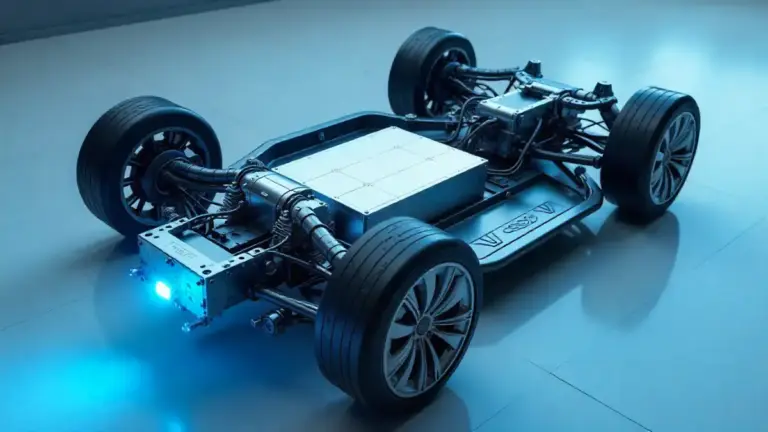
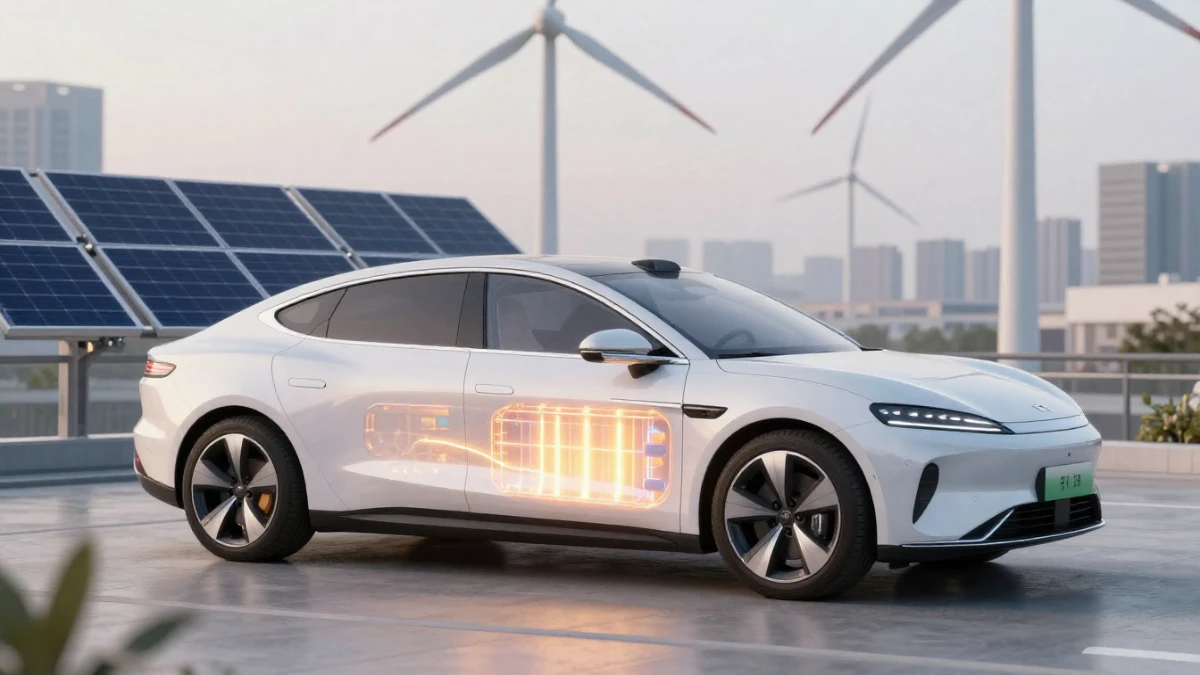
Let’s address the elephant in the room first: the lithium-ion battery. This is where most of the environmental criticism gets focused, and for good reason. Manufacturing an EV battery is energy-intensive. We’re talking about mining lithium, cobalt, nickel, and graphite from the earth, processing these materials, and then assembling thousands of individual cells into a battery pack that weighs anywhere from 500 to 1,200 pounds.
Studies have consistently shown that producing an electric vehicle generates more emissions upfront compared to manufacturing a traditional gas-powered car. The battery alone can account for roughly 30-40% of an EV’s total manufacturing emissions. A comprehensive analysis from the International Council on Clean Transportation (ICCT) found that building a mid-sized electric vehicle produces about 8-10 tons of CO2 equivalent, compared to about 6-7 tons for a comparable gasoline vehicle. That’s a meaningful difference—roughly 2-4 tons more emissions before the car even leaves the factory.
But here’s where things get interesting. Think of it like this: manufacturing emissions are like a fixed cost you pay once, while driving emissions are like a subscription fee you pay every time you fill up or charge. The question isn’t just about the upfront cost—it’s about the total cost over the vehicle’s lifetime. And that’s where EVs start to shine.
The manufacturing emissions gap has also been shrinking. Battery production has become significantly more efficient in recent years. Tesla’s Gigafactory in Nevada, for example, uses renewable energy sources to power much of its production. Similarly, manufacturers are increasingly locating battery plants near renewable energy sources or investing in on-site solar and wind power. LG Energy Solution and SK Innovation have both committed to using renewable energy for their battery production facilities. As the industry matures and scales up, these manufacturing emissions continue to decrease.
The Power Grid Matters More Than You Think
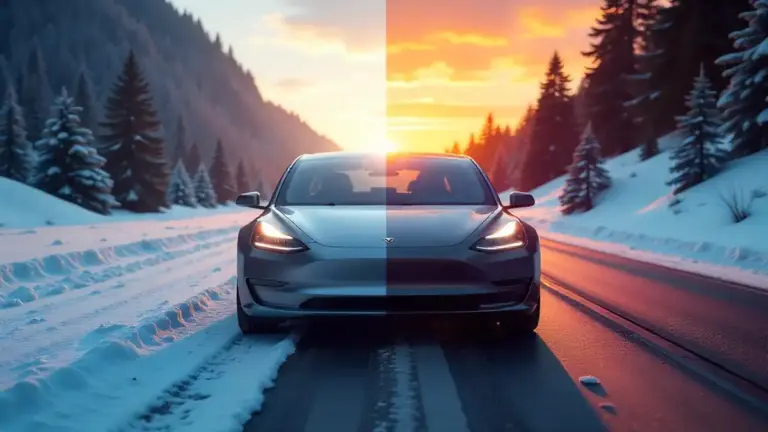
Here’s where the conversation gets really fascinating: the environmental impact of your electric vehicle depends heavily on where you plug it in. An EV charged on a coal-heavy grid will have a higher carbon footprint than one charged on renewable energy. But even in the worst-case scenario—even in regions that rely heavily on coal—EVs still come out ahead of gasoline vehicles over their lifetime.
Let me give you a real-world example. If you’re driving a Tesla Model 3 in West Virginia, where about 90% of electricity comes from coal, your car’s lifetime emissions will be higher than if you were driving the same car in California, where the grid is much cleaner. But even in coal-heavy West Virginia, that Model 3 will still produce fewer lifetime emissions than a comparable gasoline sedan like a BMW 330i. The reason? Electric motors are incredibly efficient at converting energy into motion—roughly 85-90% efficient compared to about 30-35% for internal combustion engines.
The U.S. Energy Information Administration reports that the average American grid is getting cleaner every year. Coal’s share of electricity generation has dropped from 50% in 2005 to about 20% in 2024, while renewable energy has more than tripled. This means that even if you bought your EV five years ago, it’s getting cleaner to drive every single year as the grid improves. Your gasoline car, by contrast, will always emit the same amount of CO2 per mile, regardless of broader energy trends.
What’s particularly encouraging is the regional variation. In states like Washington, Oregon, and Vermont, where hydroelectric and renewable energy dominate, driving an EV is extraordinarily clean—approaching zero emissions when charged at the right times. Even in states with dirtier grids, like Kentucky or Wyoming, EVs break even with gas cars after about 20,000-30,000 miles of driving and become cleaner with every additional mile.
The Break-Even Point: When Do EVs Become Greener?
This is the million-dollar question, isn’t it? At what point does an EV’s lower operating emissions offset its higher manufacturing emissions? The answer varies, but most studies put the break-even point somewhere between 15,000 and 30,000 miles—which most drivers reach in about 1-3 years.
A 2021 study from MIT analyzed this exact question and found that in the United States, the average EV breaks even with a gasoline car at around 21,000 miles. Drive it for 200,000 miles over its lifetime (which is entirely realistic for modern EVs), and you’ll have avoided approximately 30-50 tons of CO2 compared to driving a gas-powered vehicle. To put that in perspective, that’s equivalent to the emissions from burning about 3,000-5,000 gallons of gasoline.
In Europe, where the grid is generally cleaner and gasoline is more carbon-intensive (due to refining and transportation), EVs break even even faster—sometimes in as little as 10,000-15,000 miles. Countries like Norway, which runs almost entirely on hydroelectric power, see EVs become carbon-negative almost immediately after accounting for manufacturing.
But let’s be honest about the variables here. The break-even point depends on several factors:
Your local grid mix: A cleaner grid means a faster break-even point. If you can charge with home solar panels, you’re essentially driving on sunshine, and your break-even happens almost immediately.
How you drive: If you’re doing mostly highway driving at high speeds, your efficiency drops (though this affects both EVs and gas cars). City driving actually favors EVs because regenerative braking recaptures energy that would be wasted in a gas car.
The size of the vehicle: A smaller EV like a Nissan Leaf will break even faster than a massive electric pickup like the Ford F-150 Lightning, simply because it has a smaller battery and uses less energy per mile.
How long you keep the car: The longer you drive an EV, the more you amortize those upfront manufacturing emissions. If you trade in your EV after three years, you’re not maximizing its environmental benefit.

Recycling and the Second Life of EV Batteries
One of the most common criticisms I hear is: “But what happens to all those batteries when they’re done? Won’t we have a massive waste problem?” It’s a legitimate concern, and it’s one the industry is taking seriously—far more seriously than most people realize.
First, let’s talk about battery lifespan. Most EV batteries are designed to last 10-20 years or 150,000-300,000 miles before they degrade to about 70-80% of their original capacity. But here’s the thing: a battery that’s no longer suitable for an EV can still have a very useful second life. At 70% capacity, an EV battery can’t deliver the range or performance most drivers expect, but it’s still perfectly functional for stationary energy storage.
Companies are already repurposing used EV batteries for home energy storage systems, grid stabilization, and backup power. Nissan has been a pioneer in this space, using old Leaf batteries to power streetlights and provide emergency backup power. BMW and GM have similar programs. This second-life application can extend a battery’s useful life by another 5-10 years, further reducing the environmental impact per unit of storage capacity.
And when a battery truly reaches the end of its life? The recycling industry is ramping up fast. Companies like Redwood Materials (founded by Tesla’s former CTO JB Straubel) and Li-Cycle are building facilities that can recover more than 95% of the valuable materials from spent lithium-ion batteries—including lithium, cobalt, nickel, and copper. These recovered materials can then be used to make new batteries, creating a circular economy that dramatically reduces the need for virgin mining.
Current recycling rates for EV batteries are still relatively low, simply because most EVs on the road today haven’t reached end-of-life yet. But Europe has mandated battery recycling rates, and the U.S. is developing similar policies. As the first wave of mass-market EVs from the early 2010s begins to age out, we’ll see this recycling infrastructure mature rapidly. The economics are compelling: recycled materials are often cheaper and cleaner than freshly mined ones.
The Mining Dilemma: Can We Source Battery Materials Responsibly?
Let’s not sugarcoat this: mining lithium, cobalt, and nickel comes with environmental and social costs. Lithium extraction in South America can strain local water resources. Cobalt mining in the Democratic Republic of Congo has been linked to human rights concerns. These are real issues that demand serious attention.
But here’s the critical context that often gets lost: gasoline production also requires mining and drilling—lots of it. Oil extraction, refining, and transportation create their own environmental devastation, from oil spills to groundwater contamination to habitat destruction. The difference is that oil is a consumable resource—you burn it once and it’s gone forever. Battery materials, on the other hand, can be recycled and reused indefinitely.
The battery industry is also evolving rapidly to address these concerns. Automakers are investing heavily in ethically sourced materials and supply chain transparency. Tesla, for instance, is developing lithium extraction methods that use far less water than conventional techniques. Ford and GM have both committed to conflict-free sourcing and are working directly with mining operations to improve labor conditions.
There’s also exciting progress on new battery chemistries that reduce or eliminate problematic materials. Lithium iron phosphate (LFP) batteries, which use no cobalt or nickel, are already in widespread use in China and are coming to Western markets. Sodium-ion batteries, which use abundant and easily sourced materials, are entering production. Solid-state batteries promise even better performance with simpler material requirements.
The point isn’t that mining for battery materials is without impact—it absolutely has an impact. The point is that it’s a solvable problem, and the industry is actively solving it. We can make batteries cleaner and more ethical. We can’t make gasoline clean.
The Bigger Picture: EVs in a Net-Zero Future
Here’s what it all comes down to: if we’re serious about reaching net-zero emissions, we need electric vehicles. Not just a few EVs for wealthy early adopters, but a wholesale transformation of the transportation sector. Transportation accounts for about 28% of U.S. greenhouse gas emissions, and passenger vehicles make up more than half of that. We simply can’t hit our climate goals without electrifying cars and trucks.
Even accounting for all the manufacturing emissions, battery production impacts, and current grid limitations, EVs emit about 50-70% less CO2 over their lifetime compared to gasoline vehicles in most regions. As the grid gets cleaner—which it inevitably will—that advantage only grows. Every EV on the road today will become progressively cleaner to operate as coal plants shut down and renewable capacity expands.
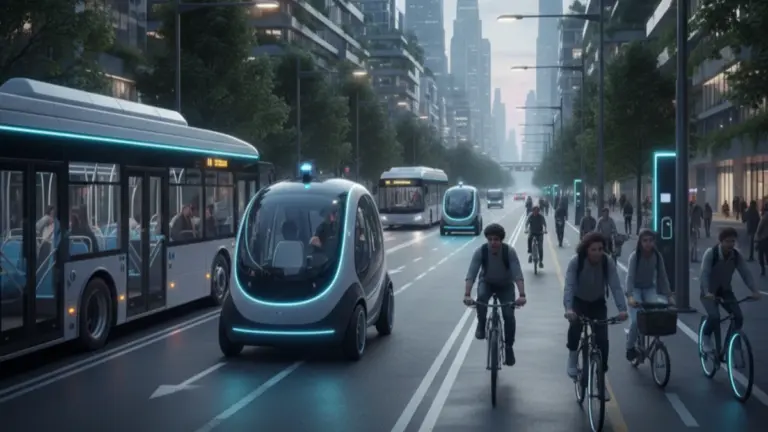
But EVs aren’t a silver bullet. They’re part of a broader solution that includes improving public transportation, redesigning cities to reduce driving distances, and investing in renewable energy infrastructure. An EV charged on coal power is better than a gas car, but it’s not as good as an EV charged on solar or wind. And an EV used for a 5-mile commute is better than a gas car, but it’s not as good as a bike or a train.
The research is clear and consistent: electric vehicles are a net positive for the environment, even with current battery production methods and grid mixes. A comprehensive study from the Universities of Cambridge, Exeter, and Nijmegen analyzed data from 59 regions worldwide and concluded that in 95% of those regions, driving an EV results in lower lifetime emissions than driving a gasoline vehicle. In most developed countries, the advantage is substantial.
What This Means for You
So, should you buy an EV? If you’re asking purely from an environmental perspective, the answer is probably yes—especially if you plan to keep the car for a long time and you live in a region with a relatively clean grid. The longer you drive it and the cleaner your electricity source, the more significant your impact.
But here’s my honest take: don’t buy an EV solely to “save the planet.” Buy one because it makes sense for your life—because you love the instant torque, because you’re tired of gas station stops, because the total cost of ownership works out in your favor, because you can charge at home and never worry about finding a station. The environmental benefits are real and significant, but they should be a bonus, not the only reason.
If you do buy an EV, here are some ways to maximize its environmental benefit:
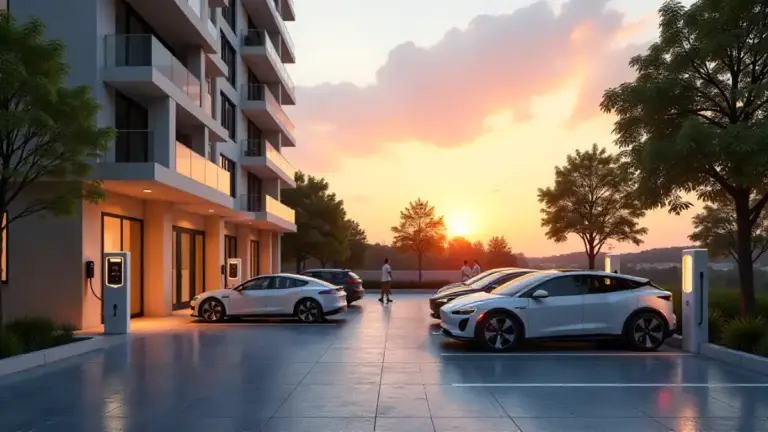
Charge smart: If your utility offers time-of-use rates, charge during off-peak hours when the grid is usually running on cleaner sources. Many EVs let you schedule charging automatically.
Go solar if you can: Installing home solar panels paired with an EV is one of the most environmentally beneficial things you can do. You’re essentially driving on sunshine.
Keep it long: The longer you drive your EV, the more you amortize those upfront manufacturing emissions. Aim to keep it for at least 10 years if possible.
Drive efficiently: Use your EV’s eco-mode, moderate your acceleration, and take advantage of regenerative braking. These habits can extend your range and reduce your energy consumption by 10-20%.
Advocate for clean energy: Support policies that expand renewable energy in your region. The cleaner your local grid gets, the cleaner your EV becomes.
The Bottom Line
Are EVs greener than gas cars? Yes—significantly so, even when you account for battery production and current grid limitations. The lifecycle emissions of an electric vehicle are lower than a comparable gasoline vehicle in the vast majority of scenarios, and that advantage is growing as battery production becomes more efficient and grids become cleaner.
But the real question isn’t just whether EVs are greener right now—it’s whether they’re a critical enabler of a cleaner future. And on that question, the answer is an emphatic yes. EVs give us a pathway to continuously reduce transportation emissions as our energy infrastructure improves. They allow us to decouple driving from fossil fuel combustion. They create the foundation for a transportation system that can run on 100% renewable energy.
Are they perfect? No. Do they solve everything? Definitely not. But they’re a massive step in the right direction, and they’re getting better every year. The batteries are becoming more efficient, the grids are getting cleaner, the recycling infrastructure is maturing, and the industry is addressing supply chain concerns.
So the next time someone asks you whether EVs are really greener, you can tell them the truth: yes, they are—and they’re getting greener every single day. The question isn’t whether we should make the transition to electric vehicles. The question is how quickly we can do it, and how we can ensure that transition is as equitable and sustainable as possible.
What’s your biggest concern about EV lifecycle emissions? And if you already drive an EV, what’s been your experience with understanding its environmental impact? The conversation is just getting started, and every voice matters.