Ever scroll through your Reddit feed or LinkedIn timeline and notice something? The electric vehicle conversation has completely changed. We’re not just talking about whether EVs are the future anymore—we’re deep in the weeds discussing megawatt charging, psychological barriers to adoption, and how our cities’ electrical grids are going to handle millions of electric cars plugging in every night.
The EV community in 2025 is having some seriously fascinating debates, and honestly, some of the most heated discussions aren’t happening in boardrooms—they’re happening in Medium comment sections, LinkedIn posts, and Reddit threads where real drivers, city planners, and tech enthusiasts are hashing out what actually matters for clean transportation.
So let me take you through the hottest EV conversations dominating social media right now. These aren’t just trends; they’re the real issues that’ll shape how we all get around in the years ahead.
The Charging Revolution: It’s About to Get Ridiculously Fast
Remember when we thought 30-minute charging was impressive? Yeah, that’s ancient history now.
BYD set a remarkable benchmark in March 2025 with its Super-e platform, claiming to deliver approximately 400 kilometers of range in just 5 minutes through next-generation silicon carbide power chips, all-liquid-cooling technology, and a 1,000-volt architecture supporting megawatt charging. Think about that for a second—you could add 250 miles of range in less time than it takes to grab a coffee and use the restroom.
This isn’t some far-off prototype either. Recent data shows that 63% of DC fast chargers deployed in the second quarter of 2025 were 250 kilowatts or higher, with major operators now installing chargers at 350 or 400 kilowatts. The infrastructure is already rolling out.
But here’s where the Reddit discussions get interesting: Is faster always better? Some users point out that home charging remains the preferred method when available due to affordability and convenience, with nearly two-thirds of charging points added through 2030 expected to be home chargers. The real question isn’t just about speed—it’s about having the right charging solution for the right situation.
And the innovation doesn’t stop at speed. Vehicle-to-Grid (V2G) technology is moving from concept to reality. With more manufacturers incorporating V2G capabilities into production vehicles, this technology enables EVs to return electricity to the grid, offering flexible energy sources that help stabilize grids as renewable energy generation becomes more variable. Your car could literally power your house during an outage or help balance the electrical grid during peak demand. That’s not futuristic—that’s happening now.
The Psychological Puzzle: Why Aren’t More People Making the Switch?
Here’s where things get really interesting, and frankly, a bit frustrating for EV advocates. According to AAA’s latest survey, only 16% of U.S. adults report being very likely or likely to purchase a fully electric vehicle as their next car—the lowest percentage recorded since 2019, while those unlikely or very unlikely to purchase rose to 63%.
Wait, what? With all these technological advances, why the hesitation?
The psychology behind EV adoption is complex and fascinating. Research shows that infrastructure, maintenance, and range anxiety are key perceived obstacles, but marketing messages that evoke anticipated pride in EV ownership can reduce these barriers and boost purchase intentions, particularly through concrete, self-targeted messages.
In other words, it’s not always about the car’s actual capabilities—it’s about how people feel about those capabilities. High battery repair costs (62%) and purchase price (59%) are cited as key barriers, along with perceived unsuitability for long-distance travel (57%), lack of convenient public charging stations (56%), and fear of running out of charge (55%).
The LinkedIn discussions around this are particularly revealing. One common thread: people need to experience EVs firsthand to overcome their resistance. Psychological inertia and resistance to change can deter individuals from adopting electric cars, but promoting familiarity through education and providing opportunities for consumers to experience electric cars firsthand can help overcome this barrier.
Medium writers have been pointing out something crucial: we’re not just fighting technical barriers; we’re fighting deeply ingrained habits and fears. The good news? Once people drive an EV, many of these concerns evaporate. The bad news? Getting them to take that first test drive is harder than you’d think.
Smart Cities: Can Our Grids Handle the EV Surge?
This is where the conversation gets technical—and a little scary if you’re a city planner.
Imagine a neighborhood where half the households plug in their EVs when they get home from work. That’s a massive surge in electricity demand, all hitting at the same time. Without intelligent management, a surge in simultaneous charging during peak electricity demand hours can overload circuits, necessitate costly infrastructure upgrades, and potentially disrupt power supply.
But here’s the clever part: smart grid integration isn’t just about preventing problems—it’s about creating opportunities. Smart grid integration systems enable cities to maintain grid stability, optimize energy consumption by encouraging charging during off-peak hours or when renewable energy is abundant, and enhance grid resilience by utilizing the flexibility of EV charging to respond to grid fluctuations.
The Reddit r/electricvehicles community has been buzzing about this, with users sharing their experiences with time-of-use pricing and smart charging schedules. Some folks are charging their cars at 2 AM when electricity is cheap and the grid has excess capacity. Others are experimenting with solar panels that directly charge their EVs during the day.
Advanced systems now use criteria weight ranking mechanisms that prioritize charging requests based on owner preferences like arrival time, departure needs, and battery state-of-charge, ensuring fair, efficient slot assignments while reducing grid strain. This isn’t just theory—it’s being implemented in forward-thinking cities right now.
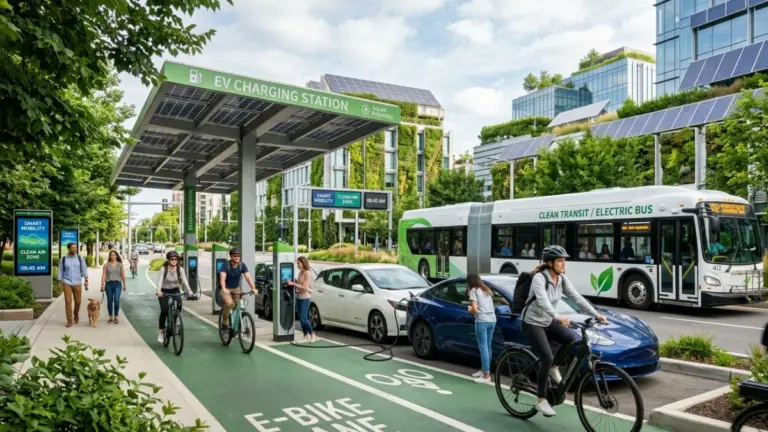
The integration goes beyond just managing when cars charge. Smart cities are working to create intelligent grids that can adapt to changing needs, including the ability to manage demand during peak hours and optimize the use of renewable energy sources, with managed charge programs and Vehicle-to-Grid systems responding to the rise in EV usage.
Brand Innovation: Who’s Actually Leading the Pack?
The automotive landscape has completely transformed, and the conversations on LinkedIn reveal which brands are truly innovating versus just putting electric motors in existing designs.
Tesla remains the leading player in the global EV market, with great commitments to technology, decent range, and autonomous driving features continuing to make it the market’s dominant force. But they’re no longer alone in pushing boundaries.
What’s fascinating is the focus on sustainable materials. Hyundai’s Concept THREE envisions the use of sustainable materials such as recycled wool, plastics, and lightweight aluminum foam, underscoring the company’s long-term vision to reduce environmental impact while delivering premium design. This isn’t greenwashing—this is fundamental rethinking of what goes into a car.
Nissan has demonstrated its commitment to sustainability by recycling old EV batteries, while Polestar has made remarkable strides by incorporating recycled materials into their seats and actively pursuing the goal of developing a fully carbon-neutral car by 2030. The industry is moving beyond just eliminating tailpipe emissions; they’re tackling the entire production and lifecycle impact.
Battery technology is also evolving rapidly. Lithium iron phosphate batteries are already used in many Tesla and BYD vehicles, being less expensive, longer lasting, and more sustainable, while manganese-rich cathodes increase energy density while reducing cobalt, and sodium-ion batteries replace lithium with a far more abundant and low-cost element.
The Medium community has been particularly engaged discussing circular economy approaches. Direct-to-battery recycling recovers usable materials without melting or shredding, while battery passports track a battery’s chemistry, origin, and usage history, supporting a circular economy and reducing the need for new mining.
The Real Conversations Happening Right Now
You know what makes these trends so compelling? They’re not coming from press releases or marketing departments. They’re emerging from real debates happening across Reddit’s r/electricvehicles, LinkedIn’s professional circles, and Medium’s thought leadership pieces.
On Reddit, users are sharing real-world charging experiences, posting photos of their electricity bills, and debating whether range anxiety is actually rational or just psychological baggage from the gas car era. The consensus? It’s mostly psychological, but infrastructure gaps in rural areas remain a legitimate concern.
LinkedIn has become a hotbed for policy discussions. Professionals in the energy sector are warning about grid readiness while simultaneously celebrating innovations that solve those very problems. City planners are sharing case studies. Battery engineers are explaining technical breakthroughs in surprisingly accessible language.
Medium writers are connecting the dots between seemingly separate trends—explaining how V2G technology could actually make renewable energy more viable, or how the psychological barriers to EV adoption mirror patterns we’ve seen with other technological shifts throughout history.
What This Means for You
Whether you’re a driver considering your next vehicle purchase, a policymaker shaping transportation infrastructure, or just someone who cares about our environmental future, these trends matter.
The charging infrastructure is reaching a tipping point. The International Energy Agency projects that the global number of public charging points will surpass 15 million by 2030, a four-fold increase from the 4 million operational in 2023. We’re past the point of wondering if charging will be convenient—we’re fine-tuning how convenient it’ll be.
The psychological barriers are real, but they’re surmountable. If you’re on the fence, find a friend with an EV and ask for a test drive. Better yet, rent one for a weekend trip. Experience often demolishes fear faster than any amount of data.
Smart cities aren’t optional; they’re essential. If you’re involved in local government or urban planning, the time to think about grid integration is now, not when your power infrastructure starts buckling under EV demand.
And for those watching brand innovation, don’t sleep on the materials revolution happening alongside the electrification revolution. The EVs of 2030 won’t just be zero-emission vehicles; they’ll be built from recycled ocean plastic, renewable materials, and batteries designed from the start to be recycled.
The Road Ahead
The conversations happening right now across Reddit, LinkedIn, and Medium aren’t just talk—they’re shaping the future of transportation. 2025 promises to be a pivotal year for the EV industry, with governments worldwide expected to enhance pro-EV incentives, address persistent supply chain challenges, and bridge critical gaps in EV technologies and infrastructure.
The question isn’t whether EVs will become the standard for mobility. That ship has sailed. The question is how quickly we can overcome the remaining barriers—technical, psychological, infrastructural, and economic—to make sustainable transportation accessible to everyone.
And judging by the passionate, informed, and increasingly sophisticated discussions happening in online communities, I’d say we’re moving faster than most people realize.
The future of transportation isn’t just electric. It’s smart, sustainable, connected, and surprisingly close. And the people having these conversations right now? They’re the ones driving us there.