The Real Promise of Electric Vehicles
You’ve probably heard the skeptics: “Electric cars aren’t really green—they just shift pollution from the tailpipe to the power plant.” And you know what? They’re not entirely wrong… yet. But here’s where the story gets exciting: renewable energy and electric car charging are now working together to change that narrative.
Imagine this: you pull into your driveway after work, plug in your EV, and the electrons flowing into your battery come directly from the sun that warmed your face that afternoon or the wind that rustled through the trees. This isn’t some distant sci-fi fantasy—it’s happening right now in driveways, parking lots, and charging stations around the world
Let me take you through why this combination represents one of the most promising developments in our fight against climate change, and more importantly, what it means for you as a driver or potential EV owner.
Understanding the Carbon Equation
Here’s something most people don’t realize: even when charged from today’s average electrical grid, electric vehicles produce significantly fewer emissions over their lifetime than gas-powered cars. A recent study from the International Council on Clean Transportation found that EVs in the United States generate about 60-68% lower emissions than comparable gasoline vehicles, even accounting for electricity generation and battery production.
But—and this is crucial—that number varies dramatically depending on your local power grid. If you live in West Virginia, where coal still dominates electricity production, your EV’s carbon advantage is smaller. Move to California or Washington state, where renewable energy comprises a much larger share of the grid, and your electric car becomes exponentially cleaner.
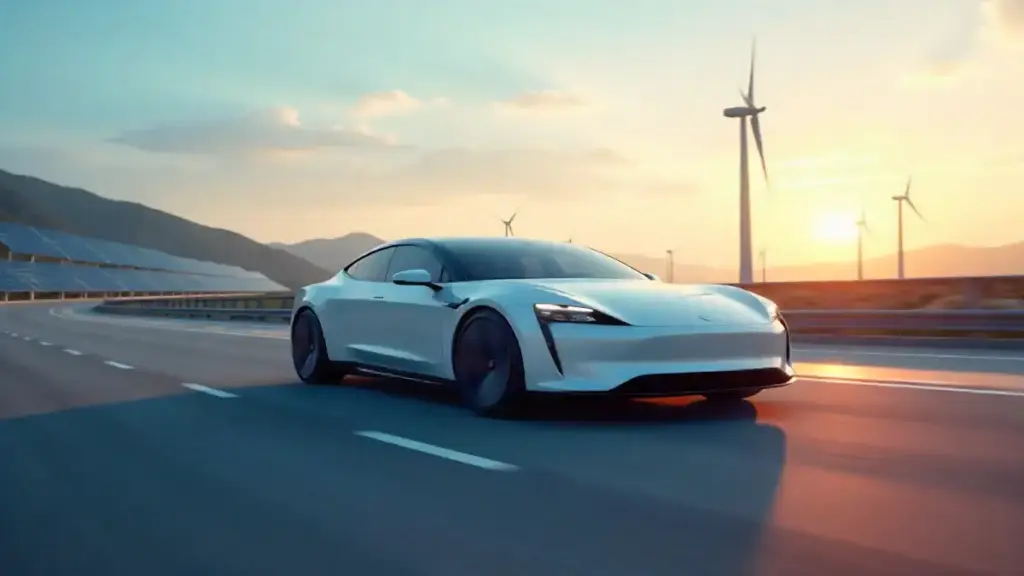
This is where renewable energy transforms the equation entirely. When you charge your EV with solar, wind, or hydroelectric power, you’re essentially eliminating the operational carbon emissions altogether. Zero tailpipe emissions plus zero power plant emissions equals truly zero-emission driving. It’s not just an incremental improvement—it’s a fundamental transformation.
Solar Power: Your Personal Charging Station
Let’s talk about the most accessible renewable option for many EV owners: solar panels. The synergy between rooftop solar and electric vehicles is almost poetic in its elegance. During the day, while your car sits in your garage or workplace parking lot, the sun generates electricity that either charges your vehicle directly or feeds into the grid, creating credits you’ll use later for charging.
The numbers are compelling. A typical residential solar installation of 6-8 kilowatts can generate around 8,000-11,000 kilowatt-hours annually in a reasonably sunny climate. Meanwhile, an efficient electric vehicle like a Tesla Model 3 or Chevrolet Bolt uses about 3,000-4,000 kWh per year for average driving. Do the math, and you’ll realize that a modest solar array can power your car and contribute significantly to your home’s energy needs.
I’ve spoken with dozens of EV owners who’ve made this leap, and they all describe a similar moment of revelation. Mark, a software engineer in Colorado, put it perfectly: “The first time I looked at my app and saw my car charging from 100% solar generation, something clicked. I was literally driving on sunshine from my own roof. It felt less like owning a car and more like being part of the solution.”
The economics are increasingly attractive too. Federal tax credits cover 30% of solar installation costs through 2032, and many states offer additional incentives. With electricity prices rising and solar costs falling, the payback period for solar-plus-EV setups has dropped to 6-10 years in many regions—not bad for a system that lasts 25+ years.
Wind Energy: Powering the Charging Network
While solar works beautifully for home charging, wind energy is revolutionizing the public charging infrastructure that makes long-distance EV travel possible. And here’s something wonderful about wind: it often blows strongest at night, precisely when solar production drops to zero. This complementary relationship makes wind and solar the perfect partners in creating 24/7 renewable charging availability.
Major charging networks are taking notice. Electrify America, one of the largest DC fast-charging networks in the U.S., has committed to powering all its charging stations with 100% renewable energy, primarily through wind power contracts. When you plug in at one of their stations, you’re not just adding miles to your battery—you’re supporting the expansion of wind farms across the country.
The scale of wind energy deployment is staggering. In 2024, the United States installed over 6,000 megawatts of new wind capacity, enough to power approximately 1.8 million homes—or tens of millions of electric vehicle charging sessions. Texas, despite its oil heritage, now generates more electricity from wind than any other state, with massive wind farms stretching across the Panhandle and offshore installations beginning to appear in the Gulf.
What’s particularly exciting is how wind energy addresses the “duck curve” challenge in renewable grids. This technical term describes how solar production peaks midday but drops off precisely when people come home and plug in their EVs. Wind power, which often peaks in the evening and overnight hours, fills this gap beautifully. For EV owners, this means setting your car to charge overnight often corresponds with peak wind production—making your sustainable choice even more sustainable.
The Smart Grid Revolution
Now, let’s talk about something that doesn’t get enough attention: bidirectional charging and vehicle-to-grid (V2G) technology. This is where the relationship between renewable energy and EVs becomes truly symbiotic rather than simply beneficial.
Here’s the concept: what if your EV wasn’t just a consumer of renewable energy but also a mobile battery bank that could stabilize the grid and store excess clean energy? That’s exactly what V2G technology enables. When wind farms generate excess power at 2 AM or solar panels overproduce on a sunny Saturday, that energy can flow into parked EVs. Later, during peak demand or when renewable production dips, those same vehicles can feed electricity back to the grid.
Think about the implications. The average car sits parked 95% of the time. If even a fraction of the projected 26 million EVs expected on American roads by 2030 participated in V2G programs, they’d represent a distributed battery storage system with capacity measured in hundreds of gigawatt-hours—more than all the stationary battery storage currently deployed worldwide.
Several pilot programs are already demonstrating this potential. In the United Kingdom, Nissan and E.ON have partnered on a V2G initiative where Nissan Leaf owners can earn up to £350 annually by allowing their vehicles to support grid stability. Similar programs in California and Colorado are showing how EVs can help integrate more renewable energy while reducing the need for fossil fuel “peaker” plants that traditionally handle demand spikes.
The technology is still maturing, and not all EVs support bidirectional charging yet, but manufacturers like Ford (with the F-150 Lightning), Hyundai, and Volkswagen are increasingly including this capability. As it becomes standard, your EV becomes not just a car but an active participant in the renewable energy ecosystem.
Workplace and Public Charging Go Green
The renewable revolution isn’t limited to home charging. Employers and businesses are rapidly recognizing that solar-powered workplace charging stations serve multiple purposes: they demonstrate environmental leadership, provide valuable employee benefits, and can actually reduce operational costs through smart energy management.
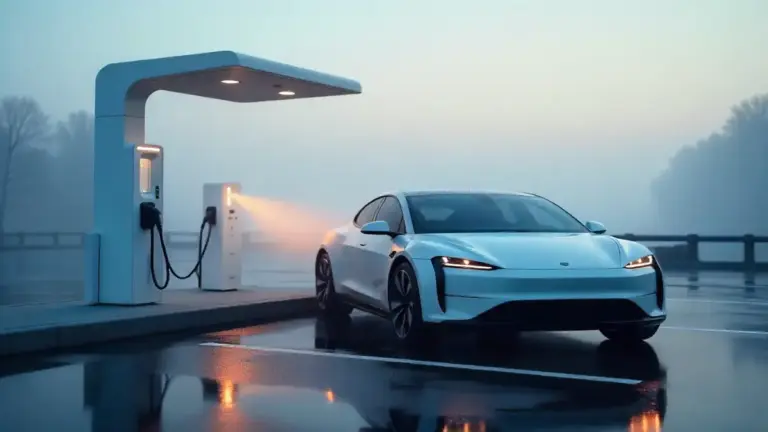
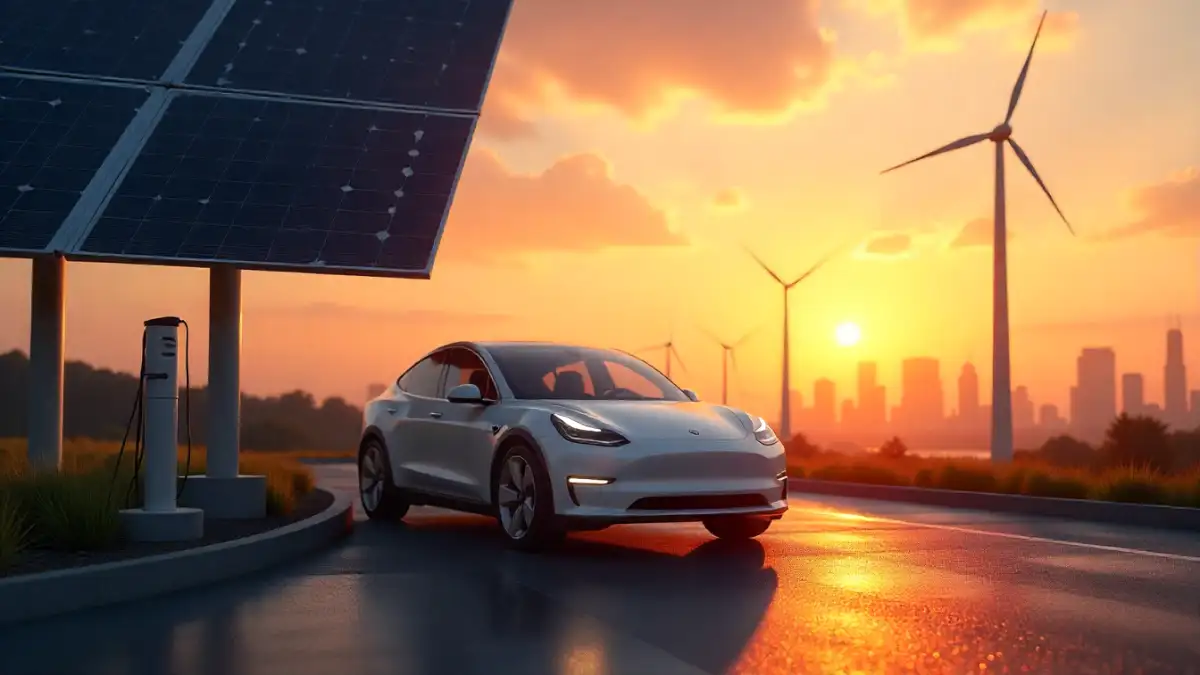
Companies like Google, Apple, and IKEA have installed massive solar canopy systems over their parking lots, simultaneously generating clean energy and providing shade for vehicles. These installations can offset significant portions of a company’s energy consumption while making EV charging a zero-marginal-cost employee benefit. For workers, it means arriving at 9 AM, parking under solar panels, and leaving at 5 PM with a fully charged car—all powered by the sun that beat down during the workday.
Public charging operators are following suit. ChargePoint, one of the world’s largest charging networks, offers solar-integrated charging solutions and allows station hosts to specify renewable energy preferences. Even in urban environments where rooftop space is limited, creative solutions are emerging: solar streetlight chargers, solar-integrated parking meters, and community solar programs that allow urban EV owners to support remote renewable installations.
The Carbon Math That Matters
Let’s get specific about the environmental impact, because numbers matter when we’re talking about climate solutions. The average gasoline-powered car emits about 4.6 metric tons of CO2 annually. Switch to an EV charged from the average U.S. grid, and you drop to about 1.5-2 metric tons. But charge that same EV exclusively from renewable energy, and you eliminate those operational emissions almost entirely—you’re left only with the embedded emissions from manufacturing, which are one-time costs amortized over the vehicle’s lifetime.
Scale that up: if just 20% of American vehicles were electric and powered by renewables, we’d reduce transportation sector emissions by approximately 200 million metric tons of CO2 annually. That’s equivalent to taking 43 million gasoline cars off the road or planting 3.3 billion trees.
But here’s what really matters to you as an individual: every mile you drive on renewable electricity is a mile that produces zero emissions, zero air pollution, and zero dependence on oil markets. It’s climate action that doesn’t require sacrifice—it requires simply choosing different infrastructure.
Challenges We’re Still Solving
I’d be doing you a disservice if I painted this picture as perfect. There are real challenges we’re still working through, and being honest about them is important for understanding where we’re headed.
First, renewable energy is intermittent. The sun doesn’t always shine, and the wind doesn’t always blow. This means we need better battery storage systems to capture excess renewable production for use during low-generation periods. The good news? Battery costs have dropped 90% over the past decade, and massive grid-scale storage projects are coming online rapidly. California alone has installed over 6,000 megawatts of battery storage capacity, with much more in development.
Second, the manufacturing emissions from both EVs and renewable infrastructure are real. Mining lithium, cobalt, and rare earth elements has environmental costs. Manufacturing solar panels and wind turbines requires energy, often from fossil fuels. Critics rightfully point this out. However, lifecycle analyses consistently show that even accounting for these manufacturing emissions, EVs powered by renewables have 70-90% lower lifetime emissions than gasoline vehicles. And as manufacturing increasingly uses renewable energy itself, these embedded emissions continue to fall.
Third, grid capacity and charging infrastructure still need significant expansion in many regions. Adding millions of EVs represents a substantial increase in electricity demand, and not all grids are prepared for this. But this challenge is also an opportunity—it’s driving investment in grid modernization, smart charging systems, and distributed energy resources that will benefit everyone.
What You Can Do Today
So where does this leave you? Whether you’re already driving electric or considering making the switch, here are concrete steps you can take to maximize the renewable connection:
If you’re an EV owner:
- Investigate your utility’s renewable energy programs. Many offer options to purchase 100% renewable electricity for a small premium—often less than $20 monthly.
- Consider solar panels if you own your home. The combination of federal and state incentives makes this more affordable than ever.
- Look into time-of-use electricity rates and charge overnight when renewable energy (especially wind) is often most abundant.
- If your EV and utility support it, enroll in vehicle-to-grid pilot programs.
If you’re considering an EV:
- Research which models support bidirectional charging if you’re interested in V2G capabilities.
- Check if your workplace offers solar-powered charging stations.
- Calculate your potential savings not just from reduced fuel costs but from potential solar+EV synergies.
- Look for charging networks committed to 100% renewable energy.
For everyone:
- Support policies and utilities that prioritize renewable energy expansion.
- Spread awareness about the renewable-EV connection—many people still don’t understand how dramatically renewables change the environmental equation.
- Consider that supporting EV adoption is also supporting renewable energy deployment, as increased electricity demand accelerates clean energy investment.
The Road Ahead
Standing at this intersection of renewable energy and electric mobility, I can’t help but feel optimistic. We’re not just talking about swapping one type of car for another or one form of energy for another—we’re witnessing the emergence of an integrated clean transportation and energy ecosystem.
Within the next decade, we’ll see solar-powered charging become commonplace, wind energy supply the majority of public fast-charging, and millions of EVs serving as distributed storage helping balance renewable-heavy grids. The question isn’t whether this future will arrive—it’s how quickly we’ll build it and how many people will participate in creating it.
Every electric vehicle charged with renewable energy represents a small but meaningful step toward energy independence, climate stability, and cleaner air. It’s climate action that happens automatically, every time you plug in. And unlike many environmental solutions that require sacrifice or lifestyle changes, this one offers better performance, lower operating costs, and a more convenient refueling experience.
The sustainable future isn’t something we’re waiting for—it’s something we’re charging into, one kilowatt-hour of clean electricity at a time. And the best part? You can be part of building it, starting today, in your own garage or at your local charging station.
The convergence of renewable energy and electric vehicles isn’t just a technological achievement—it’s a testament to human ingenuity and our ability to solve the challenges we’ve created. So next time someone questions whether EVs are truly green, you’ll know the answer: when powered by sunshine and wind, they’re not just green—they’re part of the solution that transforms how we think about energy, transportation, and our relationship with the planet.
Are you ready to drive on sunshine?