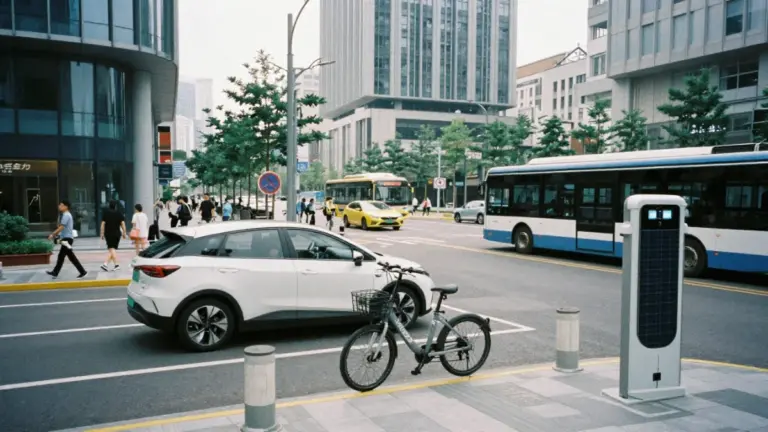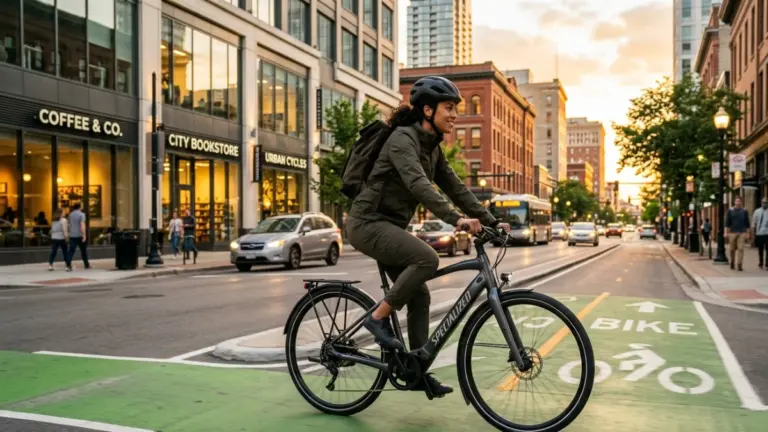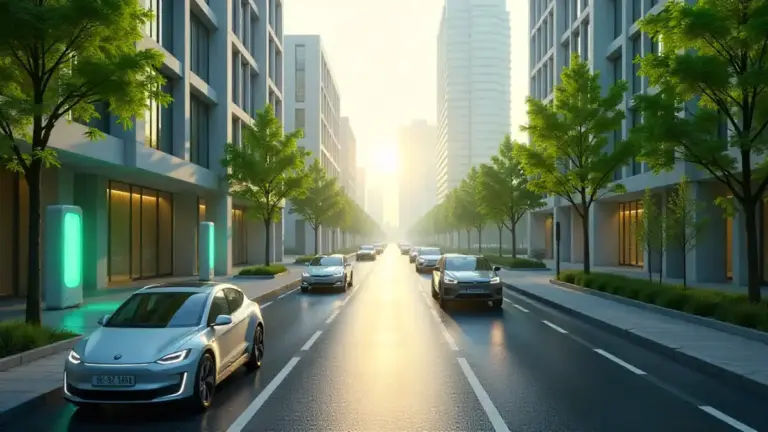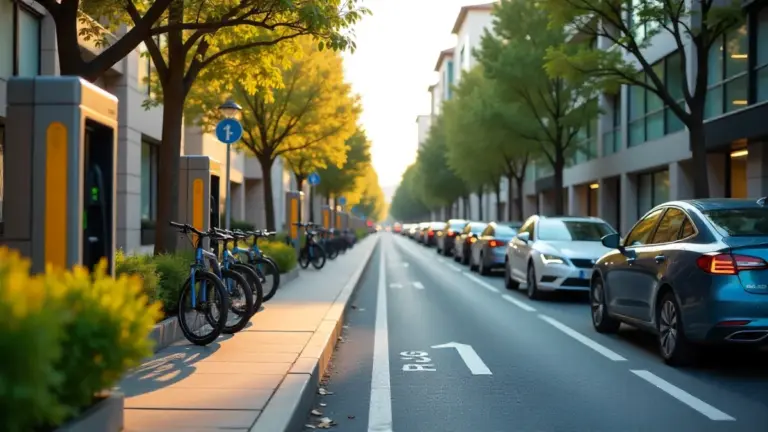
Green transportation solutions in 2025 are more accessible and practical than ever. From affordable EVs and electric buses to e-bikes and hydrogen trains, cleaner mobility options can dramatically cut emissions and save money. This guide explains how electric vehicles, public transit, micromobility, and emerging technologies are reshaping transportation while helping cities and individuals reduce their environmental impact without sacrificing convenience.
Green Transportation Solutions: Your Complete 2025 Guide to Cleaner Ways to Move
From electric vehicles and hydrogen trains to e-bikes and car-free city planning, here’s everything you need to know about getting from A to B without wrecking the planet.
Here’s a question I get almost every week: “Roy, what’s the single best thing I can do for the environment?” My answer surprises people. It’s not switching to a vegan diet, it’s not installing solar panels — it’s rethinking how you move. Transportation accounts for roughly 23% of global CO₂ emissions, making it one of the largest and most solvable climate challenges we face right now.
The good news? Green transportation solutions have never been more accessible, more affordable, or more exciting. Whether you’re shopping for your first electric vehicle, considering ditching the car entirely, or just curious about what a truly sustainable city looks like, this guide covers every option worth knowing about in 2025.
Here’s what you’ll find in the next few thousand words: a clear-eyed breakdown of every major green transport mode, honest comparisons of costs and trade-offs, the data that actually matters, and practical advice for making choices that fit your real life — not a utopian fantasy.
23%of global CO₂ from transportation
40M+electric vehicles on roads in 2025
70%lower lifecycle emissions vs gas cars
$7,500US federal EV tax credit available
Electric Vehicles: The Backbone of Green Personal Transport
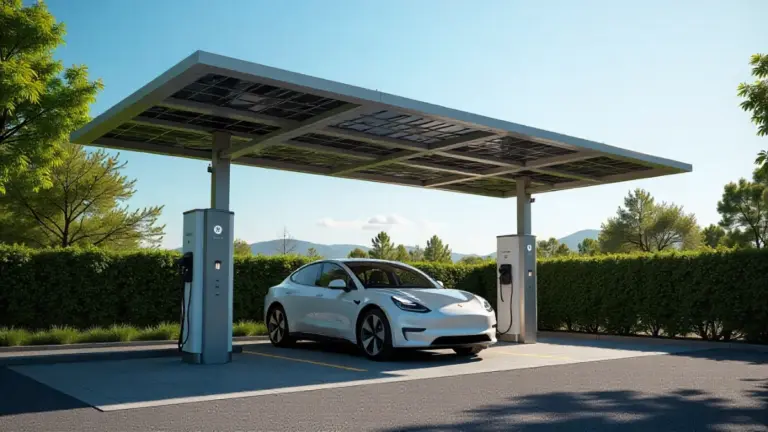
If green transportation had a flagship, it would be the battery electric vehicle — and rightly so. Modern EVs have shattered every myth about range anxiety, boring design, and sky-high costs. In 2025, you can buy a new electric car for under $30,000 (before incentives), charge it to 80% in under 30 minutes at a fast-charging station, and drive it 300+ miles on a single charge.
I’ve personally spent years behind the wheel of everything from entry-level EVs to flagship performance models, and the gap between electric and combustion vehicles — in terms of real-world driving experience — has essentially closed. The gap in environmental impact, however, remains wide open.
Why EVs actually are greener
The most common pushback I hear is: “But what about the emissions from manufacturing the battery, or charging from a coal-heavy grid?” It’s a fair question. Here’s the honest answer: even when you factor in battery production and a carbon-heavy electricity grid, the average EV produces roughly 50–70% fewer lifecycle emissions than a comparable gasoline vehicle. And as grids get cleaner — which they are, fast — that gap only widens.
According to the International Energy Agency (IEA), the average carbon intensity of electricity grids worldwide dropped by 12% between 2015 and 2024. Charge your EV in California, France, or Scandinavia today, and you’re running on an energy mix that’s largely renewable. Drive it for 150,000 miles, and the environmental math becomes overwhelming in your favor.
Best EV options in 2025 by budget
| Model | Starting Price (USD) | Range (EPA Est.) | Best For |
|---|---|---|---|
| Chevrolet Equinox EV | ~$34,995 | 319 miles | Families on a budget |
| Tesla Model 3 Standard | ~$38,990 | 333 miles | Tech-forward daily commuters |
| Hyundai IONIQ 6 | ~$38,615 | 361 miles | Long-distance drivers |
| Rivian R1T | ~$69,900 | 314 miles | Outdoors enthusiasts & truck buyers |
| BMW iX xDrive50 | ~$87,100 | 324 miles | Premium buyers wanting refinement |
The U.S. Inflation Reduction Act offers up to $7,500 in federal tax credits for qualifying new EVs purchased in 2025. Income limits and vehicle price caps apply — check the IRS’s Clean Vehicle Credit page before you buy. Many buyers also qualify for state-level incentives on top of the federal amount.
Public Transit’s Green Revolution
Here’s a fact that tends to shock people: a single full bus replaces roughly 40 individual car trips. If you live in or near a city, switching from a personal vehicle to well-run public transit may be the highest-impact transport decision you can make — period.
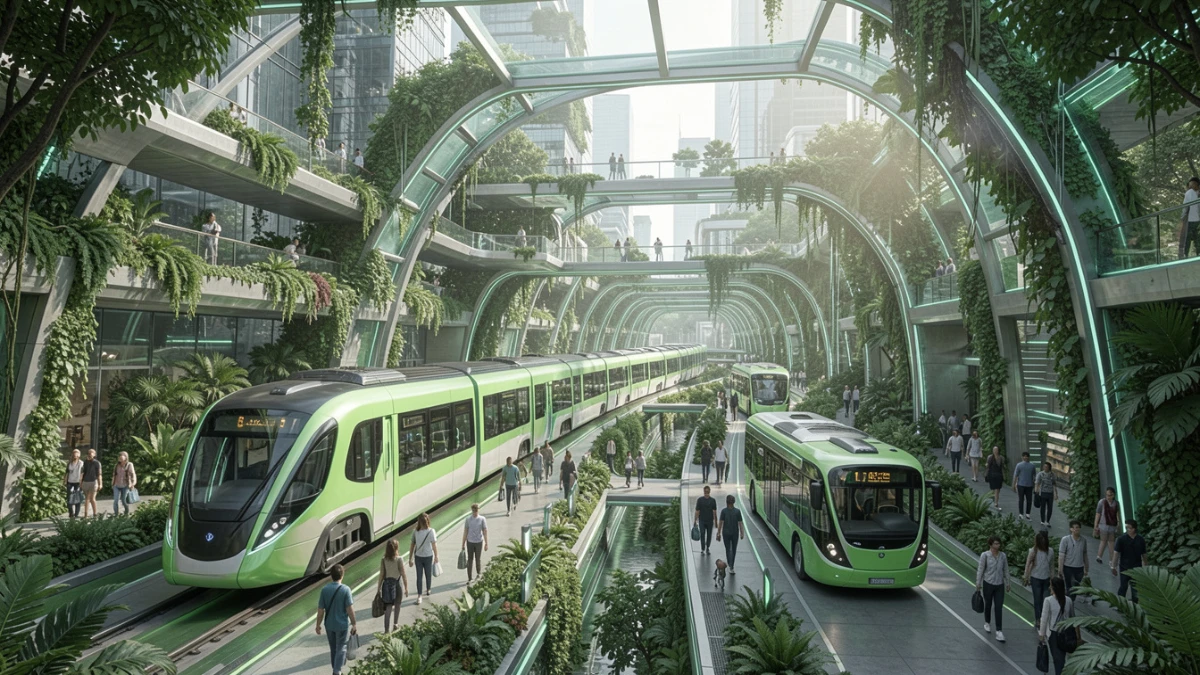
The global public transit system is also undergoing its own electrification revolution. Electric buses are no longer exotic novelties. Cities like Shenzhen, China operate fleets of over 16,000 electric buses. In 2025, major North American cities including Los Angeles, Chicago, and New York are all rolling out large-scale electric bus deployments. London’s famous red buses are increasingly electric. The technology works, it’s durable, and it’s cheaper to operate over a vehicle’s lifetime than diesel alternatives.
Electric and hydrogen rail
Rail remains the most energy-efficient way to move large numbers of people over medium and long distances. In Europe, high-speed rail networks like France’s TGV and Germany’s ICE are already responsible for a fraction of the emissions per passenger-kilometer compared to flying the same route.
Hydrogen-powered trains — which emit only water vapor — are now operational in Germany, the UK, and parts of Asia. They’re particularly valuable for routes where electrifying overhead lines is cost-prohibitive. California, meanwhile, is investing billions in high-speed rail that would connect Los Angeles and San Francisco at speeds up to 220 mph with zero direct emissions.
“The greenest mile you’ll ever travel is the one you take on a well-filled, electrified train. Nothing else in transportation even comes close, per person.”
Micromobility: The Underrated Giant of Green Transport
Ask most people about green transportation and they’ll immediately jump to cars. But here’s the thing: roughly 60% of car trips in the United States are under 5 miles. That’s a distance you could easily cover on a bicycle, an e-bike, or an electric scooter — in most cases, faster than driving when you factor in parking.
Micromobility — the umbrella term for e-bikes, conventional bicycles, scooters, and similar small-wheeled transport — is exploding in popularity worldwide. Global e-bike sales exceeded 40 million units in 2024, dwarfing electric car sales by a factor of roughly 3:1. And while an e-bike won’t solve every transportation problem, for urban and suburban commuters it’s one of the most genuinely transformative options available today.
Why e-bikes deserve serious consideration
- Carbon footprint: An e-bike produces less than 5 grams of CO₂ per kilometer — compared to roughly 170g for the average gasoline car.
- Cost savings: Average cost per mile is under $0.05, versus $0.20–$0.30 for a car once you factor in fuel, insurance, and depreciation.
- Health benefits: Regular e-bike riders still get meaningful cardiovascular exercise — studies show they’re more active overall than non-cyclists.
- Urban speed: In most cities under 5 miles, an e-bike commute takes similar or less time than driving when parking and traffic are factored in.
- Infrastructure improvements: Protected bike lane networks are expanding rapidly in cities across the U.S., Europe, and Asia, making cycling safer than it’s ever been.
Shared scooter and bike programs — operated by companies like Lime, Bird, and Lyft Bikes — also deserve mention. They’re imperfect, but for last-mile connectivity (getting from a transit hub to your final destination), they fill a gap that nothing else currently serves as well.

Emerging Green Transport Technologies Worth Watching
Beyond the established options, several technologies are gaining momentum that could reshape how we think about transportation over the next decade. I want to be honest here: some of these are genuinely promising, and some are still more hype than reality.
Hydrogen fuel cell vehicles
Hydrogen vehicles use a fuel cell to convert hydrogen gas into electricity, emitting only water vapor from the tailpipe. They refuel in minutes (unlike EVs that charge over hours), and the Toyota Mirai currently offers around 400 miles of range. The catch? Hydrogen fueling infrastructure barely exists outside California and Japan. Until that changes, hydrogen cars remain a niche option for most drivers — though for long-haul trucking, where BEV range limitations are a real constraint, hydrogen holds genuine promise.
Sustainable aviation
Aviation accounts for about 2.5% of global CO₂ emissions, but its warming effect is disproportionately larger due to contrails and high-altitude effects. Sustainable Aviation Fuel (SAF), made from waste materials and biological sources, can reduce aviation’s carbon footprint by up to 80% on a lifecycle basis. Airlines including United, Delta, and Lufthansa have committed to increasing SAF usage, though scaling supply remains a challenge.
Electric regional aircraft from companies like Heart Aerospace and Eviation are targeting short routes under 250 miles — a real market once batteries achieve the necessary energy density. Expect to see commercial electric flights on short hops by the late 2020s.
Autonomous electric mobility
Self-driving electric robotaxis — operated by Waymo in Phoenix and San Francisco, and expanding rapidly — represent an interesting green transport model. A shared, autonomous EV that replaces multiple personally owned cars could dramatically reduce the total number of vehicles on the road, cut emissions, and reduce urban congestion simultaneously. The technology is real; the regulatory and scaling challenges are equally real.
| Technology | Readiness | Key Benefit | Main Challenge |
|---|---|---|---|
| Battery EVs | Mainstream now | 70% fewer lifecycle emissions | Charging infrastructure gaps |
| E-bikes & scooters | Mainstream now | Near-zero emissions, low cost | Safety & weather limitations |
| Electric buses & rail | Scaling rapidly | Highest per-passenger efficiency | Capital investment required |
| Hydrogen vehicles | Early adoption | Fast refueling, zero tailpipe | Sparse fueling networks |
| Sustainable aviation fuel | Growing commercially | Up to 80% emissions reduction | Limited supply, higher cost |
| Electric aircraft (regional) | Late-stage development | Zero-emission short flights | Battery energy density |
How to Choose the Right Green Transportation Option for You
I want to push back, gently, against one-size-fits-all advice in this space. The “greenest” option depends enormously on where you live, how far you travel, what you can afford, and what your life actually looks like. A Tesla Model Y is a genuinely great choice if you drive 30,000 miles a year in a suburban area with good charging infrastructure. It’s probably overkill — financially and environmentally — if you live three blocks from a subway station and use a car twice a month.
Here’s a practical framework for thinking through your own choices:
- Under 5-mile trips: Walk, cycle, or use an e-bike. This is the highest-impact swap you can make for short urban trips.
- 5–30 mile commutes: E-bike or public transit where available; EV as a car replacement where it isn’t.
- 30–300 mile trips: EV is the clear winner for personal travel. High-speed rail where routes exist.
- 300+ mile trips: Train over flying wherever practical; choose SAF-committed airlines when flying is unavoidable.
- Can’t yet afford an EV? Certified Pre-Owned EVs from brands like Tesla, Chevy, and Nissan are available under $20,000. Even a used Nissan Leaf — not a thrilling car — eliminates tailpipe emissions entirely.
Worth knowing
The average American household spends over $12,000 per year on transportation — much of it on gas, maintenance, and insurance for personally owned vehicles. Switching to a combination of an EV and expanded transit/e-bike use can reduce that figure dramatically while shrinking your carbon footprint at the same time. It’s one of the few lifestyle changes that’s simultaneously better for your wallet and the environment.
The Bigger Picture: Cities, Policy, and Why Infrastructure Matters
Individual choices matter. But I’d be doing you a disservice if I left you with the impression that green transportation is purely a personal responsibility issue. The infrastructure surrounding our choices shapes those choices profoundly.
Cities that invest in protected bike lanes, reliable and frequent transit, EV charging networks, and mixed-use zoning (so people live closer to where they work and shop) make green transport the default — not the heroic exception. Amsterdam didn’t become a cycling paradise because Dutch people are uniquely virtuous. It became one because the city made cycling safe, convenient, and fast. The same logic applies to EVs: the U.S. Bipartisan Infrastructure Law allocated $7.5 billion specifically to build a national EV charging network, which is a recognition that infrastructure investment unlocks individual adoption.
What can you do beyond your own transport choices? Support local policies that expand transit funding, advocate for protected bike infrastructure, and vote for candidates who treat urban mobility as a climate issue — because it is one.
Key Takeaways
- Transportation is one of the biggest and most actionable climate levers you have. It accounts for nearly a quarter of global emissions, and solutions exist at every budget level today.
- EVs are the clear green choice for personal vehicle buyers in 2025. Lifecycle emissions are 50–70% lower than gasoline cars, incentives have never been better, and range/charging has largely caught up with real-world needs.
- Don’t overlook micromobility. E-bikes and bicycles are phenomenally efficient for short trips, and 60% of US car trips are under 5 miles — distances where a bike beats a car in nearly every metric.
- Public transit remains the most efficient mover of people on Earth. Choosing the bus, subway, or train over a solo car trip is always the greener option when it’s available and practical.
- Emerging technologies — hydrogen, SAF, electric aviation — are real, but they’re next-decade solutions for most people. The best green transport investments you can make today don’t require waiting for the future.
The Road Ahead
I’ve been covering the EV and green mobility space for years, and I genuinely believe we’re at an inflection point. The technologies are mature. The economics are compelling. The infrastructure is catching up. What’s still evolving is awareness — the realization, spreading person by person, that moving sustainably isn’t a sacrifice. More often than not, it’s actually a better experience.
The EV drives smoother, accelerates faster, and costs less per mile than the gas car it replaces. The e-bike commute is less stressful than the traffic jam it avoids. The train journey through the countryside is more enjoyable than the white-knuckle highway run. Green transportation isn’t a hairshirt. In 2025, it increasingly looks like the upgrade.
Your next step? Pick the one change in this guide that best fits your life — whether that’s test-driving an EV, buying an e-bike, or just taking the bus to work twice a week — and try it for a month. The data, the economics, and honestly most people’s experience will do the convincing for you.