Remember when electric cars were those quirky, slow-moving golf carts you’d see putting around retirement communities? Yeah, those days are long gone. We’re standing at the edge of something transformative—a complete reimagining of how we move, power our lives, and think about transportation itself. Between now and 2030, the EV revolution isn’t just coming—it’s already barreling down the highway at breakneck speed, and it’s bringing some fascinating friends along for the ride.
Let me paint you a picture of where we’re headed. It’s not just about swapping your gas tank for a battery pack anymore. We’re talking about a future where your car charges in the time it takes to grab a coffee, where your home and vehicle share the same energy ecosystem, and where getting from point A to point B might involve technologies that sound like they’re straight out of a sci-fi novel. Exciting? Absolutely. Complicated? A little. But don’t worry—I’m here to break it all down for you.
The Charging Revolution: From Anxiety to Convenience
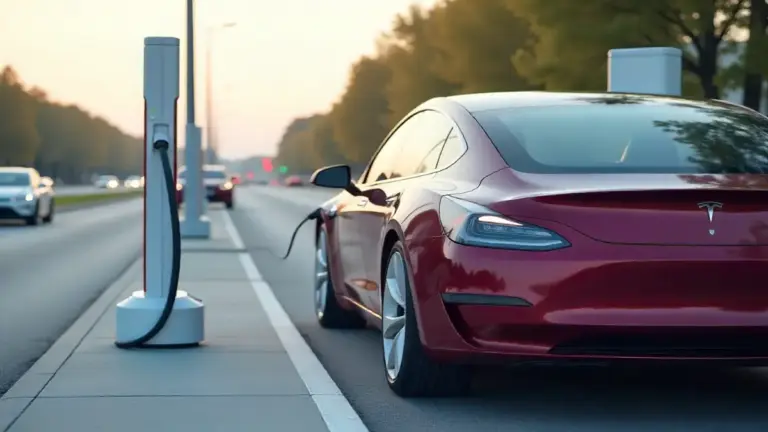
Let’s tackle the elephant in the room first—range anxiety. You know that nagging worry about running out of juice in the middle of nowhere? Well, the industry has heard you loud and clear, and they’re solving it in two brilliant ways.
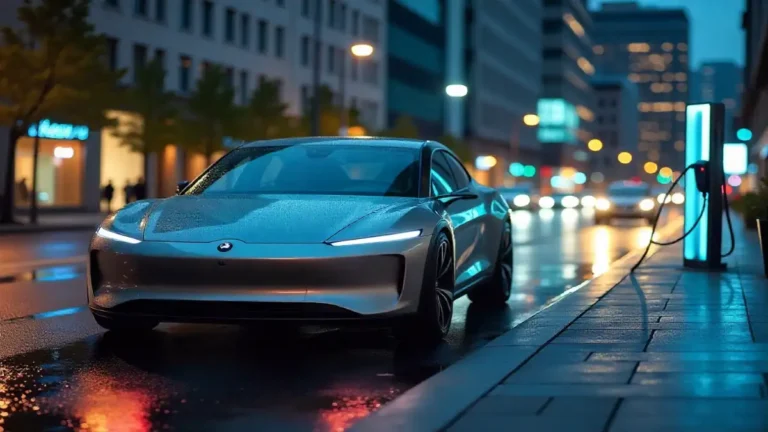
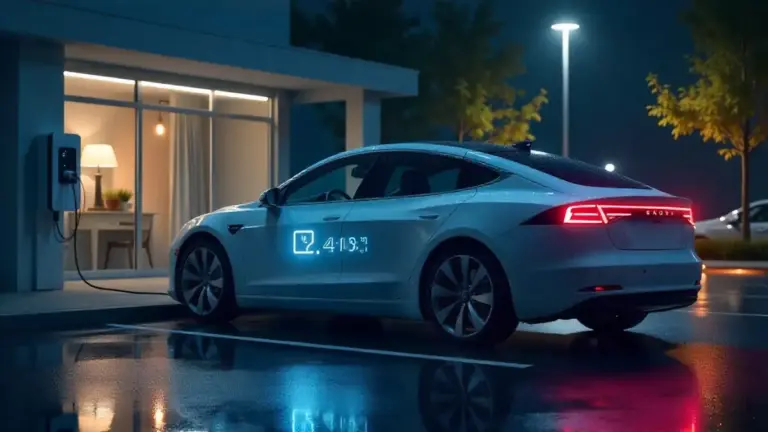
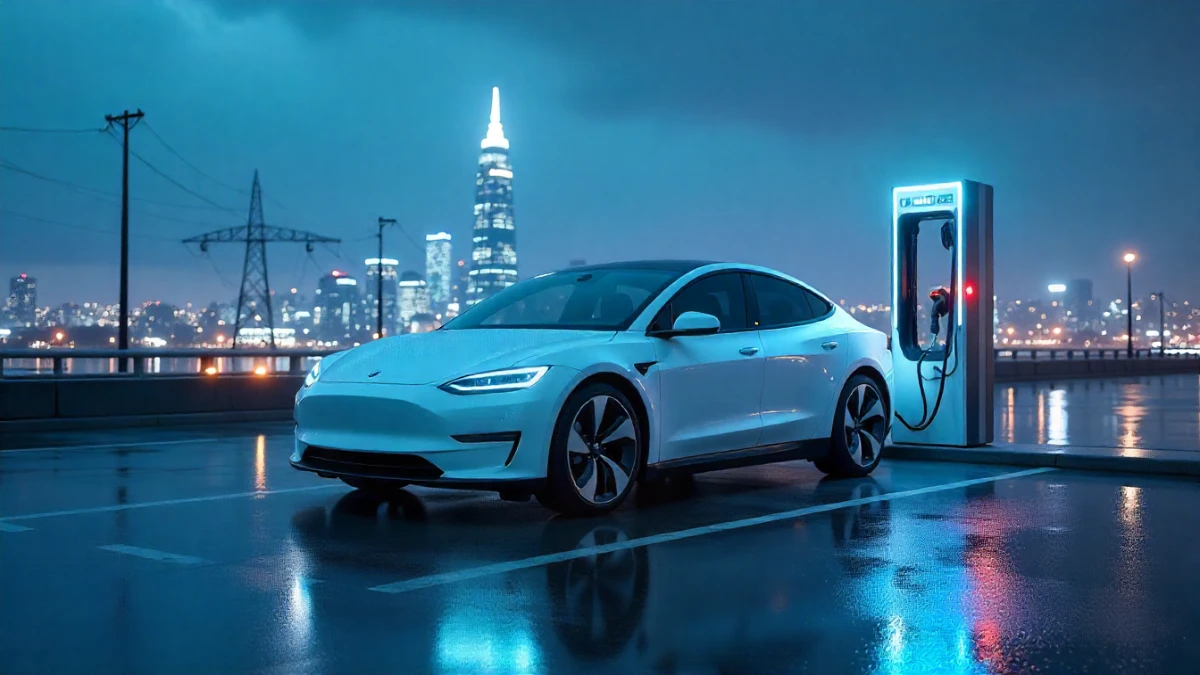
First up, charging speeds are getting ridiculously fast. We’re already seeing 350kW ultra-fast chargers that can add 200 miles of range in about 10 minutes. But here’s where it gets really interesting: by 2028, experts predict we’ll have widespread 500kW chargers that could fully charge most EVs in under 15 minutes. That’s less time than it takes to run into a convenience store, grab a snack, and use the restroom.
Battery technology is the real MVP here. Solid-state batteries—which replace the liquid electrolyte in current lithium-ion batteries with a solid material—are moving from lab experiments to production lines. Companies like Toyota and QuantumScape are racing to bring these to market by 2027-2028, promising not just faster charging but also 50% more range and better safety. Imagine driving 600-700 miles on a single charge. Suddenly, that road trip to see family doesn’t seem so daunting, does it?
But here’s something most people don’t think about: the charging infrastructure is becoming smarter, not just faster. Networks are now using AI to predict demand, optimize grid load, and even reserve charging spots for you before you arrive. Apps can tell you not just where chargers are, but which ones are likely to be available when you get there, what they’ll cost, and how long you’ll need to wait. It’s like having a personal charging concierge in your pocket.
Your Home Becomes a Power Station
Now, let’s talk about something that’s genuinely changing the game—vehicle-to-home (V2H) and vehicle-to-grid (V2G) technology. This is where things get seriously cool.
Picture this: You come home from work, plug in your EV, and instead of just drawing power from your home, your car actually becomes part of your home energy system. During peak electricity hours when rates are high, your car battery can power your house. When rates drop at night, you recharge the car. Some estimates suggest this could cut your electricity bills by 20-30% annually.
But it goes deeper than just saving money. We’re entering an era where EVs become mobile power banks that strengthen the entire electrical grid. During emergencies—think hurricanes, heat waves, or grid failures—your EV could keep your refrigerator running, your phones charged, and your lights on for days. Ford’s F-150 Lightning already offers this capability, powering a home for up to three days on a full charge.
By 2030, analysts project that over 30% of new EVs will come standard with bidirectional charging capability. Combine this with home solar panels and battery storage, and you’re looking at something remarkable: true energy independence. You generate power during the day, store it in your home battery and EV, use what you need, and potentially even sell excess back to the grid for profit. Your driveway essentially becomes a mini power station.
The regulatory landscape is catching up too. States like California are already implementing programs that pay EV owners to feed power back into the grid during high-demand periods. Imagine getting paid to charge your car at night and then contributing to grid stability during the day. It’s not just environmentally conscious—it’s economically smart.
The Great EV Showdown: Legacy vs. Startups
The competition in the EV space is heating up like never before, and honestly, it’s making things better for all of us. On one side, you’ve got the established automakers—Ford, GM, Volkswagen, Mercedes—bringing their decades of manufacturing expertise, dealer networks, and brand trust. On the other, you’ve got the disruptors—Tesla, Rivian, Lucid, and dozens of others—pushing innovation at a pace that would make traditional development cycles look glacial.
Legacy automakers are investing astronomical sums into electrification. GM alone has pledged $35 billion toward EV development through 2025, with plans for 30 new electric models globally by 2030. Ford’s targeting 2 million EV sales annually by 2026. These aren’t just press releases—factories are being retooled, workers are being retrained, and entirely new platforms are being developed from the ground up.
But here’s where the startup advantage shines: they’re not burdened by legacy systems or existing dealer networks that sometimes resist change. They can be bold, weird, and experimental. Rivian’s gear tunnel? Brilliant. Lucid’s focus on efficiency and luxury? Gorgeous. Polestar’s Scandinavian minimalism? Chef’s kiss.
What’s fascinating is that this competition is driving innovation faster than anyone predicted. Features that were exclusive to $100,000+ vehicles three years ago—over-the-air updates, advanced driver assistance, massive infotainment screens—are now appearing in $35,000 EVs. When everyone’s fighting for your attention, you win.
And let’s not forget the international players. Chinese manufacturers like BYD and NIO aren’t just dominating their home market—they’re expanding globally with compelling, affordable options. BYD actually outsold Tesla globally in the final quarter of 2023, and they’re not slowing down. This global competition means more choices, better features, and competitive pricing for consumers everywhere.
Beyond Cars: The Wild Frontier of Electric Mobility
Here’s where things get really futuristic. The electrification movement isn’t stopping at passenger vehicles—it’s transforming every corner of transportation, and some of these developments sound absolutely wild.
Urban Air Mobility: Yes, flying taxis are actually happening. Companies like Joby Aviation and Archer have working prototypes of electric vertical takeoff and landing (eVTOL) aircraft. These aren’t science fiction anymore—Joby aims to launch commercial operations in select cities by 2025. Imagine bypassing rush hour traffic entirely by hopping in an electric air taxi. The FAA is already developing certification frameworks, and vertiports are being planned in cities from Miami to Los Angeles.
Hyperloop Development: While full-scale commercial hyperloop systems probably won’t be operational until the 2030s, the technology is advancing. Multiple test tracks are operational, and routes are being planned connecting major cities. Electric-powered pods traveling at 600+ mph in near-vacuum tubes could make the trip from Los Angeles to San Francisco in 35 minutes. Sound crazy? So did the internet in 1990.
Electrified Commercial Transport: Heavy-duty trucks, delivery vans, and even cargo ships are going electric. Amazon has ordered 100,000 electric delivery vans from Rivian. Volvo and Daimler are rolling out electric semi-trucks. Even container ships are being retrofitted with battery systems and charging infrastructure at ports. The logistics revolution is electric, and it’s happening quietly in the background while we focus on passenger cars.
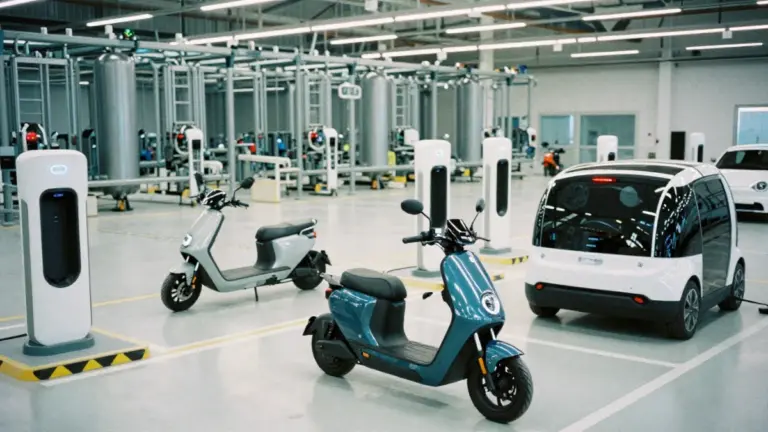
Micromobility Explosion: E-bikes, e-scooters, and electric cargo bikes are transforming urban transportation faster than traditional EVs in many cities. By 2030, the micromobility market is projected to exceed $200 billion globally. These aren’t toys—they’re legitimate transportation solutions that are reducing car dependency, cutting emissions, and making cities more livable.
Smart Grids and Intelligent Infrastructure
Let’s talk about the nervous system that’s going to make all this possible: smart grids. You can’t just add millions of EVs to the existing electrical infrastructure without making it smarter. The good news? That transformation is already underway.
Smart grids use real-time data, AI, and automated systems to balance electricity supply and demand dynamically. They can communicate directly with your EV to optimize charging times based on grid capacity, renewable energy availability, and your driving schedule. You tell your car you need it fully charged by 7 AM, and it figures out the optimal time to charge based on current grid conditions and electricity rates.
This gets particularly interesting when you consider renewable energy. Solar and wind are fantastic, but they’re also intermittent—the sun doesn’t always shine, and the wind doesn’t always blow. EVs, with their massive battery capacity, can act as distributed energy storage, absorbing excess renewable energy when production is high and feeding it back when production drops. It’s like having millions of battery buffers stabilizing the grid.
Utility companies are already piloting programs that incentivize smart charging. Some offer reduced electricity rates if you allow them to control charging timing during peak demand events. Others pay you to participate in demand response programs. The average EV owner participating in these programs can save $300-500 annually on electricity costs.
Looking forward to 2030, we’ll see neighborhoods with integrated energy management systems where EVs, home batteries, solar panels, and smart appliances all communicate to optimize energy use. Your house won’t just consume power—it’ll be an active participant in a dynamic energy ecosystem.
The Policy Push: Incentives and Regulations
None of this happens in a vacuum. Government policies are playing a huge role in accelerating EV adoption, and the landscape is evolving rapidly.
The Inflation Reduction Act in the US provides up to $7,500 in federal tax credits for new EV purchases (with specific requirements about battery sourcing and manufacturing location) and $4,000 for used EVs. Many states add their own incentives on top of this—California offers up to $7,500 in additional rebates, Colorado adds $5,000, and several others have similar programs. When you stack federal and state incentives, some buyers are seeing $10,000+ in total savings.
But the real game-changer is on the regulatory side. California has mandated that all new passenger vehicle sales be zero-emission by 2035, and over a dozen states have adopted or are considering similar rules. The European Union is banning sales of new internal combustion engine vehicles by 2035. China, the world’s largest auto market, is aggressively pushing EV adoption through quotas and subsidies.
Internationally, we’re seeing even bolder moves. Norway is targeting 2025 for ending new gas car sales—and they’re already at over 80% EV market share for new vehicles. The UK is phasing out new gas and diesel cars by 2030. These aren’t aspirational goals—they’re locked-in regulations that automakers are building their entire product strategies around.
By 2030, it’s estimated that global EV sales will reach 40-50% of total new vehicle sales, up from about 14% in 2023. That’s not gradual change—that’s transformation at scale.
What This Means for You
So what does all this actually mean for someone considering an EV or already driving one? Let me break it down into practical terms.
Right now, EVs are more affordable than ever, with compelling options at virtually every price point. Charging infrastructure is expanding rapidly—there are now more public charging stations in the US than gas stations in many urban areas. Operating costs are significantly lower than gas vehicles, even with the recent drop in gas prices.
By 2027-2028, expect charging to become as convenient as filling up with gas, thanks to ultra-fast charging and dense networks. Battery technology will provide ranges that eliminate any practical concerns for daily driving and road trips. Vehicle-to-home integration will be standard, turning your EV into an energy asset.
By 2030, the used EV market will be mature and robust, making electric vehicles accessible to budget-conscious buyers. The variety of body styles, sizes, and capabilities will match or exceed what’s currently available for gas vehicles. And perhaps most importantly, the supporting infrastructure—from charging networks to maintenance facilities—will be fully mature.
The question isn’t really whether to go electric anymore. It’s when. And for more people every day, the answer is: now.
Looking Forward
We’re living through one of the most significant transportation transitions in human history. It’s not just about cars—it’s about reimagining energy systems, urban planning, and how we move through the world. The convergence of fast charging, home integration, fierce competition, smart infrastructure, and supportive policies is creating a perfect storm for EV adoption.
Sure, there are still challenges. We need more charging stations in rural areas. Battery supply chains need to become more sustainable and resilient. Grid infrastructure requires continued investment. But here’s the thing: every single one of these challenges is being actively worked on by thousands of brilliant people, billions of dollars in investment, and coordinated policy efforts.
The future of transportation isn’t coming—it’s already here, unfolding in real-time. By 2030, looking back at this moment, we’ll see it as the turning point when electric mobility went from niche to norm, from alternative to obvious choice.
So buckle up. The ride is going to be electric, and it’s going to be incredible.