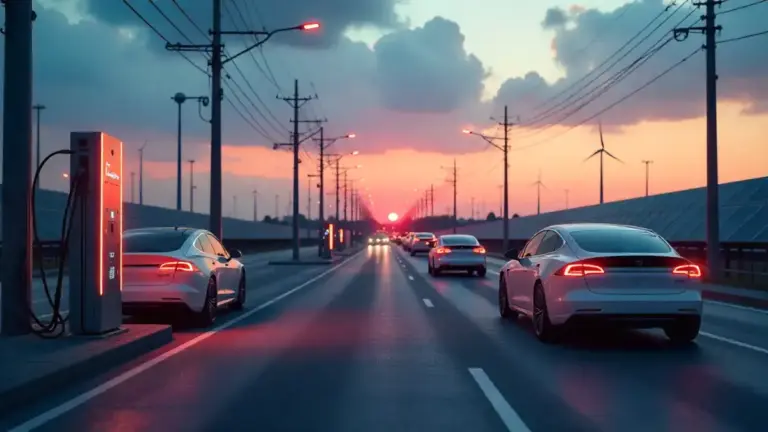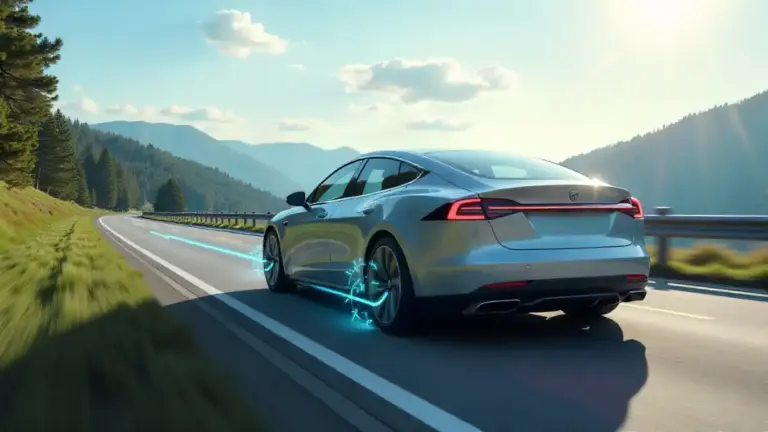
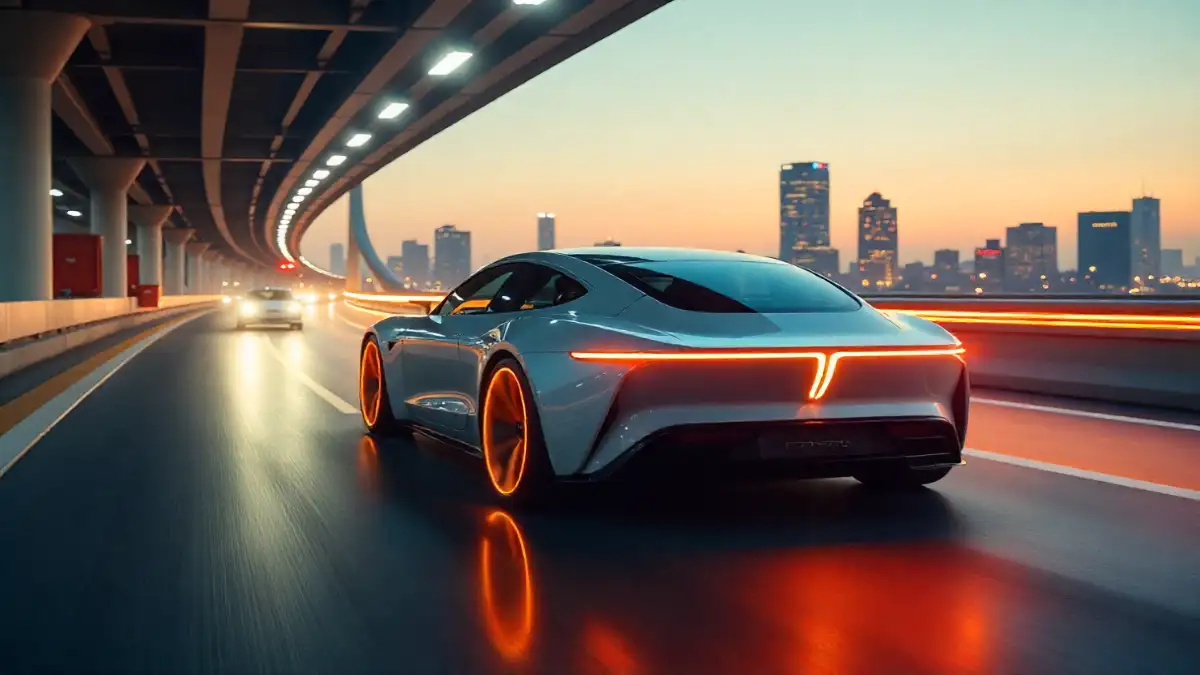
Picture this: you’re cruising down the highway in complete silence, with nothing but the hum of wind and tires on pavement. No engine rumble, no exhaust fumes, just smooth, instant acceleration that pins you gently to your seat. Welcome to the world of Battery Electric Vehicles, or BEVs – the cars that are quietly revolutionizing how we think about transportation.
If you’ve been wondering what all the fuss is about with electric cars, you’re in the right place. Today, we’re diving deep into Battery Electric Vehicles, breaking down everything from how they work to whether they might be right for your driveway. Trust me, by the end of this guide, you’ll understand why millions of drivers are making the switch – and why you might want to consider it too.
Understanding Battery Electric Vehicles: The Basics
So, what exactly is a Battery Electric Vehicle? Think of it as the purest form of electric car – one that runs entirely on electricity stored in a battery pack. Unlike hybrid vehicles that juggle between gasoline engines and electric motors, or plug-in hybrids that use both systems, BEVs are all-electric, all the time.
When most people say “electric car,” they’re usually talking about BEVs. These are vehicles like the Tesla Model 3, Nissan Leaf, or Ford Mustang Mach-E – cars that have completely ditched the internal combustion engine in favor of electric power.
The concept isn’t actually new. Did you know that electric vehicles were incredibly popular in the early 1900s? Before Henry Ford’s assembly line made gasoline cars affordable, electric vehicles dominated city streets. Now, more than a century later, we’re coming full circle with technology that would make those early pioneers green with envy.
How Battery Electric Vehicles Work: The Magic Under the Hood
Here’s where things get interesting. Pop the hood of a BEV, and you might be surprised by how much empty space you see. That’s because electric motors are incredibly compact compared to traditional engines – some are no bigger than a watermelon, yet they can produce more torque than a massive V8 engine.
The heart of any BEV is its battery pack, usually located under the floor of the vehicle. This isn’t just one giant battery, but rather hundreds or even thousands of smaller battery cells working together, similar to how your laptop battery contains multiple cells. These lithium-ion batteries store electrical energy that powers one or more electric motors.
When you press the accelerator pedal, you’re not opening a throttle valve like in a gas car. Instead, you’re telling the motor controller to draw more power from the battery. The electric motor then converts this electrical energy into mechanical energy, spinning the wheels and moving you forward. It’s beautifully simple and remarkably efficient.
One of the coolest features of BEVs is regenerative braking. When you lift off the accelerator or apply the brakes, the electric motor essentially reverses its role, acting like a generator. It captures the kinetic energy from your moving car and converts it back into electrical energy, feeding it back to the battery. It’s like having a tiny power plant that recovers energy every time you slow down.
Key Components That Make BEVs Tick
Let’s take a closer look at the main components that make your BEV run:
Battery Pack: This is the fuel tank of your electric car, but instead of holding gasoline, it stores electrical energy. Modern BEV batteries typically range from 40 kWh to over 100 kWh of capacity. To put that in perspective, the average American home uses about 30 kWh per day, so your car’s battery could literally power your house for several days.
Electric Motor: Unlike the hundreds of moving parts in a gasoline engine, electric motors have just one moving part – the rotor. This simplicity translates to incredible reliability and efficiency. Many BEVs have motors that are over 95% efficient, compared to gasoline engines that typically achieve only 20-30% efficiency.
Power Electronics: Think of this as the brain that manages the flow of electricity between the battery and motor. It converts the direct current (DC) from the battery into alternating current (AC) for the motor, and controls how much power flows based on your driving demands.
Onboard Charger: This component converts the AC electricity from your wall outlet into DC electricity that can be stored in the battery. It’s like having a built-in adapter that speaks both languages – your home’s electrical system and your car’s battery.
Thermal Management System: Batteries, like people, perform best at certain temperatures. This system keeps your battery pack cool in summer and warm in winter, maximizing both performance and longevity.
The Advantages That Are Driving the EV Revolution
Why are so many people making the switch to BEVs? The advantages are compelling, especially when you consider the total ownership experience.
Environmental Benefits: This is often the first reason people mention, and for good reason. BEVs produce zero direct emissions – no tailpipe means no pollutants entering your local air. Even when you factor in electricity generation, studies consistently show that BEVs produce significantly fewer greenhouse gas emissions than gasoline cars, especially as our electrical grid becomes cleaner.
Cost Savings: Here’s where BEVs really shine in the long run. Electricity is much cheaper than gasoline on a per-mile basis. While gas prices fluctuate wildly, electricity rates remain relatively stable. Many BEV owners report “fuel” costs of just $0.03-0.10 per mile, compared to $0.12-0.20 per mile for efficient gasoline cars.
Maintenance Simplicity: Remember those hundreds of moving parts in gasoline engines I mentioned? Well, BEVs don’t have oil changes, spark plug replacements, transmission fluid changes, or timing belt services. The main maintenance items are tire rotations, brake inspections (which last longer thanks to regenerative braking), and periodic software updates.
Performance Characteristics: Electric motors provide instant torque, meaning BEVs accelerate smoothly and quickly from a standstill. Many affordable BEVs can out-accelerate sports cars from decades past. Plus, the low center of gravity from floor-mounted batteries gives BEVs excellent handling characteristics.
Quiet Operation: Once you experience the serene quiet of electric driving, it’s hard to go back to engine noise. Your morning commute becomes more peaceful, and you can actually have conversations with passengers without raising your voice.
The Challenges You Should Consider
Let’s be honest – BEVs aren’t perfect for everyone, at least not yet. Here are the main challenges you might face:
Charging Infrastructure and Time: While charging networks are expanding rapidly, finding a fast charger isn’t always as convenient as finding a gas station. Plus, even fast charging takes 20-45 minutes for a significant charge, compared to the 5-minute gas fill-up you’re used to.
Range Limitations: Most new BEVs offer 200-300+ miles of range, which covers the vast majority of daily driving. However, long road trips require more planning, and you might experience “range anxiety” – that nagging worry about running out of power.
Upfront Cost: BEVs typically cost more upfront than comparable gasoline cars, though federal and state incentives can significantly reduce this gap. The total cost of ownership often favors BEVs, but that initial sticker shock is real.
Cold Weather Impact: Battery performance decreases in cold weather, reducing both range and charging speed. If you live in a very cold climate, you might see 20-30% range reduction in winter months.
Charging at Home: If you live in an apartment or don’t have a garage, installing home charging can be challenging or impossible. While public charging networks are growing, having home charging makes BEV ownership much more convenient.
Making the Decision: Is a BEV Right for You?
So, should you make the leap to a Battery Electric Vehicle? The answer depends on your specific situation, but here are some questions to consider:
Do you have a regular daily driving routine with predictable distances? If your daily driving is under 100 miles and you can charge at home or work, a BEV could be perfect for you. Many owners find they wake up to a “full tank” every morning.
Are you interested in the latest technology? BEVs often come with cutting-edge features like over-the-air software updates, advanced driver assistance systems, and smartphone integration that makes your car feel more like a computer on wheels.
Do you value environmental responsibility? If reducing your carbon footprint matters to you, a BEV is one of the most impactful changes you can make in your transportation choices.
The Road Ahead
The BEV landscape is evolving rapidly. Battery technology continues improving, with longer range and faster charging becoming standard. Major automakers are investing billions in electric vehicle development, meaning more choices and competitive pricing are coming.
Infrastructure is expanding too. The U.S. is building out a national network of fast chargers, and companies like Electrify America, ChargePoint, and Tesla’s Supercharger network are making long-distance travel increasingly practical.
Battery Electric Vehicles represent more than just a new type of car – they’re a glimpse into the future of transportation. With their environmental benefits, lower operating costs, and impressive performance, BEVs are proving that going electric doesn’t mean compromising on the driving experience.
Whether you’re ready to make the switch now or you’re still on the fence, understanding BEVs is increasingly important as they become a larger part of our automotive landscape. The question isn’t really whether electric vehicles will become mainstream – it’s how quickly the transition will happen, and whether you’ll be part of the early wave or wait for the technology to mature further.
The road ahead is electric, and it’s going to be an exciting ride.