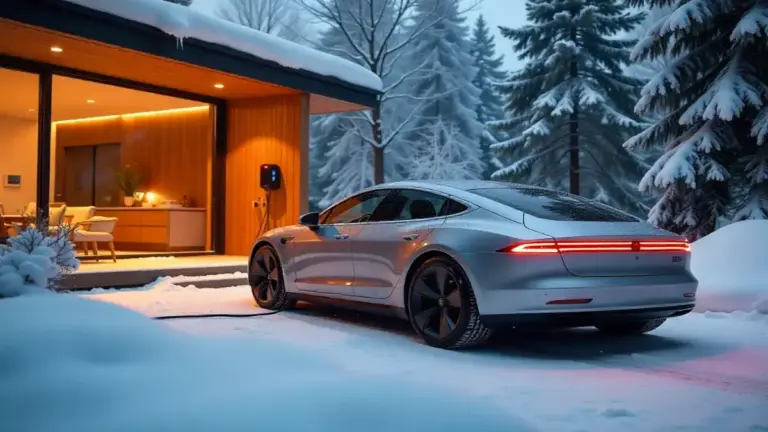
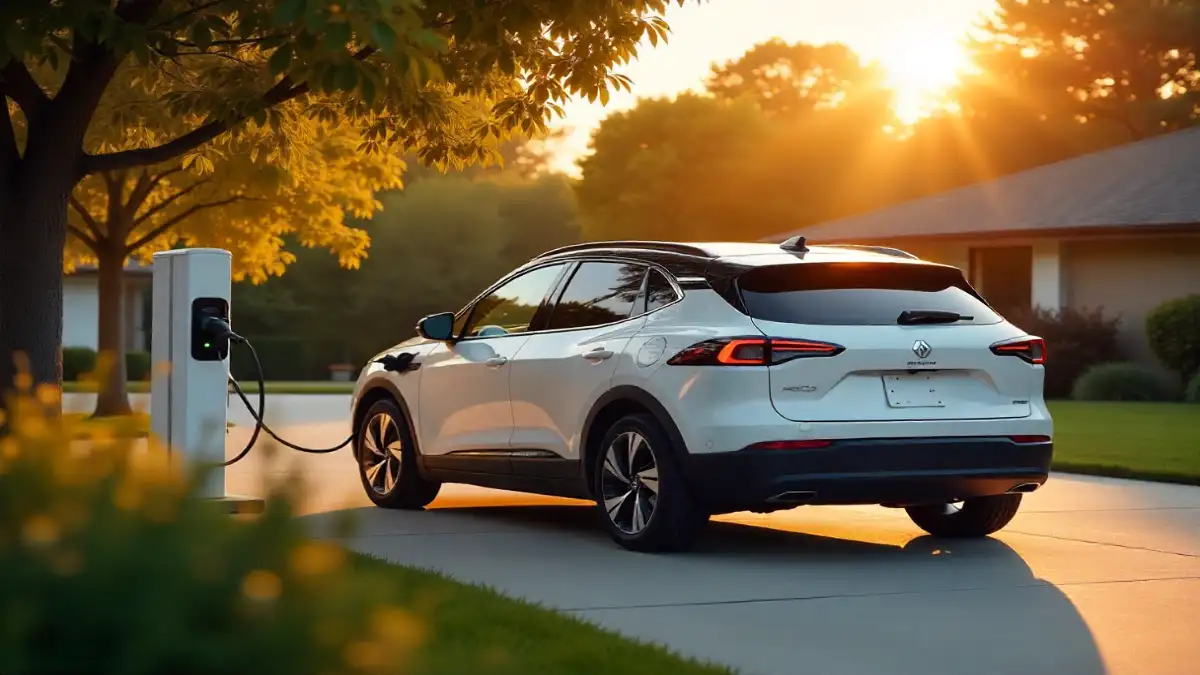
Picture this: you’re sitting in your driveway, coffee in hand, watching your neighbor plug their car into what looks like a charging station. But wait – isn’t that the same car you saw at the gas station last week? Welcome to the fascinating world of Plug-in Hybrid Electric Vehicles, or PHEVs as we like to call them.
If you’ve been curious about electric vehicles but worried about range anxiety, or if you’re intrigued by hybrids but want more electric-only driving, PHEVs might just be your perfect middle ground. These clever machines represent one of the most practical steps toward electrification, offering the best of both worlds without asking you to completely change how you think about driving.
Let me walk you through everything you need to know about these versatile vehicles, from how they actually work to whether one might be right for your driveway.
How PHEVs Actually Work: The Best of Both Worlds
Think of a PHEV as having two hearts beating in perfect harmony. Unlike a traditional hybrid that only charges its battery through the gasoline engine and regenerative braking, a PHEV comes with a larger battery pack that you can plug in and charge from an external power source – just like your smartphone.
Here’s where it gets interesting: most PHEVs can run purely on electricity for anywhere from 20 to 50 miles, depending on the model. The Toyota Prius Prime, for example, gives you about 25 miles of electric-only range, while the BMW X5 xDrive45e can stretch that to around 31 miles. For many people, this covers their daily commute entirely.
But here’s the beauty – when that battery runs low, the gasoline engine seamlessly kicks in. You don’t have to pull over, you don’t have to switch modes manually, and you certainly don’t get stranded. The car simply transitions from electric mode to hybrid mode, continuing to optimize fuel efficiency by switching between or combining both power sources as needed.
The sophisticated computer brain in your PHEV constantly monitors driving conditions, battery charge, and your driving style to decide the most efficient way to move you forward. Accelerating onto a highway? It might use both the electric motor and gas engine for maximum power. Cruising through your neighborhood? Pure electric mode keeps things whisper-quiet.
Charging Made Simple: Your New Daily Routine
One of the most common questions I hear is: “Do I really need to install some complicated charging setup?” The short answer is no, but let me explain your options.
Most PHEV owners start with what’s called Level 1 charging – that’s just plugging into a regular 120-volt household outlet using the charging cable that comes with your car. Yes, it’s slower than other methods, typically adding about 3-5 miles of range per hour of charging, but for many people, overnight charging is perfectly adequate.
Here’s a real-world example: if you have a 30-mile electric range and drive 25 miles to work and back, plugging in for 8 hours overnight will easily replenish what you used. Sarah, a teacher from Columbus, told me she’s been doing exactly this with her Honda Clarity Plug-in for two years and rarely uses gasoline during the school year.
If you want faster charging, Level 2 charging stations (240-volt) can fully charge most PHEV batteries in 2-4 hours. These are what you might install in your garage – think of it like a dryer outlet. Many PHEV owners find this worthwhile because it opens up possibilities like charging during dinner and having a full battery for evening activities.
The great news? You’re never dependent on finding a charging station. Unlike pure electric vehicles, your PHEV will happily run on gasoline if you can’t charge for a few days. It’s like having a safety net that removes all the anxiety from the equation.
Real-World Performance: What to Expect Behind the Wheel
Let’s talk about how these vehicles actually feel to drive, because that’s what really matters when you’re making a decision. In electric mode, PHEVs are remarkably quiet – so quiet that many models have artificial sound generators to warn pedestrians. The instant torque from electric motors means responsive acceleration from stoplights, often surprising drivers who expect sluggish performance from “eco” vehicles.
Take the Mitsubishi Outlander PHEV, which has become quite popular among families. Owners consistently report that the electric-only driving experience feels smooth and refined, particularly in stop-and-go traffic where the electric motor shines. When the gasoline engine does kick in, the transition is typically so smooth that passengers might not even notice.
However, it’s important to set realistic expectations. PHEVs aren’t typically designed to be sports cars – they’re optimized for efficiency and practicality. The Chrysler Pacifica Hybrid, for instance, prioritizes family hauling over acceleration, though it still provides adequate power for highway merging and hill climbing.
One aspect that surprises many new PHEV owners is regenerative braking. When you lift your foot off the accelerator or press the brake pedal, the electric motor reverses its role and becomes a generator, capturing energy that would otherwise be lost as heat. Some drivers love the one-pedal driving feel this creates, while others need time to adjust. Most PHEVs allow you to adjust the regenerative braking strength to match your preference.
Financial Reality: Costs, Savings, and Incentives
Let’s address the elephant in the room – PHEVs typically cost more upfront than their conventional counterparts. The Toyota RAV4 Prime, for example, starts about $6,000 higher than the regular RAV4 Hybrid. But here’s where the math gets interesting.
Federal tax credits can offset much of this premium. Most PHEVs qualify for credits ranging from $4,500 to $7,500, depending on their battery size. The key requirement is that the vehicle must have at least 5 kWh of battery capacity. Many states and utilities offer additional rebates – California residents might see total incentives exceeding $10,000.
Your daily savings depend heavily on your driving patterns and local electricity rates. If you can handle most of your daily driving on electric power, your fuel costs could drop dramatically. Mark, an accountant from Toledo, calculated that his daily 45-mile commute costs him about $1.80 in electricity with his Ford Escape Plug-in, compared to roughly $6.50 in gasoline with his previous car.
Don’t forget about maintenance savings either. Electric motors have far fewer moving parts than gasoline engines, and many PHEV owners report longer intervals between oil changes since their gas engines run less frequently. Brake pads also last longer thanks to regenerative braking doing much of the work.
Making the PHEV Decision: Is One Right for You?
PHEVs make the most sense for drivers who have predictable daily routines and access to charging at home or work. If your daily driving falls within the electric-only range most of the time, but you occasionally need to travel longer distances, a PHEV could be perfect.
Consider your lifestyle honestly. Do you apartment hunt where charging might be challenging? PHEVs are more forgiving than pure EVs, but you’ll get the most benefit with regular charging access. Are you someone who forgets to plug in their phone? You’ll adapt, but it’s worth considering how charging fits into your routine.
The environmental impact varies significantly based on your charging habits and local electricity grid. If you charge frequently and live in an area with clean electricity sources, your carbon footprint could be substantially smaller than driving a conventional vehicle. Even with occasional gasoline use, most PHEV owners see meaningful environmental benefits.
The Road Ahead: Your Next Steps
PHEVs represent a smart stepping stone in the automotive world’s transition to electrification. They offer a practical way to experience electric driving without completely abandoning the familiar convenience of gasoline backup power.
If you’re considering a PHEV, I recommend test driving several models to understand how they feel different from conventional vehicles. Pay attention to the transition between electric and gas modes, the regenerative braking feel, and whether the available electric range matches your typical daily driving.
Most importantly, think about charging as part of your decision. Visit potential charging locations, research installation costs if you’re considering Level 2 home charging, and perhaps most crucially, honestly assess whether you’ll remember to plug in regularly.
The PHEV landscape is expanding rapidly, with nearly every major automaker offering or planning plug-in hybrid options. Whether you choose a compact like the Toyota Prius Prime, a family SUV like the Ford Explorer Plug-in, or a luxury option like the BMW 530e, you’re not just buying a car – you’re investing in a technology that’s helping reshape how we think about personal transportation.
The future of driving is electric, but it doesn’t have to be an all-or-nothing leap. PHEVs offer a bridge that’s both practical today and progressive for tomorrow.