Did you know that electric cars were actually outselling gasoline vehicles in the early 1900s? The history of electric car brands reveals that EVs have been quietly shaping the automotive landscape for over a century. This story is filled with surprising twists, forgotten pioneers, and remarkable comebacks that change how we think about the cars we drive today.
Let’s take a journey through time to discover how electric vehicles went from being the preferred choice of early motorists to nearly disappearing, only to roar back as the future of transportation.
The Surprising Golden Age: Early Electric Pioneers (1880s-1920s)
You’d be amazed to learn that the first successful electric vehicle appeared in 1891, created by William Morrison in Iowa. But it was the brands that followed that really captured America’s imagination.
Baker Electric became the Rolls-Royce of early EVs. From 1899 to 1916, Baker produced elegant electric cars that were whisper-quiet and incredibly refined. Their vehicles could travel up to 50 miles on a single charge – impressive even by today’s standards for city driving! These weren’t just cars; they were status symbols. In fact, Thomas Edison himself drove a Baker Electric, and the company’s marketing tagline was “The Aristocrat of Motordom.”
Detroit Electric took a different approach, focusing on practicality and reliability. Operating from 1907 to 1939, they produced over 13,000 electric vehicles. What made Detroit Electric special was their commitment to everyday usability. Their cars featured comfortable interiors, easy operation (no hand-cranking required!), and impressive range for the era.
Here’s what might surprise you most: by 1912, there were 38,000 electric vehicles registered in the United States, compared to just 902 steam cars and 8,000 gasoline vehicles. Electric cars dominated city streets because they were clean, quiet, and didn’t require the dangerous hand-cranking that gas engines demanded.
The Great Decline: Why Electric Cars Nearly Disappeared (1920s-1990s)
So what happened? How did electric vehicles go from market leaders to museum pieces?
The answer lies in three game-changing developments. First, Henry Ford’s assembly line made gasoline cars incredibly affordable. The Model T cost just $290 by 1925, while electric cars remained expensive luxury items. Second, the electric starter motor eliminated the dangerous hand-cranking problem with gas engines. Third, America’s growing highway system favored the longer range of gasoline vehicles.
By the 1930s, most electric car brands had disappeared. The few that remained, like Detroit Electric, struggled to find customers in a world increasingly designed around gasoline engines.
But here’s the fascinating part: electric vehicles never completely died. During this “dark age,” a few dedicated engineers and small companies kept the dream alive. Henney Kilowatt produced limited electric vehicles in the 1960s, while golf carts and industrial vehicles quietly proved that electric power had its place.
The Environmental Awakening: Rebirth in the Modern Era (1990s-2000s)
The 1990s brought renewed interest in electric vehicles, driven by environmental concerns and California’s Zero Emission Vehicle mandate. This period saw the emergence of several pioneering brands that laid the groundwork for today’s EV revolution.
General Motors made headlines with the EV1, produced from 1996 to 1999. While ultimately unsuccessful commercially, the EV1 demonstrated that modern electric cars could be sleek, fast, and desirable. Its controversial recall and destruction became the subject of the documentary “Who Killed the Electric Car?” – but its technology lived on to influence future developments.
Toyota changed everything with the Prius in 1997. While technically a hybrid, the Prius proved that alternative powertrains could appeal to mainstream consumers. It made electric motors cool again and demonstrated that people were ready to embrace new automotive technology.
During this period, several startup companies began developing pure electric vehicles. AC Propulsion created the tzero roadster, which would later inspire a young entrepreneur named Elon Musk. Phoenix Motorcars and Miles Electric Vehicles focused on commercial applications, proving that electric power could work for business fleets.
The Tesla Revolution: Changing Everything (2003-2010)
When Tesla Motors launched in 2003, most people thought they were crazy. A startup electric car company? In Silicon Valley? Led by an internet entrepreneur with no automotive experience?
But Tesla understood something the traditional automakers missed: electric cars didn’t need to be compromises. The original Tesla Roadster, launched in 2008, could accelerate from 0-60 mph in 3.9 seconds and travel 245 miles on a single charge. It looked like a supercar and performed like one too.
Tesla proved that electric vehicles could be:
- Desirable: The Roadster was gorgeous and exclusive
- High-performance: Faster than most gasoline sports cars
- Practical: Sufficient range for most daily driving needs
- Advanced: Packed with cutting-edge technology
The Roadster’s success attracted attention from other entrepreneurs and established automakers. Suddenly, electric vehicles weren’t just environmental statements – they were the future of automotive performance and technology.
The Modern Electric Renaissance (2010-Present)
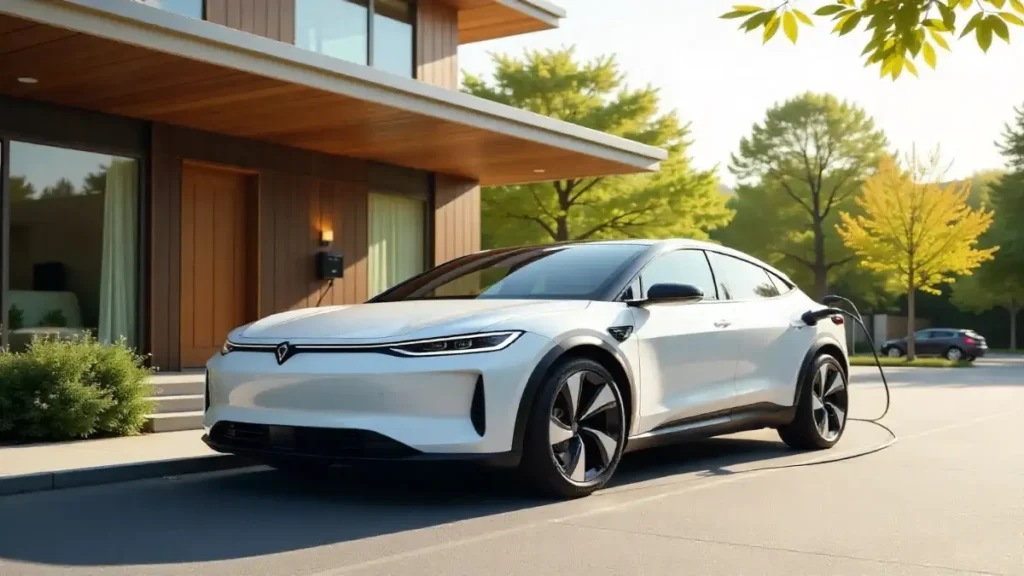
Today’s electric vehicle landscape is incredibly diverse, with traditional automakers and innovative startups competing to electrify transportation.
Tesla has expanded from the Roadster to a full lineup including the Model S luxury sedan, Model 3 mass-market car, Model X SUV, and Model Y crossover. They’ve proven that an electric car company can be profitable and highly valued by investors.
Traditional Automakers have joined the party with serious commitments. General Motors launched the Chevrolet Bolt and is developing dozens of new EVs under the Ultium platform. Ford’s Mustang Mach-E and F-150 Lightning show how classic American brands are embracing electrification. Volkswagen’s ID series represents a massive investment in electric mobility from one of the world’s largest automakers.
Luxury Brands are going all-in on electric. Mercedes-EQS, BMW iX, Audi e-tron, and Jaguar I-PACE prove that luxury and electric power are perfect partners. These vehicles offer the refinement and performance that premium customers demand.
New Startups continue to push boundaries. Rivian focuses on electric trucks and commercial vehicles. Lucid Motors targets ultra-luxury with incredible range and performance. Chinese brands like NIO and BYD are becoming global players with innovative technologies.
Commercial and Specialty Brands are electrifying specific niches. Companies like Arrival focus on delivery vans, while Proterra specializes in electric buses. Even motorcycle companies like Zero Motorcycles and Energica are proving that electric power works across all vehicle types.
What This History Teaches Us About the Future
Looking back at over 130 years of electric vehicle history, several patterns emerge that can help us understand where we’re heading.
First, technology adoption isn’t always linear. Electric cars dominated early automotive markets, disappeared for decades, and are now resurging stronger than ever. This reminds us that the “best” technology doesn’t always win initially – market conditions, infrastructure, and consumer preferences all play crucial roles.
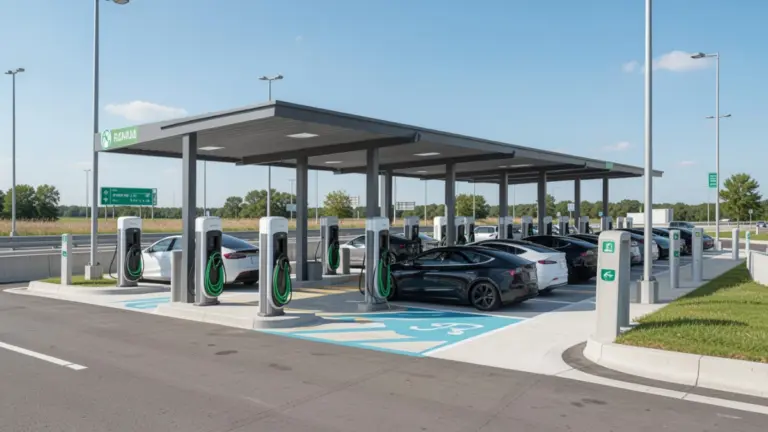
Second, infrastructure drives adoption. Early electric cars failed partly because gasoline infrastructure developed faster. Today’s EV success depends heavily on charging network expansion, government incentives, and battery technology improvements.
Third, consumer perception matters enormously. Electric cars went from being seen as sophisticated and desirable to impractical and boring, and back to cutting-edge and exciting. Brand storytelling and marketing play huge roles in shaping these perceptions.
Your Electric Future Starts Now
As we stand at another inflection point in automotive history, you have more electric vehicle choices than ever before. Whether you’re interested in an affordable commuter like the Nissan Leaf, a luxury sedan like the Mercedes EQS, or a rugged truck like the Ford F-150 Lightning, there’s likely an electric vehicle that fits your needs and budget.
The history of electric car brands teaches us that we’re not just buying cars – we’re participating in a transportation revolution that’s been building for over a century. Today’s electric vehicles combine the clean, quiet operation that made early EVs popular with the performance, convenience, and style that modern drivers demand.
The next chapter in electric vehicle history is being written right now, and you get to be part of it. Whether you’re ready to make the switch today or simply curious about the options, understanding this rich history helps you appreciate that electric cars aren’t just about the future – they’re deeply rooted in automotive tradition.
The road ahead is electric, and after more than 130 years of innovation, the future has never looked brighter.