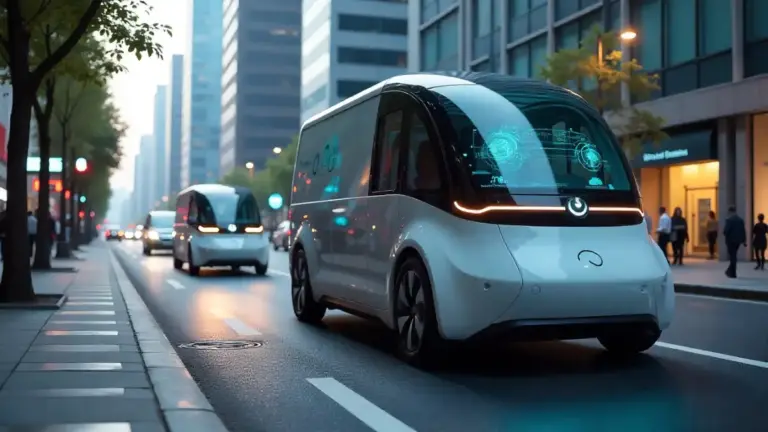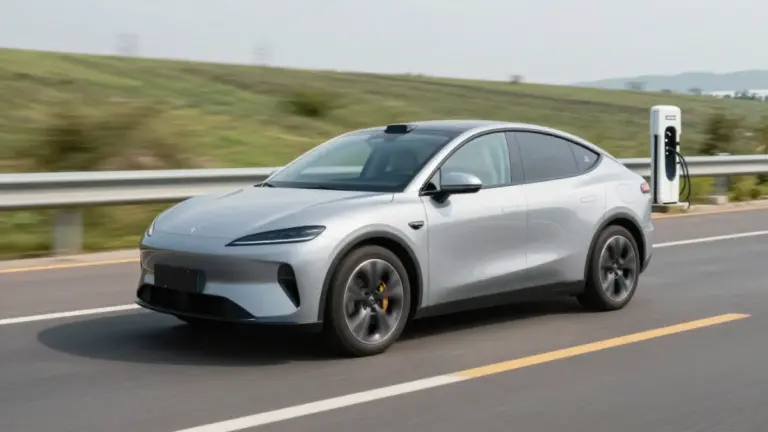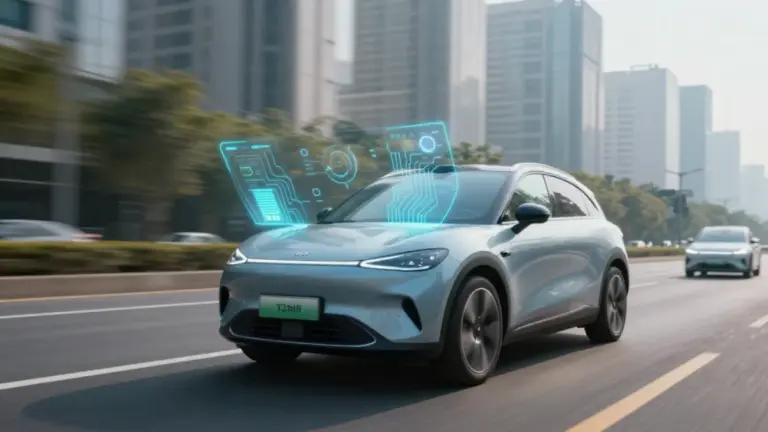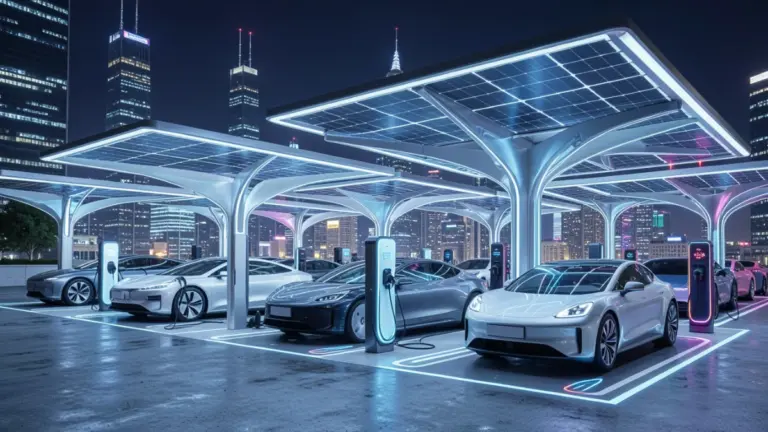
Have you noticed how quickly “electric mobility” went from a futuristic buzzword to something you see on your daily commute? Whether it’s the Tesla in your neighbor’s driveway, the electric scooters lining downtown streets, or the electric buses quietly gliding past, we’re witnessing a fundamental shift in how we move.
Electric mobility is the use of electric-powered vehicles and transportation systems instead of those running on fossil fuels. This encompasses everything from personal electric cars and e-bikes to public transit, delivery vehicles, and even electric aviation. At its core, electric mobility represents a transition from internal combustion engines to battery-powered or electrically-driven transportation across all modes of travel.
In this guide, you’ll discover what electric mobility really means beyond the basic definition, why it’s reshaping our cities and lives, the technologies powering this revolution, and what this transformation means for you—whether you’re considering an electric vehicle purchase, curious about policy changes, or simply trying to understand where transportation is headed.
Understanding Electric Mobility: More Than Just Electric Cars
When most people hear “electric mobility,” they immediately think of electric vehicles (EVs) like Teslas or the Ford F-150 Lightning. But that’s just scratching the surface. Electric mobility is a comprehensive ecosystem that’s reimagining transportation from the ground up.
The Full Spectrum of Electric Transportation
Electric mobility includes:
- Personal vehicles: Battery electric vehicles (BEVs), plug-in hybrid electric vehicles (PHEVs), and hybrid electric vehicles (HEVs)
- Micromobility: E-bikes, electric scooters, electric skateboards, and electric unicycles
- Public transportation: Electric buses, trams, light rail, and subway systems
- Commercial vehicles: Electric delivery vans, garbage trucks, and semi-trucks
- Shared mobility: Electric car-sharing services, bike-sharing programs, and ride-hailing fleets
- Alternative transport: Electric boats, ferries, and emerging electric aircraft
Think of electric mobility as an interconnected web rather than isolated products. The e-scooter you ride to the train station, the electric bus that takes you downtown, and the EV charging station at your workplace are all pieces of the same transportation puzzle.
What Makes It “Electric Mobility” vs. Just “Electric Vehicles”?
The distinction matters. “Electric vehicles” focuses narrowly on the cars themselves, while “electric mobility” captures the bigger picture:
Integration with infrastructure: Charging networks, smart grids, and renewable energy systems Policy frameworks: Government incentives, emission regulations, and urban planning Behavioral changes: How people choose to travel, route planning, and multimodal transportation Technological ecosystem: Battery technology, vehicle-to-grid systems, and autonomous capabilities
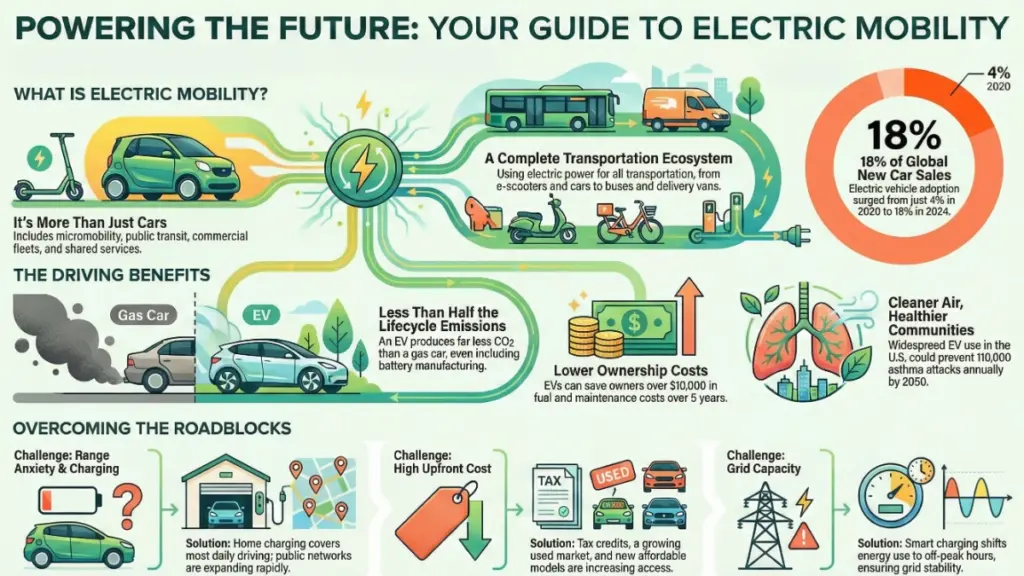
According to the International Energy Agency’s 2024 Global EV Outlook, electric mobility now represents about 18% of all new vehicle sales globally—a dramatic jump from just 4% in 2020. This isn’t just about swapping engines; it’s about fundamentally rethinking how transportation systems work.
The Technologies Powering Electric Mobility
Understanding electric mobility means getting familiar with the technologies making it possible. Don’t worry—I’ll keep this accessible rather than drowning you in technical jargon.
Battery Technology: The Heart of the Revolution
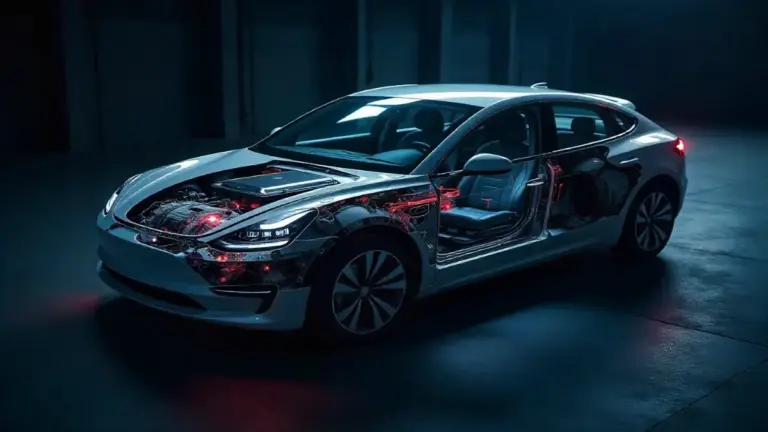
Modern electric mobility runs on lithium-ion batteries, similar to what powers your smartphone but scaled up dramatically. A typical EV battery pack contains thousands of individual cells working together to store 60-100 kilowatt-hours (kWh) of energy—enough to power an average home for several days.
Current battery capabilities (2024-2025):
- Energy density: 250-300 Wh/kg for passenger vehicles
- Charging speeds: 10-80% charge in 18-30 minutes with DC fast charging
- Battery lifespan: 8-10 years or 100,000-200,000 miles with minimal degradation
- Cost: Dropped below $100/kWh in 2024, making EVs increasingly cost-competitive
The next generation is even more promising. Solid-state batteries, expected to reach mass production by 2027-2028, could offer 50% more range, faster charging, and improved safety. Companies like Toyota, Samsung, and QuantumScape are investing billions in this technology.
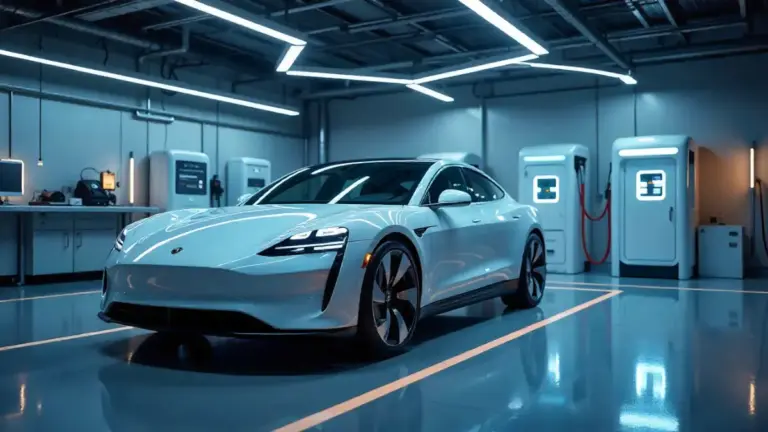
Charging Infrastructure: The Circulatory System
You can’t have electric mobility without places to charge. The charging infrastructure has evolved into three main tiers:
Level 1 Charging (Home – Standard outlet)
- Speed: 3-5 miles of range per hour
- Use case: Overnight home charging
- Advantage: No special equipment needed
Level 2 Charging (Home/Public – 240V)
- Speed: 25-30 miles of range per hour
- Use case: Daily charging at home, work, or shopping centers
- Advantage: Balances speed and cost
DC Fast Charging (Public highway stations)
- Speed: 150-200+ miles of range in 15-20 minutes
- Use case: Road trips and quick top-ups
- Advantage: Closest to traditional gas station experience
As of early 2025, the United States has over 175,000 public charging ports, with networks like Tesla Supercharger (now opening to other brands), Electrify America, and EVgo expanding rapidly. Europe has exceeded 600,000 public charging points, while China leads with over 2.5 million.
Smart Grid Integration and Vehicle-to-Grid (V2G)
Here’s where electric mobility gets really interesting. Modern EVs aren’t just consuming electricity—they’re becoming part of the energy system.
Vehicle-to-Grid technology allows EVs to send power back to the electrical grid during peak demand. Imagine your car parked at work, plugged in, and actually earning you money by supplying stored energy to the grid during the afternoon when electricity demand spikes. This bidirectional charging capability transforms millions of EVs into a distributed energy storage network.
The Ford F-150 Lightning, for example, can power an entire home for up to three days during an outage. Several pilot programs in California, the UK, and the Netherlands are already testing V2G at scale, with early participants reporting earnings of $500-1,200 annually just from their parked vehicles.
Why Electric Mobility Matters: Benefits Beyond Emissions
Yes, reducing tailpipe emissions is important, but electric mobility’s impact extends far beyond just cutting carbon. Let’s explore why cities, countries, and individuals are embracing this shift.
Environmental Impact: The Numbers That Matter
Transportation accounts for about 27% of global CO2 emissions. Switching to electric mobility directly addresses this massive source of greenhouse gases.
Real-world emissions comparison (2024 data):
- Average gasoline car: 400+ grams CO2 per mile
- EV charged on U.S. average grid: 200 grams CO2 per mile
- EV charged on renewable energy: Near-zero emissions
But here’s what often gets overlooked: as electrical grids incorporate more renewable energy, EVs automatically become cleaner over time. Your 2023 EV will have a smaller carbon footprint in 2025 than it did when you bought it, simply because the grid is getting greener. The same can’t be said for gas vehicles.
A 2024 study by the Union of Concerned Scientists found that even when accounting for battery manufacturing, an EV produces less than half the lifecycle emissions of a comparable gasoline vehicle over 200,000 miles of use.
Economic Benefits: Lower Operating Costs
The financial case for electric mobility keeps getting stronger. Let’s break down the numbers:
Fuel costs: Electricity costs roughly $0.04-0.06 per mile compared to $0.12-0.18 per mile for gasoline (based on $3.50/gallon gas and $0.13/kWh electricity)
Maintenance savings: EVs have fewer moving parts—no oil changes, transmission repairs, or exhaust system replacements. Owners typically save $800-1,200 annually on maintenance.
Total Cost of Ownership: When you factor in lower fuel and maintenance costs plus available incentives, many EVs now cost less to own over 5-7 years than their gasoline counterparts, even if the upfront price is higher.
For example, a 2024 analysis comparing a Tesla Model 3 to a BMW 330i showed the Tesla costs about $47,000 over five years versus $58,000 for the BMW, despite similar purchase prices.
Health Benefits: Breathing Easier
This benefit often flies under the radar, but it’s significant. Transportation emissions cause an estimated 385,000 premature deaths globally each year from air pollution-related illnesses.
Electric mobility eliminates tailpipe emissions entirely in cities. Studies in cities with high EV adoption rates—like Oslo, Norway (where EVs represent over 90% of new car sales)—show measurable improvements in air quality, particularly in nitrogen dioxide and particulate matter levels.
Children living near busy roads with high EV penetration show lower rates of asthma and respiratory issues. The American Lung Association estimates that widespread EV adoption in the U.S. could prevent up to 110,000 asthma attacks and 13,500 premature deaths annually by 2050.
Energy Security and Independence
Countries importing oil spend billions annually on foreign energy sources. Electric mobility powered by domestically-generated electricity (especially renewables) reduces this dependence dramatically.
For individuals, generating your own “fuel” through rooftop solar panels is now a realistic option—try doing that with gasoline! Many EV owners are achieving near-complete transportation energy independence, charging their vehicles with home solar installations.
The Challenges: What’s Holding Electric Mobility Back?
I’d be doing you a disservice if I painted an entirely rosy picture. Electric mobility faces real obstacles that the industry is working to overcome.
Range Anxiety and Charging Accessibility
Despite modern EVs offering 250-350+ miles of range, many potential buyers still worry about running out of power. This “range anxiety” persists even though the average American drives only 40 miles per day.
The charging accessibility issue is more legitimate: While home charging works great for single-family homeowners, apartment dwellers and those without dedicated parking face genuine challenges. Installing chargers in multi-unit buildings and on-street parking areas is expensive and complicated.
Solutions emerging:
- Workplace charging programs (growing 40% annually)
- Retail charging partnerships (chargers at grocery stores, shopping centers)
- Fast-charging hubs in urban areas
- Policy requirements for new construction to include EV charging infrastructure
Upfront Costs and Affordability
Despite improving economics, the higher upfront cost of EVs remains a barrier. While luxury EVs dominate current sales, the market desperately needs more affordable options.
Good news: Several sub-$30,000 EVs are entering the U.S. market in 2025-2026, including the Chevrolet Equinox EV (starting around $35,000 before incentives), the Volkswagen ID.2, and various Chinese models. Federal tax credits of up to $7,500 can bring these into the mid-$20,000 range.
The used EV market is also maturing. Three-year-old EVs often sell for 40-60% of their original price, making electric mobility accessible to more buyers.
Charging Time vs. Refueling
Even with fast charging, adding 200 miles of range takes 20-30 minutes—significantly longer than the 5-minute gas station stop. For road trips, this requires planning and adjustments.
However, most EV owners report this becomes a non-issue once they adapt. Daily charging at home means starting each day with a “full tank,” eliminating weekly gas station visits entirely. The time “cost” shifts from weekly errands to occasional longer charging stops on road trips.
Pro tip from EV owners: They charge during meal breaks, coffee stops, or while letting kids run around at rest areas—multitasking that makes the charging time feel minimal.
Grid Capacity Concerns
Can the electrical grid handle millions of EVs charging? This question comes up constantly.
The reality is more nuanced than doomsday predictions suggest. Studies show the U.S. grid has sufficient generation capacity, especially when EVs charge overnight during low-demand periods. The challenge lies more in local distribution infrastructure—neighborhood transformers and service lines that may need upgrades as EV concentration increases in specific areas.
Smart charging systems help tremendously. They automatically charge vehicles during off-peak hours when electricity is cheapest and grid demand is lowest. Time-of-use electricity rates incentivize this behavior, saving EV owners money while protecting grid stability.
Electric Mobility in Action: Real-World Applications
Let’s look at how electric mobility is transforming specific sectors right now.
Public Transportation Leading the Way
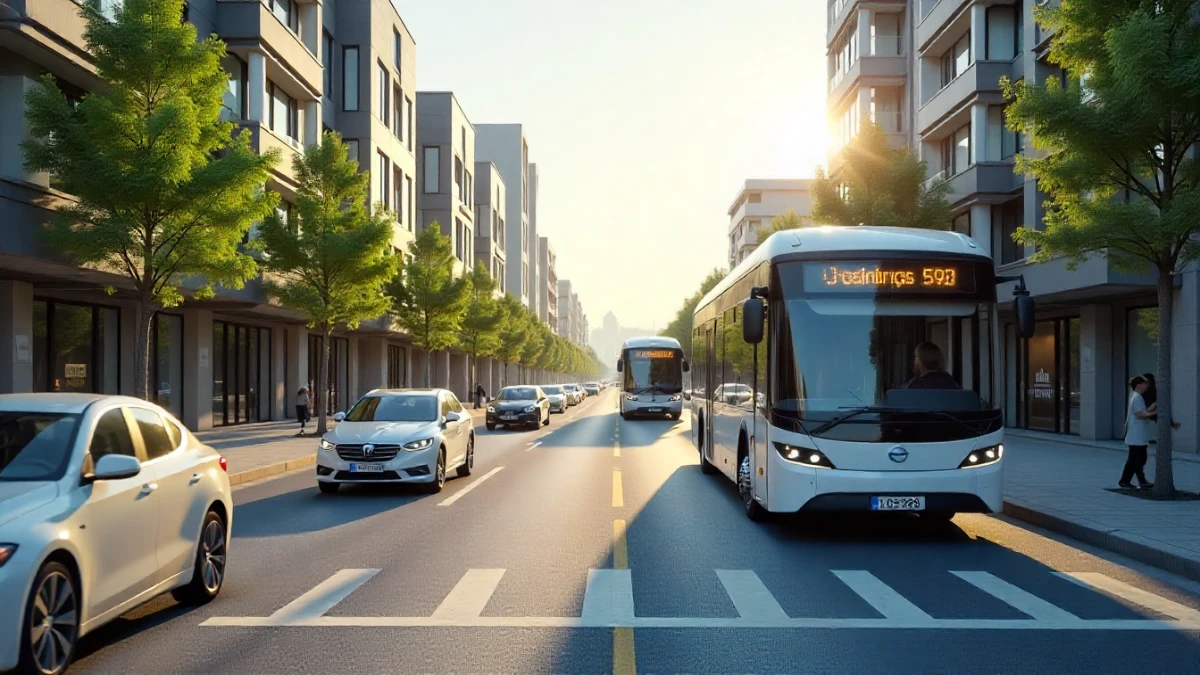
Cities worldwide are electrifying their bus fleets at impressive speeds. Shenzhen, China converted its entire fleet of 16,000+ buses to electric by 2017. Los Angeles committed to a fully electric bus fleet by 2030. London has over 700 electric buses operating, with plans to expand further.
Why buses first? The economics work perfectly:
- Predictable routes and schedules make charging straightforward
- High daily mileage means greater fuel cost savings
- Centralized maintenance reduces operational complexity
- Immediate air quality improvements in urban areas
Electric buses are quieter, produce zero local emissions, and cost significantly less to operate than diesel buses—saving transit agencies $25,000-50,000 per bus annually.
Last-Mile Delivery Revolution
E-commerce explosion meets electric mobility. Amazon, FedEx, UPS, and DHL are deploying thousands of electric delivery vans. Amazon alone has ordered 100,000 electric vans from Rivian, with deliveries already underway in numerous cities.
For delivery fleets, the business case is compelling:
- Stop-and-go urban driving suits EVs perfectly (regenerative braking recovers energy)
- Daily routes under 100 miles fit well within EV range
- Overnight depot charging is simple and cheap
- Lower maintenance costs add up across large fleets
You’ve probably noticed quieter, cleaner delivery vehicles in your neighborhood—that’s electric mobility at work.
Micromobility Transforming Urban Transport
E-bikes and e-scooters have exploded in popularity, particularly for short urban trips. In many European cities, e-bike sales now exceed traditional bicycle sales. The global e-bike market is projected to reach $120 billion by 2030.
This isn’t just about convenience—it’s reshaping urban transportation patterns:
- Short trips (under 3 miles) that previously required cars are now handled by micromobility
- Commuters combine e-bikes with public transit for efficient multimodal journeys
- Older adults and those with mobility limitations gain new transportation independence
- Cities reduce traffic congestion and parking demand
E-bikes, in particular, are remarkable. They extend the practical cycling distance from 2-3 miles to 8-12 miles, making bike commuting feasible for millions more people.
The Future of Electric Mobility: What’s Coming Next
Electric mobility is evolving rapidly. Here’s what the next 5-10 years likely holds.
Autonomous Electric Vehicles
Combining autonomous driving with electric powertrains creates powerful synergies. Electric platforms are ideal for self-driving technology—they’re quieter, offer precise control, and their computer systems integrate easily with autonomous software.
Companies like Waymo, Cruise, and Zoox are already testing autonomous electric robotaxis in several cities. While full autonomy remains years away for most situations, we’ll likely see autonomous electric shuttles and delivery vehicles becoming common in defined areas by 2027-2028.
Electric Aviation and Maritime
Yes, electric planes and ships are coming, though they face bigger challenges than cars.
Electric aviation progress:
- Short-range electric aircraft (under 500 miles) entering certification for commercial use
- Companies like Eviation, Heart Aerospace, and ZeroAvia targeting 2026-2028 entry-to-service
- Hybrid-electric regional jets in development for 2030s
Maritime electric mobility:
- Electric ferries operating successfully in Norway, Denmark, and elsewhere
- Hybrid-electric cruise ships launching
- Battery-electric tugboats and harbor craft proving highly effective
Battery Technology Breakthroughs
The next generation of batteries will address remaining EV limitations:
Solid-state batteries (2027-2030): 500+ mile range, 10-minute charging, improved safety
Lithium-sulfur batteries (2028-2032): Lower cost, higher energy density, more sustainable materials
Sodium-ion batteries (already emerging): Cheaper alternative for lower-range applications, less dependent on lithium supplies
These advances will make electric mobility increasingly practical and affordable across all transportation modes.
Infrastructure Expansion and Standardization
Expect continued rapid growth in charging infrastructure. Key developments:
- Universal charging standards: The North American Charging Standard (NACS/Tesla connector) gaining industry-wide adoption
- Ultra-fast charging: 350+ kW chargers becoming common, enabling 200 miles in 10 minutes
- Wireless charging: Inductive charging pads for convenient home and public charging
- Battery swapping: Emerging as a solution for certain vehicle types (particularly commercial fleets and two-wheelers)
Making Electric Mobility Work for You
Ready to participate in the electric mobility revolution? Here’s practical guidance.
Assessing Your Electric Mobility Needs
For personal transportation, ask yourself:
- What’s your typical daily driving distance? (Most people drive under 50 miles/day)
- Can you charge at home? (This changes everything)
- What’s your budget, including available incentives?
- Do you take frequent long road trips? (Influences range requirements)
For businesses, consider:
- Fleet composition and daily routes
- Available charging infrastructure
- Total cost of ownership calculations
- Environmental goals and public image
Starting Small: Entry Points
You don’t have to buy a $70,000 EV to embrace electric mobility:
Low-barrier entry options:
- E-bike for commuting ($1,500-3,000) — often the best starting point
- Used EV ($15,000-25,000) — proven technology at accessible prices
- Plug-in hybrid (PHEV) — bridge option with gas backup for range concerns
- Electric car-sharing or rental — test before committing
Many people start with an e-bike and later transition to an EV once they experience the benefits of electric transportation firsthand.
Resources and Support
Finding the right EV: PlugStar, Edmunds EV Hub, and the EPA’s fueleconomy.gov offer excellent comparison tools
Charging networks: Apps like PlugShare and ChargePoint show real-time charger availability and user reviews
Incentives: The Department of Energy’s Alternative Fuels Data Center maintains current federal and state incentive information
Community support: Local EV clubs and online forums provide invaluable real-world advice from experienced owners
Key Takeaways: The Electric Mobility Revolution
Let’s bring this together with the most important points:
Electric mobility is comprehensive: It’s not just cars—it’s transforming all transportation modes through an interconnected ecosystem of vehicles, infrastructure, and smart technology.
The benefits are real and growing: Lower operating costs, zero tailpipe emissions, reduced oil dependence, and improved urban air quality make compelling cases beyond environmental concerns alone.
Technology is rapidly improving: Battery costs are dropping, range is increasing, charging is getting faster, and new innovations continue emerging that address current limitations.
Adoption is accelerating globally: With 14+ million EVs sold worldwide in 2024 and electric mobility infrastructure expanding rapidly, we’re past the early-adopter phase and into mainstream acceptance.
Challenges remain but solutions are emerging: Range anxiety, charging access, and upfront costs are being systematically addressed through technology improvements, infrastructure investment, and policy support.
The transportation landscape is changing faster than most people realize. Electric mobility isn’t just an environmental necessity—it’s becoming the smart economic choice, the more convenient option, and increasingly, the default for new vehicle purchases.
Whether you embrace electric mobility tomorrow or in five years, understanding this transformation helps you make informed decisions about your personal transportation, appreciate the policy changes happening around you, and recognize the significant role this shift plays in addressing climate change while creating healthier, quieter, more livable communities.
The question isn’t really whether electric mobility will dominate transportation—it’s how quickly we’ll get there, and how we’ll navigate the transition. Based on current trajectories, that future is arriving sooner than you might think.