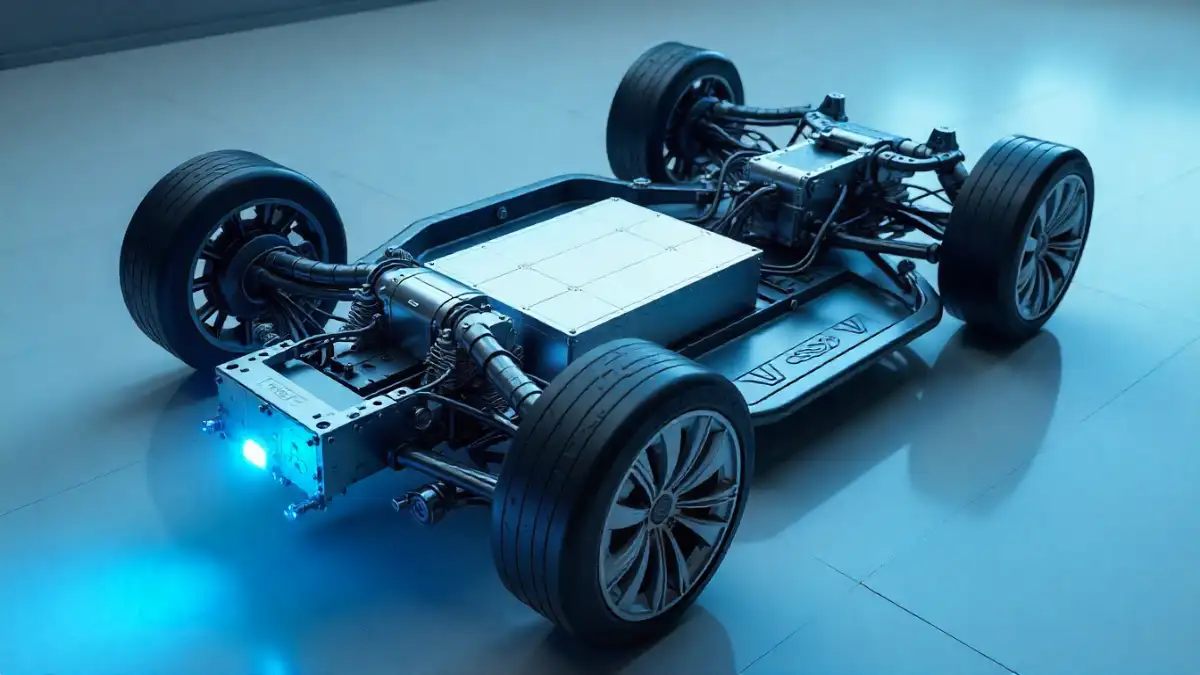
You know that moment when you’re shopping for a new phone and you’re stuck between two models—one with a massive battery that lasts forever but feels like a brick, and another that’s sleek and light but dies by dinnertime? Well, choosing an electric car involves a surprisingly similar dilemma. The battery size in your EV doesn’t just determine how far you can drive; it affects everything from how the car handles to how much you’ll pay upfront and even how quickly you can charge it.
Let me take you on a journey through the fascinating world of EV batteries and performance. Whether you’re considering making the switch to electric or you’re just curious about what makes these vehicles tick, understanding the relationship between battery size, motor power, and overall performance will help you make smarter decisions. And trust me, once you understand these fundamentals, you’ll never look at electric cars the same way again.
Understanding Battery Capacity: It’s Not Just About Size
When we talk about battery “size” in electric vehicles, we’re really discussing capacity, measured in kilowatt-hours (kWh). Think of it like the gas tank in a conventional car, except instead of gallons, we’re counting energy storage. A Tesla Model 3 Long Range packs about 82 kWh, while a Nissan Leaf might have around 40 kWh. But here’s where it gets interesting: bigger isn’t always better.
A larger battery does give you more range—that’s the obvious part. The 2024 Mercedes EQS with its whopping 108 kWh battery can travel over 350 miles on a single charge, while a Mini Cooper SE with its modest 32.6 kWh pack manages around 110 miles. But that massive Mercedes battery adds significant weight—about 1,200 pounds just for the battery pack itself. And weight, as you might imagine, has consequences.
Have you ever tried running with a heavy backpack versus a light one? The principle applies here too. Every extra pound of battery weight requires more energy to move, which creates an interesting paradox: at some point, adding more battery capacity actually delivers diminishing returns in range because you’re using more energy to haul that extra weight around.
The Weight vs. Range Equation
Let’s get specific with some real-world examples. The Ford F-150 Lightning—America’s first electric pickup truck—demonstrates this challenge perfectly. The extended-range version comes with a 131 kWh battery that weighs approximately 1,800 pounds. That’s nearly a ton of battery! Yet despite all that capacity, the EPA-estimated range tops out around 320 miles because the truck itself weighs over 6,500 pounds when fully loaded.
Compare that to the Hyundai Ioniq 6, which achieves an impressive 361-mile range with a smaller 77.4 kWh battery. How? Aerodynamics and efficiency. The Ioniq 6 has a drag coefficient of just 0.21, making it one of the slipperiest production cars ever made. It proves that smart engineering can sometimes beat brute force.
This is why manufacturers are obsessed with battery energy density—squeezing more power into less weight and space. Current lithium-ion batteries in EVs typically offer around 250-270 watt-hours per kilogram. But companies like Tesla, CATL, and QuantumScape are racing to develop solid-state batteries that could push that figure to 400-500 Wh/kg. Imagine getting 50% more range from the same weight battery. That’s the holy grail the industry is chasing.
Motor Power: The Other Half of the Performance Equation
Now, let’s talk about what actually moves your EV down the road: the electric motor. Here’s something that surprises people—electric motors are remarkably simple compared to internal combustion engines. An EV motor might have about 20 moving parts, while a gas engine has over 200. Yet that simplicity doesn’t mean they’re all the same.
Motor power is measured in kilowatts (kW) or horsepower, and it directly determines acceleration and top speed. The Lucid Air Sapphire, for instance, boasts three motors producing a combined 1,234 horsepower, rocketing from 0-60 mph in just 1.89 seconds. Meanwhile, a Chevrolet Bolt EV has a single motor producing 200 horsepower, achieving 0-60 in a still-respectable 6.5 seconds.
But here’s the crucial relationship: more powerful motors drain batteries faster, especially during aggressive driving. That Lucid Air Sapphire might have a 118 kWh battery, but if you’re constantly unleashing all that power, you’ll watch the range estimate plummet. It’s like having a sports car with a tiny gas tank—thrilling for short bursts, but you’ll be visiting chargers frequently if you drive it hard.
The Real-World Performance Trade-offs
Let me share something most EV reviews won’t tell you: the EPA range estimates are based on a specific testing cycle that includes a mix of city and highway driving at moderate speeds. Real-world performance? That’s a different story entirely.
I’ve spoken with dozens of EV owners, and here’s what they’ve learned: highway driving at 75-80 mph can reduce your range by 20-30% compared to EPA estimates. Why? Air resistance increases exponentially with speed, and electric motors work harder to maintain those velocities. The Porsche Taycan, despite its sophisticated engineering and 93.4 kWh battery, sees its 246-mile EPA range drop to around 170-180 miles during sustained highway cruising.
Temperature also plays a massive role. Batteries are basically chemical reactions, and chemical reactions slow down in the cold. A study by AAA found that at 20°F, EVs lose about 41% of their range compared to operation at 75°F. This means that same Ford F-150 Lightning with its 320-mile summer range might only give you 190 miles in a Minnesota winter. Ouch.
But there’s good news: city driving actually benefits EVs through regenerative braking. Every time you slow down, the motor acts as a generator, converting kinetic energy back into stored electricity. Some Tesla owners report getting better-than-EPA range in urban environments because of this constant energy recovery. It’s like getting a little refund every time you brake.
Charging Speed and Battery Size: An Underappreciated Connection
Here’s something that caught me off guard when I first researched EVs: larger batteries don’t necessarily charge faster. In fact, the opposite can be true. Charging speed depends on the battery’s chemistry, thermal management system, and maximum charge acceptance rate—not just raw capacity.
The Hyundai Ioniq 5 with its 77.4 kWh battery can charge from 10% to 80% in just 18 minutes on a 350 kW ultra-fast charger, thanks to its 800-volt architecture. Meanwhile, some vehicles with larger batteries using older 400-volt systems might take 40-45 minutes for the same charge level. Why does this matter? Because on road trips, your charging time can be more important than total battery capacity.
Think about it this way: would you rather have a car with 350 miles of range that takes 45 minutes to charge, or one with 280 miles of range that charges in 18 minutes? For many drivers, especially those taking frequent stops on long trips, the faster-charging vehicle might actually be more convenient. It’s yet another example of how battery size alone doesn’t tell the whole story.
Balancing Act: Finding Your Perfect Battery Size
So what’s the right battery size for you? It depends entirely on your driving patterns, and this is where you need to be honest with yourself. The average American drives about 40 miles per day. If that sounds like you, even a “smaller” 50-60 kWh battery would give you several days of driving between charges.
But here’s my advice: don’t just think about your daily commute. Consider your longest regular trip. Do you visit family 200 miles away every month? Do you take occasional road trips? For most people, a battery in the 70-85 kWh range hits the sweet spot—providing 250-300 miles of real-world range without excessive weight or cost penalties.
The Volkswagen ID.4, for example, offers an 82 kWh battery with 275 miles of EPA range, weighs a reasonable 4,600 pounds, and costs around $43,000. That’s a practical, well-balanced package for the majority of drivers. You’re not paying for battery capacity you’ll rarely use, and you’re not constantly worrying about running out of charge.
The Future is Lighter, More Efficient, and Smarter
The EV industry is evolving rapidly, and the relationship between battery size and performance is changing. Manufacturers are pursuing three main strategies: increasing energy density, improving aerodynamics, and optimizing software.
BMW’s latest generation of EVs features cylindrical battery cells similar to what Tesla uses, increasing energy density by about 20% compared to their previous prismatic cells. Mercedes is developing vehicles with drag coefficients below 0.20, reducing energy consumption at highway speeds. And companies like Rivian are using sophisticated software to optimize battery usage based on driving patterns, terrain, and weather forecasts.
Perhaps most exciting are the solid-state batteries I mentioned earlier. Toyota has announced plans to introduce solid-state battery EVs by 2027-2028, promising 750 miles of range with charging times of just 10 minutes. If they deliver even 80% of those claims, it would fundamentally change the EV landscape. Suddenly, battery size becomes less critical when charging is nearly as fast as pumping gas.
The Bottom Line: Knowledge is Power (Pun Intended)
Understanding the relationship between battery size, weight, motor power, and real-world performance helps you cut through the marketing hype. That headline-grabbing 500-mile range EV might not be as practical as it sounds if it weighs 7,000 pounds and takes an hour to charge. Conversely, a vehicle with “only” 250 miles of range might be perfect if it charges quickly and meets your actual driving needs.
The beautiful thing about electric vehicles is that they’re constantly improving. Battery technology that seemed impossible five years ago is now in production. Charging infrastructure that was sparse is rapidly expanding. And as more manufacturers enter the market, we’re seeing increased specialization—trucks optimized for towing, sedans designed for efficiency, and sports cars built for performance.
My recommendation? Test drive several EVs with different battery sizes and motor configurations. Pay attention to how they accelerate, how they handle, and yes—how you feel about their range. Download apps like A Better Route Planner to simulate long trips with different vehicles. Join online EV communities and ask real owners about their experiences. The more informed you are, the better decision you’ll make.
The electric revolution is here, and understanding these fundamentals puts you in the driver’s seat—both literally and figuratively. Whether you choose a lean, efficient EV with a smaller battery or a long-range powerhouse with all the kWhs, you’ll know exactly what trade-offs you’re making. And that, my friend, is the real power of knowledge.