Introduction: The Safety Question Everyone’s Asking
Let me guess—you’re interested in electric cars, but there’s this nagging question in the back of your mind: “Are they actually safe?” Maybe you’ve heard stories about battery fires. Or you’re wondering what happens when all that electrical power meets a collision. Trust me, you’re not alone in asking these questions.
Here’s what might surprise you: electric vehicles aren’t just as safe as traditional gas-powered cars—in many cases, they’re actually safer. Modern EVs combine cutting-edge battery protection systems with some of the most advanced safety technology ever put into a consumer vehicle. From crash test ratings that make engineers grin to driver-assistance features that feel like having a co-pilot, today’s electric cars are rewriting the safety playbook.
In this article, we’ll dive into what makes EVs so safe. We’ll explore real crash testing data. And we’ll look at the advanced features that actively work to keep you out of trouble in the first place. Whether you’re a safety-conscious parent, a tech enthusiast, or just someone who wants peace of mind on the road, you’ll find plenty of reasons to feel confident about electric vehicle safety.
Built-In Safety Advantages: How EVs Start Ahead
Electric cars have some inherent design advantages. These give them a leg up in safety before manufacturers even add additional features.
The Low Center of Gravity Effect
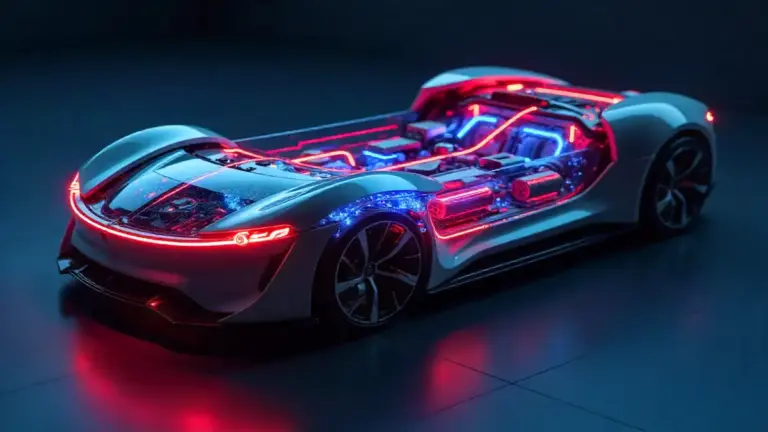
You know how sports cars hug the road through tight corners? Electric cars do something similar, and it’s all thanks to where the battery sits. That massive battery pack—often weighing 1,000 pounds or more—sits mounted low in the chassis. Usually, it rests flat along the floor between the wheels. This creates an incredibly low center of gravity that makes EVs remarkably stable.
What does this mean for you? EVs are significantly less likely to roll over in an accident or emergency maneuver. The Tesla Model 3, for instance, has such a low center of gravity that it achieved a rollover risk of just 7.9%. That’s one of the lowest figures NHTSA ever recorded. Compare that to many SUVs with rollover risks of 20% or higher, and you start to see the advantage.
The Crumple Zone Bonus
Here’s something clever about EV design: without a traditional engine taking up space under the hood, manufacturers can dedicate that entire front section to what engineers call a “crumple zone.” Think of it as a large, engineered cushion designed to absorb impact energy before it reaches you.
When a collision occurs, you want the car to absorb the energy, not your body. Electric cars like the Ford Mustang Mach-E and the Hyundai Ioniq 5 have generous front crumple zones. These compress and dissipate impact forces more effectively than many gas vehicles where a big metal engine block sits right in the impact path.
Perfect Weight Distribution
Remember playing on a seesaw as a kid? Balance matters. In an EV, the battery’s placement creates nearly perfect 50/50 weight distribution between the front and rear axles. This isn’t just about handling—it means the car responds more predictably in emergency situations. You get better control when you need it most.
Battery Safety: Separating Fact from Fear
Let’s address the elephant in the room: battery safety. If you’ve heard about EV fires on the news, you might be worried. Let’s look at what’s really happening.
The Reality of Fire Risk
Here’s a fact that might surprise you: gasoline cars catch fire far more often than electric vehicles. According to data from the National Transportation Safety Board and insurance industry studies, traditional vehicles experience approximately 1,530 fires per 100,000 vehicles sold. For EVs? That number drops to around 25 fires per 100,000 vehicles. You’re actually about 60 times less likely to experience a fire in an EV than in a gas-powered car.
Why the perception gap? When an EV fire does occur, it makes headlines because the technology is newer and more newsworthy. Meanwhile, the roughly 170,000 gas vehicle fires that happen in the U.S. each year barely register as news.
How Manufacturers Protect Batteries
Automakers aren’t taking any chances with battery safety. Modern EV batteries come wrapped in multiple layers of protection that would make a medieval knight jealous:
Armor plating: The battery pack sits in a reinforced steel or aluminum case. Engineers design it to withstand significant impact.
Thermal management systems: Liquid cooling keeps cells at optimal temperatures. This prevents the overheating that can lead to problems.
Cell separation: Manufacturers isolate individual battery cells from each other. If one cell fails, it doesn’t create a domino effect.
Automatic disconnects: In the event of a crash, the battery automatically disconnects from the electrical system within milliseconds.
The Chevrolet Bolt, for example, uses a battery enclosure that can withstand being punctured by a steel rod without catching fire. That’s a standard test that all modern EVs must pass.
Real-World Crash Performance
When EVs do get into accidents, the battery protection systems work remarkably well. After thousands of crashes involving Teslas, Nissan Leafs, Chevy Bolts, and other EVs, the rate of battery-related fires remains extraordinarily low. In fact, first responders now receive specific training on how to handle EV accidents. Their reports consistently show that battery breaches are rare even in severe collisions.
Crash Test Champions: The Numbers Don’t Lie
If you want to know how safe a car really is, crash test ratings tell the story. And electric vehicles are absolutely dominating the safety charts.
Five-Star Sweepers
The NHTSA uses a five-star rating system to evaluate vehicle safety. Five stars represent the highest possible score. Here’s what’s remarkable: nearly every mainstream electric vehicle on the market today has earned five stars overall. The Tesla Model S, Model 3, Model X, and Model Y? All five stars. The Ford Mustang Mach-E, Hyundai Ioniq 5, Kia EV6, Volkswagen ID.4, and Nissan Ariya? Five stars across the board.
But it gets even better. Several EVs haven’t just met the five-star standard—they’ve achieved some of the lowest injury probability scores ever recorded in their respective categories.
The Insurance Institute Weighs In
The IIHS conducts some of the most rigorous safety testing in the industry. This includes challenging tests like the small overlap front crash, where only a portion of the front end hits a barrier. This simulates hitting a tree or pole. Electric vehicles have been earning “Top Safety Pick” and “Top Safety Pick+” awards—the IIHS’s highest honors.
The Polestar 2, Genesis GV60, and Tesla Model Y have all earned Top Safety Pick awards. They demonstrate exceptional performance across multiple crash scenarios, including side impacts, roof strength, and headlight effectiveness.
What Makes Them Perform So Well?
Beyond the structural advantages we mentioned earlier, EVs benefit from modern engineering and materials. Many use ultra-high-strength steel and aluminum in strategic locations. This creates a rigid safety cage around occupants while allowing crumple zones to do their job. The battery’s position also reinforces the floor structure, adding additional protection in side-impact and T-bone collisions.
Advanced Driver-Assistance Systems: Your Digital Co-Pilot
Here’s where electric vehicles really pull ahead: advanced driver-assistance systems (ADAS). While these features aren’t exclusive to EVs, manufacturers more commonly include them as standard equipment on electric cars than on comparable gas vehicles.
What’s Watching Your Back
Modern EVs come loaded with sensors, cameras, and radar systems. These constantly monitor your surroundings. Think of it as having extra sets of eyes that never blink or get distracted. Here’s what’s typically included:
Automatic Emergency Braking (AEB)
This system can detect an imminent collision. It applies the brakes automatically if you don’t react in time. It’s particularly effective at preventing rear-end collisions in stop-and-go traffic. Studies show AEB reduces rear-end crashes by about 50%.
Blind Spot Monitoring
Ever changed lanes only to have a car suddenly appear beside you? Blind spot monitors use radar to detect vehicles in your blind spots. They alert you with lights in your side mirrors or even gentle steering corrections.
Lane Keeping Assist
This isn’t just a warning when you drift—the system actively steers you back into your lane if you start to wander. It’s especially helpful on long highway drives when fatigue might set in.
Adaptive Cruise Control
Set your speed and following distance, and the car automatically maintains a safe gap from the vehicle ahead. It speeds up and slows down as traffic conditions change.
360-Degree Camera Systems
Many EVs include multiple cameras that create a bird’s-eye view of your car. This makes parking and tight maneuvering significantly safer and easier.
The Tesla Autopilot Discussion
Let’s be clear about something: despite the names, no consumer vehicle today is truly “self-driving.” Tesla’s Autopilot and Full Self-Driving (FSD) are advanced driver-assistance systems. They still require you to pay attention and keep your hands on the wheel.
That said, when drivers use these systems properly, they have demonstrated real safety benefits. Tesla reports that vehicles with Autopilot engaged experience fewer accidents per mile driven compared to the national average. However, you should view this data in context—highway miles (where Autopilot is most commonly used) are generally safer than city driving regardless of assistance systems.
Other manufacturers are catching up fast. Ford’s BlueCruise, GM’s Super Cruise, and Mercedes-Benz’s Drive Pilot all offer hands-free driving on mapped highways. They include sophisticated driver monitoring systems that ensure you stay engaged.
The Human Element Still Matters
Here’s the thing about all these amazing systems: they’re assistance, not replacement. The safest driving happens when you combine advanced technology with attentive, defensive driving. These systems are incredibly effective at preventing common accidents—lane departure, rear-end collisions, backing into obstacles. But they work best when you’re still actively engaged in driving.
Real-World Safety: What Owners and First Responders Say
Beyond the test data and technology specs, what’s the real-world experience with EV safety?
Owner Testimonials
Talk to EV owners who’ve been in accidents, and you’ll hear remarkably consistent stories. They’re often surprised by how well the safety systems performed. One Tesla Model 3 owner described how automatic emergency braking prevented what would have been a serious collision when a driver ran a red light: “The car reacted before I even processed what was happening. It probably saved my life.”
First Responder Training
Fire departments and emergency services have adapted their training to handle EV accidents. Their feedback has been largely positive. While EVs do present some unique considerations—like ensuring the high-voltage system is deactivated—responders consistently report that modern EVs are well-designed for emergency situations. Clearly marked cut points, automatic shutoff systems, and comprehensive emergency response guides have made their jobs safer and more efficient.
Insurance Industry Perspective
Insurance companies have every financial incentive to charge more for dangerous vehicles. Yet they’ve found that many EVs warrant lower premiums due to their excellent safety records. The comprehensive sensor systems help prevent accidents. And when accidents do occur, the strong safety structures protect occupants effectively.
Conclusion: Safety as Standard, Not Optional
So, are electric cars safe? The evidence is overwhelming: yes, they’re remarkably safe. Often they exceed the safety performance of comparable gas-powered vehicles.
Electric vehicles benefit from inherent design advantages. Low centers of gravity, dedicated crumple zones, and optimal weight distribution give them a head start in safety. Add to that the multiple layers of battery protection, consistently excellent crash test ratings, and some of the most advanced driver-assistance technology available. You have vehicles that represent the cutting edge of automotive safety.
Your Next Steps
If you’re considering an EV, safety should absolutely be part of your decision-making process—but it shouldn’t be a barrier. Here’s what I recommend:
Check the ratings: Visit the NHTSA and IIHS websites to review crash test data for any EV you’re considering.
Compare features: Look at which driver-assistance features come standard versus optional on different models.
Test drive with safety in mind: Experience features like automatic emergency braking and blind spot monitoring firsthand.
Read owner reviews: Real-world experiences can complement official test data.
Consider your needs: Different safety features matter more depending on your driving environment—city versus highway, family hauling versus solo commuting.
The bottom line? You can feel confident that when you choose an electric vehicle, you’re choosing one of the safest options available on the road today. The technology is mature. The testing is rigorous. And the real-world results speak for themselves.
Your safety—and that of your passengers—is too important to leave to chance. The good news is that with electric vehicles, you don’t have to.
Ready to explore electric vehicles with confidence? The combination of proven safety technology and sustainable transportation has never been more compelling. Drive safe out there.