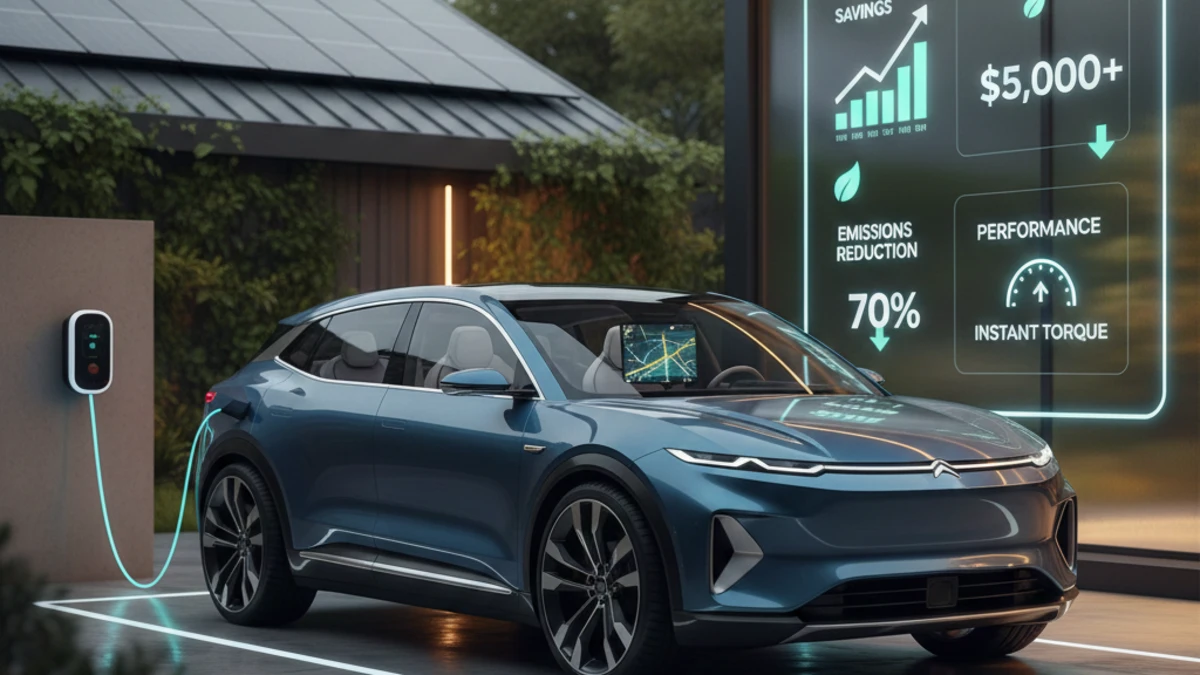
Electric vehicles were once dismissed as niche products for early adopters and environmental idealists. In 2025, that perception no longer holds. EVs have entered the mainstream, offering real-world advantages that extend far beyond environmental considerations. Lower ownership costs, impressive performance, advanced technology, and growing charging infrastructure have made electric vehicles a practical—and often superior—choice for millions of drivers.
After years of research and hands-on experience with dozens of EV models, one thing is clear: the electric vehicle conversation has evolved. Today’s buyers care just as much about savings, driving enjoyment, and convenience as they do about sustainability. This guide breaks down the true benefits of electric vehicles, helping you decide whether making the switch makes sense for your lifestyle.
The Money Factor: How EVs Save You Thousands
For most consumers, cost is the deciding factor. When you look beyond the sticker price, electric vehicles often come out ahead.
Lower Fuel Costs
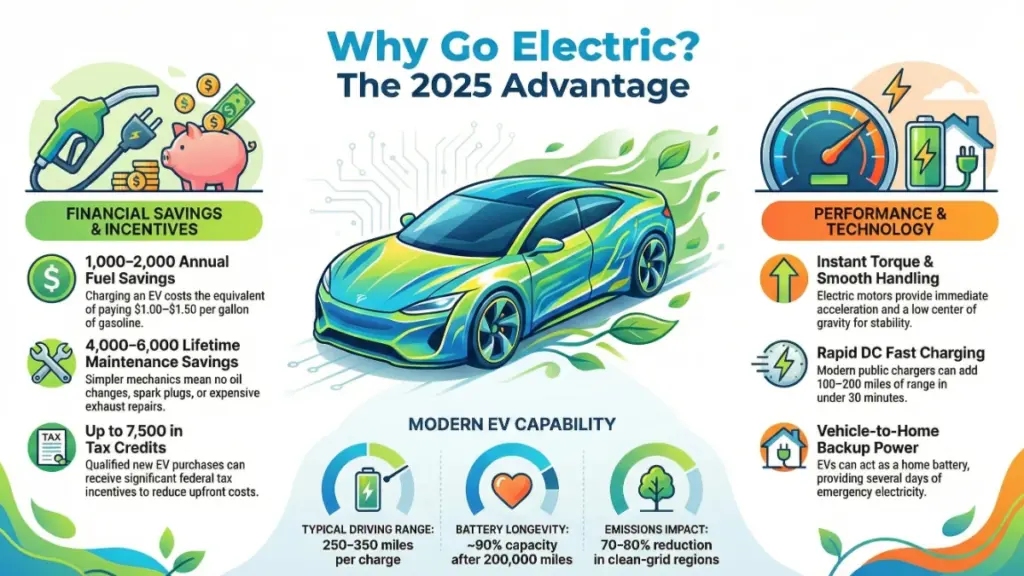
Gasoline remains one of the largest ongoing expenses for drivers. EVs dramatically reduce—or nearly eliminate—this cost. Charging an electric vehicle typically costs the equivalent of paying $1.00–$1.50 per gallon of gasoline. For the average driver, that translates into annual fuel savings of $1,000–$2,000.
Over time, these savings add up. Drivers covering about 12,000 miles per year can save well over $5,000 in fuel alone across five years of ownership.
Maintenance Savings
Electric vehicles are mechanically simpler than gas-powered cars. With far fewer moving parts, EVs avoid many routine maintenance expenses.
EV owners benefit from:
- No oil changes
- Reduced brake wear due to regenerative braking
- No exhaust systems, spark plugs, or timing belts
- Lower risk of major drivetrain repairs
Over a decade of ownership, maintenance savings can easily reach $4,000–$6,000 compared to a comparable gasoline vehicle.
Incentives and Tax Credits
Government incentives further improve the financial case. Qualified new EVs may receive federal tax credits of up to $7,500, while used EVs can qualify for up to $4,000. Many states and utility companies add rebates for vehicle purchases and home charging installation, reducing upfront costs even more.
Environmental Impact: Real Benefits You Can Measure
While financial savings attract many buyers, the environmental advantages of EVs are significant and measurable.
Lower Lifetime Emissions
Even when electricity generation is factored in, electric vehicles produce substantially fewer emissions than gasoline cars. On average, EVs generate the equivalent emissions of a gas vehicle achieving roughly 88 MPG—and that figure improves as power grids transition to renewable energy.
In regions with cleaner electricity, lifetime emissions can be reduced by as much as 70–80%.
Zero Tailpipe Emissions
EVs produce no exhaust fumes, directly improving air quality in cities and residential areas. This reduction in local pollution has immediate health benefits, particularly for children, seniors, and individuals with respiratory conditions.
Renewable Energy Synergy
Unlike gasoline vehicles, EVs become cleaner over time. As more renewable energy enters the grid, emissions drop automatically. Home solar systems take this even further, allowing drivers to power their vehicles with renewable electricity.
Performance That Redefines Driving
Electric vehicles are not just efficient—they are genuinely enjoyable to drive.
Instant Torque
Electric motors deliver maximum torque instantly. This results in quick acceleration, smooth power delivery, and confident passing performance. Even affordable EVs often outperform traditional vehicles in everyday driving scenarios.
Quiet and Refined Operation
The absence of engine noise creates a calm, comfortable driving environment. Reduced vibration and noise contribute to lower driver fatigue and a more premium driving experience.
Balanced Handling
Battery packs are mounted low in the vehicle, lowering the center of gravity. This improves stability, cornering confidence, and overall handling, particularly in poor weather conditions.
Charging Convenience and Smart Technology
Charging concerns remain one of the most common barriers to EV adoption—but for most drivers, charging is simpler than expected.
Home Charging Advantages
With home charging, drivers start each day with a fully charged vehicle. A Level 2 charger can add 25–30 miles of range per hour, easily covering daily driving needs overnight.
Expanding Public Charging Networks
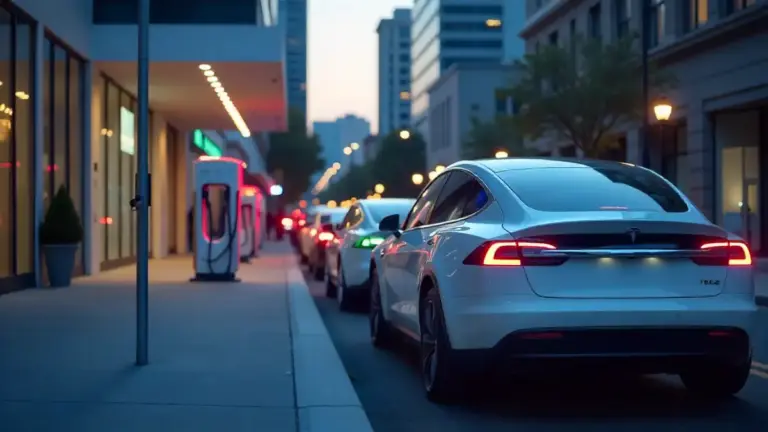
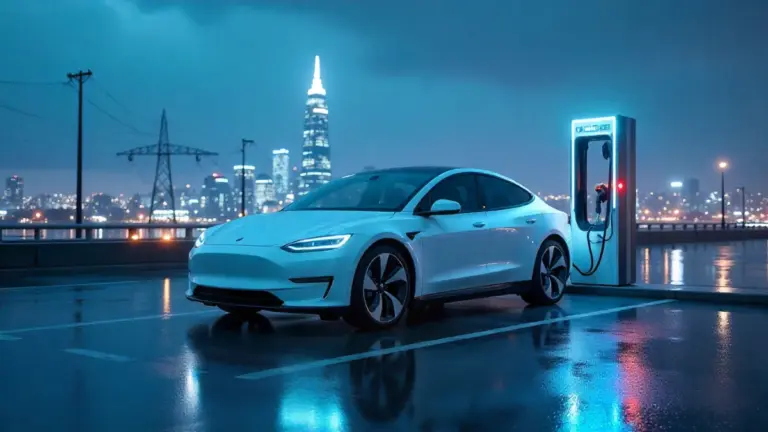
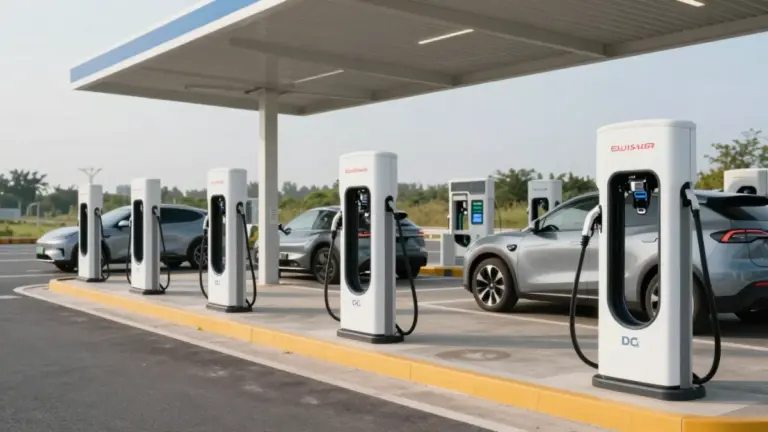
Public charging infrastructure has expanded rapidly. Fast chargers are now widely available along major highways, making long-distance travel increasingly practical. Modern DC fast chargers can add 100–200 miles of range in under 30 minutes.
Advanced Technology Features
EVs often include:
- Over-the-air software updates
- Advanced driver-assistance systems
- Smartphone-based climate and charging controls
- Large, intuitive touchscreen displays
These features enhance convenience while keeping vehicles technologically current for years.
Energy Independence and Backup Power
Electric vehicles also contribute to energy resilience.
Reduced Oil Dependence
Electricity is produced domestically from diverse sources, reducing reliance on imported oil and insulating drivers from fuel price volatility.
Vehicle-to-Home Capability
Some EVs support bidirectional charging, allowing them to power a home during outages. With battery capacities ranging from 60–100 kWh, an EV can provide several days of backup power in emergencies.
EV vs. Gas Vehicle: 5-Year Cost Comparison
When total ownership costs are compared, EVs frequently come out ahead—even when purchase prices are higher.
Factoring in fuel, maintenance, and incentives, many drivers save several thousand dollars within the first five years of ownership.
Addressing Common Concerns
Range Anxiety: Most modern EVs offer 250–350 miles of range, far exceeding daily driving needs.
Battery Longevity: Real-world data shows minimal degradation, with most batteries retaining around 90% capacity after 200,000 miles.
Cold Weather Performance: While range can decrease in extreme cold, modern thermal management systems significantly reduce this impact.
The Bottom Line: Is an EV Worth It in 2025?
For most drivers, the answer is yes. Electric vehicles deliver meaningful financial savings, superior performance, reduced environmental impact, and unmatched convenience. While EVs may not yet be ideal for every situation, they already represent the best option for a large majority of drivers.
As technology improves and infrastructure expands, the benefits will only grow stronger. The future of transportation is electric—and for many consumers, that future has already arrived.