Remember when electric cars were just quirky experiments with limited range and even more limited appeal? Those days feel like ancient history now. Here in 2025, we’re living through nothing short of a transportation revolution—and it’s happening faster than most of us imagined.
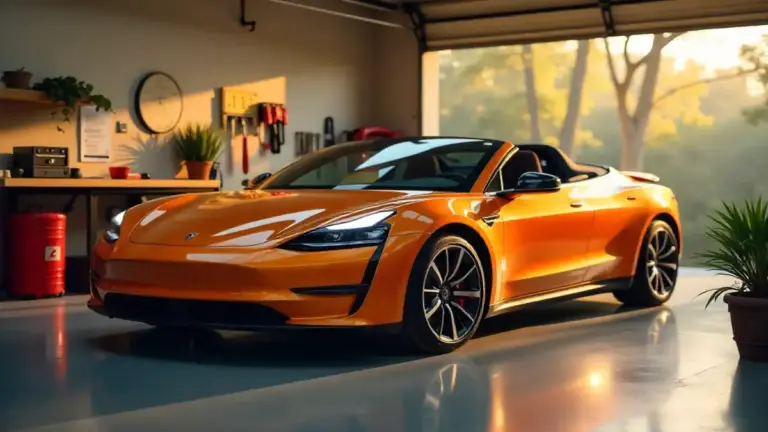
I was chatting with a neighbor last week who just installed a smart charger in his garage. “It’s like my house and my car are having conversations without me,” he laughed, explaining how his EV charges automatically when electricity rates are lowest. That’s the world we’re living in now: one where your vehicle isn’t just transportation, it’s part of an interconnected, intelligent system that’s reshaping how we think about getting from point A to point B.
Let’s dive into what’s really happening in electric mobility right now, because trust me—it’s way more exciting than just swapping gas for electricity.
The Smart Infrastructure Revolution: Your Car’s New Best Friend
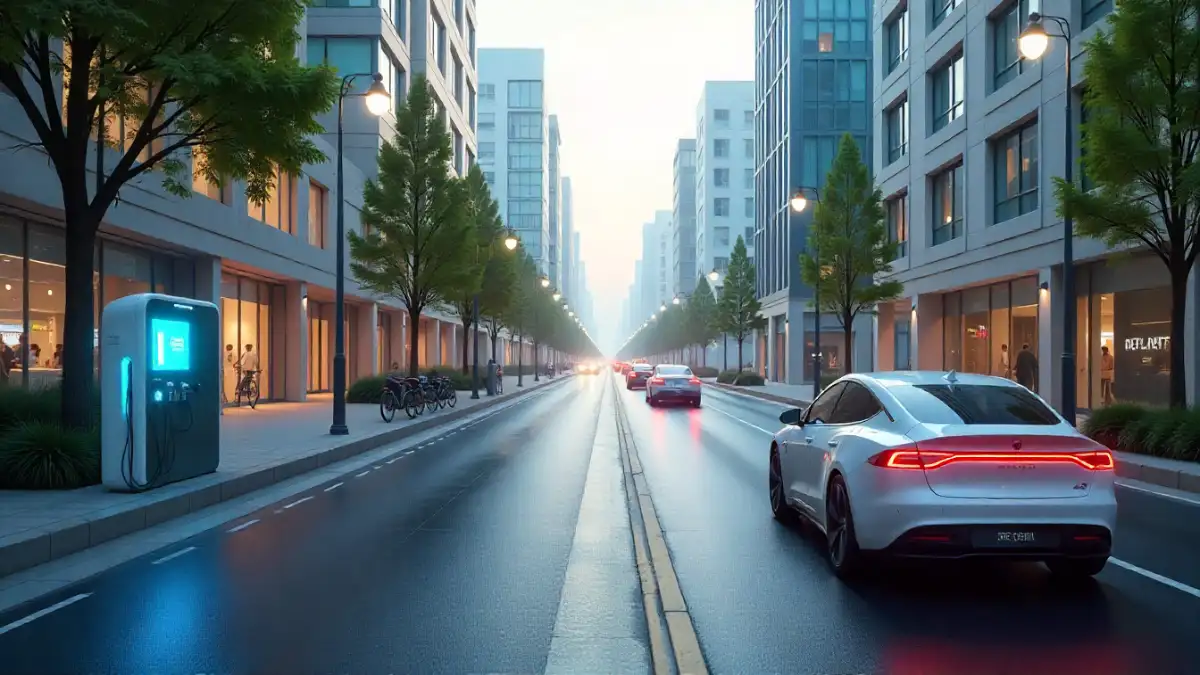
Here’s something that would’ve seemed like science fiction just five years ago: charging infrastructure has become genuinely intelligent. We’re not just talking about more charging stations (though there are plenty of those). We’re talking about networks that think, adapt, and optimize in real-time.
Vehicle-to-grid (V2G) technology has finally hit its stride. Your EV isn’t just consuming power anymore—it’s becoming a mobile energy storage unit that can actually give electricity back to the grid when demand spikes. Imagine this: you plug in after work, your car charges during off-peak hours when electricity is cheap and cleaner, and then during the evening rush when your neighbor’s air conditioner is working overtime, your car helps stabilize the grid and you get paid for it. It’s like your vehicle is moonlighting as a tiny power plant.
The numbers are genuinely impressive. Smart charging systems can reduce charging costs by up to 40% by automatically selecting optimal charging times. And in cities like Amsterdam and Los Angeles, V2G pilot programs are already demonstrating how thousands of EVs can collectively act as massive, distributed batteries—smoothing out renewable energy fluctuations and making our grids more resilient.
But it gets better. Ultra-fast charging has evolved beyond just speed. The latest 400kW chargers can add 200 miles of range in under ten minutes, and they’re getting smarter about battery health. They communicate directly with your car’s battery management system, adjusting power delivery to minimize degradation. It’s like having a personal trainer for your battery—pushing hard when it’s safe, backing off when it needs rest.
The Green Innovation Cascade: It’s Not Just About the Battery
When we talk about electric vehicles being “green,” the conversation used to begin and end with zero tailpipe emissions. In 2025, that’s just the starting point.
The latest generation of EVs is being built with sustainability woven into every decision. Battery production—once the environmental Achilles’ heel of electric vehicles—has undergone a remarkable transformation. Companies like Tesla, BYD, and emerging players are using lithium extracted through less water-intensive methods, incorporating higher percentages of recycled materials, and even experimenting with sodium-ion batteries that don’t require cobalt or nickel at all.
One development that really caught my attention: several manufacturers are now using blockchain technology to track the entire supply chain of battery materials. You can literally scan a QR code and see the ethical and environmental footprint of the minerals in your car’s battery. Transparency like this was unthinkable just a couple of years ago.
The innovation extends beyond batteries, too. Modern EVs are being manufactured in facilities powered increasingly by renewable energy. BMW’s plant in Debrecen, Hungary, runs entirely on solar power. Interior materials are shifting toward recycled plastics, natural fibers, and even mushroom-based leather alternatives. It sounds a bit hippie-ish until you sit in one of these vehicles and realize there’s zero compromise on quality or comfort.
And here’s something most people don’t consider: the software updates. Unlike traditional cars that gradually become obsolete, EVs can actually improve over time through over-the-air updates. Your car literally gets smarter, more efficient, and gains new features while you sleep. It’s the opposite of planned obsolescence—it’s planned improvement.
Eco-Friendly Driving Habits: The Human Element Still Matters
All this amazing technology is fantastic, but here’s a reality check: how you drive still matters enormously. I’ve seen two people with identical EV models get wildly different real-world ranges—sometimes a 30% difference—purely based on driving habits.
The beauty of electric vehicles is they give you instant feedback. Most EVs now have gamified efficiency displays that make saving energy almost addictive. You can see in real-time how smooth acceleration, regenerative braking, and even your climate control settings affect your range. It’s like having a coach in your dashboard, and honestly, it makes you a better driver.
Here are some practical habits that make a genuine difference:
Master regenerative braking. It sounds technical, but it’s simple: when you lift off the accelerator, your EV converts that kinetic energy back into battery charge instead of wasting it as heat through traditional brakes. Get this right, and you can add 10-15% to your range without thinking about it. Many drivers in city environments barely touch their brake pedal anymore—the regen does almost everything.
Pre-condition smartly. Heating and cooling your car while it’s still plugged in means you’re using grid power instead of battery power. Start your day with a perfectly comfortable cabin and 100% charge. It’s such a simple trick, but the range benefits are significant, especially in extreme weather.
Route planning has evolved. Modern EV navigation systems don’t just find the shortest route—they find the most efficient one, factoring in elevation changes, traffic patterns, and charging station availability. Trust the tech. I’ve seen it route me on what seemed like a longer path, only to arrive with more charge than expected because it avoided a mountain pass.
The Micromobility and Autonomous Future: It’s Closer Than You Think
Here’s where things get really interesting. Electric mobility in 2025 isn’t just about cars anymore—it’s about an entire ecosystem of transportation options that work together seamlessly.
E-bikes and e-scooters have evolved from novelty items to legitimate transportation solutions. The latest models have 50-mile ranges, integrated GPS tracking, and smart locks that communicate with your phone. In cities like Copenhagen and Portland, integrated mobility apps let you seamlessly combine an e-bike ride, an electric bus, and an EV car-share all in one trip, with one payment. It’s like Spotify for transportation—access over ownership.
Micromobility is solving that frustrating “last mile” problem. You know, that gap between public transit and your final destination that used to mean a sweaty walk or an expensive taxi ride? Now there’s an electric solution waiting on almost every corner. And these aren’t the rickety scooters from 2019—these are robust, well-maintained vehicles with swappable batteries and safety features.
As for autonomous vehicles, we’re in what I’d call the “soft launch” phase. Fully driverless taxis are operating in limited areas—San Francisco, Phoenix, and parts of Beijing have thousands of autonomous EV rides happening daily. They’re not everywhere yet, but the technology has proven itself reliable enough that expansion is inevitable rather than experimental.
What’s fascinating is how autonomous EVs are changing the conversation about car ownership entirely. If you can summon a self-driving electric vehicle to your door in three minutes for less than the cost of owning and maintaining a personal car, why would you own one? Some analysts predict that by 2030, urban car ownership could drop by 50% in major cities. Whether that happens or not, the fact that it’s even plausible shows how rapidly the ground is shifting beneath us.
The Road Ahead: What This Means for You
So where does all this leave us regular folks trying to make smart transportation decisions in 2025?
First, recognize that electric mobility is no longer a niche choice or an environmental statement—it’s rapidly becoming the default option because it’s simply better. More convenient, cheaper to operate, more reliable, and yes, dramatically cleaner.
If you’re considering an EV now, you’re entering at probably the best time yet. The technology is mature, the infrastructure is robust (and getting better daily), and the options span every price point and use case. Whether you’re looking at a compact city car or a full-size electric truck, there’s a compelling option available.
But beyond personal vehicle choices, pay attention to how your city is evolving its transportation ecosystem. Cities investing in smart infrastructure, integrated mobility apps, and diverse electric options are creating more livable, sustainable, and frankly more enjoyable urban environments. These are the places that will thrive in the coming decades.
The transformation we’re witnessing isn’t just about swapping one power source for another. It’s about reimagining transportation from the ground up—making it cleaner, smarter, more connected, and more aligned with how we actually live our lives in the 21st century.
And here’s the most exciting part: we’re still in the early chapters of this story. The innovations happening right now—solid-state batteries, wireless charging roads, AI-optimized traffic systems—are just the beginning. The future of mobility is electric, it’s intelligent, and it’s unfolding right now.
So whether you’re an early adopter already enjoying your second or third EV, or you’re still on the fence watching from the sidelines, one thing is clear: the way we move is changing, and it’s changing for the better. The question isn’t whether to join this transformation—it’s how quickly you want to be part of it.