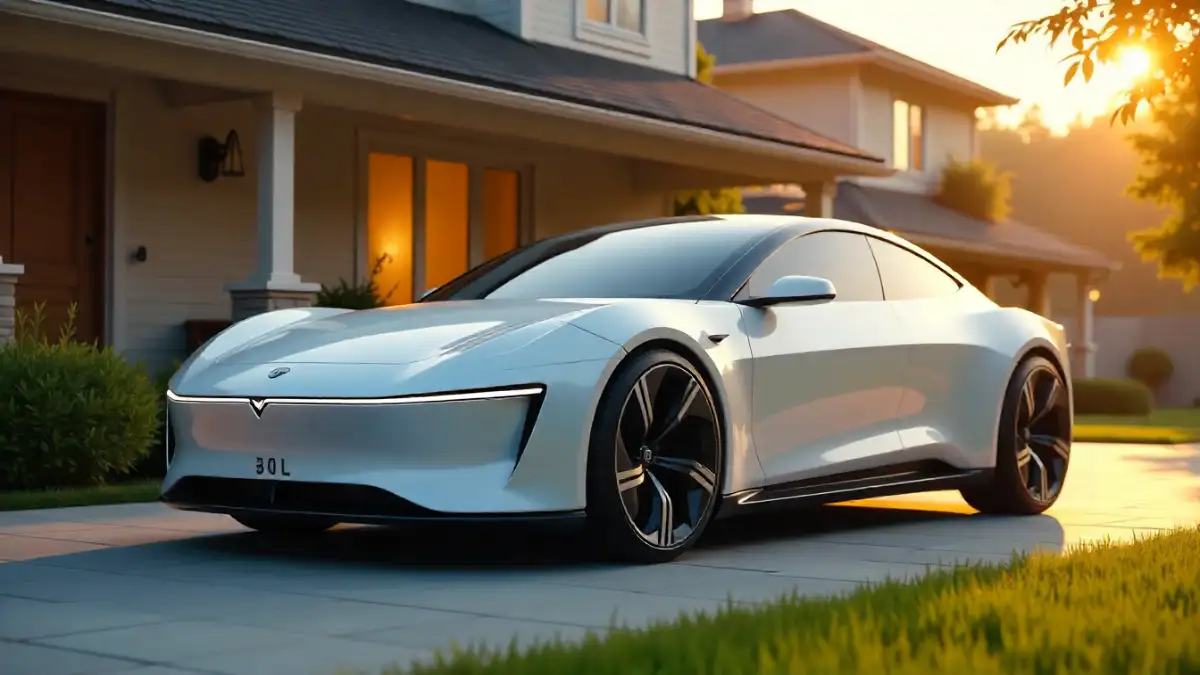
Remember when electric cars were luxury toys for the wealthy? When a Tesla seemed as attainable as a yacht, and going electric meant choosing between your dream car and your mortgage payment? Well, grab your coffee and settle in, because that landscape is changing faster than you might think.
We’ve been hearing about “affordable EVs” for years now. Every auto show brings another press release promising electric vehicles for the masses. But here’s the thing: most of those promises have felt like Lucy pulling the football away from Charlie Brown. Just when you think you can finally afford one, the price tag remains stubbornly out of reach. But in 2025, something different is happening. The $30,000 electric car isn’t just a concept anymore—it’s becoming a real possibility, and the implications could reshape how we all drive.
Why the $30K Price Point Actually Matters
You might wonder, why all the fuss about this specific number? Can’t people just save a bit more or settle for something slightly pricier? Here’s the reality: $30,000 isn’t arbitrary. It’s the psychological and practical threshold where electric cars can genuinely compete with their gasoline counterparts in the mainstream market.
Think about it this way. The average new car in America costs around $48,000 these days—a figure that makes many of us wince. But popular models like the Honda Civic, Toyota Camry, and Ford Escape typically hover in the $25,000 to $35,000 range. That’s where most families actually shop. If you want EVs to move beyond early adopters and into every driveway, you need to meet people where they are, not where you wish they were.
I’ve talked to dozens of potential EV buyers over the past year, and the story is remarkably consistent. They’re interested, even excited about electric driving. They love the idea of lower fuel costs, reduced maintenance, and yes, helping the environment. But when they run the numbers, that extra $10,000 to $15,000 premium compared to a gas car becomes a deal-breaker. Federal tax credits help, sure, but not everyone qualifies, and even with incentives, many EVs still price themselves out of reach.
The Players Racing Toward Affordable
So who’s actually making this $30K dream happen? The competition is heating up, and it’s coming from some unexpected directions.
Ford has been surprisingly aggressive here. Their leadership has made it clear they’re not content to let EVs remain a premium product. They’re leveraging their massive scale and manufacturing expertise to drive costs down. The company has openly discussed plans for more affordable electric models, recognizing that their F-150 Lightning, while successful, doesn’t help the family looking for a daily commuter.
Then there’s BYD, the Chinese automaker that’s become the elephant in the room nobody wants to ignore. BYD isn’t just building cheap electric cars—they’re building good, cheap electric cars. They’ve vertically integrated their supply chain, manufacturing everything from batteries to semiconductors in-house. This gives them cost advantages that legacy automakers are scrambling to match. Their vehicles are already dominating markets in China and Europe, and while tariffs complicate their U.S. entry, their pressure on pricing is forcing everyone else to sharpen their pencils.
Chevrolet is also back in the affordable EV game after the Bolt’s brief departure and return. The new Bolt platform promises to deliver genuine utility at a price point that won’t require a second mortgage. General Motors learned painful lessons from their first attempt, and they’re applying that knowledge to create something more durable, more refined, and more price-competitive.
Even Tesla, despite their reputation for premium pricing, has repeatedly teased a $25,000 model. While Elon Musk’s timelines are notoriously optimistic, the company knows they’ve saturated the luxury market. Growth means going mainstream, and mainstream means more accessible pricing.
The Technology Finally Catching Up to the Promise
Here’s something that doesn’t get enough attention: the reason we’re finally seeing affordable EVs isn’t just about willpower or market pressure. The technology itself has reached a tipping point.
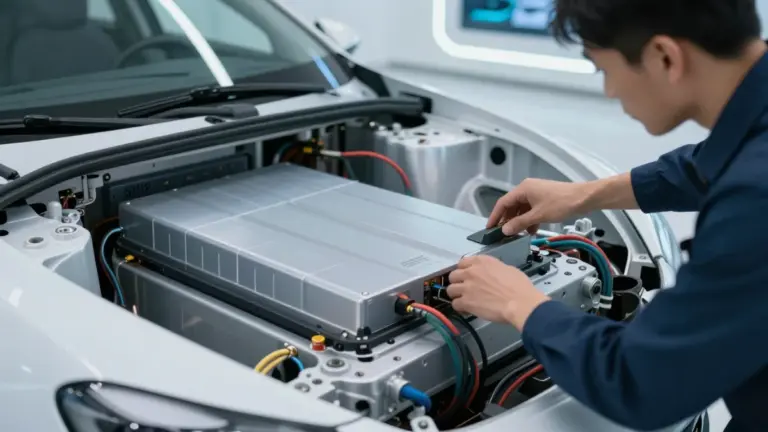
Battery costs have plummeted over the past decade. In 2010, lithium-ion batteries cost about $1,100 per kilowatt-hour. Today? We’re looking at around $130 per kWh, with some manufacturers achieving even lower costs. That’s not incremental improvement—that’s revolutionary. When batteries account for roughly 30-40% of an EV’s cost, this kind of reduction changes everything.
Manufacturing processes have also matured dramatically. Remember, the auto industry has had over a century to perfect building internal combustion engines. They’ve only been seriously manufacturing EVs at scale for about 15 years. Every year brings improvements in efficiency, reduced waste, and streamlined assembly. Tesla’s controversial “gigacasting” approach, for example, where massive portions of the vehicle are created in single pieces rather than welded together from dozens of parts, might slash production costs by up to 20%.
The charging infrastructure, while still imperfect, has also reached critical mass in many regions. When buyers know they can actually charge their vehicle conveniently, the psychological barrier drops. It’s similar to how smartphones became ubiquitous once we had reliable cellular networks everywhere—the hardware was always impressive, but usability required infrastructure.
The Roadblocks Still in the Way
Let’s be honest though: we’re not quite there yet, and pretending otherwise would be doing you a disservice. Several significant challenges still stand between us and widespread affordable EV adoption.
Raw material costs remain volatile. Lithium, cobalt, nickel—these aren’t just mining industry buzzwords; they’re the foundation of battery technology. When these commodities spike in price due to supply constraints or geopolitical tensions, that cost flows directly to the vehicle price. Diversifying battery chemistry helps (lithium-iron-phosphate batteries use cheaper materials), but we’re still dependent on global supply chains with inherent vulnerabilities.
Manufacturing scale presents a chicken-and-egg problem. To get costs down, you need massive production volume. But to justify that volume, you need confident buyers. Traditional automakers are cautious about overcommitting to EV production when consumer demand remains somewhat uncertain. They’ve seen what happens when you build excess capacity—billions in losses and shuttered plants.
Charging anxiety persists, even if it’s sometimes more perception than reality. Yes, most people charge at home overnight and never think about it. But that doesn’t help if you live in an apartment or don’t have a dedicated parking space. Until charging becomes as ubiquitous and quick as filling up with gas, some buyers will remain hesitant. And hesitant buyers don’t justify aggressive pricing.
There’s also the profit margin dilemma. Automakers aren’t charities. They need to make money on the vehicles they sell. Right now, many manufacturers are barely breaking even—or actually losing money—on their EVs. They’re subsidizing these losses with profits from gas vehicles. As that gas vehicle revenue declines, they’ll need EVs to stand on their own financially. Dropping prices to $30K while maintaining quality and achieving profitability? That’s a tightrope walk.
Will 2026 Be the Year Everything Changes?
So here’s the million-dollar question—or rather, the $30,000 question: Is next year really when affordable EVs break through?
The honest answer is: probably not entirely, but we’ll get much closer. Think evolution, not revolution. By late 2026, I expect we’ll see at least three to five models from major manufacturers genuinely hitting that $30K price point before incentives. With federal tax credits (assuming they remain in place), that could mean $22,500 to $25,000 out of pocket for eligible buyers. That’s firmly in “competitive with gas cars” territory.
The Chinese manufacturers will continue applying pressure, even if they’re not selling directly in the U.S. Their pricing in other markets forces everyone to match or risk losing global competitiveness. American and European automakers are watching BYD sell quality EVs for the equivalent of $25,000 in Brazil and thinking, “We need to figure this out.”
Battery technology continues its relentless improvement. Solid-state batteries, which promise greater energy density and lower costs, are moving from labs to production lines. Even before those arrive, incremental improvements in current lithium-ion technology keep pushing costs down.
What I’m most optimistic about is the psychological shift happening among automakers. For years, EVs were side projects, experimental divisions, compliance cars built to satisfy regulations. Now they’re central to every major manufacturer’s strategy. When you commit at that level, when your CEO’s legacy depends on successful electrification, you find ways to solve the cost problem.
What This Means for You
If you’re reading this and wondering whether you should wait for these mythical affordable EVs or buy something now, here’s my take: it depends on your situation.
Buy now if: You can genuinely afford current prices, you have home charging, and you drive enough that fuel savings offset the premium. Early adopters get to enjoy the technology today while contributing to the infrastructure and market development that helps everyone later.
Wait if: You’re stretching your budget uncomfortably, you’re in a rental situation without charging access, or you simply don’t drive enough miles annually to benefit from the operational savings. The cars coming in the next 18-24 months will likely offer better value.
Watch carefully if: You’re in that middle ground—interested and capable, but not urgent. Keep an eye on announcements, particularly from Ford, GM, and emerging brands. Subscribe to test drive notifications. The right vehicle at the right price could appear faster than you expect.
The Bigger Picture: Transportation Democracy
Here’s what really excites me about this whole affordable EV movement, and it’s bigger than just saving money on gas. When electric vehicles were exclusively premium products, they reinforced economic divides. Wealthy neighborhoods got cleaner air while lower-income communities dealt with pollution from older gas vehicles. Early adopters benefited from lower operating costs while everyone else paid more at the pump.
Affordable EVs change that equation. They democratize access to cleaner transportation, lower operating costs, and newer technology. A single parent working two jobs deserves reliable, inexpensive transportation just as much as a tech executive. When we finally crack the affordable EV code, we’re not just selling cars—we’re providing opportunity.
Think about ride-sharing drivers, delivery workers, and small business owners who log serious miles. These folks pay a premium in fuel and maintenance for gas vehicles, costs that directly eat into their livelihoods. An affordable EV with low operating costs could transform their economics. That’s not hyperbole; that’s math.
The Bottom Line
Are affordable electric cars finally within reach? The answer is a qualified yes. We’re closer than we’ve ever been, with real vehicles from real manufacturers approaching real affordability. The $30K EV isn’t a fever dream anymore—it’s a target that multiple companies are actively shooting for, and some are getting very close.
Will 2026 be the definitive turning point? Probably not a single dramatic moment, but rather a year when we look back and realize things fundamentally shifted. More choices at lower prices, better technology, expanded infrastructure—all converging to make electric driving accessible to people who previously couldn’t consider it.
My advice? Stay informed, but manage your expectations. The revolution is coming, but revolutions rarely happen overnight. The affordable EV you’ve been waiting for might not arrive exactly when promised or precisely how you imagined. But it’s coming, driven by economics, technology, and competitive pressure that no automaker can ignore.
The question isn’t really whether affordable EVs will arrive—it’s whether you’ll be ready when they do. Start thinking now about your charging situation, your driving patterns, and your actual needs versus wants. Because when that $30K electric car that meets your requirements finally hits the showroom, you’ll want to be prepared to make a smart decision, not a rushed one.
The electric future is coming. And for the first time, it looks like it might actually be affordable for most of us.