You know what’s funny? A few years ago, I was at a family dinner when my uncle asked me, “Why are we bothering with all these electric cars when hydrogen is clearly the future?” My cousin immediately jumped in: “No way, batteries are where it’s at!” What followed was a debate that lasted through dessert and coffee. The truth? They were both right—and both wrong.
The hydrogen versus battery debate isn’t just some nerdy engineering argument. It’s about the future of how we’ll get around, and it affects everything from your next car purchase to global climate policy. So let’s dig into this fascinating rivalry and figure out what it really means for you as a driver.
Understanding the Basics: Two Different Approaches to Zero Emissions
Before we dive into the comparison, let’s make sure we’re on the same page about what we’re actually talking about here.
Battery electric vehicles (BEVs) are what most people picture when they think “electric car.” They work like your smartphone or laptop—a big battery pack stores electricity, and an electric motor uses that power to turn the wheels. You plug it in, charge it up, and off you go. Think Tesla Model 3, Chevrolet Bolt, or Ford Mustang Mach-E.
Hydrogen fuel cell vehicles (FCVs), on the other hand, are a bit more complex. They carry compressed hydrogen gas in special tanks. Inside the car, a fuel cell combines that hydrogen with oxygen from the air, creating electricity through a chemical reaction. The only byproduct? Water vapor. That electricity then powers an electric motor. The Toyota Mirai and Hyundai Nexo are the most common examples you’ll actually see on the road.
Here’s the thing that confuses people: both types are electric vehicles! They both use electric motors. The difference is in how they generate and store the electricity. One uses a battery you charge from the grid; the other creates electricity on-demand from hydrogen fuel.
The Efficiency Question: Where Does Your Energy Actually Go?
Let’s talk about something that doesn’t always make headlines but absolutely matters: efficiency. And honestly, this is where battery electric vehicles have a commanding lead.
When you charge a BEV, roughly 70-80% of the energy from the power grid actually makes it to the wheels. Sure, you lose some energy in charging, battery storage, and the electric motor, but it’s a relatively straightforward path.
Hydrogen’s journey is… well, it’s more of an obstacle course. First, you need to create the hydrogen, usually through electrolysis (splitting water with electricity). Then you compress it to incredibly high pressures—we’re talking 10,000 PSI, about 300 times the pressure in your car tires. Then it gets transported to fueling stations, pumped into your car, and finally converted back into electricity through the fuel cell. By the time that energy reaches your wheels, you’re only getting about 25-35% of the original energy.
Think of it like this: if battery charging is like drinking water straight from a glass, hydrogen is like turning that water into ice, shipping it across the country, melting it back down, and then drinking it. You’ll still get hydrated, but you’ve wasted a lot of energy in the process.
Does this mean hydrogen is doomed? Not necessarily. But it does mean that for the same amount of renewable energy, you can power roughly three times as many battery electric vehicles as hydrogen ones. In a world where we’re trying to maximize our clean energy, that’s a big deal.
Refueling Speed and Range: Where Hydrogen Looks Really Attractive
Now let’s talk about one of hydrogen’s strongest selling points: refueling time. And I’ll be honest—this is where battery advocates have to acknowledge hydrogen’s appeal.
Fill up a hydrogen fuel cell vehicle, and you’re done in about 3-5 minutes. It feels almost exactly like pumping gas. You pull up, attach the nozzle, wait a few minutes, and you’ve got 300-400 miles of range. For a long-distance road tripper or someone who regularly drives hundreds of miles a day, that’s incredibly compelling.
Compare that to battery electric vehicles. Even with the fastest DC fast chargers available today, you’re typically looking at 20-40 minutes to add 200-250 miles of range. Yes, charging technology is improving rapidly—some new EVs can add 200 miles in 15 minutes—but it’s still not as quick as refueling with hydrogen or gasoline.
But here’s where the real-world picture gets more nuanced. How often do you actually drive more than 250 miles in a day? For most people, the answer is rarely. The typical American drives about 40 miles daily. With a BEV, you’re charging at home overnight while you sleep. Your car is “full” every morning, and you never need to visit a fueling station for your daily routine.
I think of it this way: battery cars are like having a phone charger on your nightstand—you plug in when you’re not using it, and it’s ready when you need it. Hydrogen is like having to go to a special phone charging store every few days. Sure, it’s fast when you’re there, but the convenience of home charging is hard to beat for everyday life.
The range comparison is interesting too. The best hydrogen FCVs offer 300-400 miles, while top battery EVs now exceed 400 miles. The gap is closing, and for most people, either option provides plenty of range for daily driving plus the occasional road trip.
The Infrastructure Challenge: Building Out the Network
Let me tell you about my friend Sarah in California. She drives a hydrogen Mirai and loves it—when she can find a station. Last month, her regular station was closed for maintenance, and the nearest alternative was 25 miles away. She managed, but it was stressful.
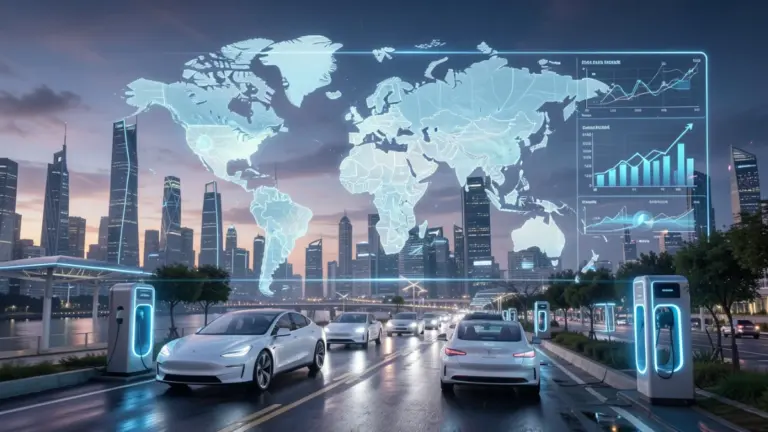
This brings us to perhaps the biggest practical challenge for hydrogen: infrastructure. As of 2025, there are only about 60-70 hydrogen fueling stations in the entire United States, and most of those are in California. In contrast, there are over 60,000 public EV charging stations with more than 150,000 individual charging ports across the country.
Building hydrogen infrastructure is expensive. A single hydrogen fueling station costs $2-4 million to build, requires specialized equipment, and needs a steady supply of hydrogen. It’s a chicken-and-egg problem: car companies don’t want to sell hydrogen vehicles where there aren’t stations, and energy companies don’t want to invest in stations where there aren’t enough vehicles.
Battery charging infrastructure has its own challenges, don’t get me wrong. We need more chargers, especially fast chargers along highways and in underserved communities. But the advantage is that charging infrastructure can grow incrementally. You can install chargers in parking lots, homes, workplaces, and shopping centers relatively easily. Every outlet is potentially a charging point.
Plus, with BEVs, you have the home charging option. About 80% of EV charging happens at home. You can’t produce hydrogen at home (at least not practically), so FCV owners will always depend on public refueling infrastructure.
The Cost Equation: What Will You Actually Pay?
Let’s talk money, because that’s what ultimately matters for most buyers.
Purchase price? Right now, battery electric vehicles have a clear advantage. You can find decent BEVs starting around $28,000-$35,000 after federal tax credits. Hydrogen FCVs are more expensive—the Toyota Mirai starts around $50,000, though it often comes with substantial hydrogen fuel credits.
But purchase price is just the beginning. What about fuel costs?
Electricity is cheap. Charging at home, you’ll typically pay the equivalent of $1.50-$2.50 per gallon of gas, depending on your local electricity rates. Even using public fast chargers (which are more expensive) usually works out to $2.50-$4.00 per gallon equivalent.
Hydrogen? It’s currently expensive—really expensive. Retail hydrogen in California costs around $15-20 per kilogram, and a typical fill-up requires 5-6 kilograms. That’s $75-120 per fill-up, equivalent to paying $7-10 per gallon of gas. Ouch. The only reason FCV drivers aren’t screaming about this is that manufacturers often include significant fuel credits with vehicle purchases.
Could hydrogen get cheaper? Absolutely. If we scale up production and use renewable energy to produce green hydrogen, costs could drop significantly. But today, it’s expensive, and there’s no clear timeline for when it’ll be competitive with electricity.
Maintenance is another consideration. Both types of vehicles have fewer moving parts than gas cars, so maintenance is generally lower. However, hydrogen fuel cells have complex components that may be expensive to repair or replace over time, though we don’t have enough long-term data yet to know for sure.
Environmental Impact: It’s More Complicated Than You Think
You might assume both options are equally “green” since they produce zero emissions at the tailpipe. But the environmental story is more complex and depends heavily on where the hydrogen and electricity come from.
For battery EVs, the environmental impact depends on your local power grid. Charging from a grid powered by coal is obviously less clean than charging from solar or wind. But here’s the good news: grids are getting cleaner every year, so even if you buy a BEV today and charge from a mixed grid, your car’s emissions footprint improves automatically as your utility adds more renewable energy.
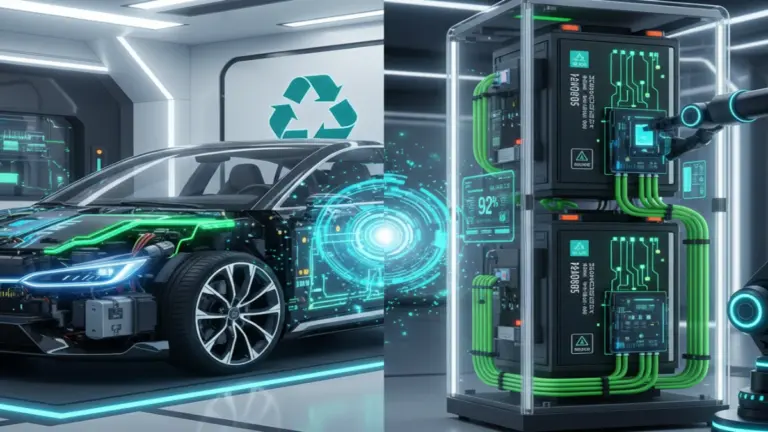
Battery manufacturing does have environmental costs, particularly in mining lithium, cobalt, and other materials. However, battery recycling technology is advancing rapidly, and we’re getting better at recovering these materials. Plus, batteries can have second lives in energy storage systems after they’re no longer suitable for vehicles.
Hydrogen’s environmental story depends entirely on production method. About 95% of hydrogen produced today is “gray hydrogen,” made from natural gas in a process that releases significant CO2. That’s not helping the climate crisis at all—in fact, using gray hydrogen in an FCV can produce more lifecycle emissions than just driving an efficient gasoline car.
“Green hydrogen,” produced by splitting water using renewable electricity, is genuinely clean. But remember that efficiency issue we talked about earlier? You need about 3 times as much renewable energy to make green hydrogen and power an FCV than to directly charge a BEV. In a world where renewable energy is still being scaled up, that’s a significant consideration.
There’s also “blue hydrogen,” made from natural gas but with carbon capture to reduce emissions. It’s better than gray hydrogen but not as clean as green, and the effectiveness depends on how well the carbon capture works.
The bottom line? A BEV powered by renewable energy is currently the cleanest option. A hydrogen FCV powered by green hydrogen is also very clean but requires more renewable energy per mile driven. An FCV powered by gray hydrogen might actually be worse than a fuel-efficient gas car.
Use Cases: Where Each Technology Makes Sense
Here’s where the conversation gets really interesting, because I don’t think this is an either-or situation. Different technologies make sense for different applications.
Battery electric vehicles excel for:
- Personal vehicles and daily commuting
- Light-duty commercial vehicles with predictable routes
- Fleets with access to depot charging
- Urban and suburban driving
- Households with home charging access
You wake up every morning with a “full tank,” never visit gas stations, enjoy lower operating costs, and benefit from growing charging infrastructure. For the vast majority of personal vehicle owners, BEVs are already the better choice.
Hydrogen fuel cells might make more sense for:
- Long-haul trucking (where battery weight becomes an issue)
- Heavy-duty vehicles that need maximum payload capacity
- Vehicles requiring very fast refueling times
- Applications in cold climates where batteries lose significant range
- Vehicles with unpredictable usage patterns and no base for charging
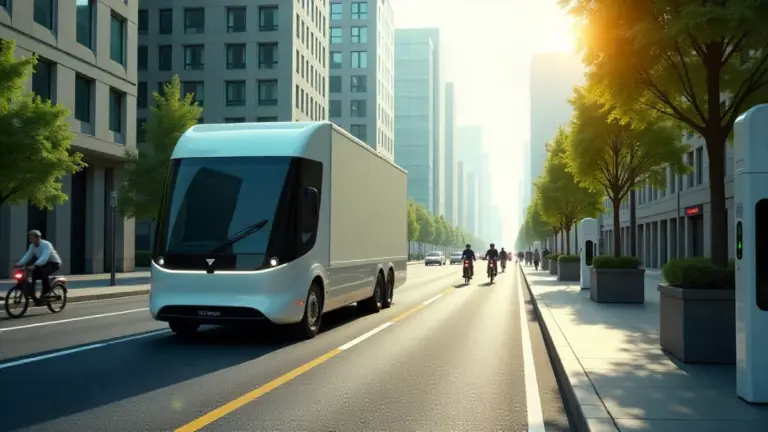
Notice I said “might” for hydrogen. Even in these categories, battery technology is advancing rapidly. We’re seeing electric semi-trucks that can compete with diesel, and cold-weather battery performance is improving. But there’s a legitimate argument that hydrogen could play a role in these heavier-duty applications.
Some experts envision a future where light-duty vehicles (cars, SUVs, light trucks) are primarily battery electric, while heavy-duty applications (semi-trucks, buses, maybe even ships and planes) use hydrogen or synthetic fuels. That might be the most efficient allocation of our resources.
The Road Ahead: What Does the Future Hold?
So where are we headed? Let me share my honest assessment after watching this industry for years.
Battery electric vehicles have won the battle for personal transportation. The momentum is overwhelming. Every major automaker has committed to electrification, billions are being invested in battery production and charging infrastructure, and governments worldwide are supporting the transition. Battery technology keeps improving—we’re seeing better range, faster charging, lower costs, and longer lifespans with each generation.
Hydrogen hasn’t been abandoned, but it’s pivoting. Major automakers who once championed hydrogen for passenger cars are now focusing their hydrogen efforts on commercial vehicles. Toyota, Honda, and Hyundai still produce fuel cell cars, but even they’re ramping up battery EV production. The hydrogen conversation is increasingly about trucks, buses, and industrial applications rather than your daily driver.
That doesn’t mean hydrogen is irrelevant. For decarbonizing heavy industry, shipping, and aviation, hydrogen will likely play a crucial role. But for the car in your driveway? Battery electric is the present and the foreseeable future.
The wild card is technological breakthroughs. If someone invents a dramatically cheaper way to produce green hydrogen, or if battery technology hits fundamental physical limits, the equation could shift. But betting on breakthroughs is risky—you make decisions based on current technology and realistic projections.
So What Should You Do?
If you’re considering your next vehicle purchase, here’s my practical advice:
Choose a battery EV if:
- You can charge at home or work
- Your daily driving is under 200 miles
- You want the lowest operating costs
- You value convenience (home charging) over fast refueling
- You live somewhere with decent charging infrastructure
Consider hydrogen if:
- You’re in California (where most hydrogen infrastructure exists)
- You regularly drive 300+ miles with no time to charge
- You can’t install home charging
- You get substantial manufacturer fuel credits
- You want to be an early adopter of emerging technology
For most people reading this article, a battery EV is the better choice right now. It’s more practical, more economical, and more proven. The infrastructure is better, the vehicle selection is vastly larger, and the technology is more mature.
Does that mean hydrogen is dead? No. It means hydrogen is finding its niche, probably in commercial and industrial applications rather than consumer vehicles. And that’s okay—we don’t need one technology to rule them all. We need the right technology for each application.
The beautiful thing is that both technologies represent progress toward a cleaner transportation future. Whether electricity comes from a battery or is generated from hydrogen in a fuel cell, we’re moving away from burning fossil fuels directly in our engines. That’s worth celebrating.
The hydrogen versus battery debate at my family dinner never really got resolved. But after all my research and real-world observation, I’d tell my uncle that his hydrogen future is probably coming—just not necessarily for passenger cars. And I’d tell my cousin that batteries are indeed winning, but there’s room for both technologies in our clean energy future.
The question isn’t really which technology will “win.” It’s about using each technology where it makes the most sense, maximizing the benefit of our clean energy resources, and getting as many vehicles as possible away from fossil fuels. Whether you’re team battery or team hydrogen, we’re all on the same team when it comes to creating a more sustainable transportation future.
Now, if you’ll excuse me, I need to plug in my EV—because in my driveway, the future is already here, and it charges while I sleep.