You’ve invested in a sleek electric vehicle—maybe it’s a Tesla Model 3, a Mustang Mach-E, or a Rivian R1T. But here’s something many new EV owners don’t realize: keeping your electric car clean isn’t just about aesthetics. It’s about preserving your investment, maintaining efficiency, and yes, enjoying that showroom shine every time you walk up to your car.
Electric vehicles have some unique considerations when it comes to cleaning and detailing. From protecting sensitive charging ports to maintaining specialized paint finishes, there’s more to EV care than you might think. In this guide, I’ll walk you through everything you need to know about keeping your electric car looking its best—inside and out—while avoiding the common mistakes that could damage your vehicle or void your warranty.
What you’ll learn:
- Why regular cleaning matters more for EVs than you’d expect
- The essential differences between detailing an EV versus a gas car
- Step-by-step cleaning techniques that protect your vehicle’s unique features
- Professional detailing tips that’ll save you money and keep your car pristine
- How proper maintenance can actually impact your EV’s range and resale value
Why Electric Cars Deserve Extra Attention
Let me start with something that surprised me when I got my first EV: these cars actually need regular cleaning more than traditional vehicles. I know what you’re thinking—a car’s a car, right? Not quite.
Electric vehicles typically feature advanced paint technologies with ceramic or metallic finishes that show dirt and water spots more readily than conventional paint. Many EVs also come with large, flat surfaces—think about the massive hood on a Tesla Model S or the expansive glass roof on a Polestar 2. These surfaces are gorgeous but act like dust magnets.
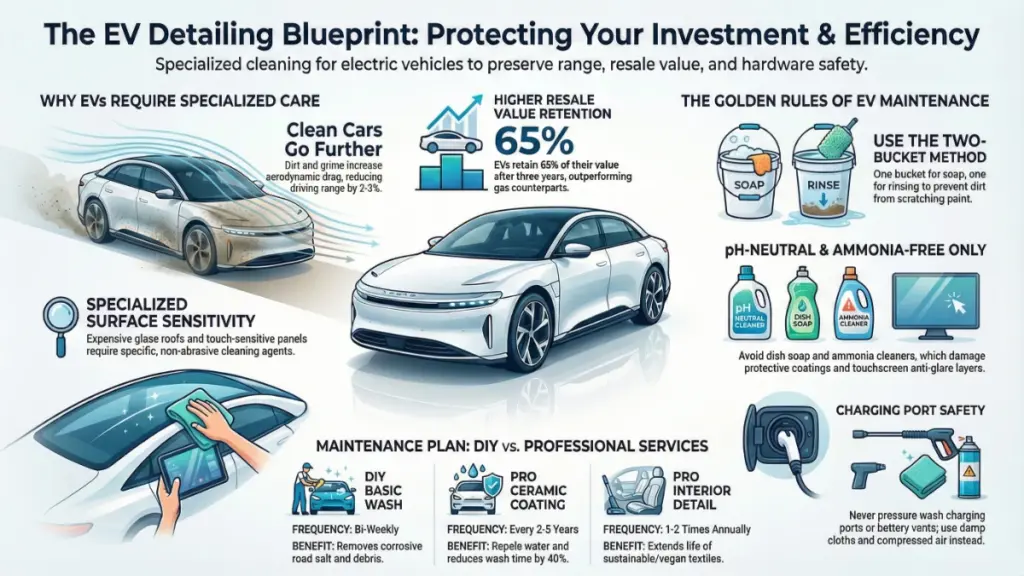
Here’s the real kicker: dirt and grime accumulation can actually affect your EV’s efficiency. According to a 2024 study by the Society of Automotive Engineers, a heavily soiled EV can experience up to a 2-3% reduction in range due to increased aerodynamic drag. That might not sound like much, but when you’re already planning charging stops on a road trip, every mile counts.
Beyond efficiency, there’s the resale value factor. The used EV market has exploded in 2025, with Kelley Blue Book reporting that well-maintained electric vehicles retain an average of 65% of their value after three years—significantly higher than their gas counterparts. A pristine exterior and interior? That’s money in your pocket when it’s time to upgrade.
The Unique Challenges of EV Exteriors
Electric vehicles present some distinct challenges:
- Charging port protection: Water and cleaning products near charging ports require extra caution
- Specialized coatings: Many EVs feature UV-protective or self-healing paint that needs specific care
- Exposed battery vents: Most EVs have cooling vents that shouldn’t be pressure-washed directly
- Touch-sensitive panels: Some models (looking at you, Rivian) have panels that can be damaged by harsh chemicals
- Large glass surfaces: Panoramic roofs and expansive windows need streak-free cleaning
Essential Cleaning Supplies for Your Electric Vehicle
Before you grab that bucket and sponge, let’s talk about what you actually need. I’ve made the expensive mistake of using the wrong products on my EV’s paint, and I’m here to save you from the same headache.
The Must-Have Cleaning Arsenal
Exterior Cleaning:
- pH-neutral car wash soap (never dish soap—it strips protective coatings)
- Microfiber wash mitts (at least two: one for the body, one for wheels)
- Soft-bristle wheel brush for intricate wheel designs
- Microfiber drying towels or a silicone squeegee
- Foam cannon for touchless pre-wash (if you have a pressure washer)
- Clay bar kit for removing embedded contaminants (quarterly use)
- EV-safe spray wax or ceramic coating spray for protection
Interior Cleaning:
- Vacuum with soft brush attachments (crucial for vegan leather seats)
- Interior cleaner specific to your seat material (leather, vegan leather, or cloth)
- Glass cleaner (ammonia-free for tinted windows)
- Microfiber cloths in multiple colors (avoid cross-contamination)
- Detailing brushes for air vents and tight spaces
- Screen-safe cleaning solution for touchscreens (this is critical!)
What to Avoid:
- Automatic car washes with harsh brushes (they cause micro-scratches)
- Pressure washers above 1,200 PSI directly on charging ports
- Ammonia-based cleaners on touchscreens
- Silicone-based tire shine products (they damage EV-specific wheel finishes)
- Abrasive compounds on matte paint finishes
Investment-Worthy Upgrades
If you’re serious about maintaining your EV’s appearance, consider these upgrades:
Ceramic coating ($500-$2,000 professionally applied): Creates a hydrophobic layer that repels water, dirt, and contaminants. On my Tesla, this reduced wash frequency by nearly 40% and made each wash significantly easier.
Paint protection film (PPF) ($1,500-$5,000): Especially valuable for high-impact areas like the front bumper, hood, and mirrors. Many Rivian owners swear by this for off-road adventures.
All-weather floor mats ($150-$300): Protect that pristine carpet, especially if you live in areas with snow and salt.
The Perfect EV Exterior Wash: A Step-by-Step Guide
Let me walk you through the cleaning process I’ve refined over three years of EV ownership. This method minimizes water spots, protects your vehicle’s finish, and takes about 45 minutes start to finish.
Pre-Wash Preparation (5 minutes)
Step 1: Park in the shade Direct sunlight causes soap and water to dry too quickly, leaving those annoying water spots. If you don’t have shade, wash early morning or late evening.
Step 2: Close all charging ports and panels This sounds obvious, but I’ve seen it happen—someone forgets to secure the charging port door. Double-check that everything’s sealed tight. Most EVs have weatherproofing, but why risk it?
Step 3: Pre-rinse thoroughly Use a gentle stream (not a pressure washer yet) to remove loose dirt, bird droppings, and debris. Pay special attention to wheel wells and the lower rocker panels where road grime accumulates.
The Two-Bucket Method (20 minutes)
Why two buckets? One holds your soapy water, the other clean rinse water. This prevents you from reintroducing dirt to your paint—a major cause of swirl marks.
Step 4: Fill your buckets
- Bucket 1: Fresh water with pH-neutral car soap (follow manufacturer’s dilution ratio)
- Bucket 2: Clean rinse water
- Add grit guards to both buckets to trap dirt at the bottom
Step 5: Work from top to bottom Start with the roof and work your way down. Why? The lower parts of your car are dirtiest. You don’t want to drag that contamination across pristine upper panels.
Use straight, overlapping lines rather than circles. This minimizes swirl marks that become visible in direct sunlight.
Step 6: Rinse your mitt frequently After each panel, rinse your mitt in the clean water bucket, scrub it against the grit guard, then reload with soap. This single habit prevents most paint damage during washing.
Step 7: Clean wheels separately Use a dedicated wheel brush and your second microfiber mitt (the one you’ll never use on the body). EV wheels often have intricate designs that trap brake dust—yes, even regenerative braking produces some dust from the mechanical brakes.
Drying and Protection (20 minutes)
Step 8: Rinse thoroughly with deionized water (if possible) If you have access to a deionizing filter for your hose, use it. Deionized water doesn’t leave mineral deposits, meaning zero water spots. Game-changer for dark-colored EVs.
Step 9: Dry with proper technique Never let your EV air dry—that’s how you get water spots. Use a clean microfiber drying towel with a blotting motion rather than dragging it across the paint.
For an even better result, try a silicone water blade (squeegee). Just make sure it’s clean and use light pressure.
Step 10: Apply spray wax or ceramic spray While the paint is still slightly damp, apply a spray wax or ceramic coating spray. This provides immediate protection and enhances that glossy finish. I use this after every third wash, and it keeps my Model 3’s paint looking showroom-fresh two years in.
Special Attention Areas
Charging port area: Wipe around (not inside) the charging port with a slightly damp microfiber cloth. Keep soap and water away from the actual charging contacts. If you notice any moisture inside, use compressed air to dry it out.
Glass roof/panoramic sunroof: These massive glass surfaces need special care. Use a dedicated glass cleaner and microfiber cloth designed for automotive glass. Clean in small sections to avoid streaking.
Underbody (quarterly): Most car washes offer underbody rinsing for $3-5. Do this quarterly, especially if you drive in areas that use road salt. Salt can corrode battery protective shields and suspension components.
Interior Detailing: Protecting Your EV’s Cabin
Electric vehicle interiors present their own set of considerations. With no engine noise, every squeak, rattle, and odor becomes more noticeable. Plus, many EVs feature premium materials—vegan leather, sustainable textiles, real wood—that require specific care.
Dashboard and Console Cleaning
The touchscreen dilemma: Your EV’s massive touchscreen is also a fingerprint magnet. Here’s what works:
- Never use Windex or ammonia-based cleaners—they can damage the anti-glare coating
- Use a dedicated screen cleaning solution or distilled water with a microfiber cloth
- Clean in gentle circular motions
- Dry immediately to avoid streaks
For the surrounding dashboard, use an interior cleaner designed for automotive plastics. Many EVs use matte-finish plastics that can become shiny and streaky with the wrong products.
Pro tip: Keep a dedicated microfiber cloth in your center console for quick touchscreen wipes. You’ll use it more than you think.
Seat Care by Material Type
Vegan leather (Tesla, Polestar, many others):
- Vacuum thoroughly first to remove debris
- Use a pH-neutral interior cleaner—not leather conditioner
- Wipe with a damp microfiber cloth
- Dry immediately to prevent water spots
- Apply UV protectant every 3-4 months to prevent cracking
Traditional leather (luxury EVs like Porsche Taycan, Mercedes EQS):
- Clean with dedicated leather cleaner
- Follow with leather conditioner every 3 months
- Avoid excessive wetness
- Never use harsh chemicals or bleach-based cleaners
Cloth/sustainable materials (some Rivian and Lucid models):
- Vacuum regularly with soft brush attachment
- Spot-clean stains immediately with upholstery cleaner
- Consider fabric protectant spray for spill resistance
- Professional steam cleaning annually
Floor Mats and Carpets
This is where all-weather floor mats prove their worth. Here’s my routine:
Weekly: Remove mats, shake them out, vacuum both mats and underlying carpet
Monthly: Deep clean mats with all-purpose cleaner and scrub brush, then rinse and dry completely
Quarterly: Vacuum carpet thoroughly, including under seats. Use a carpet cleaner on any stains.
One thing I’ve learned: EV carpets can develop odors faster than gas cars because there’s no engine heat to dry out moisture. If you live in a humid climate, occasionally run a dehumidifier packet or leave windows cracked on dry days.
Air Quality and Odor Management
Many electric vehicles feature HEPA-filtration systems (Tesla’s Bioweapon Defense Mode, anyone?), but those filters need maintenance:
- Replace cabin air filters according to your owner’s manual (typically every 12-24 months)
- Clean air intake vents monthly with a detailing brush
- Use natural odor eliminators (activated charcoal bags) rather than fragrances
- Run the HVAC system on fresh air mode periodically to prevent musty odors
Professional Detailing vs. DIY: What’s Worth the Money?
I’ve done both professional detailing and DIY maintenance on my electric vehicles. Here’s my honest take on when to DIY and when to call the pros.
When DIY Makes Sense
Regular maintenance (bi-weekly to monthly):
- Basic wash and dry
- Interior vacuum and wipe-down
- Glass cleaning
- Quick spray wax application
Estimated time: 1-2 hours Cost: $20-30 in supplies per month Savings vs. professional: $100-150 per month
The satisfaction of maintaining your own vehicle is real, plus you’ll spot potential issues (paint chips, interior wear) before they become problems.
When to Call a Professional
Ceramic coating application: This requires professional surface preparation, controlled environment, and curing time. A DIY ceramic coating rarely lasts as long or performs as well.
Expected cost: $500-$2,000 depending on vehicle size Frequency: Every 2-5 years Why it’s worth it: Professional-grade ceramic coatings last significantly longer and provide superior protection
Paint correction: If your EV has swirl marks, scratches, or oxidation, professional machine polishing is the only real solution. This requires specialized equipment and expertise.
Expected cost: $300-$800 Frequency: As needed, typically every 2-3 years Why it’s worth it: Improper polishing can damage clear coat permanently
Deep interior detailing: Once or twice a year, professional detailing reaches places you can’t—steam-cleaning vents, shampooing headliners, extracting deep-seated dirt from carpets.
Expected cost: $150-$400 Frequency: 1-2 times annually Why it’s worth it: Extends interior life and maintains that “new car” feel
The Hybrid Approach (My Recommendation)
Here’s what I do on my own EVs:
- DIY: Regular washing (bi-weekly), interior maintenance (weekly), quick detailing (monthly)
- Professional: Annual deep interior detail, ceramic coating refresh (every 2 years), paint correction (as needed)
Total annual cost: Approximately $600-900 Result: Vehicle consistently looks 1-2 years newer than its actual age
Common EV Cleaning Mistakes to Avoid
Let me save you from the mistakes I’ve made (or witnessed) over the years:
1. Pressure-washing the charging port area I’ve seen this multiple times at self-service car washes. While charging ports are weatherproof, blasting them with 2,000 PSI water can force moisture past seals. Keep the pressure washer wand at least 12 inches away from charging ports and battery vents.
2. Using traditional tire shine on EV wheels Many electric vehicles have aero-wheel covers or specially coated wheels. Silicone-based tire shine can damage these finishes or cause degradation. Use water-based, EV-safe tire dressings instead.
3. Ignoring the frunk (front trunk) If your EV has a frunk, it needs cleaning too! These often accumulate leaves, dirt, and debris. Vacuum it monthly and wipe down surfaces.
4. Cleaning windows with the wrong products Ammonia-based cleaners can damage window tinting and the coatings on panoramic glass roofs. Always use ammonia-free automotive glass cleaner.
5. Letting bird droppings sit Bird droppings are acidic and can permanently etch EV paint, especially on the advanced coatings many EVs use. Remove them within 48 hours using a quick detailer spray and microfiber cloth.
6. Over-waxing or using the wrong products on matte finishes Some EVs offer matte paint options (like certain Tesla wraps or special edition colors). Never use traditional wax or polish on matte finishes—use matte-specific detailing products only.
7. Cleaning in direct sunlight This bears repeating: washing or applying products in direct sun causes premature drying, leading to water spots and product streaking. Always detail in shade or during cooler parts of the day.
Seasonal Maintenance: Year-Round EV Care
Your electric vehicle faces different challenges depending on the season. Here’s how to adapt your cleaning and detailing routine:
Spring: Post-Winter Recovery
After months of road salt, slush, and grime, your EV needs serious attention:
- Thorough underbody wash to remove salt and prevent corrosion
- Clay bar treatment to remove embedded winter contaminants
- Paint inspection for chips and damage—touch up immediately
- Deep interior cleaning including floor mats and carpets
- Wax or sealant application to protect for the coming months
Time investment: 4-6 hours or professional detailing service Why it matters: Prevents long-term damage from winter conditions
Summer: UV and Heat Protection
Intense sun and heat can damage your EV’s exterior and interior:
- Apply UV protectant to all interior surfaces, especially vegan leather
- Use windshield sun shades when parked (also helps with interior heat)
- Wash more frequently to remove tree sap, bug splatter, and bird droppings
- Consider ceramic coating for maximum heat and UV protection
- Clean and protect rubber seals around doors and trunk
Pro tip: Park in shade whenever possible—it protects your paint and reduces battery cooling load.
Fall: Preparation Mode
Get ready for the challenging winter months ahead:
- Wax or seal paint before winter weather arrives
- Treat leather and vinyl with conditioner to prevent winter cracking
- Clean and protect charging port area—inspect weatherstripping
- Apply paint protection film to high-impact areas if you haven’t already
- Prepare all-weather mats and interior protection
Winter: Maintenance and Protection
Cold weather cleaning requires special considerations:
- Wash more frequently to remove road salt (every 7-10 days in heavy salt areas)
- Avoid washing when temperatures drop below 32°F at automatic car washes
- Hand-dry thoroughly to prevent freezing doors and locks
- Clean charging port contacts monthly—salt spray can cause corrosion
- Protect battery vents from direct pressure washing in freezing temps
Important: Many EVs have battery heating systems that work harder in winter. Keeping your EV clean reduces aerodynamic drag, helping preserve range when you need it most.
Long-Term Appearance Preservation: Protecting Your Investment
Beyond regular cleaning, here are strategies to keep your EV looking new for years:
Paint Protection Strategies
Ceramic coating ($500-$2,000): Creates a chemical bond with your paint, lasting 2-5 years. Repels water, resists UV damage, and makes cleaning significantly easier. On my Model 3, ceramic coating reduced wash time by 30% and kept the paint pristine.
Paint protection film ($1,500-$5,000): Self-healing urethane film applied to high-impact areas or full body. Essential if you do highway driving, live in areas with gravel roads, or want maximum protection. Rivian and Lucid owners particularly benefit due to these vehicles’ off-road and luxury positioning.
Regular wax/sealant ($50-100/year DIY): Most affordable option, requires reapplication every 3-4 months. Provides decent protection and shine enhancement.
Interior Preservation
UV window tinting: Protects interior materials from sun damage and keeps cabin cooler, reducing HVAC load (which preserves range). Cost: $200-600.
Seat covers: Controversial among EV purists, but if you have kids or pets, quality seat covers protect expensive vegan leather or cloth seats. Look for breathable, well-fitted options.
Regular conditioning: Apply interior protectant to dashboard, door panels, and seats every 2-3 months. This prevents cracking, fading, and premature aging.
Wheel and Tire Care
EV-specific considerations for wheels:
- Ceramic coating for wheels: Protects against brake dust and makes cleaning easier ($100-300)
- Avoid harsh wheel cleaners: Many EVs have powder-coated or specially finished wheels
- Monitor tire pressure weekly: Proper inflation reduces tire wear and maximizes range
- Rotate tires every 5,000-7,000 miles: EVs are heavy, causing faster tire wear
The Environmental Angle: Eco-Friendly Detailing
You chose an electric vehicle partly for environmental reasons, right? Let’s keep that philosophy consistent with how you clean it.
Water Conservation
Waterless or rinseless wash products: These innovative solutions let you clean your EV using less than 2 gallons of water versus 40-100 gallons for a traditional hose wash. I’ve been using rinseless wash products for over a year—they work surprisingly well for light to moderate dirt.
Two-bucket method efficiency: Compared to continuous running water, this method uses approximately 5-10 gallons total—an 80% reduction.
Professional eco-friendly detailers: Many now use water reclamation systems that filter and reuse water. If using professional services, ask about their water conservation practices.
Eco-Friendly Products
Look for:
- Biodegradable soaps and cleaners
- Plant-based or mineral-based formulations
- Products free from phosphates and harsh chemicals
- Concentrated formulas that reduce packaging waste
Brands I’ve had success with: Chemical Guys EcoSmart line, Optimum No Rinse (ONR), and Adam’s Eco line. These products work just as well as conventional options while being gentler on the environment.
Waste Reduction
- Reusable microfiber cloths instead of paper towels (wash separately from regular laundry)
- Concentrated products in refillable containers
- Proper disposal of cleaning water—never let soapy runoff enter storm drains
- Long-lasting protection products like ceramic coatings reduce overall product consumption
Real-World Detailing: Owner Experiences
Let me share some insights from the EV owner community that have shaped my own approach:
Tesla Model 3 owner, Chicago: “Road salt here is brutal. I wash my car every week in winter and still found surface rust on some exposed metal after two years. Now I apply a sealant specifically to the undercarriage in November—problem solved.”
Rivian R1T owner, Colorado: “I take my truck off-road regularly, so it gets dirty. I learned the hard way that the vents for battery cooling are easy to clog with mud. Now I use compressed air after every trail run to clear them out. Keeps the battery cooling system happy.”
Porsche Taycan owner, California: “The paint on this car is stunning but shows every tiny scratch. I invested in full PPF coverage ($5,000) and haven’t regretted it once. Three years later, the paint under the film looks factory fresh.”
Polestar 2 owner, Seattle: “Our constant rain means water spots on that big glass roof. I applied a ceramic coating specifically for glass, and now water just sheets right off. Makes a huge visual difference.”
These real experiences highlight a key point: your local climate and usage patterns should determine your detailing approach. There’s no one-size-fits-all solution.
Quick Reference: Monthly Maintenance Checklist
Bookmark this section for your regular maintenance routine:
Weekly (15-20 minutes):
- Quick exterior rinse focusing on bird droppings, bug splatter, and wheels
- Interior vacuum (focus on floor mats and high-traffic areas)
- Touchscreen wipe-down
- Windows cleaned inside and out
Bi-Weekly (45-60 minutes):
- Full two-bucket wash
- Wheel and tire cleaning
- Spray wax or quick detailer application
- Interior wipe-down (dashboard, door panels, console)
Monthly (2-3 hours):
- Deep interior vacuum including under seats
- Tire dressing application
- Charging port area inspection and cleaning
- Clay bar treatment (if needed)
- All-weather floor mat deep cleaning
- Glass cleaning inside and out
- Check for paint chips or damage
Quarterly (3-4 hours or professional service):
- Paint sealant or wax application
- Interior conditioning (seats, dashboard, door panels)
- Underbody wash
- Wheel well cleaning and protection
- Headlight lens cleaning and protection
- Cabin air filter check
Annually:
- Professional paint inspection and correction (if needed)
- Ceramic coating refresh or reapplication
- Deep interior professional detailing
- Complete exterior protection assessment
Looking Ahead: The Future of EV Detailing
As electric vehicles evolve, so do their maintenance needs. Here’s what’s on the horizon:
Self-cleaning coatings: Several manufacturers are developing photocatalytic coatings that break down dirt using sunlight. Tesla has filed patents in this space, and Nissan showcased a prototype in 2024.
Automated charging port covers: Future EVs may feature motorized, self-cleaning charging port covers that reduce contamination and maintenance needs.
Advanced materials: New interior materials being developed are more stain-resistant and easier to clean while maintaining premium feel and sustainability credentials.
Smart detailing systems: Imagine an app that monitors your EV’s exterior condition through cameras and alerts you when washing is needed—or better yet, schedules mobile detailing automatically.
The bottom line? Electric vehicles represent the future of automotive technology, and their care and maintenance will continue to evolve. Staying informed and adapting your approach keeps your investment protected and looking its best.
Key Takeaways: Your EV Detailing Strategy
Let’s bring this all together with the essential points you need to remember:
Regular cleaning matters more than you think: Beyond aesthetics, proper maintenance affects efficiency, range, and resale value. A clean EV can recover 2-3% in aerodynamic efficiency.
Use the right products: pH-neutral soaps, microfiber cloths, screen-safe cleaners, and EV-appropriate protectants prevent damage and extend the life of your vehicle’s finishes.
Protect charging ports and battery vents: Keep these areas clean and dry, avoid direct pressure washing, and inspect regularly for debris or moisture.
Material-specific care is crucial: Vegan leather, traditional leather, and sustainable fabrics each require different cleaning approaches. Follow manufacturer guidelines.
Invest strategically: DIY regular maintenance, but use professionals for ceramic coating, paint correction, and annual deep detailing. The hybrid approach maximizes value.
Stay eco-conscious: Use water-conserving methods, biodegradable products, and sustainable practices that align with your choice to drive electric.
Follow a maintenance schedule: Consistency prevents major problems and keeps your EV looking newer longer. Use the monthly checklist as your guide.
Your electric vehicle represents a significant investment in both your transportation and the planet’s future. Taking care of its appearance isn’t vanity—it’s smart stewardship. Whether you’re a DIY enthusiast or prefer professional services, the strategies outlined here will keep your EV looking showroom-fresh for years to come.
Now, if you’ll excuse me, I have a date with my foam cannon and a very dusty Model 3. Those microfiber towels aren’t going to fold themselves.
What’s your biggest EV cleaning challenge? Feel free to share your experiences or questions in the comments—I’d love to hear what’s worked (or hasn’t worked) for you. And if you found this guide helpful, bookmark it for your next detailing session. Your future self will thank you when it’s time to trade in that pristine EV for the newest model.