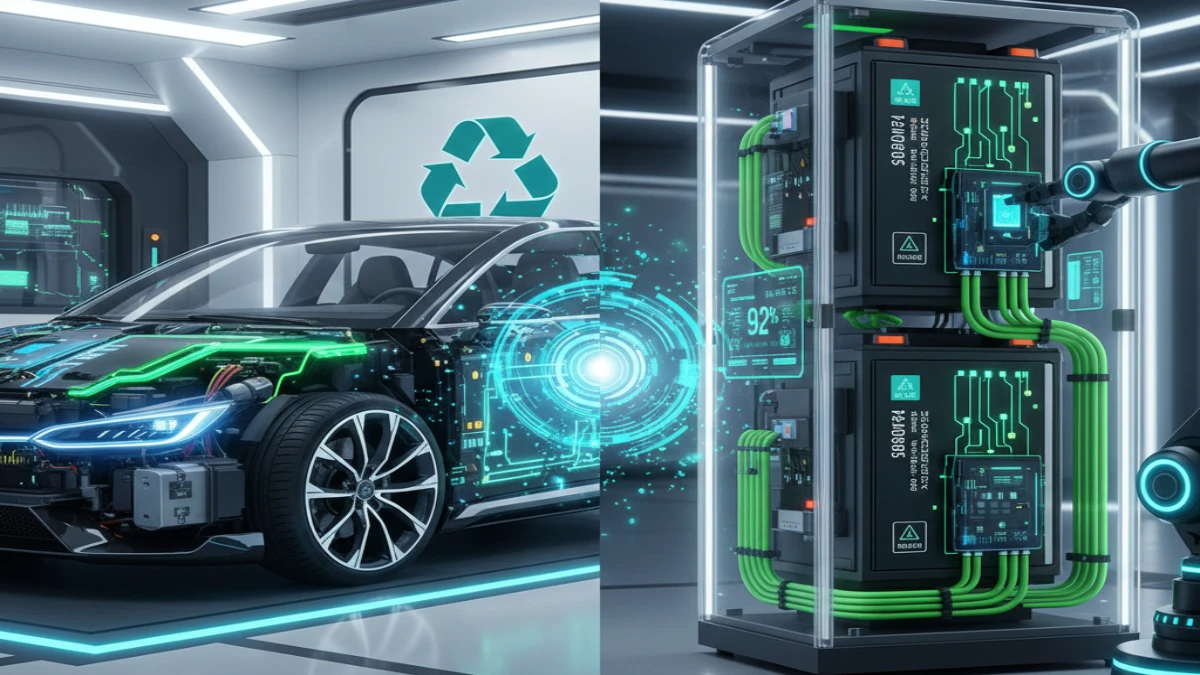
Here’s a question that probably crossed your mind when you were considering an electric vehicle: What happens to that massive battery pack when it’s done powering your car? Does it just end up in a landfill somewhere, creating a new environmental problem while we’re trying to solve an old one?
I’ll be honest—I’ve lost count of how many times I’ve heard this concern at dinner parties, car shows, and even from my own family members. And you know what? It’s a completely valid question. We’re talking about battery packs that can weigh anywhere from 1,000 to 1,800 pounds and contain valuable materials like lithium, cobalt, and nickel. The answer to what happens next is actually far more interesting and optimistic than most people realize.
The truth is, we’re witnessing the birth of an entirely new industry—one that’s transforming “dead” EV batteries into valuable resources and giving them second (sometimes third) lives. Let me walk you through this fascinating journey.
When Does an EV Battery Actually “Die”?
First, let’s clear up a common misconception. When we say an EV battery is “done,” we don’t mean it’s completely dead like your old TV remote batteries. Far from it.
Most electric vehicle batteries are considered ready for retirement when they’ve degraded to about 70-80% of their original capacity. Think about what that means for a moment. If your EV originally had a 300-mile range, at 75% capacity, you’re still looking at 225 miles per charge. That’s still plenty for daily driving, right?
But here’s the thing—automakers set these retirement thresholds to maintain performance standards and warranty promises. When your battery drops below this point, your car might feel sluggish, take longer to charge, or not deliver the acceleration you’re used to. For a vehicle that cost you $40,000 or more, that’s not acceptable.
However, this is where the story gets exciting rather than ending. That “retired” battery still has 70-80% of its life left. It’s like a professional athlete retiring at 35—sure, they’re not performing at Olympic levels anymore, but they’ve still got plenty to offer.
The Second Career: Stationary Energy Storage
Before we even talk about recycling, many EV batteries get a second career in stationary energy storage. This is brilliantly practical when you think about it.
Imagine a battery that’s no longer quick enough for your morning commute demands, but it’s perfectly fine for storing solar energy at your home or providing backup power to a building. Companies like Nissan have pioneered this approach with their used Leaf batteries, creating energy storage systems for homes and businesses.
I recently spoke with a business owner who installed a second-life EV battery system in his warehouse. His exact words were, “It stores energy during off-peak hours when electricity is cheap, and we use it during the day when rates skyrocket. It’s paid for itself in two years.” These repurposed batteries are showing up in some pretty creative places—from powering stadium lighting to serving as backup power for cell phone towers.
The best part? This second life can last another decade or more, depending on the application. We’re talking about squeezing every possible bit of value out of these batteries before they ever see the inside of a recycling facility.
The Real Deal: What Happens in Battery Recycling
Eventually, even second-life batteries reach the end of their useful life. This is where recycling comes in, and the technology here is advancing rapidly.
The Pyrometallurgical Process: Smelting and Recovery
The traditional approach involves essentially smelting the batteries at extremely high temperatures—we’re talking about 1,000 to 1,500 degrees Celsius. This process melts down the batteries and allows recyclers to recover valuable metals like cobalt, nickel, and copper.
Think of it like melting down old jewelry to extract the gold. It works, but it’s energy-intensive and doesn’t recover everything. You lose materials like lithium and aluminum in the slag, and the process itself has a significant carbon footprint. Recovery rates typically hover around 50-60% of materials, which honestly isn’t great when you consider what went into mining those materials in the first place.
The Hydrometallurgical Process: Chemical Extraction
This is where things get more sophisticated. Instead of burning, this process uses chemical solutions to dissolve and separate battery components. Picture it like a highly selective chemical bath that pulls out specific materials.
Companies using this method can achieve recovery rates of 90% or higher for critical materials like lithium, cobalt, and nickel. The process operates at much lower temperatures than smelting, which means less energy consumption and a smaller environmental footprint. Redwood Materials, founded by Tesla’s former CTO JB Straubel, has been making serious waves with this approach.
Direct Recycling: The Future is Here
Now, this is where I get really excited. Direct recycling—also called direct cathode recycling—is the newest and potentially most promising method. Instead of breaking everything down to raw materials, this process carefully takes apart the battery and recovers intact cathode materials.
Why does this matter? Because cathodes are the most expensive and energy-intensive part of battery production. If you can reuse them directly, you’re cutting production costs and energy use by up to 60% compared to making new ones from scratch. It’s like refurbishing a computer component instead of mining new silicon—just way more complex and impressive.
RecycLiCo Battery Materials and Battery Resourcers are among the pioneers pushing this technology forward. We’re still in early stages, but the potential here is enormous.
The Economics: Why Battery Recycling Actually Makes Sense
Let me hit you with some numbers that might surprise you. The materials in a typical EV battery pack are worth somewhere between $1,000 and $2,000 when recovered properly. We’re talking about:
- Lithium (for which prices have fluctuated wildly but remain valuable)
- Cobalt (one of the most expensive materials in batteries)
- Nickel (essential for high-energy-density batteries)
- Copper, aluminum, and other metals
When you consider that mining and refining these materials from scratch is expensive, time-consuming, and environmentally challenging, recycling starts to look really attractive. Some estimates suggest that using recycled materials can be 40-50% cheaper than using virgin materials, especially for metals like cobalt.
This isn’t just good environmental policy—it’s becoming good business. Companies like Redwood Materials, Li-Cycle, and Ascend Elements have raised billions in funding because investors see the writing on the wall. As more EVs hit the roads today, we’re looking at a tsunami of batteries needing recycling in 10-15 years. The market for recycled battery materials could hit $24 billion by 2035, according to some industry analysts.
The Challenges We’re Still Solving
I’d be doing you a disservice if I painted everything as perfect. We’ve got real challenges ahead.
Collection and Transportation
Right now, there’s no standardized system for collecting end-of-life EV batteries. Should they go back to the manufacturer? To specialized recycling centers? Who pays for the transportation of these heavy, potentially hazardous materials? These might sound like boring logistics questions, but they’re critical to making recycling work at scale.
Battery Design Standardization
Every manufacturer designs their batteries differently. Different chemistries, different form factors, different fastening systems. For recyclers, it’s like trying to work on cars when every single model requires completely different tools and procedures. Some batteries are glued together in ways that make disassembly nearly impossible without destroying components.
The good news? Manufacturers are starting to design with recycling in mind. Tesla’s new 4680 battery cells, for example, have features that make them easier to recycle. It’s progress, but we need more of this forward-thinking design.
Regulatory Frameworks
In the United States, battery recycling regulations are still catching up with the technology. The EU has been more proactive, requiring that 65% of battery materials be recovered by 2025, increasing to 70% by 2030. China has implemented a traceability system for EV batteries. Meanwhile, the U.S. is working on various initiatives, but we don’t yet have comprehensive federal mandates.
What’s Being Done Right Now
Despite these challenges, the industry isn’t sitting idle. Let me share some encouraging developments.
Manufacturer Initiatives
BMW has committed to using up to 50% recycled materials in their battery cells. Ford partnered with Redwood Materials to create a closed-loop battery recycling system. GM invested in battery recycling infrastructure as part of their electric vehicle push. These aren’t just press releases—they’re building actual facilities and setting binding targets.
Innovative Startups
The startup scene in battery recycling is absolutely buzzing. Beyond the companies I’ve mentioned, you’ve got:
- Ascend Elements, which claims to recover 98% of critical materials
- Princeton NuEnergy, working on direct recycling technology
- Cirba Solutions, operating multiple recycling facilities across North America
These companies are attracting serious investment because the value proposition is clear: there’s gold—or rather, lithium and cobalt—in those old batteries.
Research Breakthroughs
Universities and research institutions worldwide are developing new recycling methods. Researchers at UCSD recently announced a room-temperature recycling process that could dramatically reduce energy costs. Scientists in Europe are working on robotic systems that can automatically disassemble battery packs. Every month seems to bring news of another advancement.
What This Means for You as an EV Owner
If you’re driving an electric vehicle or considering buying one, here’s what you should know about your battery’s end-of-life:
You Probably Won’t Have to Deal With It
Most EV batteries are outlasting the vehicles they’re in. If you lease or trade in your EV after 5-10 years, the battery will likely still have plenty of life left, and the next stage becomes someone else’s responsibility—whether that’s a second owner, a repurposing company, or eventually a recycler.
Extended Warranties Protect You
Most manufacturers offer 8-10 year warranties on EV batteries, covering you well into the battery’s lifespan. By the time your battery needs replacing, recycling infrastructure will be even more mature than it is today.
Resale Value Considerations
Battery health is becoming a key factor in EV resale values, similar to how mileage affects gas car prices. Apps and services now exist to assess battery health, giving buyers confidence and sellers transparency. Knowing that there’s value in recycling also means that even batteries in rough shape have some baseline worth.
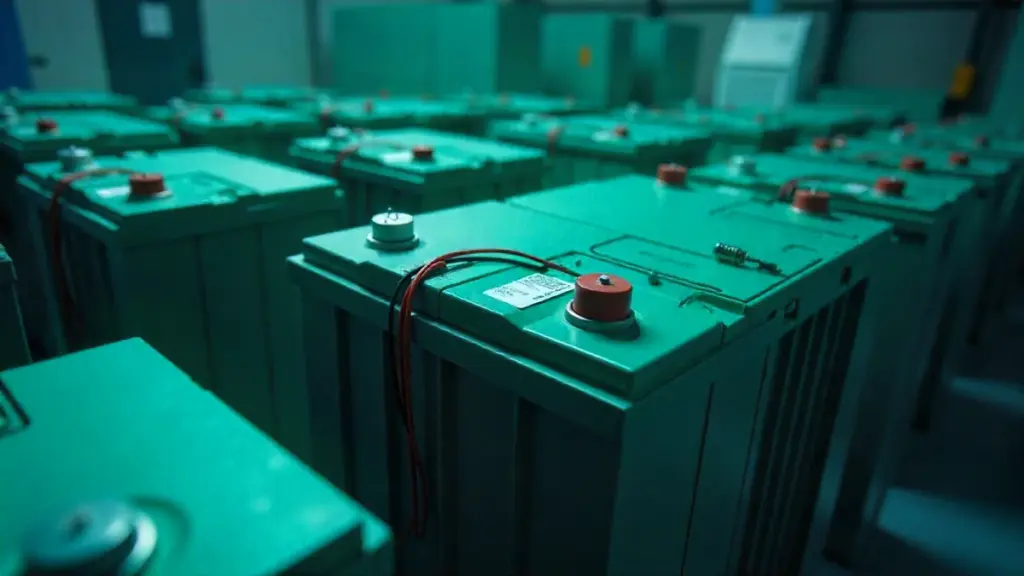
The Bigger Picture: Why This Matters
Let’s zoom out for a moment. The concern about EV battery waste is really part of a bigger conversation about whether electric vehicles are truly better for the environment. The answer increasingly looks like a resounding yes, especially when you factor in recycling.
An EV running on recycled battery materials has a dramatically lower carbon footprint than one using virgin materials. One study found that using recycled materials could reduce battery production emissions by up to 40%. When you combine that with the zero emissions during operation and the improving electricity grid, EVs become even more compelling from an environmental standpoint.
Moreover, recycling reduces our dependence on mining. Lithium extraction requires vast amounts of water. Cobalt mining has been associated with human rights concerns in certain regions. By recycling more effectively, we reduce the need for new mining operations and their associated environmental and social impacts.
Think of it this way: every ton of recycled battery materials is a ton we don’t need to pull out of the ground somewhere. That’s less habitat disruption, less water use, less carbon emitted in mining operations, and fewer trucks hauling ore around the planet.
Looking Ahead: What’s Coming
The next decade is going to be transformative for EV battery recycling. Here’s what I’m watching:
Closed-Loop Systems
Imagine a future where Tesla collects your old Model 3 battery, recycles it, and uses those materials to build a battery for a new Model Y. That’s the goal—a circular economy where batteries essentially recycle themselves indefinitely. We’re not there yet, but we’re moving in that direction.
Advanced Automation
Robotics and AI are coming to battery recycling. Right now, a lot of disassembly is done manually, which is slow and potentially dangerous. Automated systems that can identify battery types, safely discharge them, and efficiently disassemble them will make the process faster, cheaper, and safer.
Better Battery Chemistries
Future batteries are being designed with recycling in mind from day one. Some next-generation batteries use more abundant, less problematic materials. Others are designed for easier disassembly. The batteries being developed today will be far easier to recycle than the ones from even five years ago.
The Bottom Line
So, what really happens when your EV battery “dies”? The short answer: something surprisingly productive and increasingly sophisticated.
Your battery will likely spend a decade or more in your car, then potentially another decade storing solar energy or providing backup power somewhere. When it finally reaches true end-of-life, it’ll enter a recycling system that’s rapidly advancing, recovering valuable materials that will go right back into new batteries or other products.
Is the system perfect? No. Are there challenges to solve? Absolutely. But the trajectory is clear and encouraging. Between advancing technology, growing economic incentives, and increasing regulatory pressure, battery recycling is evolving from a nice idea to a robust industry.
The next time someone asks you about EV battery waste at a dinner party—and trust me, they will—you can confidently explain that those batteries are far too valuable to waste. They’re designed for long lives, useful second careers, and ultimately, rebirth as new batteries.
That’s not just good environmental policy. It’s good engineering, good economics, and a glimpse of a more circular, sustainable future. And honestly? That’s pretty exciting.