Remember when getting from point A to point B meant choosing between your car keys or the bus schedule? Those days are numbered. I was recently stuck in traffic on my morning commute—again—when I started thinking about how radically different transportation will look for my kids when they’re my age. We’re not just talking about shinier cars or faster trains. The future of mobility is about to flip everything we know about getting around on its head, and honestly? It’s both thrilling and a little overwhelming.
The convergence of electric vehicles, artificial intelligence, 5G connectivity, and renewable energy isn’t just creating better transportation—it’s completely reimagining what transportation means. Whether you’re a tech enthusiast, a daily commuter, or someone who just wants to spend less time behind the wheel and more time living, what’s coming will change your life in ways you probably haven’t even considered yet.
The Autonomous Revolution: When Your Car Becomes Your Chauffeur
Let’s address the elephant in the room—or rather, the self-driving car in the garage. Autonomous vehicles have been “just around the corner” for years now, but here’s the thing: they’re actually arriving, just not in the dramatic, all-at-once way Hollywood promised us.
I test-drove a Tesla with Full Self-Driving capability last month, and while I still kept my hands hovering near the wheel, the experience was eye-opening. The car navigated city streets, handled complex intersections, and even made judgment calls about aggressive drivers that honestly matched what I would’ve done. It wasn’t perfect—there were a couple of moments where I had to intervene—but it was leagues beyond what I’d experienced even two years ago.
Where We’re Actually At
Current autonomous technology operates on what experts call “levels,” ranging from Level 0 (no automation) to Level 5 (full automation under all conditions). Most advanced consumer vehicles today offer Level 2 or 3, meaning they can handle specific driving tasks but still require human supervision. Companies like Waymo, Cruise (despite recent setbacks), and AutoX are already operating Level 4 robotaxis in select cities, transporting real passengers without human drivers behind the wheel.
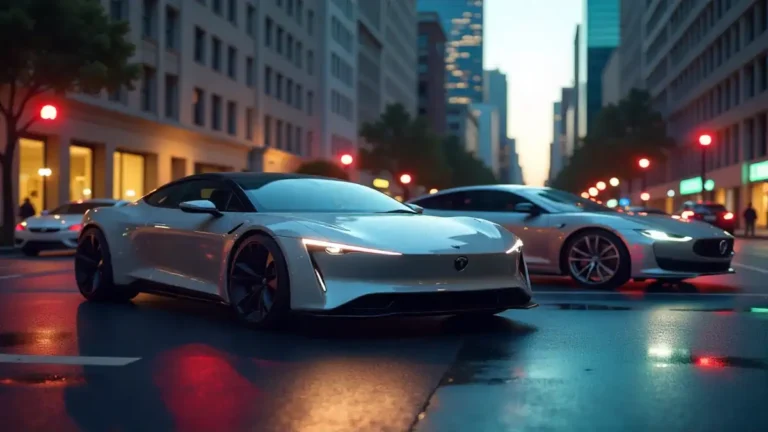
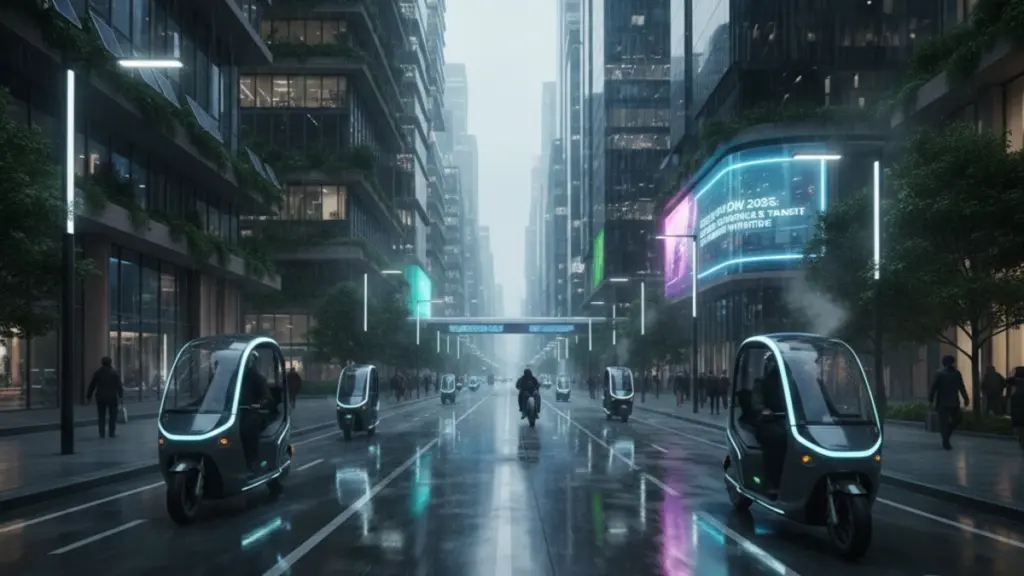
The real transformation isn’t just about removing the driver—it’s about fundamentally rethinking what a vehicle can be. When you don’t need to watch the road, your car becomes an extension of your living room, your office, or your entertainment space. Imagine having an extra hour each day during your commute to read, work, video chat with family, or simply relax. For Americans who commute an average of 54 minutes daily, that’s reclaiming 225 hours per year.
The Ripple Effects You Haven’t Considered
But here’s where it gets really interesting. Autonomous vehicles will create changes that extend far beyond your personal commute. Urban planners are already redesigning cities around the assumption that we’ll need far less parking space. Think about it: if your car can drop you off and then park itself miles away—or better yet, pick up another passenger—we suddenly free up an estimated 30% of urban land currently devoted to parking. That’s space for parks, housing, or community centers in your neighborhood.
Insurance companies are scrambling to figure out new models because accident rates are expected to plummet by up to 90% once autonomous vehicles dominate the roads. Traffic congestion could decrease by 40% as AI systems coordinate vehicle flow more efficiently than human drivers ever could. And for the 25 million Americans with disabilities that prevent them from driving, autonomous vehicles represent nothing short of life-changing independence.
Electric Everything: The Silent Revolution Under Our Feet
While autonomous vehicles get the headlines, the electrification of transportation is the quiet revolution that’s already transforming our world. And it’s not just about cars anymore.
I recently visited Amsterdam, where electric bicycles outnumber traditional bikes in many neighborhoods, electric boats cruise the canals, and you can barely walk a block without seeing a charging station. It felt like glimpsing five years into our future. The electric revolution isn’t limited to passenger vehicles—it’s touching every form of transportation you can imagine.
Beyond the Passenger Car
Electric buses are already operating in over 600 cities worldwide, with some Chinese cities running entirely electric public bus fleets. These aren’t your grandfather’s clunky, slow-moving buses either. Modern electric buses offer smooth, quiet rides, rapid acceleration, and operating costs that are roughly 40% lower than diesel equivalents.
The trucking industry is undergoing its own electric transformation. Companies like Tesla, Volvo, and newcomer Nikola are developing long-haul electric semi-trucks with ranges exceeding 500 miles on a single charge. For a sector responsible for nearly 30% of transportation-related emissions in the U.S., this shift could dramatically reduce our carbon footprint. Amazon has already ordered 100,000 electric delivery vans from Rivian, and UPS is testing electric trucks in urban delivery routes.
Even more exciting? Electric aviation is taking off—literally. Companies like Heart Aerospace, Eviation, and Joby Aviation are developing electric aircraft for short regional flights. While we’re not likely to see electric 747s crossing the Atlantic anytime soon, electric planes could revolutionize flights under 500 miles within the next decade, offering quieter, cleaner, and potentially cheaper air travel.
The Infrastructure Challenge—and Solution
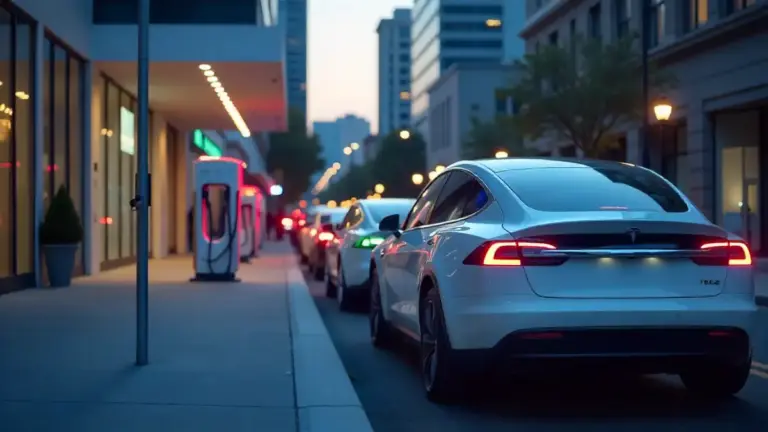
Here’s the reality check: this electric future requires massive infrastructure investment. The U.S. currently has about 150,000 gas stations but only around 60,000 public EV charging locations. We need more, and we need them fast.
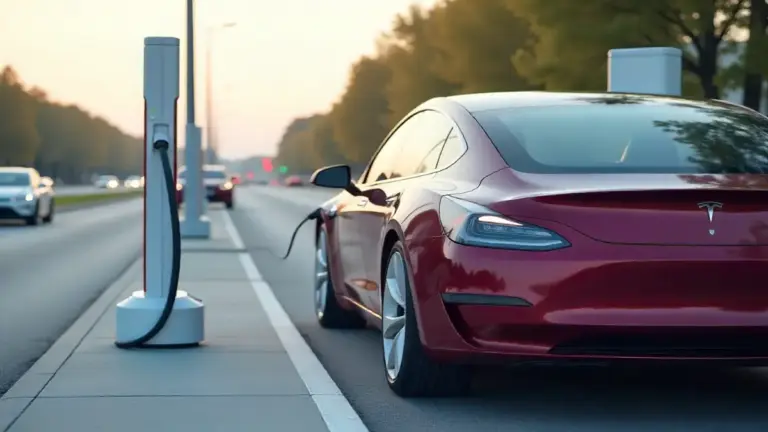
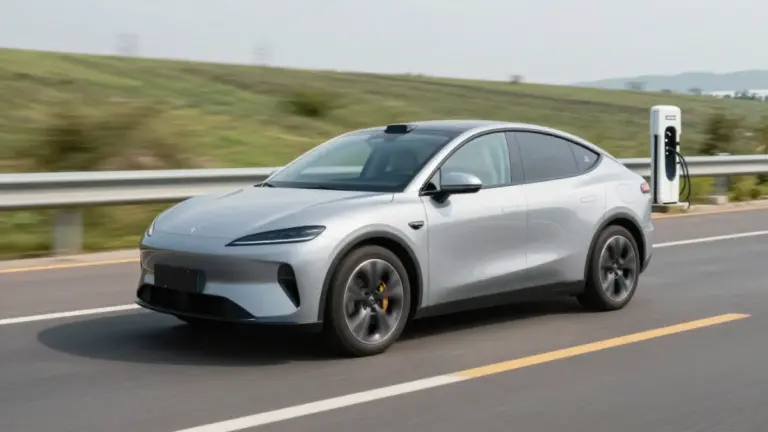
But here’s what gives me hope: the infrastructure is growing exponentially. The Bipartisan Infrastructure Law allocated $7.5 billion specifically for EV charging networks. Companies like ChargePoint, Electrify America, and EVgo are installing thousands of new fast-charging stations monthly. Tesla’s Supercharger network, once exclusive to Tesla owners, is opening to other brands. And here’s something cool—new technologies like wireless charging roads (yes, roads that charge your car as you drive) are already being tested in countries like Sweden and Israel.
The charging experience is improving rapidly too. Five years ago, DC fast charging might give you 60 miles of range in 20 minutes. Today’s latest chargers can add 200 miles in the same time. Companies are developing 350 kW chargers that could fully recharge most EVs in under 15 minutes—basically the time it takes to grab a coffee and use the restroom during a road trip.
Flying Taxis and Urban Air Mobility: Science Fiction Meets Reality
Okay, I’ll admit—when I first heard about flying taxis, my cynical side kicked in. It sounded like another overhyped tech promise destined to disappoint. But after researching the actual progress in urban air mobility (UAM), I’m starting to believe we might actually see this in our lifetimes. Soon.
eVTOLs: The Technology Making It Possible
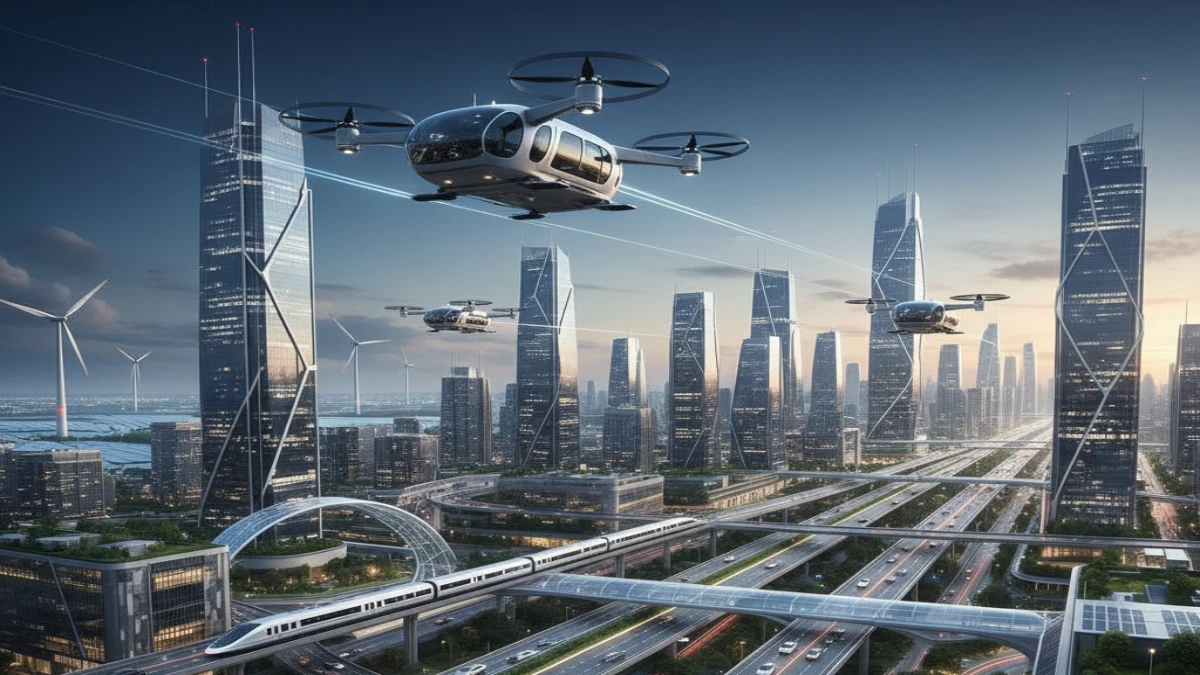
The key innovation is the electric vertical takeoff and landing vehicle, or eVTOL (yes, the industry loves its acronyms). Unlike traditional helicopters, eVTOLs are quieter, cheaper to operate, safer through redundant systems, and produce zero direct emissions. They’re essentially large drones designed to carry passengers.
Companies like Joby Aviation, Archer Aviation, Lilium, and Volocopter aren’t just creating concept videos—they’re conducting real test flights and securing actual airline partnerships. Joby has partnered with Delta Air Lines and Toyota (which invested $394 million in the company). United Airlines has placed orders for eVTOL aircraft from both Archer and Eve Air Mobility. These are serious players making serious bets.
When and Where Will This Actually Happen?
Dubai and Singapore are positioning themselves as first-mover cities, with both aiming to launch commercial eVTOL services in the mid-2020s. Los Angeles is developing “skyports” in preparation for the 2028 Olympics. Japan is targeting commercial operations for its 2025 World Expo in Osaka.
The initial use case will likely be airport transfers and point-to-point trips for affluent travelers—think of it as Uber Black for the skies. A 30-mile trip from downtown to the airport that takes 90 minutes in traffic could be accomplished in 15 minutes by air. Early pricing is expected to be comparable to luxury ground transportation, perhaps $100-200 for typical urban trips, though costs should decrease as the technology matures and scales.
The Practical Challenges
Let’s be real: integrating flying vehicles into urban airspace is complex. Air traffic management systems need complete overhauls. Noise regulations must be established and enforced. Landing infrastructure must be built. Battery technology needs continued improvement for longer flights. Public acceptance needs to be earned—many people understandably feel nervous about the idea of autonomous aircraft flying overhead.
But cities are actively working through these challenges. NASA is developing UAM traffic management systems. The FAA is creating new certification frameworks specifically for eVTOLs. And as these aircraft accumulate safe flight hours, public confidence will grow, just as it did with autonomous ground vehicles.
Hyperloop and High-Speed Rail: Reimagining Long-Distance Travel
While EVs transform short trips and eVTOLs tackle urban mobility, another revolution is brewing for medium-distance travel: hyperloop systems and next-generation high-speed rail.
The Hyperloop Promise
If you’re not familiar, hyperloop is essentially a train in a nearly airless tube that can theoretically reach speeds exceeding 700 mph—faster than commercial aircraft. Elon Musk popularized the concept in 2013, and while his involvement has been minimal since, companies like Virgin Hyperloop, Hyperloop Transportation Technologies, and TransPod are actively developing the technology.
Is it realistic? Honestly, the jury’s still out. Virgin Hyperloop conducted successful crewed tests in 2020, proving the basic concept works. But building the required infrastructure—hundreds of miles of sealed tubes—is enormously expensive and logistically challenging. The most likely near-term applications are cargo transport between ports and warehouses, where the economic case is strongest.
High-Speed Rail: The Proven Alternative
Meanwhile, high-speed rail represents a more mature technology that’s already transforming mobility in Asia and Europe. Japan’s Shinkansen, France’s TGV, and China’s extensive high-speed rail network have proven that trains can effectively compete with short-haul flights for trips under 500 miles.
China now operates over 25,000 miles of high-speed rail, and they’re still expanding rapidly. These trains routinely hit 217 mph, making them faster than driving or flying for many routes when you account for airport security and check-in times. Spain, Japan, and several European countries have similarly extensive networks.
The U.S. has historically lagged in this area, but that’s slowly changing. California’s high-speed rail project, despite numerous delays and cost overruns, continues to make progress. Brightline’s Florida service is expanding, with plans for a high-speed connection to Las Vegas. Private companies are proposing new routes connecting major city pairs across the country.
Why This Matters for Your Life
Imagine living in Sacramento and commuting to a job in San Francisco, a 90-minute train ride where you can work productively the entire time, rather than a soul-crushing drive through Bay Area traffic. Or taking a weekend trip from Dallas to Houston in 90 minutes instead of a four-hour drive. This isn’t science fiction—it’s the reality in countries that have invested in this infrastructure.
The environmental benefits are substantial too. High-speed trains produce roughly 80% less CO2 per passenger mile than flying and 85% less than driving alone. For a society trying to reduce transportation emissions (which account for 29% of U.S. greenhouse gas emissions), high-speed rail is a proven solution.
Mobility as a Service: Owning Less, Accessing More
Here’s a question: will you own a car in 2040? Increasingly, experts think many of us won’t, especially those living in urban areas. Instead, we’ll use “Mobility as a Service” (MaaS)—integrated platforms that seamlessly combine various transportation options into a single, user-friendly app.
The MaaS Vision
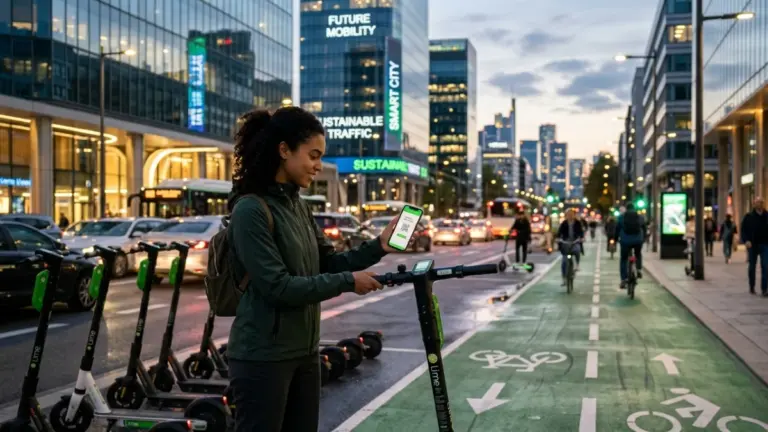
Imagine opening a single app to plan your trip across town. The app considers all available options—autonomous car service, electric scooter, subway, bike-share, electric bus—and suggests the fastest, cheapest, or most convenient route (you choose the priority). You book everything through one interface, pay through one account, and switch between transportation modes as seamlessly as you currently stream different shows on Netflix.
This isn’t theoretical. Helsinki’s “Whim” app has been operating since 2016, offering exactly this service. Users pay a monthly subscription (similar to a phone plan) and get unlimited access to public transit, bike-shares, taxis, and rental cars. Barcelona, Vienna, and several other European cities have launched similar platforms. Los Angeles, Chicago, and other U.S. cities are testing their own versions.
Why This Model Makes Sense
Consider the economics: the average American spends over $9,500 annually on car ownership when you factor in payments, insurance, fuel, maintenance, and parking. A typical car sits unused 95% of the time. For many people, especially in cities with decent transit infrastructure, a MaaS subscription could provide better mobility at lower cost while eliminating the hassles of car ownership.
The environmental benefits are significant too. Studies suggest MaaS could reduce urban car ownership by 30-50% as people realize they don’t need a personal vehicle sitting idle. Fewer cars means less congestion, less pollution, and more efficient use of resources.
The Suburban Challenge
Now, I live in rural Ohio, and I can already hear my neighbors laughing at the idea of giving up their pickup trucks. And they’re right to be skeptical—MaaS works best in dense urban areas with diverse transportation options. Suburban and rural areas will likely maintain higher car ownership rates, though those vehicles will increasingly be electric and possibly autonomous.
But here’s what’s interesting: even in less dense areas, car-sharing services like Turo and Zipcar are growing. As autonomous vehicles become more common, we might see fleets of self-driving cars that can efficiently serve suburban areas, arriving within minutes of your request. You’d get the convenience of car ownership without the cost and hassle.
Smart Cities and Connected Infrastructure: The Nervous System of Future Mobility
All these transportation innovations share one critical requirement: smart, connected infrastructure. The future of mobility isn’t just about better vehicles—it’s about vehicles, infrastructure, and users all communicating seamlessly.
What Smart Infrastructure Actually Means
Smart intersections can detect approaching emergency vehicles and preemptively adjust traffic signals. Connected highways can warn drivers about accidents, weather conditions, or congestion miles ahead. Parking systems can guide you to available spots in real-time. Electric vehicle chargers can communicate with the grid to charge your car when electricity is cheapest and cleanest.
Cities like Singapore, Barcelona, and Copenhagen are leading the way, installing sensors throughout their street networks to monitor everything from air quality to pedestrian flows. This data enables real-time optimization of transportation systems, reducing congestion and improving safety.
The 5G Revolution
Fifth-generation cellular networks (5G) are the backbone enabling this connectivity. 5G offers latency as low as 1 millisecond—fast enough for vehicles to communicate with each other and infrastructure in real-time, a critical requirement for safe autonomous vehicle operation.
Vehicle-to-everything (V2X) communication will allow cars to “see” around corners and through other vehicles by receiving data from sensors throughout the environment. If a car three blocks ahead suddenly brakes, your car will know instantly and can adjust accordingly. If a pedestrian is about to step into the street on the other side of a blind corner, your vehicle will receive that information and slow down preemptively.
Privacy and Security Concerns
Of course, all this connectivity raises legitimate concerns. Who owns the data about your travel patterns? How secure are these systems from hacking? What happens when infrastructure fails?
These aren’t trivial questions, and society is still grappling with the answers. The European Union’s GDPR provides some framework for data protection, while cybersecurity standards for connected vehicles are still being developed. As consumers, we’ll need to stay informed and advocate for robust protections as these systems roll out.
The Human Element: Jobs, Equity, and Social Change
With all this talk of technology, we can’t ignore the human impact. The future of mobility will create winners and losers, opportunities and disruptions. Let’s talk honestly about both.
The Jobs Question
In the U.S., approximately 3.5 million people work as truck drivers, taxi drivers, or delivery drivers. Autonomous vehicles threaten many of these jobs. That’s a real concern that deserves serious policy attention—retraining programs, education initiatives, and social safety nets will be crucial.
But it’s not all job losses. The electric vehicle sector is creating hundreds of thousands of new jobs in manufacturing, battery production, charging infrastructure, and maintenance. The Bureau of Labor Statistics projects that wind turbine technician and solar panel installer will be among the fastest-growing occupations over the next decade. Smart city infrastructure requires planners, technicians, and data analysts. New mobility services need customer support, fleet managers, and operations specialists.
The question isn’t whether jobs will exist—it’s whether we’ll successfully transition workers from declining sectors into growing ones. Countries like Germany are investing heavily in worker retraining programs. We need to learn from their experiences and implement similar policies.
Mobility Equity and Access
Here’s something that keeps me up at night: will these mobility innovations help everyone, or will they create a two-tier system where the wealthy fly over traffic in eVTOLs while the poor wait for underfunded buses?
This is where policy matters enormously. Cities must ensure that new mobility options serve all neighborhoods, not just affluent ones. Pricing structures should include affordable options for low-income residents. Rural areas need connectivity solutions too, not just dense urban cores.
Some encouraging examples exist: Los Angeles requires that 40% of new mobility services operate in disadvantaged communities. Some cities offer subsidized MaaS subscriptions for low-income residents. But these efforts need to expand dramatically to prevent mobility innovation from worsening inequality.
Cultural and Social Shifts
Beyond jobs and equity, the future of mobility will change how we relate to transportation itself. For generations, car ownership has been tied to freedom, status, and personal identity—especially in American culture. Will younger generations, who already show less interest in driving and car ownership than their parents, embrace shared mobility? Early signs suggest yes, but it’s not universal.
The shift away from car ownership could strengthen communities. Less space devoted to parking means more room for public gathering places. Quieter electric vehicles create more pleasant neighborhoods. Reduced air pollution improves health outcomes, particularly for children and the elderly.
The Timeline: What to Expect and When
Let me be honest with you: technology timelines are notoriously difficult to predict. That said, based on current trends and announced plans, here’s my informed speculation on when various elements of the mobility future will reach mainstream adoption:
2025-2027: The Early Adopter Phase
- Level 3 autonomous features become standard in premium vehicles
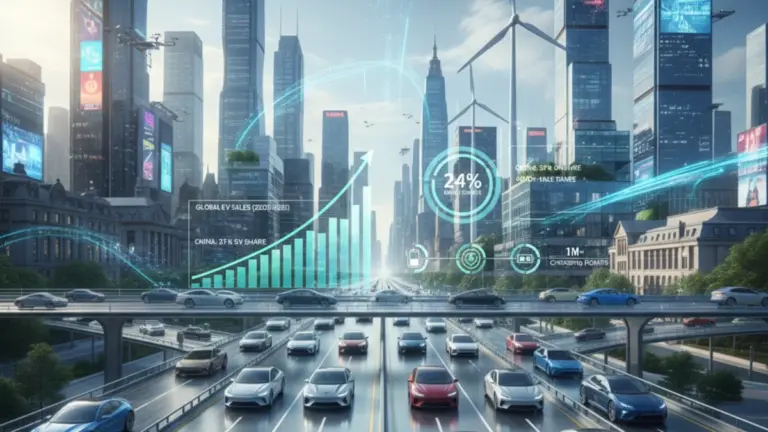
- Electric vehicle market share reaches 25-30% in developed markets
- First commercial eVTOL services launch in select cities
- MaaS platforms expand to most major U.S. cities
- Fast-charging infrastructure reaches critical mass in urban and suburban areas
2028-2032: The Rapid Growth Phase
- Level 4 autonomous taxis operate in most major cities
- Electric vehicles reach price parity with internal combustion vehicles
- Used EV market matures, making electric cars accessible to middle-income buyers
- Urban air mobility becomes accessible to upper-middle-class travelers
- First hyperloop cargo routes become operational
- High-speed rail corridors expand significantly in the U.S.
2033-2040: The Transformation Phase
- Level 4/5 autonomous vehicles available for personal ownership
- Electric vehicles dominate new car sales (80%+ market share)
- Urban air mobility pricing reaches middle-class accessibility
- Many urban residents adopt MaaS subscriptions over car ownership
- Connected infrastructure becomes standard in developed cities
- Aviation begins transitioning to electric power for short-haul flights
Beyond 2040: The Mature Phase
- Internal combustion vehicles become rare in developed countries
- Fully integrated, multi-modal transportation systems function seamlessly
- Significant reduction in urban parking infrastructure
- Hyperloop or equivalent ultra-high-speed ground transport connects major city pairs
- Transportation’s carbon footprint reduced by 70%+ from 2020 levels
These timelines assume continued investment, technological progress, and supportive policy. Disruptions—economic downturns, resource constraints, political shifts—could accelerate or delay these transitions significantly.
What You Can Do Right Now
So, where does this leave you? Whether you’re excited about this future or apprehensive, there are practical steps you can take today:
If You’re Planning to Buy a Vehicle Soon:
- Seriously consider an electric vehicle, especially if you can install home charging. The total cost of ownership now favors EVs in many scenarios, even before considering environmental benefits.
- If full electric doesn’t fit your needs, explore plug-in hybrids as a transitional option.
- Look for vehicles with advanced driver-assistance features—they improve safety today while preparing you for autonomous vehicles tomorrow.
To Prepare for Changing Mobility:
- Experiment with existing mobility services: try ride-sharing, e-scooters, bike-shares, or public transit to understand multi-modal transportation.
- Follow developments in your city’s transportation planning—advocate for policies that promote equity and sustainability.
- If you work in transportation-related fields, start thinking about how your skills might translate to new mobility sectors.
To Support Positive Change:
- Support policies that invest in public transportation and active mobility infrastructure (sidewalks, bike lanes).
- Advocate for equitable deployment of new mobility technologies in underserved communities.
- Consider reducing car dependence gradually—combine trips, work from home when possible, or choose housing near transit.
To Stay Informed:
- Follow reputable sources covering transportation technology and policy.
- Be skeptical of both over-hyped promises and knee-jerk dismissals—the truth usually lies between extremes.
- Engage with these technologies when possible to form educated opinions.
Looking Forward: Challenges and Opportunities
As I write this, sitting in my admittedly non-autonomous, gasoline-powered car during my lunch break, I’m struck by how rapidly the transportation landscape is shifting. Five years ago, electric vehicles felt like a niche product. Today, they’re mainstream. Five years from now, autonomous features will likely feel similarly normal.
The future of mobility presents genuine challenges: infrastructure investment requirements, workforce transitions, equity concerns, and the always-present possibility that some technologies won’t pan out as hoped. We’ll need thoughtful policy, substantial investment, and societal commitment to ensure these transitions benefit everyone, not just the wealthy and well-connected.
But I’m ultimately optimistic. The convergence of electric vehicles, autonomous technology, connected infrastructure, and innovative business models offers an opportunity to create transportation systems that are cleaner, safer, more efficient, and more accessible than what we have today. We could reclaim time currently wasted in traffic, reduce the 40,000 annual U.S. traffic deaths by 90%, dramatically cut transportation’s environmental impact, and provide mobility to millions who currently lack it.
The future of mobility isn’t just about getting from A to B more efficiently—it’s about reimagining how our communities function, how we use our time, and how we relate to the built environment. It’s about kids growing up in cities with clean air instead of smog. It’s about grandparents maintaining independence through accessible autonomous vehicles. It’s about reducing the 20% of household income that average Americans spend on transportation.
That future is closer than you might think. The vehicles being designed today, the infrastructure being built right now, and the policies being debated this year will shape how you and your family move around for decades to come. And while the transition will be bumpy—transformations always are—the destination is worth the journey.
So the next time you’re stuck in traffic, or searching for parking, or calculating whether you can afford another car repair, take a moment to imagine something different. Because that different future? It’s already being built. And whether you’re ready or not, it’s coming down the road—quietly, electrically, and possibly without anyone behind the wheel.