Remember when “getting around town” meant choosing between your car, the bus, or maybe a bike if you were feeling adventurous? Well, 2025 is turning that old-school thinking on its head. We’re witnessing a transportation shake-up that’s making city streets look less like parking lots and more like, well, something out of a sci-fi movie—except it’s happening right now.
Micromobility—those zippy e-scooters, sleek e-bikes, and increasingly creative small electric vehicles—isn’t just a passing trend anymore. It’s becoming the backbone of how millions of people tackle that infamous “last mile” problem. You know the one: you get off the train, but your destination is still a sweaty 15-minute walk away. As we roll deeper into 2025, the micromobility landscape is exploding with innovation, practical solutions, and yes, a few head-scratching moments too.
Let me walk you through what’s actually happening on the streets right now, what’s working, what’s not, and why your daily commute might look completely different by this time next year.
The Big Picture: Micromobility Goes Mainstream
Here’s something that would’ve seemed crazy just five years ago: according to recent industry data, shared micromobility services logged over 200 million trips in major U.S. cities in 2024 alone. That’s not counting the millions of privately-owned e-bikes and e-scooters that people bought during the pandemic and never looked back.
What’s driving this surge? Three things, really. First, cities are finally building infrastructure that doesn’t treat cyclists and scooter riders like afterthoughts. Protected bike lanes, dedicated parking zones, and even “micromobility highways” are popping up everywhere from Paris to Portland. Second, the vehicles themselves have gotten remarkably better—longer battery life, smoother rides, and yes, they’re actually built to last now. Third, and this is the kicker: people have realized that sitting in traffic for 20 minutes to travel 2 miles is absolutely bonkers.
But 2025 isn’t just about more of the same. The trends we’re seeing this year are genuinely reshaping urban mobility in ways that feel both practical and, dare I say, exciting.
Smart Integration: Your Phone Is Now Your Garage
One of the coolest developments in 2025 is how seamlessly micromobility has woven itself into the broader transportation fabric. Remember when you had separate apps for every scooter company, bike-share program, and transit system? Those days are fading fast.
Multi-modal trip planning apps are now the norm. You open one app, punch in your destination, and it shows you the fastest route using whatever combination of subway, e-bike, scooter, or walking makes sense. Some mornings, my commute might start with a 5-minute scooter ride to the subway station, a quick train ride downtown, then hop on a shared e-bike for the final stretch. The app handles all the payments, shows real-time vehicle availability, and even tells me if my usual scooter spot is full.
What’s particularly clever is how AI is getting involved. These apps learn your patterns. They know you prefer bikes over scooters, that you avoid hills, and that you’re willing to walk an extra two minutes if it means grabbing a vehicle with a fuller battery. It’s personalization that actually makes sense—not creepy, just convenient.
The subscription models are getting smarter too. Instead of paying per ride or juggling multiple memberships, “mobility-as-a-service” packages let you pay one monthly fee for access to all available options. It’s like Spotify, but for getting around. For someone like me who uses different modes depending on weather, time, and mood, this is a game-changer.
Battery Tech and Range: Finally, No More Range Anxiety
Let’s talk about something that’s been holding micromobility back: battery life. Nothing kills the vibe faster than your e-scooter dying halfway through your ride, right? Well, 2025 is addressing that frustration head-on.
Newer micromobility vehicles are sporting batteries that can go 40-60 miles on a single charge—up from the measly 15-25 miles we saw just a couple years ago. This isn’t just about bigger batteries (though that helps); it’s about smarter energy management systems that optimize power use based on terrain, rider weight, and riding style.
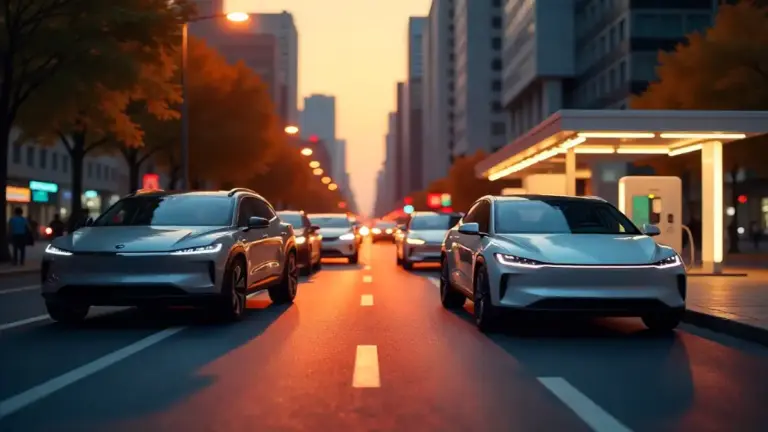
Even more interesting is the charging infrastructure evolution. Swappable battery systems are becoming mainstream, especially for shared fleets. Instead of taking vehicles out of circulation for hours to charge, operators can swap depleted batteries for fresh ones in under a minute. Some cities are installing charging stations right at major transit hubs and popular parking spots. I’ve seen these in Brooklyn—they look like miniature parking meters, and they’re surprisingly easy to use.
Solar-powered charging stations are also making appearances in sunny cities like Los Angeles and Phoenix. They’re not just eco-friendly marketing gimmicks; they’re genuinely practical in areas where grid access is tricky or expensive. The panels charge during the day, and the stations are ready when evening commuters need them most.

Safety First: Technology Steps Up
Okay, let’s address the elephant in the room—or should I say, the scooter lying sideways on the sidewalk. Safety has been micromobility’s biggest PR problem, and 2025 is the year the industry is getting serious about fixing it.
Modern e-scooters and e-bikes now come packed with safety tech that would make your car jealous. Automatic headlights and taillights that adjust based on ambient light. Turn signals you can activate with thumb buttons. Built-in sensors that detect when you’re riding on sidewalks (where it’s usually illegal) and gently slow the vehicle down. Some high-end models even have collision detection systems that can automatically brake if they sense an obstacle.
Helmet detection is another fascinating development. Several shared mobility services are experimenting with systems that use the vehicle’s camera to check if you’re wearing a helmet before letting you start your ride. It’s controversial—some see it as overreach—but it’s undeniably reducing head injuries in pilot programs.
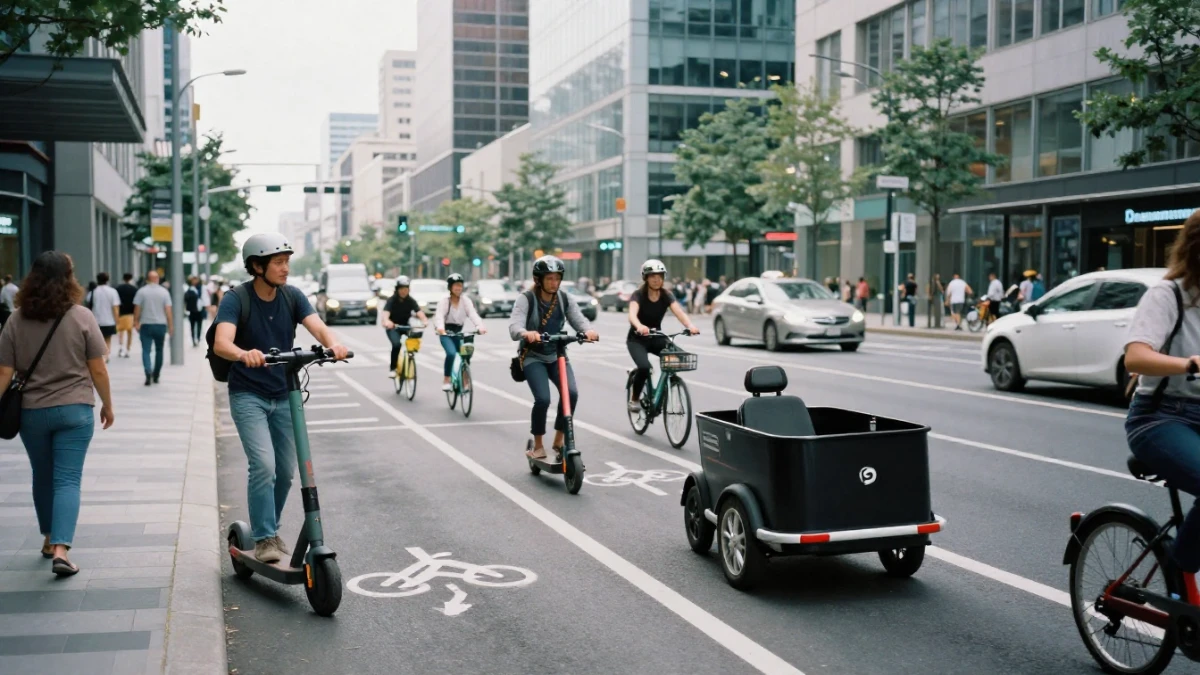
Cities are doing their part too. Protected bike lanes have become the gold standard, with physical barriers separating micromobility traffic from cars. Copenhagen and Amsterdam have been the poster children for this approach, and now American cities like Seattle, Austin, and Washington D.C. are rapidly catching up. The data is clear: protected infrastructure reduces accidents by up to 70% compared to painted bike lanes.
And can we talk about the parking situation? Geofencing technology has gotten so precise that scooters will literally refuse to let you end your ride if you’re not in a designated parking zone. It sounds strict, but honestly, it’s made sidewalks so much more walkable. No more obstacle courses of randomly discarded scooters.
The Cargo Revolution: More Than Just Personal Transport
Here’s a trend that’s absolutely exploding in 2025: cargo e-bikes. These aren’t your grandpa’s bicycles with a basket—we’re talking serious hauling capacity that’s replacing delivery vans in urban cores.
Small businesses are leading the charge. Coffee shops using cargo bikes for local deliveries. Florists, bakeries, even plumbers are ditching their vans for electric cargo bikes that can navigate bike lanes and squeeze through traffic. In Portland, a friend of mine runs a catering business entirely on cargo e-bikes, handling orders within a 5-mile radius. His operating costs dropped by 60%, and his delivery times actually improved.
The designs have gotten incredibly creative. Some cargo bikes have enclosed boxes for weather protection. Others have modular platforms where you can attach different containers depending on what you’re hauling. There are even insulated versions for food delivery. One company makes a cargo e-bike specifically designed for families, with comfortable seating for two kids and storage space for groceries—the ultimate car replacement for school runs and errands.
Cities are catching on to the potential here. Many are offering incentives—tax breaks, subsidies, priority parking—to businesses that adopt cargo bikes for deliveries. It makes sense when you realize that a single cargo bike can replace up to 50% of urban van trips while producing zero emissions and causing zero traffic congestion.
Regulation and Standardization: Growing Pains
Let’s be real: the regulatory landscape for micromobility in 2025 is still a bit of a mess, but it’s a productive mess. Cities are experimenting with different approaches, learning from each other’s successes and face-plants.
Speed limits are becoming standardized—usually 15 mph on bike lanes, 8 mph in pedestrian zones. Geofencing enforces these automatically, which is way better than hoping riders will behave. Age restrictions (typically 16 or 18+) are now the norm, with app-based ID verification making enforcement actually possible.
The thorniest issue remains sidewalk riding. Some cities have banned it outright, others allow it in areas without bike infrastructure. The technology exists to detect and prevent sidewalk riding, but it’s not perfect—I’ve had my scooter slow down on wide, multi-use paths where riding is totally legal, which is annoying.
What’s encouraging is that cities are talking to each other now. There’s a real push for regional or even national standards, so you don’t need to relearn the rules every time you cross a city line. The League of American Bicyclists and similar organizations are pushing hard for consistent regulations that balance innovation with safety.
Environmental Impact: Real Numbers, Not Just Marketing
You might be wondering: are these things actually helping the environment, or is this just greenwashing? The answer is genuinely encouraging—when done right, micromobility is making a measurable difference.
Studies from cities with mature micromobility ecosystems show that 30-40% of trips replace car journeys that would’ve otherwise happened. That’s significant. In Paris, where bike and scooter infrastructure is extensive, the city estimates that micromobility has reduced short-distance car trips by over 8 million annually. The air quality improvements in central Paris are visible and measurable.
The carbon math is compelling. An average e-scooter trip generates about 200 grams of CO2 when you account for manufacturing, charging, and maintenance. A car trip of the same distance? Around 1,400 grams. Even when riders are replacing walking or transit (which happens, let’s be honest), the net effect tends to be positive because it makes non-car travel more attractive.
But here’s the catch: vehicle lifespan matters enormously. Early shared scooters lasted maybe 3-6 months before being trashed. Newer models are built to survive 3-5 years, which dramatically changes the environmental equation. Companies are also getting smarter about right-sizing their fleets—fewer vehicles, used more efficiently, maintained better.
Battery recycling programs are finally becoming real in 2025. Major operators are partnering with specialized recyclers to ensure lithium-ion batteries don’t end up in landfills. Some companies are even giving old batteries second lives as stationary energy storage before final recycling. It’s not perfect, but it’s progress.
What’s Next: The Crystal Ball View
So where is all this headed? Based on what I’m seeing on the streets and hearing from industry insiders, here are the trends that’ll shape 2026 and beyond.
Autonomous micromobility is coming, whether we’re ready or not. Imagine e-scooters that drive themselves to charging stations or popular pickup spots. Some pilot programs are already testing self-balancing e-bikes that can meet you at your location. Wild? Yes. Practical? We’ll see.
Vehicle diversity is exploding. E-scooters and e-bikes are just the beginning. E-skateboards, standing electric vehicles, seated scooters, even tiny enclosed pods for rainy commutes—the experimentation is endless. Not everything will stick, but the successful innovations will expand what’s possible.
Rural micromobility is emerging as a real opportunity. We’ve been focused on cities, but small towns and suburbs are realizing these solutions work there too. Lower speeds, longer distances, different use cases—but the fundamental appeal of affordable, flexible, electric-powered short trips is universal.
Integration with autonomous vehicles is inevitable. Picture this: you take a robotaxi to the edge of a dense downtown area, then switch to a micromobility option for the final leg because it’s faster and cheaper. The handoff is seamless, paid for through the same platform. This isn’t science fiction; pilots are launching this year.
Making It Work for You
Look, I get it—micromobility isn’t for everyone, and that’s okay. Some people have mobility issues that make bikes or scooters impractical. Others live in places where the infrastructure just isn’t there yet. But if you’re in a position to give it a try, 2025 is genuinely the best time to jump in.
Start small. Download one of the multi-modal apps and use it for one trip per week—maybe your coffee run or that annoying errand that’s too far to walk but too short to drive. See how it feels. Most people are surprised by how much they enjoy it once the initial awkwardness fades.
If you’re considering buying your own e-bike or e-scooter (which makes economic sense if you’ll use it regularly), 2025’s models are legitimately impressive. Look for things like removable batteries, good build quality, and brands with actual service networks. Cheap options exist, but they’re usually false economies.
And here’s my favorite tip: use micromobility to explore your own city. Those little side streets you’d never notice in a car? The hidden parks and local shops? They become discoverable again. It’s like being a tourist in your own neighborhood, except better because you actually live there.
The Bottom Line
Micromobility in 2025 isn’t a gimmick or a phase—it’s becoming essential urban infrastructure. The technology is maturing, the regulations are stabilizing, and cities are building the infrastructure to make it safe and practical. We’re solving real problems: traffic congestion, air pollution, the first-mile/last-mile gap, and the simple fact that cars are overkill for most urban trips.
Will it completely replace cars? No, and that’s not the goal. But for those 2-3 mile trips that make up the majority of urban travel, micromobility offers something cars simply can’t: speed, convenience, affordability, and yes, a bit of fun thrown in.
The streets are changing. The question isn’t whether micromobility is here to stay—it obviously is. The question is how quickly your city, your neighborhood, and maybe you yourself will embrace it. Based on everything I’m seeing in 2025, that shift is happening faster than almost anyone predicted.
So next time you’re about to hop in your car for a short trip, maybe pull out your phone and check if there’s a scooter nearby. You might surprise yourself. And at the very least, you’ll avoid circling for parking—which, let’s be honest, is worth the price of admission alone.