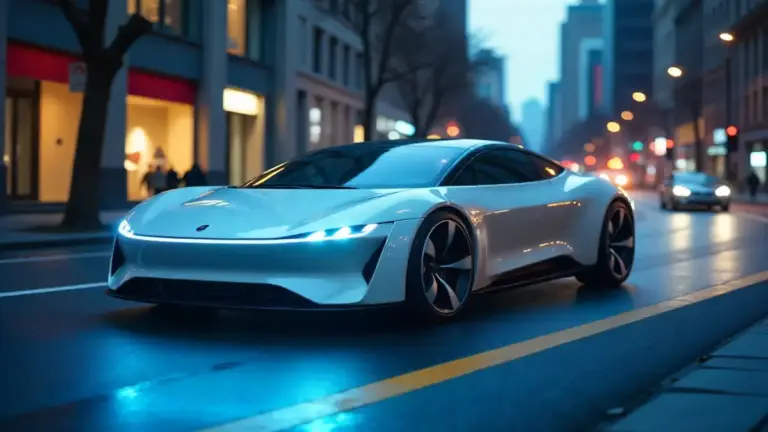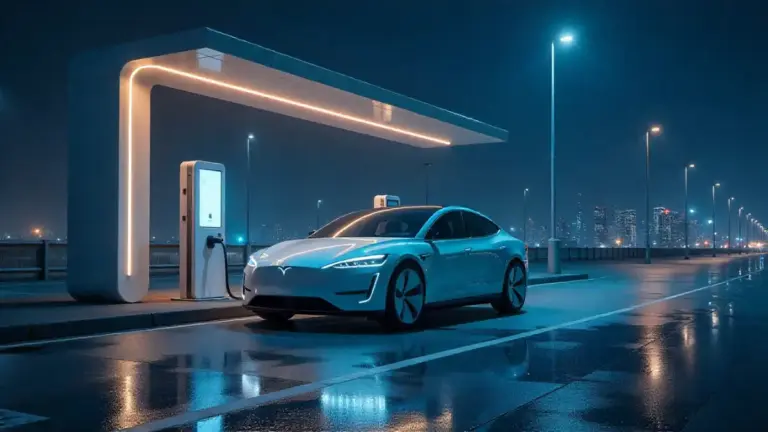
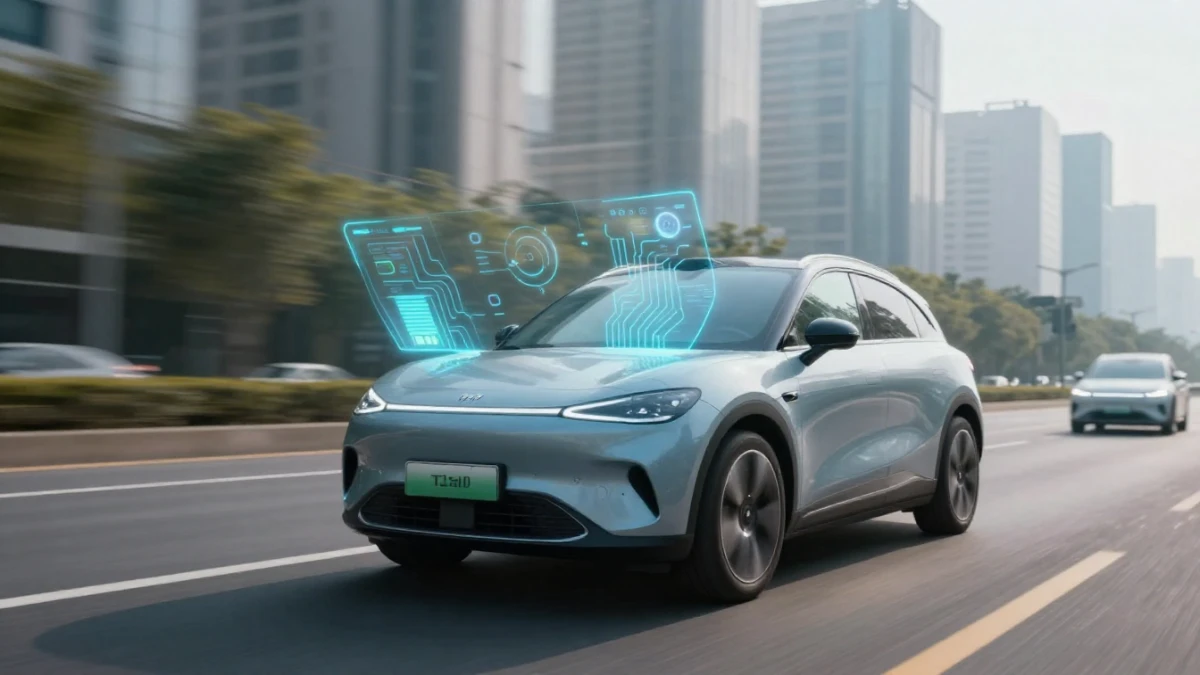
Electric vehicle technology trends are reshaping the automotive industry as electric cars gain momentum worldwide. The sector is undergoing a major transformation driven by sustainability goals, innovation in battery systems, and rapid advancements in charging infrastructure. As governments, manufacturers, and consumers embrace cleaner mobility, electric vehicles are becoming central to the future of transportation.
With advancements in battery technology and charging infrastructure, the electric vehicle market is poised for substantial growth. As a result, manufacturers are investing heavily in research and development, leading to exciting new trends in electric vehicle technology.
Key Takeaways
- Advancements in battery technology are driving electric vehicle adoption.
- Charging infrastructure is expanding rapidly.
- Manufacturers are investing in research and development.
- New trends in electric vehicle technology are emerging.
- The electric vehicle market is poised for substantial growth.
Understanding Electric Vehicle Technology Trends in 2023
As we dive into 2023, the electric vehicle (EV) landscape is rapidly evolving, driven by technological advancements and shifting consumer preferences. The year has seen significant developments in EV technology, impacting various aspects of the industry.
Analyzing Market Growth and Consumer Adoption
The electric vehicle market is experiencing robust growth, with consumer adoption rates increasing steadily. Factors contributing to this growth include government incentives, declining battery costs, and expanding charging infrastructure. As a result, EVs are becoming more mainstream, appealing to a broader audience.
Identifying Leading Manufacturers and Their Innovations
Leading manufacturers are at the forefront of innovations in EV technology. Companies like Tesla, Volkswagen, and General Motors are investing heavily in research and development, introducing new models with enhanced range, performance, and features. These innovations are crucial in driving consumer interest and pushing the boundaries of sustainable transportation developments.
Interpreting Policy Changes Affecting EV Development
Policy changes play a significant role in shaping the EV industry. Governments worldwide are implementing policies to encourage the adoption of electric vehicles, such as tax credits, subsidies, and investments in charging infrastructure. Understanding these policy changes is essential for manufacturers and consumers alike, as they impact the future direction of EV advancements.
The interplay between market growth, technological innovation, and policy changes will continue to define the EV landscape in 2023 and beyond. As the industry evolves, it is crucial to stay informed about the latest trends and developments.
How to Evaluate Battery Technology Advancements
As electric vehicles become more mainstream, advancements in battery technology are gaining attention. The future of electric vehicles heavily relies on the progress made in this area, particularly in terms of energy density, charging speed, and sustainability.
Researching Solid-State Battery Developments
Solid-state batteries are being touted as a significant improvement over traditional lithium-ion batteries. Key benefits include enhanced safety, higher energy density, and faster charging times. Researchers are making significant strides in overcoming the challenges associated with scaling up production.
Comparing Energy Density Improvements
Energy density is a critical factor in determining the range of electric vehicles. Solid-state batteries promise to offer significant improvements in this area. For instance, some prototypes have shown energy density increases of up to 40% compared to conventional lithium-ion batteries.
Assessing Manufacturing Scalability
While the technology is promising, manufacturing scalability remains a challenge. Companies are investing heavily in developing production processes that can meet the growing demand for electric vehicles. Key considerations include reducing production costs and increasing efficiency.
Measuring Range and Charging Speed Improvements
Range anxiety is a significant concern for potential electric vehicle adopters. Advances in battery technology are addressing this issue by improving both range and charging speed.
Analyzing Fast-Charging Capabilities
Fast-charging capabilities are becoming increasingly important. New battery technologies are being designed to charge to 80% in under 15 minutes, making long-distance travel more practical.
Evaluating Real-World Range Performance
Real-world range performance is influenced by various factors, including driving habits, climate, and terrain. Manufacturers are working to optimize battery performance under diverse conditions to provide more accurate range estimates.
Exploring Battery Recycling and Sustainability Initiatives
The environmental impact of battery production is a growing concern. Battery recycling and sustainability initiatives are being developed to mitigate this issue. Closed-loop recycling systems are being explored to recover valuable materials and reduce waste.
- Closed-loop recycling can significantly reduce the demand for primary materials.
- Sustainability initiatives are being integrated into battery design and production.
- Regulatory frameworks are being developed to support battery recycling.
By understanding these advancements and initiatives, stakeholders can better evaluate the future prospects of battery technology in electric vehicles.
How to Assess Autonomous Driving Features in Modern EVs
With the growing adoption of electric vehicles, assessing their autonomous driving capabilities is more crucial than ever. Autonomous driving features are becoming a key differentiator in the EV market, enhancing safety, convenience, and overall driving experience.
Comparing Self-Driving Capability Levels
Understanding the levels of autonomy in EVs is essential for evaluating their self-driving capabilities. The Society of Automotive Engineers (SAE) classification system is widely used to define these levels.
Understanding SAE Autonomy Classifications
The SAE defines six levels of driving automation, from Level 0 (no automation) to Level 5 (full automation). Most modern EVs fall between Level 2 and Level 3, with some manufacturers pushing towards Level 4.
Evaluating Real-World Performance
Real-world performance of autonomous driving features can vary significantly from theoretical capabilities. Factors such as weather conditions, road complexity, and system calibration play a crucial role in determining the effectiveness of these features.
Examining Sensor Technologies and AI Integration
The backbone of autonomous driving lies in the sensor technologies and AI integration used in EVs. These systems enable vehicles to perceive their environment and make informed decisions.
LiDAR (Light Detection and Ranging) and camera-based systems are two primary approaches to sensing the environment. LiDAR offers high precision but at a higher cost, while camera-based systems are more cost-effective but require complex software processing.
Reviewing Neural Network Advancements
Advancements in neural networks have significantly improved the processing of sensor data, enabling more accurate and faster decision-making. These advancements are crucial for enhancing the reliability of autonomous driving features.
Assessing Safety Records and Testing Protocols
The safety record of autonomous driving features is a critical aspect of their assessment. Manufacturers employ rigorous testing protocols to ensure the reliability and safety of these systems.
Key considerations include:
- Simulation testing for various scenarios
- Real-world testing on public roads
- Continuous software updates to improve performance
By comprehensively evaluating these aspects, consumers and industry professionals can better understand the capabilities and limitations of autonomous driving features in modern EVs.

How to Navigate EV Charging Infrastructure Development
Navigating the evolving landscape of EV charging infrastructure is essential for consumers and manufacturers alike. As electric vehicle technology trends continue to advance, the need for comprehensive and efficient charging networks becomes increasingly important.
Mapping Fast-Charging Network Expansion
The expansion of fast-charging networks is a critical aspect of EV charging infrastructure development. This involves:
- Identifying key locations for new charging stations
- Assessing the compatibility of different charging systems
- Evaluating the coverage of highway corridors
Tracking CCS and Tesla Supercharger Compatibility
CCS (Combined Charging System) and Tesla Supercharger compatibility are crucial for ensuring seamless charging experiences. CCS is widely adopted across various EV models, while Tesla’s Supercharger network is exclusive to Tesla vehicles but offers high-speed charging.
Finding Highway Corridor Coverage
Highway corridor coverage is vital for long-distance travel. Many companies are investing in expanding their charging networks along major highways to provide uninterrupted travel for EV users.
Understanding Vehicle-to-Grid (V2G) Integration
Vehicle-to-Grid (V2G) integration allows EVs to supply energy back to the grid, potentially stabilizing it during peak demand periods. This technology can also benefit EV owners through:
- Evaluating home energy storage solutions
- Calculating cost savings potential
Evaluating Home Energy Storage Solutions
Home energy storage solutions, such as those offered by Tesla with its Powerwall, enable homeowners to store excess energy generated from solar panels or the grid, reducing reliance on the grid during peak hours.
Calculating Cost Savings Potential
The cost savings potential of V2G integration and home energy storage can be significant. By optimizing energy usage, EV owners can reduce their energy bills and potentially earn revenue by selling excess energy back to the grid.
Implementing Smart Charging Solutions
Smart charging solutions optimize the charging process based on various factors, including energy demand, grid capacity, and user preferences. Key features include:
- Setting up Time-of-Use charging
- Utilizing smartphone integration for remote monitoring and control
Setting Up Time-of-Use Charging
Time-of-Use (TOU) charging involves scheduling EV charging during off-peak hours when electricity rates are lower, reducing costs for EV owners.
Utilizing Smartphone Integration
Smartphone integration allows users to monitor their EV’s charging status, receive notifications, and control charging remotely, enhancing the overall charging experience.
By understanding these aspects of EV charging infrastructure development, consumers and manufacturers can better navigate the complex landscape of ev advancements and contribute to a more sustainable transportation future.
Conclusion: Preparing for the Electric Vehicle Future
The electric vehicle (EV) industry is on the cusp of a revolution, driven by sustainable transportation developments and technological advancements. As discussed, understanding EV technology trends, evaluating battery advancements, assessing autonomous driving features, and navigating EV charging infrastructure are crucial for stakeholders.
As the world shifts towards a more environmentally friendly transportation system, the future of electric vehicles looks promising. Leading manufacturers are innovating, and policy changes are supporting EV development. The growth of fast-charging networks and vehicle-to-grid integration will further accelerate adoption.
To prepare for this future, consumers, manufacturers, and policymakers must work together. Investing in sustainable transportation developments will be key to reducing our carbon footprint. As the EV landscape continues to evolve, staying informed about the latest trends and technologies will be essential for making informed decisions.
By understanding the factors influencing the industry, we can better navigate the transition to a more sustainable transportation system, ultimately shaping the future of electric vehicles.