Remember when “going electric” meant you were the quirky neighbor with solar panels and a compost bin? Those days are long gone. Today, electric mobility isn’t just a trend—it’s a full-blown transportation revolution happening right under our noses. And honestly? It’s about time we paid attention.
I’m talking about more than just sleek Teslas cruising silently down the highway. Electric mobility encompasses everything from the e-scooters zipping past you on the sidewalk to the whisper-quiet buses pulling up to your stop, and even the delivery vans dropping packages at your door. This shift is fundamentally changing how we think about getting from point A to point B, and it’s affecting your daily life whether you realize it or not.
So what exactly is driving this electric revolution? More importantly, what does it mean for you, your wallet, and the cities we call home? Let’s dive in and explore why electric mobility is the most exciting transportation transformation since, well, since we traded in our horses for Model T’s.
The Electric Mobility Ecosystem: It’s Not Just About Cars
Here’s where things get interesting. When most people hear “electric mobility,” they immediately picture an electric car. But that’s like saying “the internet” is just email—you’re missing about 90% of the story.
Electric mobility is this beautiful, interconnected web of transportation options that are all powered by batteries instead of fossil fuels. We’re talking about electric cars, sure, but also e-bikes that help you conquer hills without breaking a sweat, electric scooters that solve that pesky “last mile” problem, electric buses making public transit cleaner and quieter, and even electric trucks transforming how goods reach your doorstep.
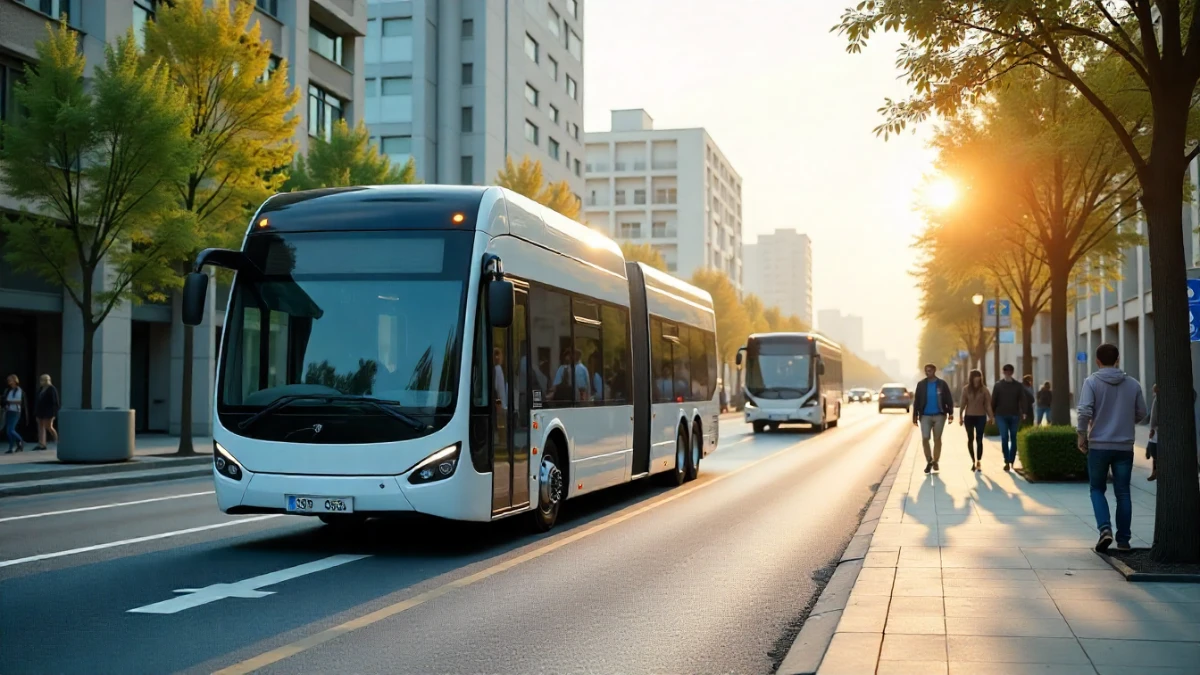
Think about your typical day for a moment. Maybe you spot someone on an e-bike during your morning commute. Later, you see a delivery van that’s eerily quiet pulling into your neighborhood—that’s probably electric. On your lunch break, you might grab a ride-share that turns out to be a Nissan Leaf. And if you’re in a progressive city, your evening bus ride home might be on an electric bus that doesn’t belch diesel fumes every time it accelerates.
This diversity is actually electric mobility’s secret weapon. Not everyone needs a $50,000 electric car, but almost everyone can benefit from some form of electric transportation. A college student might start with an e-bike. A delivery company might electrify its fleet. A city might roll out electric buses. Each piece reinforces the others, building infrastructure and normalizing the idea that, hey, maybe we don’t need to burn gasoline for every single trip.
The numbers back this up beautifully. Global electric car sales hit around 14 million units in 2023, but e-bike sales? They’re crushing it at over 40 million units annually. Electric two-wheelers and three-wheelers are particularly huge in Asia, where they’re not a luxury—they’re practical, affordable transportation that’s cleaning up notoriously polluted cities.
Why Cities Are Going All-In on Electric Mobility
City planners are having their “aha moment” with electric mobility, and it’s not hard to see why. Imagine running a city where transportation is one of your biggest headaches. Traffic congestion costs billions in lost productivity. Air pollution sends thousands to hospitals each year. Noise pollution makes neighborhoods less livable. Traditional transportation is basically a problem-generating machine.
Enter electric mobility, which flips the script on almost every issue.
First, there’s the air quality revolution. London introduced Ultra Low Emission Zones and is seeing measurable improvements in air quality. Shenzhen, China, went bonkers and electrified their entire bus fleet—over 16,000 buses. The result? They’ve slashed CO2 emissions by 1.35 million tons annually and significantly reduced particulate matter in the air. That’s not just an environmental win; it’s a public health victory. Fewer asthma attacks, fewer respiratory illnesses, fewer premature deaths.
Then there’s the noise factor, which might sound trivial until you’ve lived on a busy street. Electric vehicles are remarkably quiet, especially at low speeds. Cities with electric buses and delivery vehicles report noticeably quieter streets during early morning hours. Residents sleep better. Neighborhoods become more pleasant. It’s one of those quality-of-life improvements you don’t fully appreciate until you experience it.
But here’s what really gets city officials excited: electric mobility is flexible and scalable. You can start small with a bike-sharing program or a few electric buses on pilot routes. You can create dedicated lanes for e-bikes and scooters, improving traffic flow. You can partner with private companies on charging infrastructure without huge upfront costs. Unlike massive highway projects that take decades and billions, electric mobility initiatives can show results quickly.
Paris is a perfect example. Mayor Anne Hidalgo has been aggressively promoting electric mobility as part of a broader vision to make the city more livable and less car-dependent. They’ve expanded bike lanes, subsidized e-bike purchases, and restricted certain areas to electric vehicles only. The transformation has been dramatic—Paris is quieter, cleaner, and frankly, more enjoyable to navigate.
The Infrastructure Challenge: Chicken, Meet Egg
Okay, let’s address the elephant in the room—or rather, the charging station that isn’t in the room. Infrastructure remains electric mobility’s biggest challenge, and it’s a classic chicken-and-egg problem.
People don’t want to buy electric vehicles if they can’t easily charge them. But companies don’t want to invest heavily in charging infrastructure if there aren’t enough electric vehicles to make it profitable. It’s the kind of catch-22 that makes everyone scratch their heads.
The good news? We’re breaking through this impasse faster than most people realize. Global public charging points surpassed 2.7 million in 2023, with China leading the charge (pun intended) with over 60% of the world’s public chargers. Europe and North America are catching up rapidly, with governments offering incentives and mandates that are accelerating installation.
But here’s what’s really interesting: the infrastructure needs vary wildly depending on what type of electric mobility we’re talking about. Electric cars need robust public charging networks, especially for long-distance travel. E-bikes and scooters? They’re actually pretty easy—most people just charge them at home overnight using a regular outlet. Electric buses often charge at depots or use opportunity charging at stops. Electric delivery vans typically return to a central hub for charging.
This diversity is actually helpful because it means we don’t need to solve everything at once. Cities can install charging infrastructure where it makes the most sense for their specific needs. A dense urban area might prioritize charging for shared e-scooters and apartment dwellers who can’t charge at home. A suburban community might focus on workplace charging and fast chargers along highways.
Home charging remains the sweet spot for most EV owners—you plug in overnight and wake up to a “full tank” every morning. About 80% of EV charging happens at home, which is brilliant when you think about it. No more weekly trips to gas stations. But this does create equity concerns for apartment dwellers and people without dedicated parking. Cities are getting creative here, installing chargers on street lights, in parking garages, and at retail locations.
The fast-charging network is exploding too. Tesla’s Supercharger network proved the concept works, and now everyone’s racing to build out their own. Companies like Electrify America, EVgo, and ChargePoint are blanketing highways with fast chargers. The latest generation can add 200 miles of range in about 15 minutes—time for a coffee and a bathroom break, basically. Not quite as quick as pumping gas, but close enough for most people.
The Economics: Following the Money Trail
Let’s talk about something everyone cares about: money. Is electric mobility actually affordable, or is it just for wealthy environmentalists virtue-signaling with their Teslas?
The truth is more nuanced and honestly, more encouraging than you might think.
For electric cars, yes, the upfront cost is typically higher than comparable gas vehicles. A Chevy Bolt starts around $27,000, while a similar-sized gas car might be $22,000. But—and this is a big but—the total cost of ownership tells a very different story.
Electricity is dramatically cheaper than gasoline. Driving an EV typically costs about $500-700 per year in electricity versus $1,500-2,000 in gas for a similar vehicle. Maintenance is where EVs really shine. No oil changes. No transmission fluid. No spark plugs or timing belts. Brake pads last longer because of regenerative braking. We’re talking savings of $500-1,000 annually just on routine maintenance. Over a typical 10-year ownership period, many EV owners save $5,000-10,000 compared to gas vehicles, even accounting for the higher purchase price.
Factor in federal tax credits (up to $7,500 in the U.S.), state incentives, and potential utility rebates, and suddenly that price gap shrinks considerably or disappears entirely.
But here’s where electric mobility gets really interesting economically: the other forms are often cheaper upfront, not just over time. A decent e-bike costs $1,000-3,000. Compare that to car ownership (average of $10,000+ annually when you include insurance, maintenance, parking, and depreciation), and suddenly that e-bike looks like a financial genius move for local trips.
Electric scooters for personal use? $300-800. Even cheaper. And if you’re using shared e-scooters or e-bikes? You’re paying only when you use them, with no ownership costs whatsoever.
For businesses, the calculation is even more compelling. Electric delivery vans like the Ford E-Transit or Mercedes eSprinter have higher upfront costs but deliver massive operational savings. UPS estimates saving up to $300 million over 12 years by deploying 35,000 electric vehicles in its fleet. DHL, Amazon, and FedEx are all racing to electrify for exactly this reason—it’s not environmental altruism (though that’s nice), it’s basic business sense.
Electric buses are particularly interesting. A diesel bus costs about $500,000, while an electric bus runs $750,000-900,000. But over a 12-year lifespan, the electric bus is cheaper to operate by $200,000-400,000. Plus, electric buses last longer—potentially 15-18 years versus 12 for diesel. Cities are catching on, and orders are surging.
Environmental Impact: Beyond the Tailpipe
You probably already know that electric vehicles produce zero tailpipe emissions. But the environmental story of electric mobility is both more complicated and more encouraging than that simple fact suggests.
Let’s address the skeptics head-on: “But what about the electricity generation? If it comes from coal plants, aren’t EVs just moving the pollution somewhere else?”
Fair question. And yes, where your electricity comes from matters. But here’s the thing—even when powered by electricity from coal-heavy grids, EVs typically produce lower lifetime emissions than comparable gas vehicles. Why? Because electric motors are incredibly efficient (85-90% efficiency) compared to internal combustion engines (20-30% efficiency), and power plants are more efficient at converting fuel to energy than millions of individual car engines.
And the grid is getting cleaner every year. Renewable energy—solar, wind, hydro—made up about 30% of global electricity generation in 2023 and is growing rapidly. Every solar panel installed, every wind farm built makes every EV on the road cleaner, automatically. Your EV from 2020 is producing lower emissions in 2025 than it did when new, just because the grid is cleaner. Try getting that benefit from a gas car.
The manufacturing emissions for EVs are higher than gas cars, primarily due to battery production. This is real and we shouldn’t downplay it. But studies consistently show that EVs break even on total lifetime emissions after about 1-2 years of driving in most regions, and after that, they’re significantly cleaner. In areas with clean grids, an EV can produce 70-80% lower lifetime emissions than a comparable gas vehicle.
Battery recycling is improving rapidly too. Companies are developing processes to recover 95%+ of valuable materials like lithium, cobalt, and nickel from old batteries. Some are even finding second-life applications for EV batteries in grid storage systems before recycling them. The circular economy for EV batteries is becoming real, not just aspirational.
And let’s not forget the other forms of electric mobility. E-bikes and scooters have tiny environmental footprints compared to any car. Replacing even 10% of short car trips with e-bike trips would have enormous environmental benefits. Same with electric buses and delivery vans—they’re cleaning up some of the dirtiest, most-used vehicles on our roads.
What This Means for You: Practical Considerations
So we’ve covered the big picture. But what does electric mobility actually mean for your life? How should you think about it?
First, consider your transportation needs honestly. Do you drive 200 miles daily? Then maybe an EV isn’t quite right for you yet, unless you can charge at work or during your day. But honestly, most people drive fewer than 40 miles daily, which any modern EV handles easily with overnight home charging.
Do you live in a city and mostly make short trips? An e-bike might genuinely transform your life. You’ll save money, get exercise (with assist when you need it), avoid parking hassles, and often get places faster than driving in traffic. Many people find that an e-bike replaces 50-70% of their car trips.
Are you considering electric mobility for environmental reasons? Great, but know that you’ll likely appreciate the practical benefits more. EV drivers consistently report loving the instant torque, the quiet ride, and never stopping for gas. E-bike users rave about the freedom and exercise. It’s the daily conveniences that win people over, not abstract environmental benefits.
Infrastructure matters to your decision. If you can charge at home, EV ownership is dramatically easier. If you’re in an apartment without charging, you’ll need nearby public charging or workplace charging. Check what’s available in your area. Apps like PlugShare show you every public charger, with real user reviews.
For trying electric mobility without commitment, most cities now have shared e-bikes and e-scooters. Test them out. See how they fit your life. Many EV dealerships offer extended test drives—take advantage of them. You might be surprised by how much you enjoy the experience.
The Road Ahead: Where We’re Going
Electric mobility is past the tipping point. It’s not a question of “if” anymore—it’s “how fast?”
Global EV sales are expected to reach 40% of new car sales by 2030. That’s just five years away. Many countries have announced plans to ban new gas car sales by 2030-2040. Even oil-producing nations like Saudi Arabia are investing heavily in EV charging infrastructure.
The technology keeps improving. Battery costs have dropped 90% over the past decade and continue falling. Charging speeds keep getting faster. Range anxiety is becoming less of an issue as new models routinely exceed 300 miles per charge. Solid-state batteries on the horizon promise even better performance.
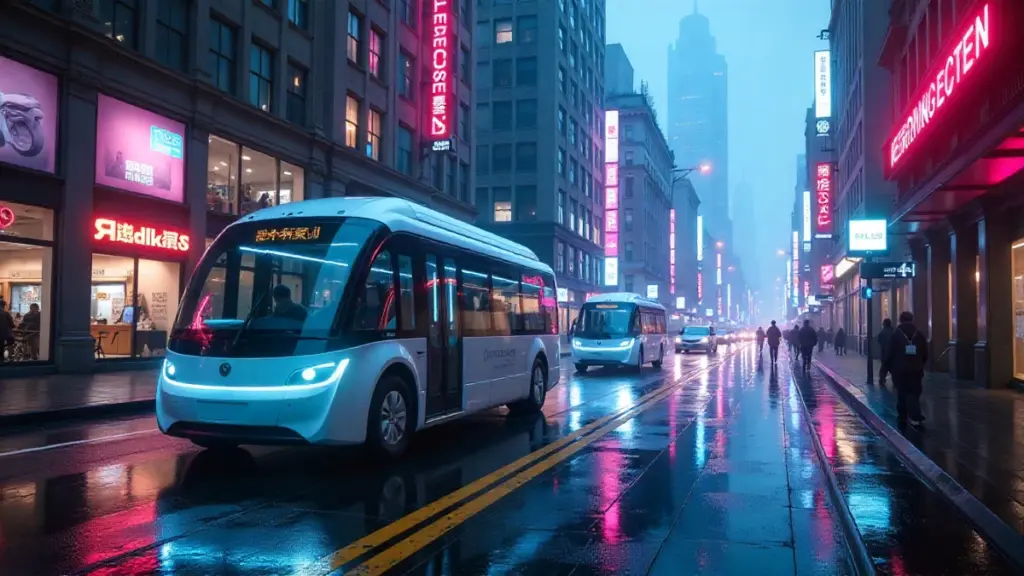
Other forms of electric mobility are growing even faster. E-bike sales are exploding globally. Cities are racing to build protected bike lanes and micro-mobility infrastructure. Electric buses and trucks are becoming mainstream fleet options.
The supporting infrastructure is maturing. Charging networks are expanding rapidly. Grid operators are learning to manage EV charging demand. Utilities are offering time-of-use rates that make EV charging even cheaper. Building codes are starting to require charging-ready parking. All the pieces are falling into place.
Your Electric Future Starts Now
Here’s the bottom line: electric mobility isn’t some distant future concept. It’s happening right now, all around you. And the beautiful thing? You don’t have to dive in all at once.
Start small if you want. Try a shared e-scooter for your lunch run. Test ride an e-bike at a local shop. Take an extended test drive of an EV. Talk to EV owners—we’re an enthusiastic bunch who love sharing our experiences.
Maybe electric mobility means buying an EV as your next car. Maybe it means getting an e-bike for local errands. Maybe it just means choosing electric options when they’re available—taking the electric bus, using e-scooter shares, supporting local businesses that operate electric delivery fleets.
The point is, you have options. More options than ever before, actually. And those options are getting better, cheaper, and more convenient every single year.
Electric mobility is reshaping how we move through the world. It’s making cities cleaner and quieter. It’s giving us new ways to get around that are often faster, cheaper, and more enjoyable than what we’re used to. It’s reducing our environmental impact and our dependence on fossil fuels.
But most importantly? It’s here, it works, and it’s ready for you to try.
So what are you waiting for? Your electric adventure is just a test ride away.