Have you ever wondered if your daily commute could actually help save the planet instead of harming it? That’s exactly what sustainable transport is all about. In simple terms, sustainable transport refers to any form of transportation that has low or zero negative impact on the environment, operates efficiently, and can be maintained long-term without depleting natural resources.
As we navigate through 2025, sustainable transport has evolved from a niche concept to a mainstream necessity. Whether you’re considering an electric vehicle, curious about public transit improvements, or simply want to understand how transportation can become more environmentally friendly, you’re in the right place. In this article, we’ll break down what sustainable transport really means, explore the different types available today, examine why it matters more than ever, and show you how it’s reshaping the way we move from place to place.
Understanding Sustainable Transport: The Core Principles
Sustainable transport isn’t just about swapping gas-guzzlers for electric cars—though that’s certainly part of it. It’s a comprehensive approach to mobility that balances three critical elements: environmental protection, economic viability, and social equity.
The Environmental Dimension
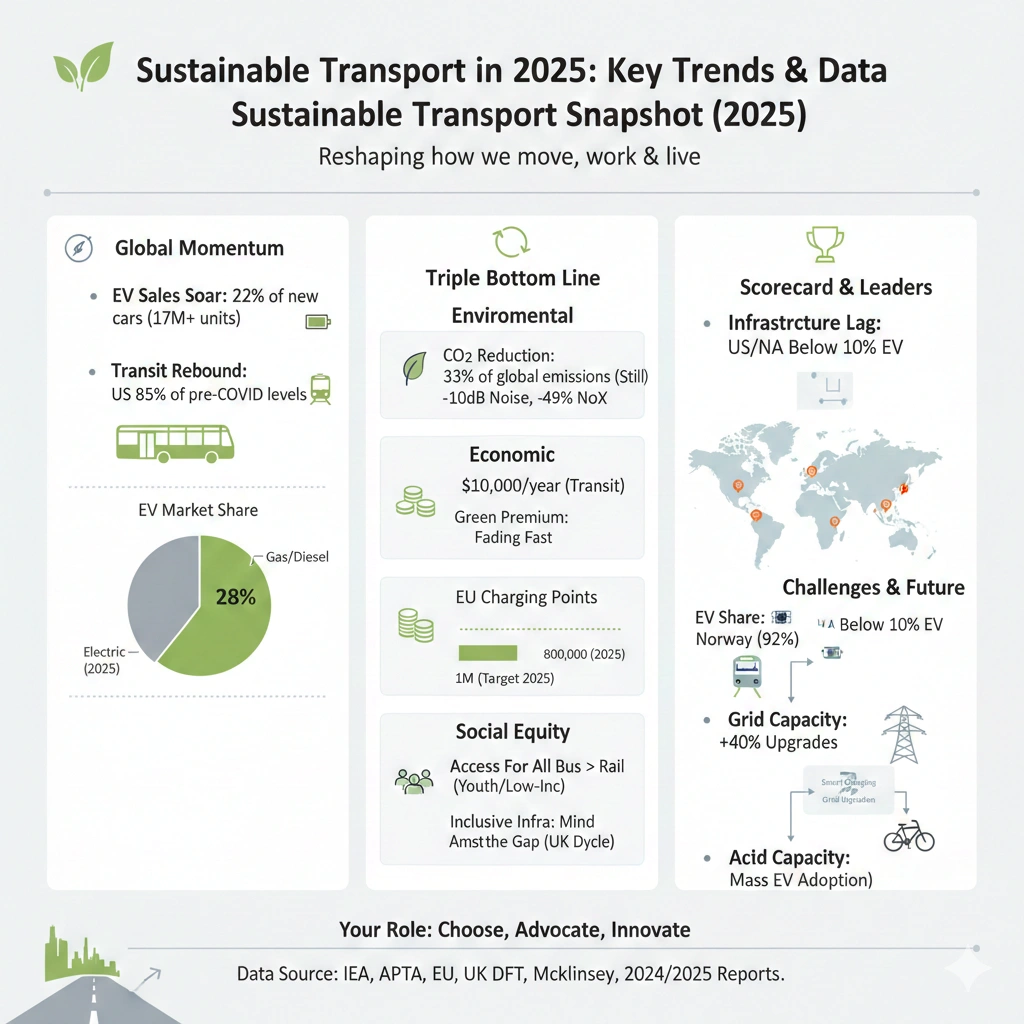
At its heart, sustainable transport aims to minimize pollution and carbon emissions. Traditional transportation accounts for roughly 23% of global energy-related CO2 emissions, according to the International Energy Agency. Sustainable alternatives work to dramatically reduce this footprint through:
- Zero or low emissions: Electric vehicles, hydrogen fuel cell cars, and biofuel-powered transit produce significantly fewer greenhouse gases
- Energy efficiency: Modern sustainable transport uses less energy per mile traveled compared to conventional options
- Reduced air pollution: Fewer particulates and toxic gases mean cleaner air in cities and communities
- Lower noise pollution: Electric motors operate much more quietly than combustion engines
Think of it like this: if traditional transport is like leaving every light in your house on 24/7, sustainable transport is like switching to LED bulbs with motion sensors—you still get where you need to go, but with a fraction of the environmental cost.
The Economic Sustainability Factor
Here’s something that surprises many people: sustainable transport often makes financial sense too. While the upfront costs can be higher (like purchasing an electric vehicle), the long-term economics are compelling:
- Lower operating costs: EVs cost about 60% less to maintain than gas vehicles
- Reduced fuel expenses: Electricity is significantly cheaper per mile than gasoline
- Infrastructure efficiency: Well-designed public transit moves more people with less investment per capita
- Healthcare savings: Cleaner air means fewer respiratory illnesses and associated medical costs
A 2024 study by the American Public Transportation Association found that households near quality public transit save an average of $10,000 annually compared to car-dependent households.
Social Equity and Accessibility
Truly sustainable transport must be accessible to everyone, not just those who can afford the latest Tesla. This dimension includes:
- Universal access: Public transit systems that serve all neighborhoods, not just affluent areas
- Affordability: Transportation options available at various price points
- Safety: Well-maintained infrastructure that protects all users—drivers, cyclists, and pedestrians
- Connectivity: Integrated networks that make car-free living practical
In Rotterdam, Netherlands, for example, the city’s comprehensive bike-sharing program and extensive tram network have created a transportation system where 60% of trips are made without a private car—regardless of income level.
Types of Sustainable Transport: Your Options in 2025
The sustainable transport landscape has expanded dramatically. Let’s explore what’s actually available today.
Electric Vehicles (EVs)
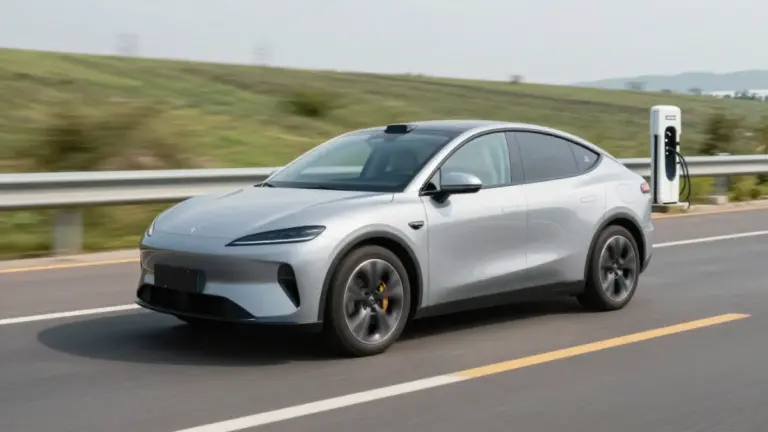
Electric vehicles have matured from quirky experiments to mainstream choices. In 2024, global EV sales exceeded 14 million units, representing nearly 18% of all new car purchases.
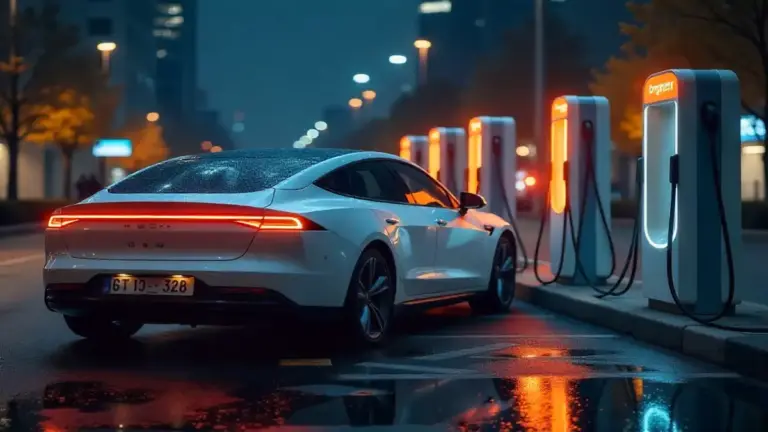
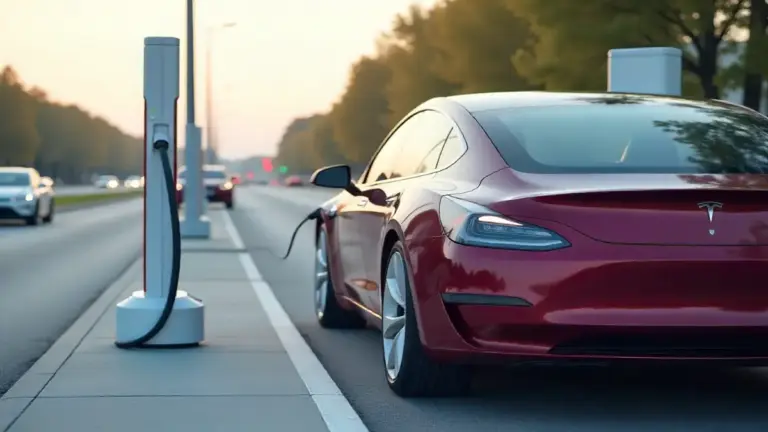
Battery Electric Vehicles (BEVs): These run entirely on electricity stored in batteries. Modern BEVs like the 2025 Tesla Model 3, Hyundai Ioniq 6, and Chevrolet Equinox EV offer ranges exceeding 300 miles on a single charge. Charging infrastructure has grown exponentially—the US now has over 160,000 public charging ports, a 40% increase from 2023.
Plug-in Hybrid Electric Vehicles (PHEVs): These combine electric motors with traditional engines, offering flexibility for longer trips. They’re ideal if you’re not quite ready to commit fully to electric but want to reduce emissions for your daily commute.
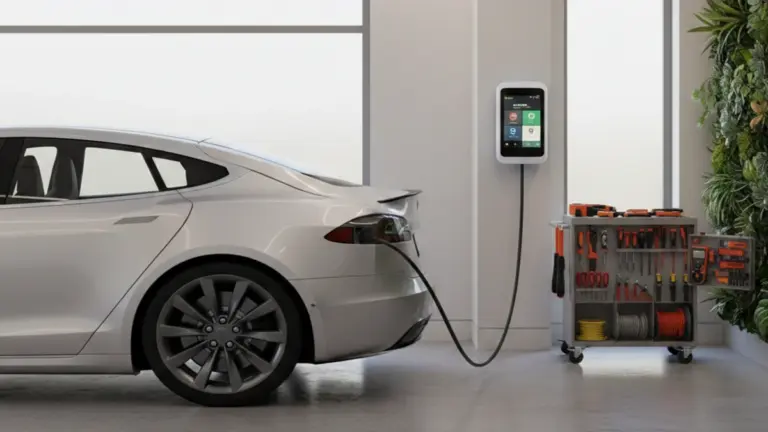
The real-world experience: My colleague switched to a BEV last year and was shocked to discover she charges at home 95% of the time, just plugging in overnight like a smartphone. Her electricity bill increased about $40 monthly, but she’s saving over $150 on gas—not to mention zero oil changes.
Public Transportation Systems
Modern public transit has evolved far beyond the stereotypical crowded, unreliable bus. Cities worldwide are revolutionizing mass transit:
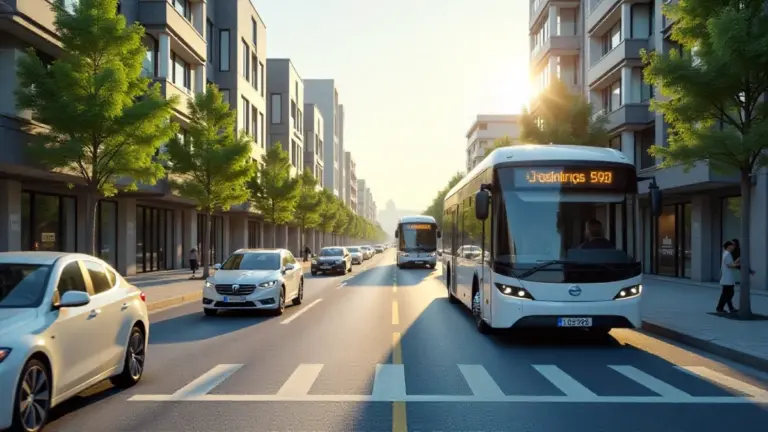
Electric Buses and Trains: Los Angeles now operates over 2,300 electric buses, the largest fleet in North America. These vehicles produce zero tailpipe emissions and operate significantly more quietly than diesel predecessors.
Metro and Light Rail: Subway and light rail systems can move 50,000 people per hour per direction—the equivalent of a 30-lane highway. Cities like Copenhagen and Tokyo have demonstrated that world-class public transit can actually be preferable to private car ownership.
Bus Rapid Transit (BRT): These systems use dedicated lanes and advanced technology to provide subway-like efficiency at a fraction of the construction cost. Bogotá’s TransMilenio moves 2.4 million passengers daily while reducing the city’s CO2 emissions by an estimated 300,000 tons annually.
Active Transportation
Sometimes the most sustainable vehicle is no vehicle at all.
Cycling Infrastructure: Protected bike lanes, bike-sharing programs, and e-bikes have transformed cycling from recreation to legitimate transportation. Amsterdam famously has more bicycles than residents, with 68% of residents cycling daily. Even car-centric cities like Austin, Texas, have added over 200 miles of bikeways since 2020.
E-Bikes and E-Scooters: Electric-assist bicycles have democratized cycling, making it accessible regardless of fitness level or terrain. E-bikes now outsell electric cars in many European countries. Shared e-scooter programs, despite some growing pains, have replaced an estimated 5-10% of short car trips in cities where they operate.
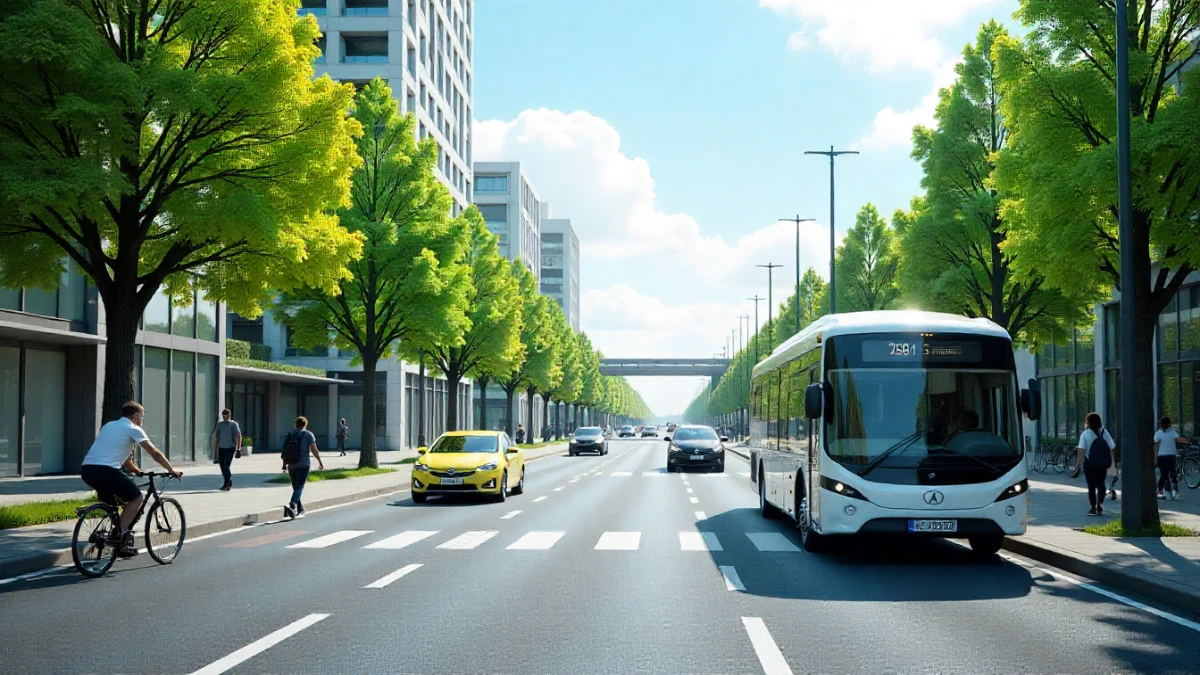
Walkable Urban Design: The most sustainable trip is one you can walk. Cities are increasingly prioritizing pedestrian-friendly design—wider sidewalks, crosswalk safety improvements, and mixed-use zoning that puts daily needs within walking distance.
Emerging Technologies
The future of sustainable transport is arriving faster than you might think:
Hydrogen Fuel Cell Vehicles: Companies like Toyota and Hyundai are betting on hydrogen, particularly for heavy-duty applications like trucks and buses. Hydrogen refueling takes just minutes, similar to gasoline, but produces only water vapor as emissions.
Autonomous Electric Shuttles: Self-driving electric vehicles are being tested for first-mile/last-mile connections to transit hubs. These could dramatically reduce the need for private car ownership.
Electric Aviation: While still in development, companies like Airbus and startups like Heart Aerospace are working on electric aircraft for regional routes, targeting commercial operations by 2028-2030.
Why Sustainable Transport Matters Now More Than Ever
You might be wondering: why all the urgency around sustainable transport in 2025? The answer is multifaceted and increasingly urgent.
Climate Change Imperatives
Transportation remains one of the largest contributors to greenhouse gas emissions in most developed countries. In the United States, transport accounts for 28% of all emissions—the single largest sector. To meet the Paris Agreement goals of limiting global warming to 1.5°C, transportation emissions need to drop by at least 50% by 2030.
We’re essentially in a race against time. Every year we delay transitioning to sustainable transport, the climate challenge becomes more severe. The good news? The technology exists today to make this transition—what’s needed now is widespread adoption.
Urban Air Quality Crisis
Beyond climate change, air pollution from vehicles kills an estimated 385,000 people annually worldwide, according to a 2024 study published in Environmental Health Perspectives. Children living near major roadways show higher rates of asthma and developmental delays.
Electric vehicles and improved public transit directly address this public health emergency. Cities that have invested heavily in sustainable transport—like Oslo, Norway, which banned private cars from its city center—have seen dramatic improvements in air quality and children’s health outcomes.
Economic Transformation
The global sustainable transport market is expected to exceed $9 trillion by 2030. Countries and companies investing in this transition are positioning themselves for economic leadership in the coming decades.
Consider China: by aggressively promoting EV manufacturing and adoption, Chinese companies now produce over 60% of the world’s electric vehicles and control most of the battery supply chain. This isn’t just about environment—it’s about economic competitiveness.
Energy Security
Dependence on imported petroleum makes nations vulnerable to price shocks and geopolitical instability. Sustainable transport, powered by domestically-produced electricity, renewable energy, or hydrogen, provides energy independence.
The 2022-2023 energy crisis following Russia’s invasion of Ukraine demonstrated this dramatically. European countries with higher EV adoption and robust public transit were far less affected by gasoline price spikes than those heavily dependent on oil imports.
Quality of Life Improvements
Here’s something often overlooked: sustainable transport makes cities more livable. Consider these benefits:
- Reclaimed public space: Parking lots and wide roads can be transformed into parks, cafés, and gathering places
- Quieter neighborhoods: Electric vehicles and reduced traffic create more peaceful urban environments
- Safer streets: Lower speeds and better infrastructure design reduce traffic fatalities
- Community connection: Public transit and walkable neighborhoods foster social interaction
Barcelona’s “superblock” program, which restricts car traffic in neighborhood zones, has reduced air pollution by 25% and increased commercial activity by 30% in participating areas.
Challenges and Barriers to Sustainable Transport
Let’s be honest: if sustainable transport were easy, everyone would already be doing it. Several real challenges need addressing.
Infrastructure Investment Needs
Building charging networks, expanding public transit, and creating protected bike lanes requires significant upfront investment. The American Society of Civil Engineers estimates the US alone needs $2.6 trillion in transportation infrastructure investment by 2030.
However, these costs must be weighed against the expense of continuing with unsustainable transport: climate damage, healthcare costs from pollution, and economic losses from congestion. A 2024 analysis by the Global Commission on the Economy and Climate found that investing in sustainable urban transport delivers $3-4 in economic benefits for every dollar spent.
Range Anxiety and Charging Accessibility
Despite improvements, many potential EV buyers still worry about running out of charge. While modern EVs offer ranges of 250-400 miles (comparable to many gas cars), charging infrastructure remains unevenly distributed. Rural areas and lower-income urban neighborhoods often lack adequate charging options.
The solution involves both expanding public charging infrastructure and incentivizing home charging installation. Norway, where 88% of new cars sold are electric, achieved this partly through guaranteed charging access for apartment dwellers.
Cost Barriers
Electric vehicles still carry price premiums, though this gap is rapidly closing. The average new EV in the US costs about $53,000 compared to $48,000 for conventional vehicles. However, multiple factors are bringing prices down:
- Battery costs: Dropped 90% since 2010 and continue declining
- Manufacturing scale: Increased production volumes reduce per-unit costs
- Used EV market: Growing rapidly, providing affordable options
- Incentives: Federal and state tax credits can reduce EV costs by $7,500-$12,500
Analysts predict EVs will reach price parity with gas vehicles by 2026-2027, even without subsidies.
Behavioral and Cultural Factors
Let’s face it: many people love their cars. Personal vehicle ownership represents freedom, status, and convenience for millions. Shifting these deeply-held preferences requires more than just rational arguments about sustainability.
Successful transitions happen when sustainable options become genuinely preferable—faster, cheaper, or more convenient than alternatives. When Amsterdam’s cycling infrastructure made bikes the fastest way across town, adoption soared without heavy-handed mandates.
Grid Capacity Concerns
Can the electrical grid handle millions of EVs charging simultaneously? It’s a legitimate question. The short answer is: yes, but with smart management.
Studies by the US Department of Energy suggest the current grid can support EV adoption through 2030 if charging is managed intelligently—primarily encouraging off-peak overnight charging when electricity demand is lowest. Longer-term, grid upgrades will be necessary, but these improvements benefit all electricity consumers, not just EV owners.
The Path Forward: Making Sustainable Transport a Reality
So where do we go from here? Creating truly sustainable transport systems requires coordinated action at multiple levels.
Policy and Government Action
Governments play a crucial role through:
- Incentives: Tax credits, rebates, and HOV lane access encourage EV adoption
- Regulations: Emissions standards and zero-emission vehicle mandates push manufacturers to innovate
- Investment: Funding for public transit, charging infrastructure, and active transportation
- Urban planning: Zoning reforms that enable mixed-use, transit-oriented development
California’s Advanced Clean Cars II regulation, requiring 100% zero-emission vehicle sales by 2035, has pushed several other states to adopt similar targets, creating market certainty for manufacturers.
Technology and Innovation
The private sector continues advancing sustainable transport technology:
- Battery improvements: Solid-state batteries promise 500+ mile ranges and faster charging
- Vehicle-to-grid technology: EVs that can supply power back to the grid during peak demand
- Smart mobility platforms: Apps integrating various transport modes into seamless journeys
- Autonomous vehicles: Potentially increasing efficiency and reducing private car ownership needs
Individual Choices Matter
You don’t need to wait for perfect infrastructure to make a difference. Consider these practical steps:
Evaluate your transportation needs honestly: Do you really need a car for every trip? Could you combine car ownership with public transit, bikes, or car-sharing for different needs?
Consider EVs for your next vehicle purchase: Even if you’re not ready now, keep informed about options, incentives, and charging infrastructure in your area.
Support sustainable transport in your community: Attend city council meetings, advocate for better bike lanes and public transit, or join local transportation advocacy groups.
Try alternatives: Challenge yourself to one car-free day per week. You might discover you enjoy walking to the coffee shop or cycling to work more than you expected.
Community and Employer Initiatives
Workplaces can accelerate the transition by:
- Installing workplace charging stations
- Offering transit subsidies instead of free parking
- Supporting flexible work arrangements that reduce commuting
- Organizing carpool and bike-to-work programs
Companies like Microsoft and Google have found that sustainable transport benefits—transit passes, bike facilities, EV charging—are among the most valued employee perks, often more appreciated than traditional benefits.
Conclusion: Sustainable Transport Is Here to Stay
Sustainable transport isn’t a distant dream or idealistic fantasy—it’s happening right now, all around us. From the electric buses quietly gliding through Los Angeles to the bike superhighways connecting Copenhagen’s neighborhoods, from the massive expansion of charging networks to the high-speed rail connecting European capitals, the transportation revolution is well underway.
Here are your key takeaways:
- Sustainable transport balances environmental, economic, and social needs—it’s not just about being green, but creating transportation systems that work better for everyone
- Multiple options exist today: electric vehicles, improved public transit, cycling infrastructure, and emerging technologies all contribute to sustainable mobility
- The urgency is real: climate change, air pollution, and energy security demand rapid transition to cleaner transport
- Challenges remain but are solvable: infrastructure investment, cost barriers, and behavioral change require coordinated effort
- Everyone has a role: governments, businesses, and individuals all contribute to creating sustainable transport systems
The question isn’t whether sustainable transport will replace our current systems—it’s how quickly we can make that transition. The technology exists, the economic case is increasingly compelling, and the environmental imperative grows stronger each year.
What’s your next step? Maybe it’s researching electric vehicles for your next purchase, trying out your city’s public transit system, or advocating for better bike infrastructure in your community. Whatever you choose, remember that sustainable transport isn’t about sacrifice—it’s about creating cities and communities where it’s easier, cheaper, and more enjoyable to get around while protecting the planet for future generations.
The road to sustainable transport starts with a single trip. Where will yours take you?