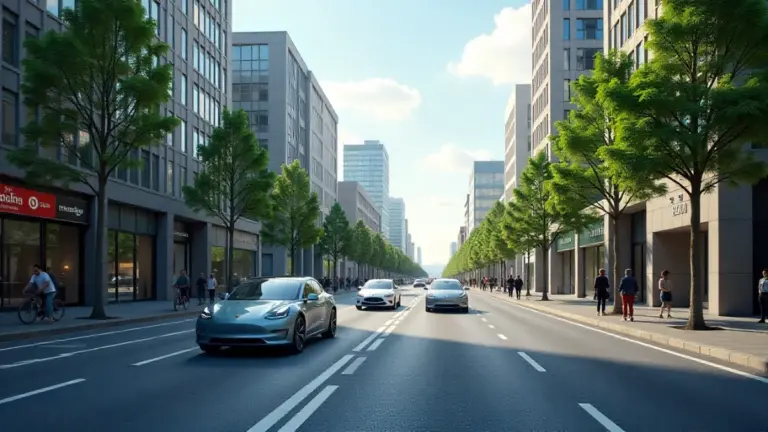
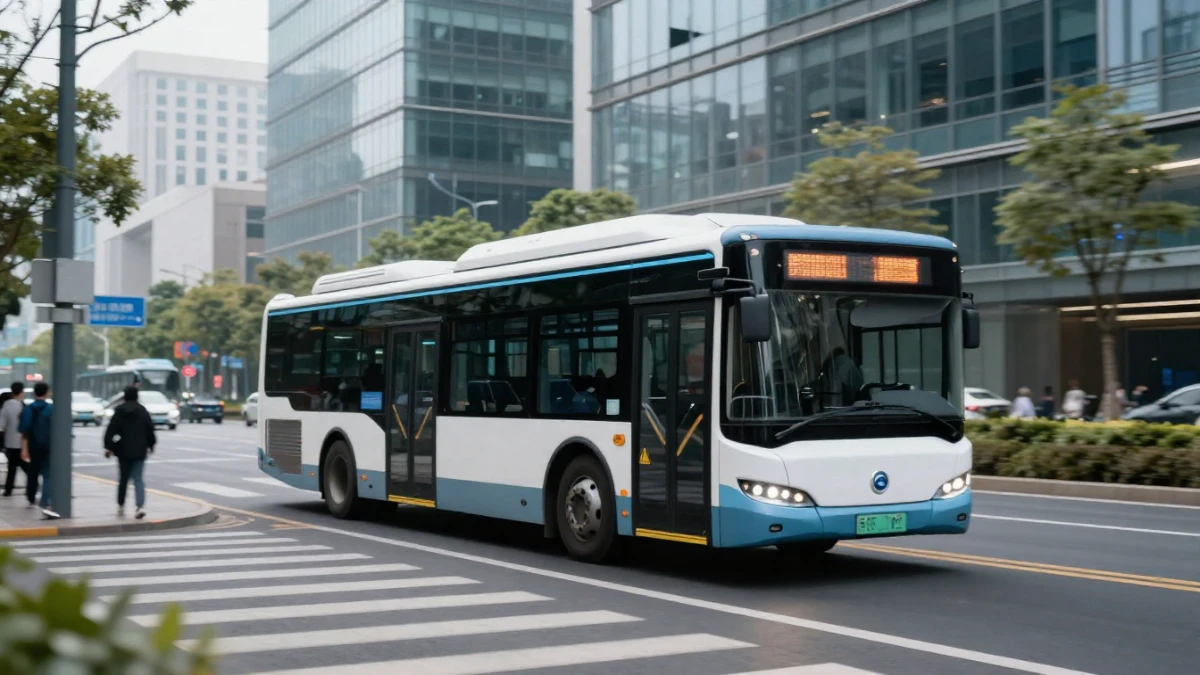
Have you noticed more electric buses gliding silently through your city streets lately? You’re not imagining it. The global shift toward electric public transit is accelerating faster than most people realize, and the numbers tell a remarkable story of transformation.
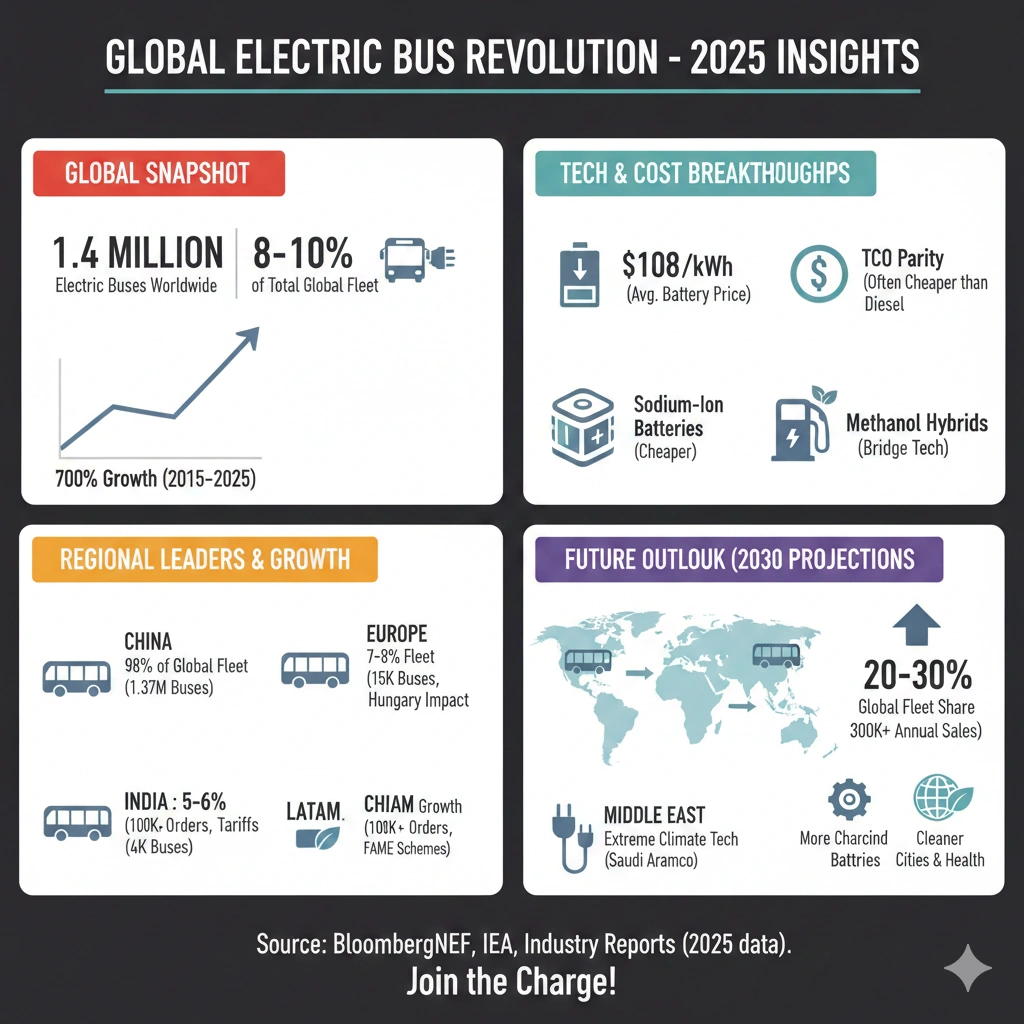
Here’s the headline: Electric buses now represent approximately 8-10% of the global bus fleet as of 2025, with over 1.4 million electric buses operating worldwide. While that might sound modest, consider this: back in 2015, there were barely 173,000 electric buses globally. That’s an explosive growth rate of over 700% in just a decade. But here’s what makes this even more interesting—the adoption isn’t happening evenly across the globe, and understanding where, how, and why electric buses are taking over reveals fascinating insights about the future of urban transportation.
In this article, you’ll discover the real story behind global electric bus adoption rates, which regions are leading (and why others are catching up fast), what’s driving this transportation revolution, and what the next five years have in store for cities worldwide. Whether you’re a policy maker, transit enthusiast, or simply curious about cleaner urban transport, you’ll walk away understanding why electric buses aren’t just a trend—they’re becoming the new normal.
The Current State of Global Electric Bus Adoption
Let’s cut straight to the numbers, because they’re genuinely impressive.
Global Fleet Breakdown (2024-2025 Data)
As of late 2024, approximately 1.4 million electric buses operate on roads worldwide, representing roughly 8-10% of the global bus fleet. To put that in perspective, the total global bus fleet sits around 14-15 million vehicles. While single-digit percentages might not sound revolutionary, the trajectory matters more than the snapshot.
According to the International Energy Agency (IEA), electric bus sales continue to climb year-over-year, with approximately 150,000-180,000 new electric buses added annually in recent years. That’s nearly 500 new electric buses hitting the streets every single day somewhere in the world.
Regional Distribution: A Tale of Dramatic Contrasts
Here’s where things get really interesting. The adoption rate varies wildly depending on where you are:
- China: Dominates with approximately 98% of the world’s electric buses—around 1.37 million vehicles. Yes, you read that correctly. China hasn’t just embraced electric buses; they’ve practically cornered the market.
- Europe: Home to roughly 12,000-15,000 electric buses as of 2024, representing about 7-8% of the regional bus fleet, with adoption accelerating significantly.
- United States: Operating around 8,000-10,000 electric buses, which represents only about 5-6% of the transit bus fleet, though orders are surging.
- Latin America: Countries like Chile and Colombia are emerging as adoption leaders in the region, with approximately 3,000-4,000 electric buses combined.
- India: Rapidly expanding its electric bus fleet to around 8,000-10,000 vehicles with ambitious government procurement targets.
Growth Trajectory: Not Just Linear, But Exponential
The adoption curve isn’t just climbing—it’s steepening. Between 2019 and 2023, the global electric bus stock more than doubled. Market analysts project that by 2030, electric buses could represent 30-40% of new bus sales globally, with the total fleet potentially reaching 2.5-3 million vehicles.
What’s driving this exponential growth? That’s where our story gets more complex and fascinating.
What’s Accelerating Electric Bus Adoption Worldwide
The shift to electric buses isn’t happening because transit agencies suddenly became environmental crusaders (though sustainability plays a role). Multiple converging factors are making electric buses not just attractive, but economically inevitable.
Economic Factors: When Clean Becomes Cheaper
Total Cost of Ownership is Flipping
Here’s what changed the game: while electric buses cost more upfront—typically $500,000-$750,000 compared to $350,000-$450,000 for diesel buses—their total cost of ownership (TCO) over a 12-15 year lifespan is increasingly competitive or even lower.
Why? Three words: fuel and maintenance.
Electric buses typically cost 50-70% less to fuel per mile compared to diesel equivalents. When diesel prices spiked in 2022-2023, many transit agencies saw their operating budgets squeezed dramatically. Meanwhile, electricity prices remained relatively stable. A transit agency running 100 buses can save $1-2 million annually on fuel alone by going electric.
Maintenance costs tell a similar story. Electric drivetrains have far fewer moving parts—no oil changes, no transmission repairs, no exhaust system replacements. Transit agencies report maintenance cost reductions of 40-60% with electric buses. That’s not marginal—that’s transformational for budget-strapped public transit systems.
Battery Prices Are Plummeting
In 2015, lithium-ion battery packs cost around $500 per kilowatt-hour (kWh). By 2024, prices dropped to approximately $115-130 per kWh, according to BloombergNEF. That’s a 75% reduction in less than a decade. This trend directly translates to lower upfront costs for electric buses, closing the price gap with conventional buses faster than most experts predicted just five years ago.
Policy and Regulatory Pressures: The Mandate Effect
Governments worldwide aren’t just encouraging electric bus adoption—they’re mandating it.
Notable Policy Milestones:
- European Union: Targets requiring at least 50% of new urban buses to be zero-emission by 2030
- California (U.S.): Mandates 100% zero-emission bus purchases by 2029 for transit agencies
- United Kingdom: Commitment to end the sale of new diesel buses by 2030
- China: National policies prioritizing electric vehicles in public transport with substantial subsidies
- India: FAME (Faster Adoption and Manufacturing of Electric Vehicles) program subsidizing thousands of electric buses
These aren’t suggestions—they’re requirements backed by funding mechanisms and procurement rules. When regulatory timelines become certain, manufacturers invest in production capacity, driving economies of scale that further reduce costs. It’s a virtuous cycle.
Environmental and Public Health Drivers
While economics and regulations provide the push, public demand for cleaner air provides the pull.
Urban air quality has become a critical health issue in cities worldwide. Diesel buses are significant contributors to urban particulate matter and nitrogen oxide emissions. According to the World Health Organization, air pollution causes approximately 7 million premature deaths annually, with urban vehicle emissions playing a major role.
Electric buses eliminate tailpipe emissions entirely. In cities like Shenzhen, China—which electrified its entire 16,000+ bus fleet by 2017—air quality improvements have been measurable and significant. Studies show substantial reductions in PM2.5 levels in areas with high electric bus concentration.
Citizens notice the difference too: less noise, no diesel smell, and cleaner air at bus stops. This tangible quality-of-life improvement creates political will for further investment.
Technological Maturation: Range Anxiety is Yesterday’s Problem
Early electric buses struggled with range limitations, often managing only 100-150 miles on a charge. That’s problematic when city bus routes can cover 200+ miles daily.
Modern electric buses have shattered those limitations:
- Current models routinely achieve 200-300+ miles per charge
- Fast-charging technology allows partial recharges during route layovers (10-15 minutes for significant range extension)
- Improved battery thermal management systems maintain performance in extreme weather
- Depot charging infrastructure has become standardized and reliable
The technology has matured from experimental to operational. Transit agencies aren’t guinea pigs anymore—they’re deploying proven solutions.
Regional Deep Dive: Why Adoption Rates Vary So Dramatically
The vast disparity in adoption rates between regions reveals much about what enables—or hinders—electric bus deployment.
China: The Uncontested Leader
China’s near-monopoly on electric bus adoption (98% of global fleet) didn’t happen by accident. It resulted from coordinated industrial policy, aggressive subsidies, and national priorities aligning perfectly.
Key Success Factors:
- Massive Government Subsidies: China provided substantial purchase subsidies (often covering 30-50% of vehicle cost) for electric buses through the mid-2010s
- Domestic Manufacturing Ecosystem: Companies like BYD and Yutong built massive production capacity, driving costs down through scale
- Air Quality Crisis: Severe urban air pollution created urgent political imperative for action
- Centralized Decision-Making: National and provincial governments could mandate adoption quickly without complex local negotiations
Cities like Shenzhen (100% electric bus fleet since 2017) and Beijing (90%+ electric as of 2024) demonstrate what’s possible with coordinated policy and investment.
However, China’s dominance may be plateauing. With domestic electrification largely achieved in major cities, growth is shifting to replacement cycles rather than initial conversions.
Europe: Accelerating From Behind
Europe started slower but is now hitting its stride, with adoption rates climbing rapidly.
Current Leaders:
- Netherlands: Amsterdam and other cities targeting 100% zero-emission buses by 2025-2030
- Norway: Oslo achieving 80%+ electric bus operation as of 2024
- United Kingdom: Major cities like London deploying hundreds of electric double-decker buses
- Germany: Berlin, Hamburg, and other cities with aggressive electrification targets
European adoption benefits from:
- Strong regulatory frameworks (EU mandates)
- Substantial EU funding programs supporting clean transit
- Growing domestic manufacturing (Solaris, VDL, Ebusco)
- Dense urban environments where shorter routes favor electric operation
The European market is expected to grow by 15-20% annually through 2030, with projections suggesting 40-50% of the European bus fleet could be electric by 2035.
United States: The Slow Giant Awakening
The U.S. presents a paradox: home to innovative electric vehicle companies but lagging in electric bus adoption compared to Europe and far behind China.
As of 2024, only 5-6% of U.S. transit buses are electric, but several factors are driving rapid change:
Recent Catalysts:
- Infrastructure Investment and Jobs Act (2021): $5.5 billion specifically for low- and zero-emission transit buses
- State Mandates: California’s zero-emission bus requirement is forcing the largest transit market to move
- Major Orders: Cities like Los Angeles, Seattle, and New York have ordered hundreds of electric buses with delivery through 2025-2027
Challenges Remaining:
- Fragmented transit agency structure (hundreds of independent agencies)
- Existing diesel bus fleets with remaining useful life
- Infrastructure costs (depot charging installations are expensive)
- Manufacturing capacity constraints from domestic suppliers
Despite the slower start, U.S. electric bus stock is projected to grow by 25-30% annually through 2028, suggesting adoption could reach 15-20% of the fleet by 2030.
Emerging Markets: India and Latin America
Some emerging economies are leapfrogging traditional diesel infrastructure entirely.
India’s Ambitious Push: The Indian government’s FAME II program subsidizes 55% of electric bus costs for cities, resulting in orders for over 10,000 electric buses between 2022-2024. Cities like Delhi, Mumbai, and Bangalore are deploying electric buses rapidly, with targets suggesting 50% electric bus fleets in major metros by 2030.
Latin America’s Progress:
- Santiago, Chile: Operating Latin America’s largest electric bus fleet (approximately 2,000+ buses) with plans to reach 80% electric by 2030
- Bogotá, Colombia: Deploying electric buses in its Bus Rapid Transit (BRT) system
- São Paulo, Brazil: Recently ordered hundreds of electric buses with aggressive expansion plans
These markets benefit from learning from early adopter mistakes, accessing improved technology, and leveraging international climate financing.
The Challenges Still Holding Back Faster Adoption
Despite impressive growth, several obstacles prevent even faster electric bus deployment globally.
Infrastructure Investment Requirements
Electrifying a bus fleet isn’t just about buying new vehicles—it requires fundamental depot infrastructure transformation.
The Real Costs:
- Installing charging infrastructure: $50,000-$300,000 per charging station
- Upgrading electrical grid connections to depots: $500,000-$2+ million
- Training maintenance staff on high-voltage systems: $10,000-$25,000 per technician
- Facility modifications for battery safety and ventilation
For a 100-bus fleet, total infrastructure investment can easily reach $10-15 million beyond vehicle costs. Many transit agencies lack the capital budget for this upfront investment, even when long-term savings are clear.
Supply Chain and Manufacturing Constraints
The global semiconductor shortage and battery supply constraints have created delivery delays. Transit agencies ordering electric buses in 2023-2024 often face 18-24 month delivery timelines, compared to 12-15 months for diesel buses.
Battery manufacturing capacity is expanding rapidly, but current demand from both automotive and transit sectors creates competition for supply. Additionally, critical battery materials (lithium, cobalt, nickel) face extraction and processing bottlenecks that could constrain growth if not addressed.
Grid Capacity and Energy Management
Large electric bus fleets create substantial new electricity demand, particularly during overnight charging periods.
A 100-bus depot might require 2-5 megawatts of charging capacity—equivalent to the electricity consumption of 500-1,500 homes. In some urban areas, local electrical grids weren’t designed for this additional load. Utility upgrades can be expensive and time-consuming.
Smart charging management systems help by staggering charging times and optimizing for off-peak electricity rates, but grid planning remains a real consideration that requires coordination between transit agencies and utilities.
Performance in Extreme Climates
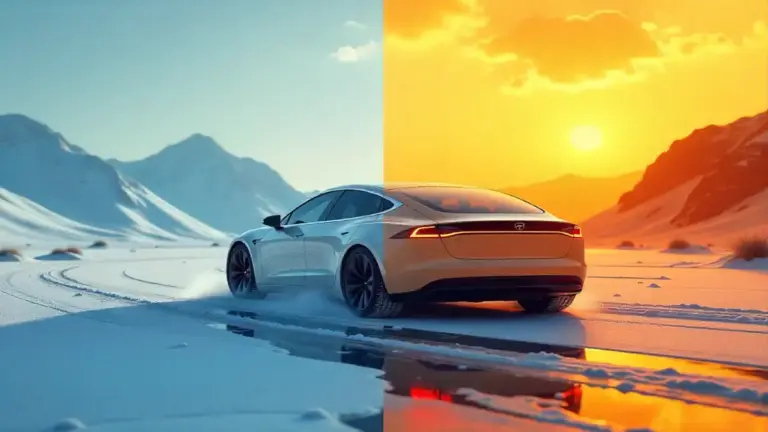
Battery performance degrades in extreme heat and extreme cold, reducing range by 20-40% in severe conditions.
This presents challenges for:
- Very cold climates (Canadian cities, northern Europe, northern U.S.)
- Very hot climates (Middle Eastern cities, some parts of India and the southwestern U.S.)
Modern thermal management systems are improving, and newer battery chemistries show better temperature resilience, but climate considerations still affect route planning and fleet sizing in extreme environments.
The “First Mover” Hesitation
Many transit agencies take a “wait and see” approach, reluctant to be early adopters of technology they perceive as still evolving. This creates a chicken-and-egg problem: without demand, manufacturers don’t build out service networks and parts availability; without robust service networks, agencies hesitate to commit.
First movers like Shenzhen, Oslo, and Los Angeles have proven the technology works, but institutional conservatism remains a real barrier in many regions.
What the Next Five Years Hold: Projections and Trends
The trajectory is clear: electric buses are moving from niche to mainstream. Here’s what industry experts and analysts project for 2025-2030.
Adoption Rate Projections
Conservative Estimates:
- Global electric bus fleet reaching 2.5-2.8 million vehicles by 2030
- Representing 20-25% of the total global bus fleet
- Annual sales of electric buses surpassing 300,000 units by 2030
Aggressive Scenarios (if current growth rates continue):
- Global electric bus fleet potentially reaching 3-3.5 million by 2030
- Representing 25-30% of global bus fleet
- Electric buses accounting for 50-60% of new bus sales in major markets by 2030
Most analysts expect reality to fall between these scenarios, with acceleration in the second half of the decade as technology improves and costs continue declining.
Technology Developments on the Horizon
Several emerging technologies could accelerate adoption further:
Solid-State Batteries: Promising higher energy density (30-50% more range), faster charging, and improved safety. Commercial deployment in buses expected around 2027-2029.
Wireless (Inductive) Charging: Eliminating cables through in-ground charging pads at bus stops or depots. Already piloted in several cities, could become mainstream by 2028-2030.
Vehicle-to-Grid (V2G) Technology: Allowing parked electric buses to feed electricity back to the grid during peak demand periods, creating revenue opportunities for transit agencies.
Battery Second-Life Applications: Using retired bus batteries (which retain 70-80% capacity after 8-10 years) for stationary energy storage, improving overall economics.
Regional Trend Predictions
China: Shifting from rapid growth to steady-state replacement as major cities approach 100% electrification. Focus moving to smaller cities and rural areas.
Europe: Expecting 30-40% of the European bus fleet to be electric by 2030, with Nordic countries and Netherlands potentially reaching 70-80%.
United States: Projected to reach 15-20% electric buses by 2030, with California alone possibly achieving 40-50% in major metro areas.
India: Aggressive government targets suggest potential for 30-40% electric bus penetration in major cities by 2030.
Emerging Markets: Africa, Southeast Asia, and smaller Latin American markets will likely see initial deployments accelerate post-2027 as costs decline and financing mechanisms improve.
The Economic Tipping Point
Most analysts agree we’re approaching—or have already reached—total cost of ownership parity between electric and diesel buses in many markets. The next 2-3 years should see this become universal as battery costs continue declining and diesel fuel costs remain volatile.
Once TCO parity is clear and undeniable, adoption rates historically accelerate dramatically. We’ve seen this pattern in other technologies—the question isn’t whether electric buses will dominate, but how quickly the transition will complete.
What This Means for Cities, Riders, and the Planet
The electric bus revolution isn’t just about vehicle technology—it’s reshaping urban transportation, public health, and climate strategies.
For Transit Agencies and City Planners
The message is clear: plan now for electric transition, even if full deployment is years away. Cities that start infrastructure planning and pilot programs today will avoid costly catch-up later. Best practices suggest:
- Start with high-utilization routes to maximize cost savings and emissions reductions
- Invest in depot infrastructure incrementally as fleet turns over
- Partner with utilities early to plan for grid capacity needs
- Build maintenance staff expertise through training before large-scale deployment
For Bus Riders and Urban Communities
Expect a noticeably better riding experience over the next decade: quieter buses, smoother acceleration, elimination of diesel exhaust at bus stops, and potentially more reliable service (electric buses have higher availability rates—95-98% vs. 85-90% for diesel).
Communities near bus depots will particularly benefit from noise reduction and elimination of diesel maintenance operations in their neighborhoods.
For the Environment
The climate impact is substantial and growing. Electric buses currently eliminate approximately 1.2-1.5 million tons of CO2 annually compared to equivalent diesel operation. As the fleet grows to 3 million vehicles by 2030, annual emissions reductions could reach 4-5 million tons of CO2—equivalent to taking 800,000-1 million passenger cars off the road.
Additionally, urban air quality improvements translate directly to public health benefits. Studies in cities with large electric bus deployments show measurable reductions in respiratory illnesses and asthma hospitalizations in areas along major bus routes.
Key Takeaways: What You Need to Remember
Let me distill everything we’ve covered into the essential points:
- We’re in the early acceleration phase, not the early adoption phase. With 8-10% global adoption and 700%+ growth over the past decade, electric buses have proven themselves and are now scaling rapidly.
- China’s dominance is real but regional markets are catching up. While China holds 98% of current electric buses, Europe and North America are accelerating quickly, and emerging markets are beginning deployment.
- Economics, not just environmentalism, are driving adoption. Total cost of ownership advantages, falling battery prices, and fuel cost volatility make electric buses financially compelling independent of environmental benefits.
- Infrastructure investment is the real challenge, not vehicle technology. The technology works—the bottleneck is capital for charging infrastructure and grid upgrades.
- Expect 20-30% global adoption by 2030, with electric buses representing the majority of new purchases in leading markets. The transition is accelerating, not plateauing.
- Your city’s buses will likely be electric within 10-15 years—whether you’re in New York, London, Mumbai, or São Paulo. The question is timing, not if.
What You Can Do Next
Whether you’re involved in transit planning, interested in pushing for cleaner transportation in your city, or simply curious about the future unfolding around you, here are concrete next steps:
For the curious: Track your local transit agency’s electric bus plans (most now publish fleet transition roadmaps). Ride an electric bus if your city has them—the difference is immediately noticeable.
For advocates: Contact your city council members or transit board representatives to ask about electrification timelines and funding needs. Public support helps agencies justify infrastructure investments.
For professionals: Organizations like the Zero Emission Transit Alliance, UITP (International Association of Public Transport), and CALSTART provide excellent resources and case studies on electric bus deployment.
The global electric bus revolution is well underway, transforming public transportation from one of urban transportation’s largest pollution sources into a climate solution. The adoption curve is steep, the technology is proven, and the economics increasingly favor electric. Whether you’re watching from a bus stop or planning the transition from a transit agency office, you’re witnessing a fundamental shift in how cities move people—one that’s cleaner, quieter, and more sustainable.
The future of urban public transit isn’t coming. It’s already here, rolling silently down streets in cities across the globe.