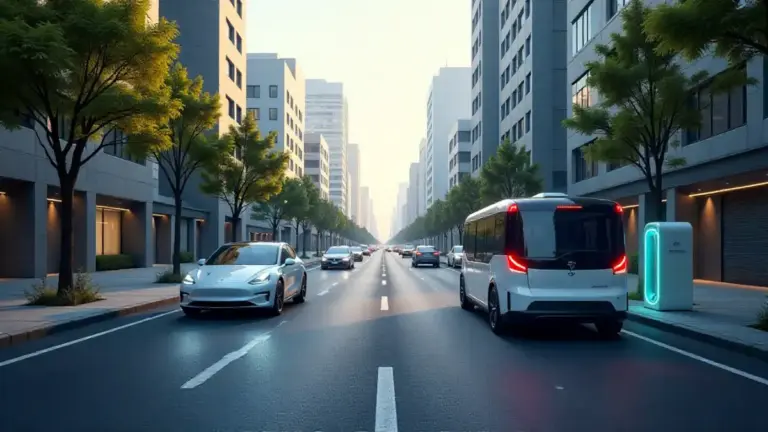
You’re standing at a crossroads in transportation history. Not literally—though if you’re in a modern city, you might actually be waiting at an intersection where an autonomous electric shuttle just glided past, while someone on an e-scooter zipped by in the bike lane. The way we move from place to place is transforming faster than most of us realize, and you’re not just watching it happen. Whether you know it or not, you’re helping shape it.
Here’s something that might surprise you: The conversations happening right now in online forums, community meetings, and dinner tables across the globe are having a real impact on how our electric future unfolds. The technology exists. The environmental imperative is clear. But the path forward? That’s being negotiated by millions of people like you, weighing convenience against sustainability, cost against conscience, and wondering what role they’ll play in this transportation revolution.
Let me take you on a journey through what’s actually happening in the world of electric mobility—not the glossy marketing version, but the messy, complicated, fascinating reality of 2025 and beyond.
The Autonomous Promise: Why Your Robotaxi Might Be Running Late
Remember when we were told that fully autonomous vehicles would be everywhere by 2020? Yeah, about that.
The technology has advanced remarkably—I won’t pretend otherwise. Companies like Waymo and Cruise have logged millions of autonomous miles in cities like San Francisco and Phoenix. Tesla’s Full Self-Driving (despite the aspirational name) continues to improve with each update. But here’s what the headlines often miss: the gap between “technically possible” and “practically deployable everywhere” is enormous.
Think about it this way. Teaching a car to navigate a sunny day in gridded Phoenix is like teaching someone to swim in a calm pool. Teaching that same car to handle a snowy Boston winter, with faded lane markings, aggressive drivers, and a jaywalking college student texting while wearing noise-canceling headphones? That’s like asking them to swim across the English Channel in a storm.
The real barriers aren’t just technological—they’re regulatory, ethical, and deeply human. Who’s liable when an autonomous EV makes a split-second decision that results in an accident? How do we program these vehicles to handle the infamous “trolley problem” in real-world scenarios? And perhaps most importantly: do we actually trust them?
According to recent community discussions and surveys throughout 2024 and 2025, public trust in autonomous vehicles remains surprisingly low. Even among EV enthusiasts, there’s hesitation. One forum member put it perfectly: “I love my electric car and I’m excited about the technology, but I’m not ready to let it drive my kids to school without me.”
Here’s what’s actually happening instead of the full autonomy revolution: We’re getting really good at Level 2 and Level 3 assistance. Your electric vehicle might handle highway driving, parking, and stop-and-go traffic better than you do. But you’re still in the driver’s seat, legally and literally. And for the next several years, that’s probably where you’ll stay.
Smart Cities: The Infrastructure Nobody Talks About
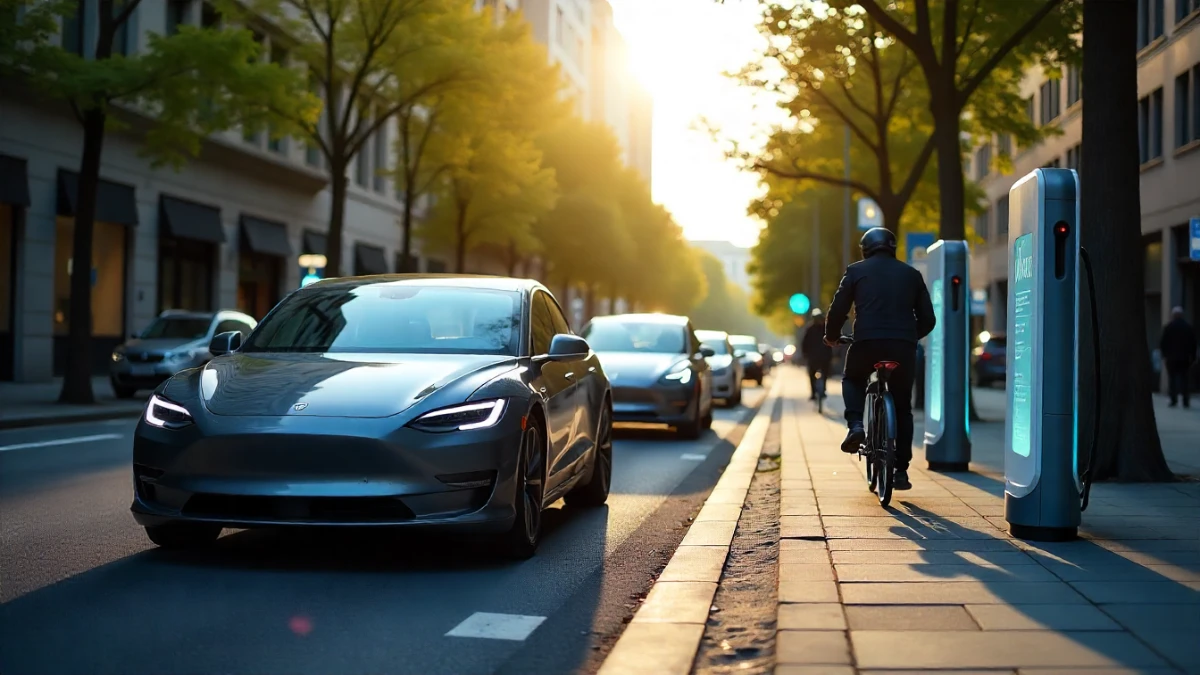
Let’s talk about something less sexy than flying autonomous pods but infinitely more important: charging infrastructure and urban planning.
You’ve probably heard that “range anxiety” is the biggest barrier to EV adoption. But you know what I hear more often from actual EV owners? “Charging anxiety.” Not whether their car can go far enough, but whether they can conveniently charge it when they get there.
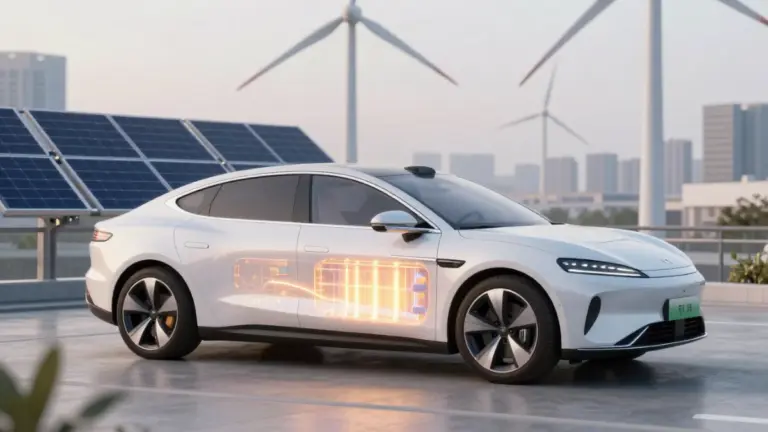
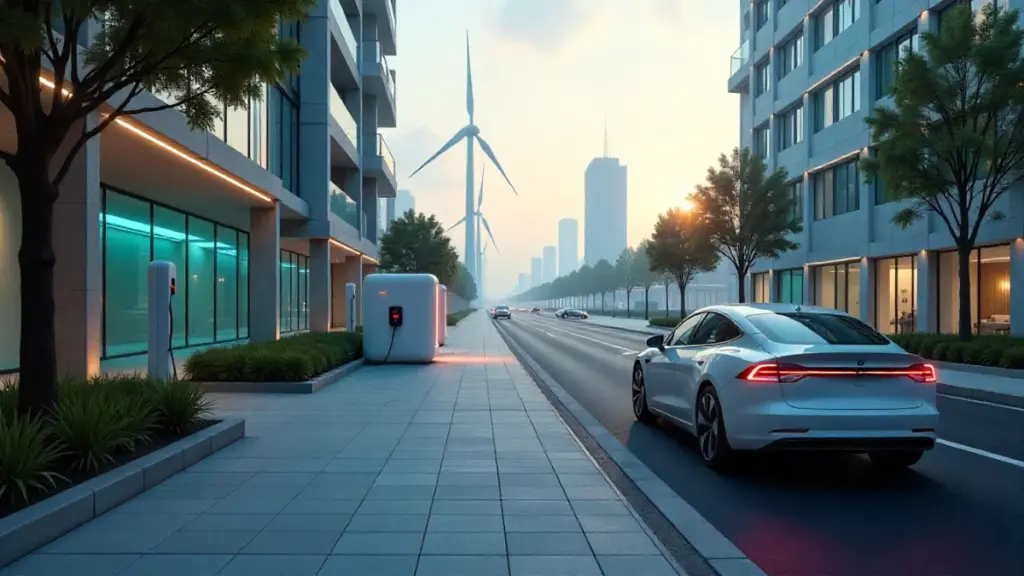
The smart city vision promises seamlessly integrated charging networks, where your car communicates with the grid to charge during off-peak hours, where parking spaces double as charging stations, and where renewable energy powers your commute. Some cities are getting there. Oslo, Norway has transformed its urban landscape with extensive charging infrastructure and incentives that made EVs the default choice rather than the alternative.
But most cities? They’re struggling with the basics.
Installing Level 2 chargers in older apartment buildings requires expensive electrical upgrades. Utility companies are scrambling to handle increased demand on already-stressed grids. And let’s not even start on the patchwork of charging networks, each requiring different apps, memberships, and payment systems. It’s like if every gas station required a different credit card.
Here’s where you come in: The cities making the most progress aren’t waiting for top-down mandates. They’re responding to community pressure. Residents demanding charging access in public parking. Apartment dwellers forming cooperatives to share installation costs. Local businesses seeing opportunity in providing charging services.
One particularly inspiring example comes from a neighborhood association in Portland that worked with their city council to convert street parking spaces to EV charging stations, funded partially through a combination of municipal grants and local business sponsorships. Within two years, EV adoption in that neighborhood tripled.
Your voice matters here. Whether you drive an EV yet or not, you can advocate for better infrastructure in your community. Because here’s the truth: The technology is ready. The cars are ready. We’re waiting on the infrastructure—and the infrastructure is waiting on political will, which comes from you.
Micromobility: The Tiny Revolution You’re Already Part Of
Now, let’s zoom out for a moment. When we talk about electric transportation, we often default to cars. But some of the most significant changes are happening at a completely different scale.
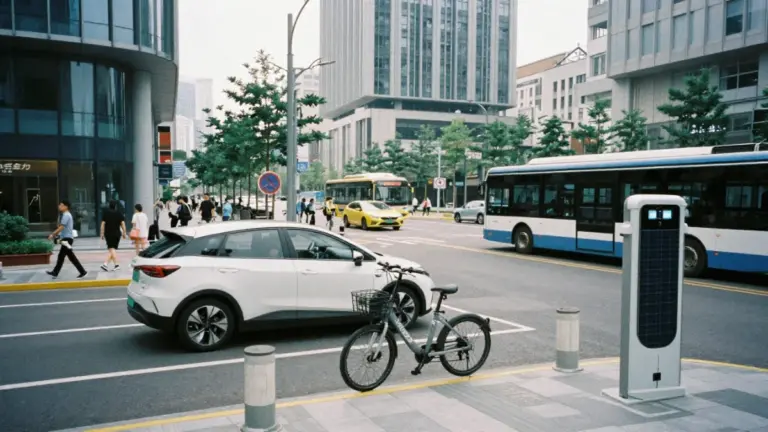
E-bikes, e-scooters, electric skateboards, and other micromobility options are quietly revolutionizing urban transportation. In many cities, these aren’t recreational toys—they’re legitimate commuting options that are faster, cheaper, and often more practical than cars for short trips.
Consider this: According to recent urban mobility studies, roughly 50% of car trips in cities are under three miles. That’s easily e-bike territory. Yet we’ve built our entire urban infrastructure around cars, creating a self-fulfilling prophecy where you need a car because everything is designed for cars.
The environmental impact is staggering. An e-bike uses about 1% of the energy of an electric car per mile traveled. Manufacturing one produces a fraction of the carbon emissions. And the space efficiency? You can park ten e-bikes in one car parking space.
But here’s where it gets interesting: Micromobility isn’t replacing cars for everyone—it’s changing the equation about whether you need a car at all. Young professionals in cities are increasingly doing the math and realizing they can get around with a combination of e-bikes, public transit, and occasional rideshares for less than the cost of car ownership.
The resistance to micromobility is real, though. Scooter programs have faced backlash in cities where they were deployed too quickly without proper infrastructure. Bike lanes remain politically contentious in many areas. Safety concerns—some legitimate, some overblown—persist.
Yet the trend is undeniable. Cities that have invested in protected bike lanes and integrated micromobility into their transit planning are seeing remarkable results. Paris transformed itself by adding hundreds of miles of bike lanes during the pandemic. Ridership exploded, and it didn’t come back down when restrictions lifted.
The Environmental Reality Check: Are We Really Going Green?
Here’s where I need to get real with you about something that often gets glossed over in EV enthusiasm: Electric vehicles are better for the environment than gas cars, but they’re not environmental silver bullets.
The manufacturing process for EVs, particularly the battery production, has a significant carbon footprint. Mining lithium, cobalt, and rare earth minerals raises environmental and ethical concerns. The electricity charging your EV might come from coal plants. And the massive lithium-ion batteries eventually become electronic waste that we haven’t fully figured out how to handle sustainably.
Does this mean EVs are a wash? Absolutely not. Even when you account for manufacturing and electricity sources, EVs have a substantially lower lifetime carbon footprint than comparable gas vehicles—typically 50-70% lower in regions with cleaner electrical grids. As renewable energy deployment accelerates (and it is accelerating), this advantage grows.
But the honest conversation needs to include what’s next: battery recycling and second-life applications. The good news is that this technology is advancing rapidly. Companies are developing processes to recover over 95% of battery materials for reuse. Old EV batteries that no longer meet the performance standards for vehicles are being repurposed for stationary energy storage, giving them years of additional useful life.
The better news? You can influence this. Buying from manufacturers committed to sustainable practices matters. Supporting right-to-repair legislation helps extend vehicle lifespans. Choosing vehicles with longer-range batteries (which typically last longer) reduces replacement frequency.
And here’s something crucial that doesn’t get enough attention: The biggest environmental impact you can make isn’t necessarily buying an EV—it’s driving less. Combining EV ownership with reduced overall mileage, supplemented by walking, biking, and public transit, multiplies the environmental benefits exponentially.
Your Choices Shape the Industry
Let me share something I’ve observed watching the EV market evolve over the past decade: Manufacturers follow consumer demand more than you might think.
When early Tesla adopters proved there was a market for high-performance electric vehicles, legacy automakers took notice. When Chinese consumers embraced smaller, affordable EVs in massive numbers, it influenced global product strategies. When European buyers showed willingness to pay premiums for sustainability features, manufacturers invested more heavily in circular economy initiatives.
Every purchase is a vote for the kind of future you want. But it’s not just about buying—it’s about the entire ecosystem of choices you make:
Charging behavior matters. Charging during off-peak hours reduces grid strain and often costs less. Many EVs and charging apps make this automatic, but you have to enable it.
Maintenance decisions matter. Choosing independent shops over dealerships increases competition and reduces costs. Supporting right-to-repair initiatives protects your ability to maintain your vehicle affordably.
Advocacy matters. Attending city council meetings about transportation policy. Voting for candidates who prioritize sustainable transit. Joining online communities that share knowledge and put pressure on manufacturers to improve.
Lifestyle integration matters. An EV that replaces a gas car you drove 20,000 miles annually has environmental benefits. An EV that replaces one car in a two-car household while you shift many trips to biking or transit? That’s transformative.
The 2025-2030 Trajectory: What’s Actually Coming
Let me cut through the hype and give you realistic expectations for the next five years.
Battery technology will improve incrementally, not dramatically. Expect ranges to creep up to 350-400 miles as standard on mid-range vehicles, with charging times dropping to 15-20 minutes for 80% charges. Solid-state batteries remain perpetually “five years away,” but lithium-iron-phosphate batteries are becoming mainstream for their durability and lower cost.
Pricing will reach parity with gas vehicles by 2027-2028 for most segments, even without incentives. This is the tipping point that will accelerate adoption dramatically.
Infrastructure will be the make-or-break factor. The US aims to install 500,000 public chargers by 2030. Whether that happens depends largely on coordination between federal funding, state implementation, and private investment—and whether communities demand it loudly enough.
Autonomous features will continue improving gradually. By 2030, expect most new EVs to handle highway driving and parking autonomously, with increasing capability in urban environments. Full autonomy without driver oversight? Still limited to specific areas and conditions.
Used EV market will finally mature, making electric vehicles accessible to middle and lower-income buyers. This is huge—it’s where mass adoption actually happens.
Finding Your Place in the Electric Future
So where does this leave you?
Maybe you’re ready to buy an EV tomorrow. Maybe you’re waiting for prices to drop or infrastructure to improve. Maybe you’re in a situation where car ownership of any kind doesn’t make sense, and you’re exploring e-bikes or scooter-sharing.
Here’s what I want you to understand: There’s no one-size-fits-all answer, and the perfect is the enemy of the good. An EV makes sense for some people right now and will make sense for many more in a few years. Micromobility is revolutionary for urban dwellers but impractical in rural areas. The key is finding what works for your situation while staying aware of how your choices ripple outward.
The electric transportation future isn’t something being done to you—it’s something being negotiated by millions of people making daily decisions about how they move through the world. Companies respond to markets. Governments respond to voters. Infrastructure follows demand.
Your role isn’t to be a perfect environmental citizen or an early adopter of every new technology. It’s to stay informed, make thoughtful choices within your constraints, and—when possible—advocate for the systemic changes that make sustainable transportation accessible to everyone.
The crossroads I mentioned at the beginning? You’re standing there right now, along with the rest of us. The direction we go isn’t predetermined. It’s being decided by conversations, purchases, policies, and priorities shaped by people who care enough to pay attention.
The EV future is coming. But what kind of EV future? That’s still up for grabs—and you’ve got a say in how it turns out.
Ready to take your next step? Start by researching EVs and charging infrastructure in your area. Join online communities to learn from current owners. Test drive a few models to see how they fit your lifestyle. And most importantly, think beyond just the vehicle—consider how electric transportation fits into a broader shift toward sustainable, efficient mobility that works for everyone.
The future of transportation is electric, connected, and—if we do this right—more sustainable and accessible than ever before. Let’s build it together.