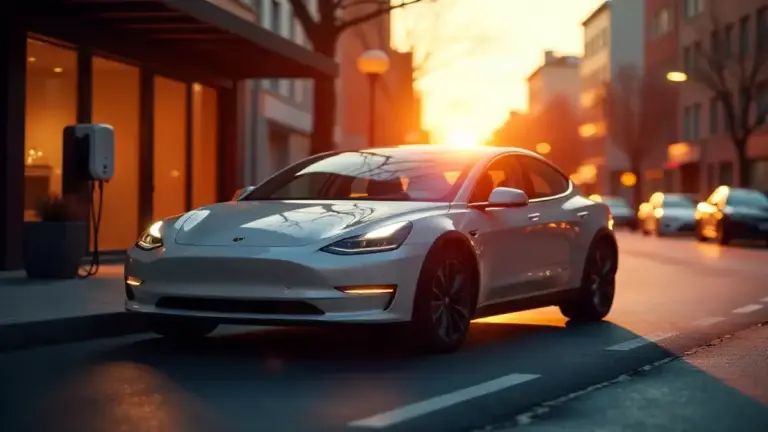
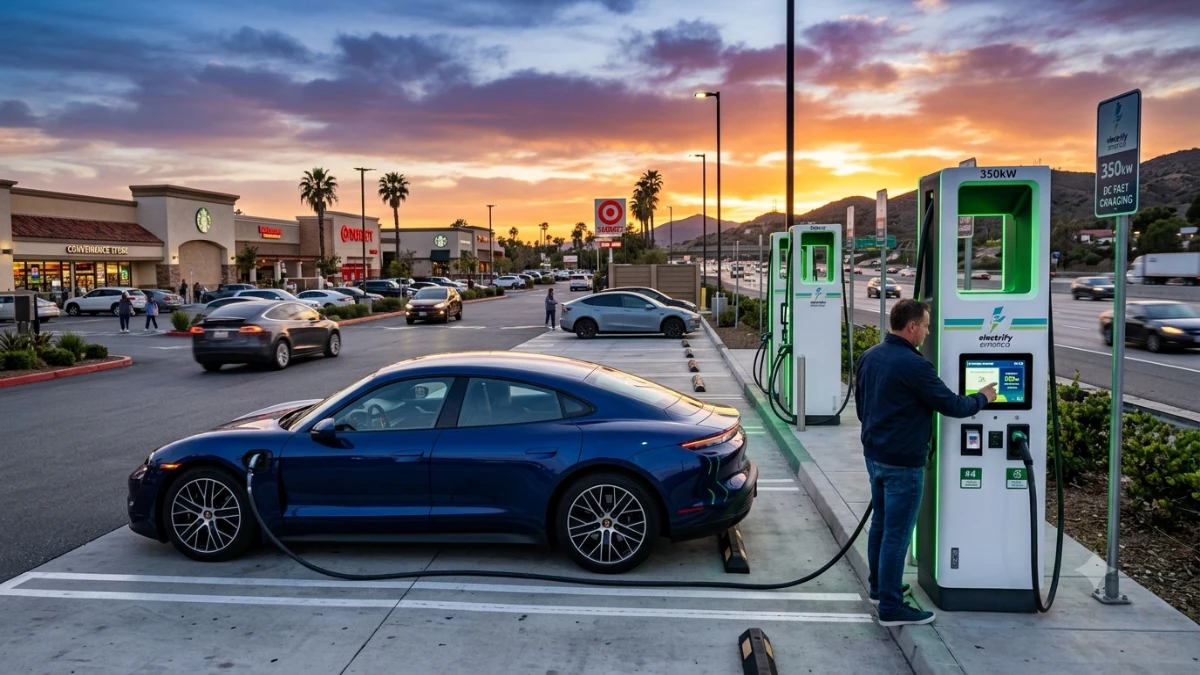
Electrify America remains one of the largest DC fast-charging networks in the U.S., offering high-speed charging, growing NACS support, and extensive coverage along highways and major metro areas. Drivers can easily find nearby stations using the Electrify America app, PlugShare, or in-car navigation. While pricing and availability vary by location, planning ahead, checking real-time charger status, and keeping a backup station in mind can make EV road trips much smoother.
Did you just type “Electrify America near me” into your phone? Maybe you’re standing next to your EV, wondering where the nearest fast charger is. Or maybe you’re planning a road trip and want to know what to expect. Either way, I’ve got you covered.
I’ve spent years covering the EV charging world. Electrify America is one of the networks I get asked about most. It’s the second-largest DC fast-charging network in the country. But it’s also one of the more misunderstood networks out there. People aren’t always sure how to find stations, what they’ll pay, or whether the chargers will actually work when they get there.
Here’s what you need to know. I’ll cover how to locate stations near you, what the network looks like in 2026, what it costs, and how to make your charging stop as painless as possible.
What Is Electrify America, and Why Does It Matter?
Volkswagen created Electrify America as part of its settlement over the 2015 diesel emissions scandal. Since then, it’s grown into a major piece of the national charging puzzle. Today the network runs roughly 1,000 to 1,200 stations across the US. It also operates around 4,500 to 5,700 individual charging stalls, depending on how you count.
That makes it a mid-sized player next to Tesla’s Supercharger network. But it punches above its weight in one important way. The network was built specifically for high-power DC fast charging, with speeds up to 350 kW at many locations. That’s fast enough to add well over 100 miles of range while you grab a coffee. Of course, your car needs to actually accept that rate first.
Quick answer: Use the free Electrify America app (iOS and Android) to find the fastest station near you. It shows real-time stall availability. You can also check their website locator at electrifyamerica.com/locations. PlugShare works well as a second option too. It includes crowdsourced reviews from drivers who charged there recently.
How to Actually Find a Station Near You
You have more than one way to hunt down a charger. Each option brings its own strengths.
Start with the Electrify America app. It shows:
- Live stall status (in use, available, or out of service)
- Pricing at that specific location
- Connector types available (CCS, CHAdeMO, and increasingly NACS)
- Nearby amenities, since many stations sit at Walmart, Target, or shopping center parking lots
Check your car’s built-in navigation too. Many systems integrate charging stops automatically. EVs from Ford, Hyundai, Kia, and several other brands now bake charging network partnerships directly into route planning.
Cross-check with PlugShare. Real driver check-ins flag problems fast. A stall might show “available” in the official app, but drivers on PlugShare might report it’s been broken for two weeks. That kind of detail saves you a wasted trip.
Glance at Google Maps or Apple Maps. Both now show charging stations directly in search results. It’s a handy option for a quick check while you’re already driving.
Here’s my honest advice: cross-reference at least two sources before you commit to a station on a long trip. Uptime numbers look great on paper. But individual stalls do go down, and you don’t want to discover that with 8% battery left.
Where Coverage Is Strongest (and Where It Isn’t)
Electrify America’s map skews toward highway corridors and dense metro areas. That makes sense, since the network started as a highway-charging solution. Coverage is genuinely strong along major interstates. States like California, New York, Florida, Texas, and Colorado host some of the highest station counts in the network.
That said, coverage thins out fast once you leave population centers or interstate corridors. Rural stretches of the Mountain West have sparse coverage — think Montana and Wyoming. If you’re road-tripping through less-traveled regions, build in a backup plan. Don’t assume a station will be waiting exactly when you need one.
A few things worth knowing about coverage:
- Stations typically cluster in groups of 4 to 8 stalls per location
- Urban and retail-lot stations tend to see heavier use and more wear than highway-corridor sites
- Newer stations increasingly offer both CCS and NACS connectors, as the industry shifts toward Tesla’s charging standard
The NACS Shift: What’s Changing Right Now
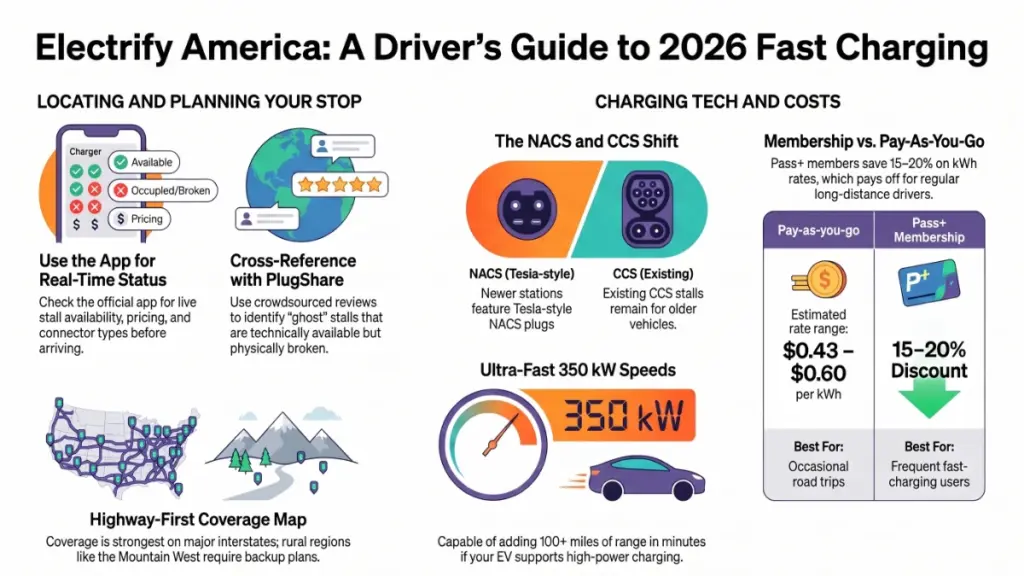
You’ve probably heard about the industry-wide move to NACS (North American Charging Standard) if you follow EV news. Tesla originally created this plug type. Most major automakers have now adopted it too.
Electrify America has started rolling out NACS connectors at select high-traffic sites. This pilot program converts some existing CCS stalls while keeping others reserved for CCS-equipped vehicles. As of mid-2026, the pilot has expanded to more large-format charging hubs in California and along the East Coast, building on earlier pilot sites in Connecticut and Florida.
Here’s what this means in practice:
- Newer EVs with native NACS ports now have a growing number of Electrify America stations they can plug into directly, no adapter needed
- Older CCS vehicles aren’t getting left behind — most conversions keep some CCS stalls in place rather than replacing them entirely
- The rollout stays selective for now, not universal. Check the app before you go, since not every station has an NACS option yet
What Does It Actually Cost?
Pricing confuses a lot of EV drivers, and Electrify America is no exception. Rates vary by state and even by specific station.
Here’s a rough guide for 2026:
| Plan | Approximate Rate | Notes |
|---|---|---|
| Pay-as-you-go (no membership) | ~$0.43–$0.60/kWh | Varies by state and station |
| Pass+ membership | Lower per-kWh rate (roughly 15–20% off) | Small monthly fee, often a few dollars |
Keep these cost factors in mind too:
- Some locations charge by the minute instead of by the kWh, depending on state regulations
- Idle fees can kick in if you leave your car plugged in after it finishes charging — don’t treat the stall as a parking spot
- Membership pays for itself quickly if you charge on the network regularly, but skip it for occasional road-trip use
Tips for a Smoother Charging Stop
I’ve tracked this space for years and talked to plenty of EV owners along the way. Here’s the practical advice that actually helps:
- Check real-time stall status before you drive there. A station might show “available” ten minutes ago, but it could fill up by the time you arrive at a busy retail location.
- Keep a backup station in mind, especially on road trips through less-dense areas.
- Know your car’s actual charging limit. A station rated at 350 kW won’t help much if your EV only accepts 100–150 kW. Compare your vehicle’s specs against the charger’s max rate, not just the highest number on the sign.
- Set up your app account and payment method ahead of time. Don’t wait until you’re standing at the charger — it saves real time.
- Plan around amenities. Many stations sit at shopping centers, so you can knock out an errand or grab food while your car charges instead of standing around watching a percentage tick up.
How It Stacks Up
Electrify America generally matches EVgo on raw charging speed. It can even outpace Tesla’s older Supercharger hardware on paper. But real-world speed always comes down to what your specific vehicle can accept. It isn’t the plug-and-forget experience Tesla owners enjoy with the Supercharger network. Still, if you want a broad, CCS-focused fast-charging option with a growing NACS footprint, this network remains one of the most useful on the road today.
The Bottom Line
Finding an Electrify America station near you gets easy once you know where to look. Start with the official app — it’s your fastest, most reliable tool. Use PlugShare as a helpful second opinion. Coverage stays strong along highways and in major metro areas, though it thins out in rural stretches. And it keeps evolving fast, as NACS connectors roll out at more locations.
My advice: download the app before your next trip. Check real-time availability instead of trusting a static map. And always keep a backup charging option in your back pocket for longer drives. The charging infrastructure keeps improving month over month. It’s just not quite “set it and forget it” yet.
Have you had a good or bad experience charging on Electrify America? The more real driver feedback circulates, the better this whole ecosystem gets for everyone plugging in.