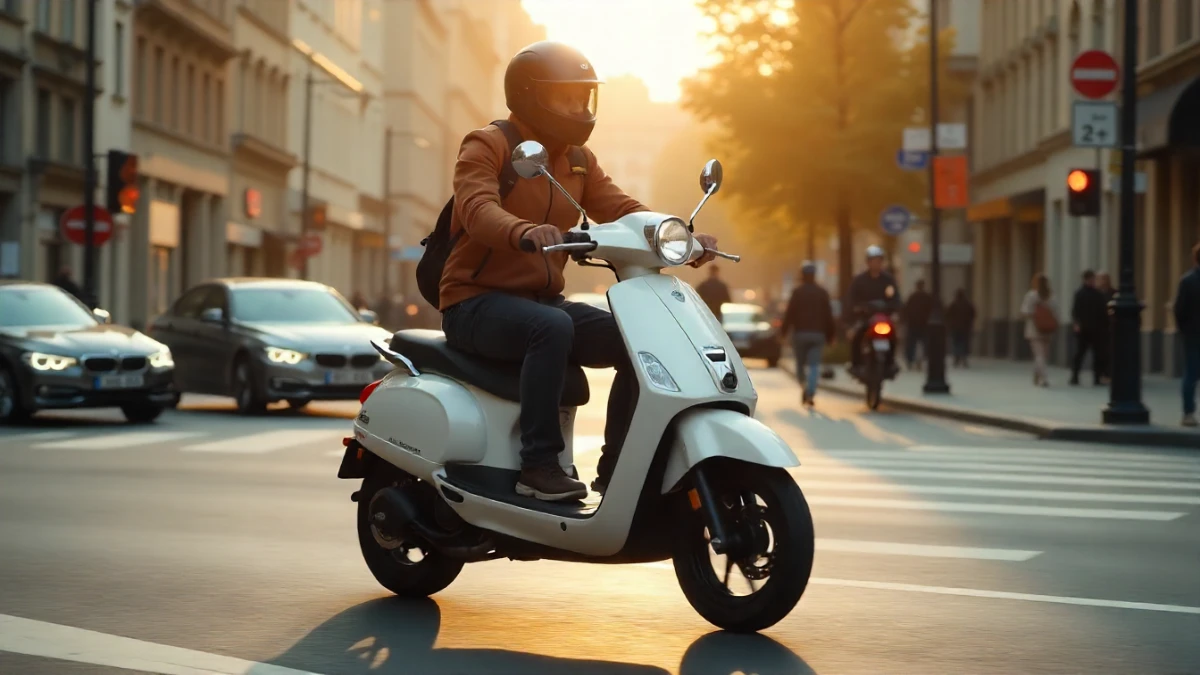
You know that feeling when you’re stuck in traffic, watching the minutes tick by, knowing you’re going to be late again? Or maybe you’ve experienced the frustration of circling the block for twenty minutes looking for parking, only to end up three blocks away from your destination. I’ve been there, and I’m betting you have too.
Here’s the thing: there’s a quiet revolution happening on city streets around the world, and it’s changing how we think about getting from point A to point B. Electric scooters have evolved from trendy toys into serious commuting tools, and they’re solving real problems for millions of urban dwellers. But with hundreds of models flooding the market, how do you choose the right one?
I’ve spent years testing electric vehicles of all kinds, and I can tell you that finding the perfect electric scooter for your commute isn’t about picking the flashiest model or the one with the most Instagram appeal. It’s about matching your specific needs with the right combination of range, portability, safety features, and yes, price. Whether you’re dodging subway delays, avoiding parking nightmares, or just trying to add some joy to your daily grind, there’s likely a scooter that fits your life perfectly.
In this guide, I’ll walk you through everything you need to know to make a smart choice. We’ll look at what makes a great commuter scooter, explore the top models that actually deliver on their promises, and help you avoid the common pitfalls that catch first-time buyers off guard.
What Makes a Great Commuter Electric Scooter?
Before we dive into specific models, let’s talk about what actually matters when you’re using a scooter day in and day out for commuting. Trust me, the features that look cool in a showroom aren’t always the ones you’ll care about on a rainy Tuesday morning.
Range That Matches Your Reality
Here’s a mistake I see constantly: people calculate their commute distance, buy a scooter with exactly that range, and then wonder why they’re walking the last mile home. Real-world range is almost always less than advertised, especially if you’re riding uphill, carrying a backpack, or facing headwinds.
A good rule of thumb? If your round-trip commute is 10 miles, you want a scooter rated for at least 15-20 miles. This gives you breathing room for detours, running errands, and the inevitable range degradation that happens as the battery ages. Most quality commuter scooters today offer between 15-40 miles of range, which covers the vast majority of urban commutes comfortably.
Portability vs. Performance: The Eternal Trade-off
This is where you need to be honest with yourself about your actual usage. Do you need to carry your scooter up three flights of stairs every day? Or will it stay parked in your office? The difference matters enormously.
Lightweight, portable scooters typically weigh 25-30 pounds and fold in seconds. They’re perfect if you’re combining scooter riding with public transit or need to store it in tight spaces. But here’s the catch: lighter usually means smaller battery, shorter range, and less powerful motors. The sweet spot for most commuters is around 30-35 pounds—portable enough to manage when needed, but substantial enough for a comfortable, stable ride.
Weather Resistance: Because Rain Happens
I learned this lesson the hard way on a soggy morning in Brooklyn. Unless you live in perpetual sunshine, you need at least an IP54 rating, which means your scooter can handle splashes and light rain. Many quality commuter models now offer IP55 or even IP65 ratings, giving you peace of mind when those unexpected showers roll in.
Just remember: water-resistant doesn’t mean waterproof. You shouldn’t be power-washing your scooter or riding through flooded streets, but you should be able to handle typical urban weather without anxiety.
Safety Features That Actually Matter
Bright LED lights aren’t optional—they’re essential. You need a powerful front headlight (not just a decorative LED strip) and a visible rear brake light. Reflectors are nice, but active lighting is what keeps you visible in low-light conditions.
Braking systems vary widely. The best commuter scooters use dual braking systems combining electronic and mechanical brakes (like disc brakes). This redundancy matters more than you might think. I’ve tested scooters where the electronic brake failed, and having that backup mechanical brake saved me from a nasty spill.
Top Electric Scooters for Daily Commuters
Now let’s get to what you’re really here for: which scooters actually deliver for real-world commuting? I’ve tested dozens of models, talked to countless daily riders, and these are the ones that consistently rise to the top.
Segway Ninebot Max G30LP: The Reliable Workhorse
If electric scooters had a Honda Civic equivalent, this would be it. The Ninebot Max G30LP isn’t the flashiest option out there, but it’s the one I recommend most often to first-time commuters, and here’s why.
With a real-world range of about 25 miles and a top speed of 18.6 mph, it hits that perfect middle ground for most urban commutes. The 350W motor handles moderate hills without drama, and the 10-inch pneumatic tires provide a surprisingly smooth ride over typical city surfaces. I’ve watched this thing roll over potholes that would send lighter scooters airborne.
What really sets it apart is the build quality. This scooter feels solid in a way many competitors don’t. The frame doesn’t flex or creak, the folding mechanism stays tight after months of use, and the IP55 rating means you can ride through rain without worry. At around 41 pounds, it’s not ultralight, but it’s manageable for most people, and that weight contributes to its stability.
The regenerative braking works beautifully—it actually adds noticeable charge back to the battery on descents, and combined with the rear drum brake, stopping power is confident and progressive. Plus, the battery placement (integrated into the deck) gives the scooter a low center of gravity that makes it feel stable even at top speed.
Who it’s for: Commuters with 5-15 mile round trips who prioritize reliability and comfort over portability. If you’re looking for one scooter to do everything reasonably well, this is your answer.
Xiaomi Mi Electric Scooter Pro 2: Smart Value
Want to know a secret? Some of the best value in electric scooters comes from a smartphone company. The Xiaomi Pro 2 punches way above its price point, offering features you’d expect on scooters costing hundreds more.
The 300W motor might not sound impressive on paper, but Xiaomi’s tuning makes it feel punchier than the numbers suggest. You’ll get about 18-22 miles of real-world range, and the 15.5 mph top speed is perfect for bike lanes and shared paths. The integration with Xiaomi’s app is genuinely useful—you can monitor battery health, adjust speed modes, and even lock the scooter remotely.
At 31 pounds, this is noticeably lighter than the Ninebot Max, making it a better choice if you’re climbing stairs or storing it in tight spaces. The 8.5-inch pneumatic tires are smaller than I’d prefer for rough roads, but they’re adequate for well-maintained bike paths and sidewalks.
One thing to note: the IP54 rating means you should be more careful about wet conditions than with higher-rated models. Light rain? Fine. Heavy downpour? Maybe wait it out or take the bus.
Who it’s for: Budget-conscious commuters with shorter distances (under 10 miles round trip) who want smartphone integration and don’t mind sacrificing some range for lower weight.
Apollo City: The Enthusiast’s Choice
If you’re serious about scooter commuting and willing to invest more for significantly better performance, the Apollo City deserves your attention. This is where you start seeing premium features that make daily riding genuinely enjoyable rather than just practical.
The 500W sustained motor (with 900W peak) transforms your experience on hills and accelerations. Where budget scooters struggle up inclines, the Apollo City climbs confidently. The 28-mile real-world range means you’re never worried about making it home, even with detours.
But here’s what really impressed me: the suspension. Front and rear springs absorb road imperfections that would rattle your teeth on unsuspended scooters. If your commute involves cracked pavement, cobblestones, or poorly maintained streets, this feature alone justifies the higher price. Your back will thank you after six months of daily rides.
The build quality feels like a different category entirely. The machined aluminum construction is beautiful, yes, but more importantly, it’s robust. The folding mechanism uses a secure lever system that inspires confidence, and the deck is wide enough for a comfortable stance even at higher speeds.
At 52 pounds, this isn’t a scooter you’ll want to carry far, but the performance and comfort make it ideal for longer commutes where you’re primarily riding rather than carrying.
Who it’s for: Serious commuters with 10-20 mile round trips who want comfort, performance, and quality. Best if you have secure parking and don’t need to carry it frequently.
Unagi Model One E500: Style Meets Substance
Sometimes you want your commuter to look as good as it rides, and the Unagi Model One delivers on both fronts. This is the scooter that gets compliments, but beneath the sleek design is a genuinely capable commuter.
The dual 250W motors (one front, one rear) provide smooth acceleration and all-wheel-drive traction that’s surprisingly confidence-inspiring in light rain or on slick surfaces. The 15-mile range is modest, making this better suited for shorter commutes, but the 15.5 mph top speed and lightweight 26-pound frame make it incredibly easy to live with.
What really sets the Unagi apart is the one-click folding mechanism. I’ve tested dozens of folding systems, and this is among the quickest and most reliable. It’s genuinely one-handed operation, which matters when you’re juggling a coffee and trying to board a train.
The hard rubber tires eliminate maintenance but sacrifice some comfort on rough surfaces. If your commute is primarily on smooth pavement, you won’t miss the air-filled tires. If you’re dealing with potholed streets, you might feel every bump.
Who it’s for: Urban commuters with shorter distances (5-10 miles round trip) who frequently combine scooter riding with public transit and value aesthetics alongside function.
TurboAnt X7 Pro: The Budget Champion
Not everyone can or should spend $1,000+ on a commuter scooter, and that’s where the TurboAnt X7 Pro shines. This is proof that you don’t need to empty your wallet to get reliable electric transportation.
The 350W motor and 30-mile range (expect 20-25 miles in real-world use) are legitimately impressive at this price point. You’re getting performance comparable to scooters costing twice as much. The 20 mph top speed makes it one of the faster options in this roundup, though you’ll want to be cautious about using that speed on crowded paths.
The build quality can’t match premium models—you’ll notice more plastic components and less refined details—but the fundamentals are solid. The dual brake system works well, the LED lights are bright enough for safety, and the folding mechanism, while not as smooth as pricier models, gets the job done.
At 33 pounds, it’s portable enough for most situations, and the 10-inch pneumatic tires handle typical city surfaces reasonably well. The IP54 rating means you can handle light rain, but I’d still try to avoid heavy weather.
Who it’s for: First-time electric scooter buyers or budget-conscious commuters who want solid performance without premium pricing. Perfect if you’re testing whether scooter commuting works for your lifestyle before investing more.
Essential Accessories for Scooter Commuters
You’ve picked your scooter—great! But your setup isn’t complete yet. These accessories transform a good commuting experience into a great one.
A Quality Helmet Is Non-Negotiable
I don’t care how short your commute is or how safe you think your route is—wear a helmet. Every. Single. Time. Look for bike helmets certified to CPSC standards at minimum. I prefer models with MIPS (Multi-directional Impact Protection System) technology for added protection against rotational forces.
For commuting, consider helmets with integrated lights or reflective elements. Some newer models even include turn signals, which might seem gimmicky but genuinely improve visibility to drivers.
The Right Lock Matters More Than You Think
Here’s an uncomfortable truth: scooter theft is common, especially in urban areas. Budget at least $50-80 for a quality U-lock or heavy-duty cable lock. The cheap cable locks sold at big-box stores can be cut in seconds with bolt cutters.
I use a two-lock system: a U-lock through the frame and a cable lock through the wheels. It’s not theft-proof, but it makes your scooter a harder target than the one next to it, and thieves usually move on to easier opportunities.
Weather Protection for You and Your Scooter
A waterproof backpack or pannier keeps your work stuff dry when weather turns. I learned this lesson after arriving at an important meeting with a laptop that had taken an unexpected shower.
For the scooter itself, a cover is worthwhile if you’re parking outside regularly. UV exposure degrades plastic and rubber components over time, and a simple cover adds years to your scooter’s life.
Making Your Choice: Key Questions to Ask Yourself
Still feeling overwhelmed? Let’s narrow it down with some practical questions:
How far is your actual commute? Be honest—measure it both ways, including any detours you regularly make. Choose a scooter with at least 1.5x your daily mileage in rated range.
What’s your storage situation? If you’re carrying it upstairs daily, weight matters more than peak performance. If you have secure parking, you can prioritize comfort and range over portability.
What’s your budget—really? Don’t just consider the scooter price. Factor in helmet, lock, possible accessories, and potential maintenance. A $400 scooter that needs $100 in upgrades isn’t necessarily cheaper than a $500 scooter that’s ready to ride.
What are your local laws? Some cities restrict scooter speeds, require specific equipment, or limit where you can ride. Check your local regulations before buying—there’s no point in a 20 mph scooter if your city limits them to 15 mph.
The Bottom Line: Your Next Steps
Electric scooters have matured from novelties into legitimate transportation tools. They’re not perfect for everyone—if your commute is 30 miles or involves highway speeds, you need something else. But for the millions of people with urban commutes under 15 miles, they offer a compelling combination of speed, convenience, and sustainability.
The “best” scooter isn’t the one with the highest specs or the coolest design—it’s the one that fits seamlessly into your daily routine. For most commuters, that means something in the middle range: reliable, reasonably priced, and easy to live with. The Segway Ninebot Max G30LP or TurboAnt X7 Pro will serve the majority of riders beautifully without breaking the bank.
If you’re ready to take the plunge, here’s what I’d recommend: start by mapping your actual commute distance, including any regular stops. Consider whether you’ll need to carry your scooter regularly. Set a realistic budget that includes safety gear. Then narrow your choices to two or three models that fit those parameters.
Many retailers offer test rides or generous return policies—take advantage of them. A scooter that looks perfect on paper might not feel right when you’re actually riding it, and there’s no substitute for real-world experience.
The daily grind doesn’t have to feel like such a grind. Sometimes all it takes is 26 pounds of aluminum, a charged battery, and the willingness to try something different. Your morning commute might just become the best part of your day.
Safe riding, and see you in the bike lane.