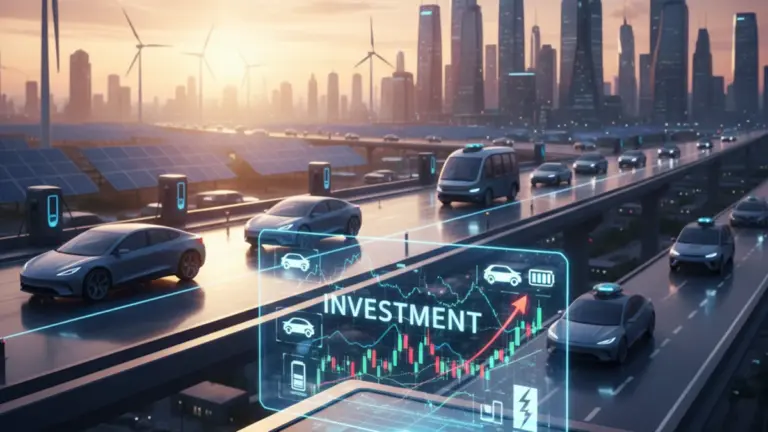
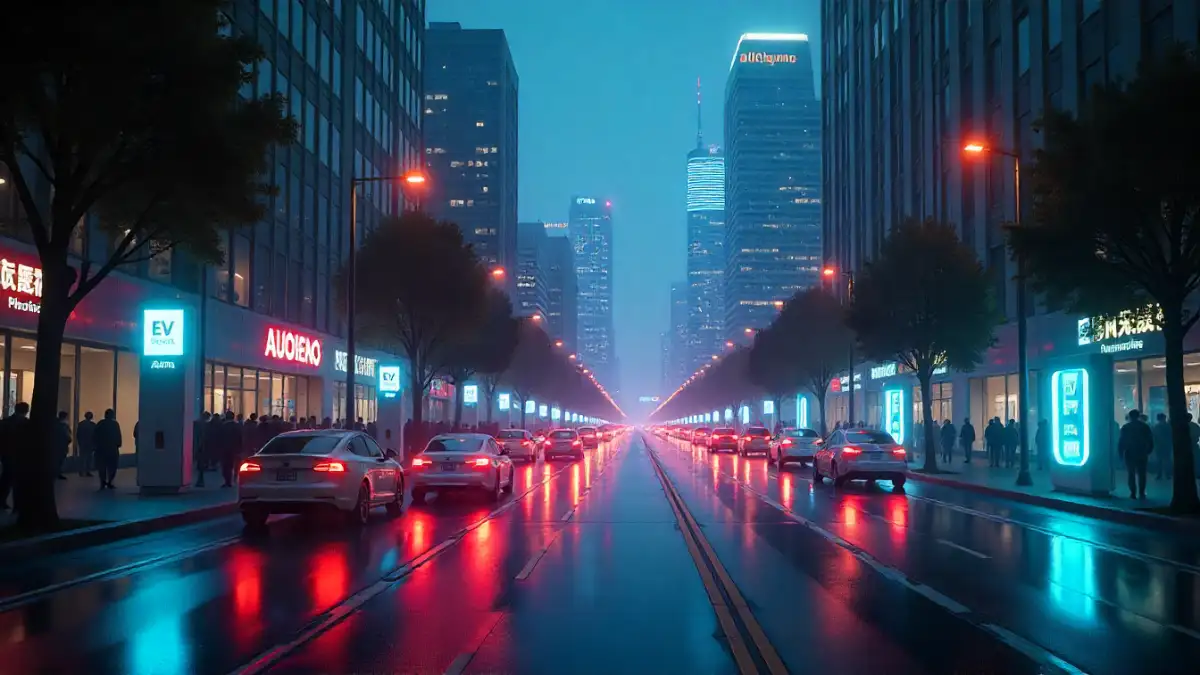
Remember when “smart city” sounded like something out of a sci-fi movie? Well, welcome to 2025, where your electric vehicle doesn’t just drive you around—it talks to charging stations, predicts traffic patterns, and even helps balance the power grid while you’re asleep. If you thought electric mobility was just about swapping gas for batteries, you’re in for a pleasant surprise.
The electric mobility landscape is evolving at breakneck speed, and this year is shaping up to be a game-changer. We’re not just seeing more EVs on the road (though there are plenty of those). We’re witnessing a fundamental transformation in how cities move, how energy flows, and how technology makes the entire experience seamless. Let’s dive into the trends that are literally reshaping the streets beneath our wheels.
AI-Powered Fleet Management: The Brain Behind the Wheels
Here’s something that might blow your mind: the largest electric vehicle fleets in 2025 aren’t being managed by humans anymore—at least not primarily. Artificial intelligence has taken the driver’s seat when it comes to logistics, and the results are remarkable.
Think about delivery companies, ride-sharing services, or municipal transit systems. They’re now using AI systems that can predict when a vehicle needs charging, optimize routes based on real-time traffic and weather conditions, and even schedule maintenance before problems occur. It’s like having a brilliant operations manager who never sleeps and processes millions of data points per second.
I recently spoke with a fleet manager in Los Angeles who told me their AI system reduced charging downtime by 34% in just six months. How? The system learned the patterns—which vehicles cover which routes, when they’re most likely to need a charge, and which charging stations will be available when they arrive. It’s predictive intelligence at its finest.
But here’s what really excites me about AI in fleet management: it’s democratizing efficiency. Small businesses can now access the same optimization tools that were once only available to massive corporations. A local plumber with three electric vans can use AI platforms to maximize their daily routes and minimize charging time, competing more effectively with larger companies.
The environmental impact is substantial too. When every vehicle in a fleet is operating at peak efficiency—taking the shortest routes, charging at optimal times, and avoiding unnecessary battery degradation—the cumulative effect is enormous. We’re talking about reducing urban emissions while simultaneously cutting operational costs. That’s the kind of win-win that makes the transition to electric mobility not just sustainable, but inevitable.
Smart Charging Networks: Your EV’s New Best Friend
Let’s talk about what used to be every EV driver’s nightmare: range anxiety. In 2025, smart charging networks are turning that fear into a distant memory, and they’re doing it in ways that benefit everyone—drivers, utilities, and the planet.
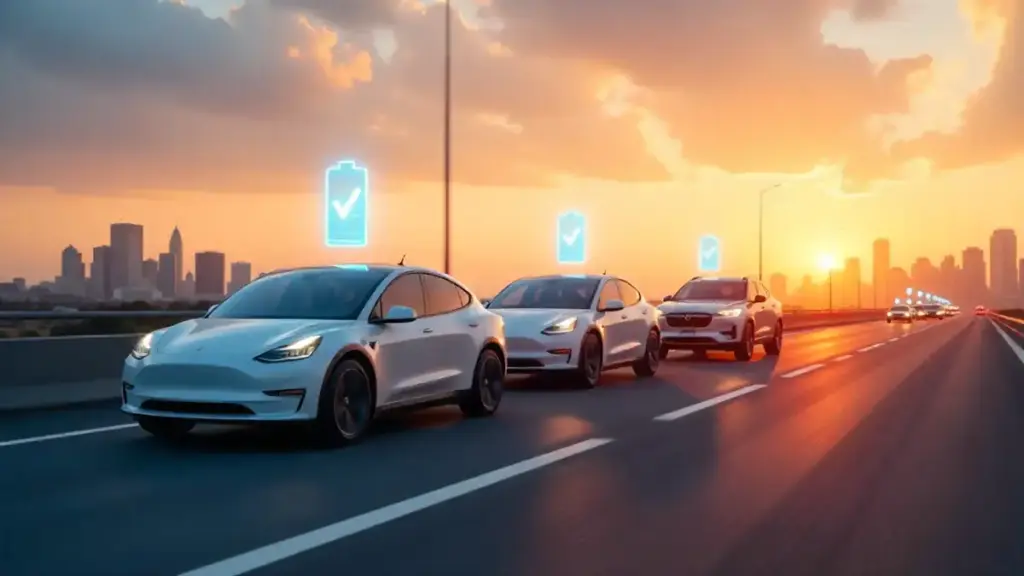
Picture this: you’re driving home from work, and your car is communicating with charging stations along your route. Not just checking availability—actually reserving a spot, negotiating charging rates based on grid demand, and even pre-conditioning the battery for optimal charging speed. By the time you pull up, everything’s ready. It takes about as much thought as your phone connecting to Wi-Fi.
The magic happens through something called Vehicle-to-Grid (V2G) integration, which sounds technical but is beautifully simple in practice. Your EV isn’t just a consumer of electricity anymore—it’s a mobile energy storage unit that can give power back to the grid when needed. During peak demand hours, your parked car might sell a bit of its stored energy back to the utility. During off-peak hours, it charges up at lower rates. You’re essentially running a tiny power arbitrage business while you sleep.
Cities like Amsterdam and Singapore have implemented citywide smart charging networks that prioritize renewable energy. When the wind is blowing and solar panels are soaking up sun, the system automatically increases charging rates to capture that clean energy. When the grid is straining, it scales back or even draws power from parked EVs to help stabilize things. It’s a choreographed dance of electrons, and your car is one of the dancers.
What does this mean for you practically? Lower charging costs, for starters. Smart charging networks can reduce your electricity bill by 30-40% compared to random charging. Plus, you’re supporting grid stability, which means fewer blackouts and more efficient use of renewable energy sources. And let’s be honest—there’s something satisfying about knowing your car is smart enough to handle its own energy needs without you lifting a finger.
Multimodal Integration: When Everything Works Together
This is where electric mobility gets really interesting. The future isn’t just about electric cars—it’s about seamlessly connecting every mode of transportation into one fluid system. Welcome to multimodal integration, where your journey from home to office might involve an e-scooter, an autonomous electric shuttle, and a subway train, all coordinated through a single app.
Cities across Europe and Asia are pioneering this approach. Imagine opening your transit app and seeing not just bus schedules, but real-time options that combine e-bikes, shared EVs, public transport, and even walking routes—all optimized for your preferences. Want the fastest route? Got it. Prefer the cheapest? Done. Need something with zero emissions and a bit of exercise? There’s an option for that too.
The technology enabling this is fascinating. It requires massive data sharing between different transportation providers, predictive algorithms that account for traffic patterns and user behavior, and payment systems that work across all platforms. In Stockholm, they’ve created what they call a “Mobility as a Service” (MaaS) platform where you pay one monthly subscription and get unlimited access to bikes, scooters, buses, trains, and shared electric cars. It’s like Netflix, but for transportation.
What I find most compelling about multimodal integration is how it’s changing urban planning. Cities are no longer just adding bike lanes or bus routes in isolation—they’re designing comprehensive mobility ecosystems. Charging stations are being placed at transit hubs. E-bike docking stations connect directly to subway exits. Parking garages are transforming into mobility hubs where you can switch between different transportation modes effortlessly.
For everyday people, this means real freedom. You don’t need to own a car to have mobility. You’re not locked into one mode of transport for your entire journey. And because everything’s electric and optimized, you’re reducing your carbon footprint without even trying. It’s sustainable transportation that doesn’t require sacrifice—it just works better.
Ultra-Fast Charging Technology: Minutes, Not Hours
Let’s address the elephant in the room: charging time. For years, critics have pointed to lengthy charging sessions as a deal-breaker for EVs. Well, 2025 is the year that argument finally loses its punch.
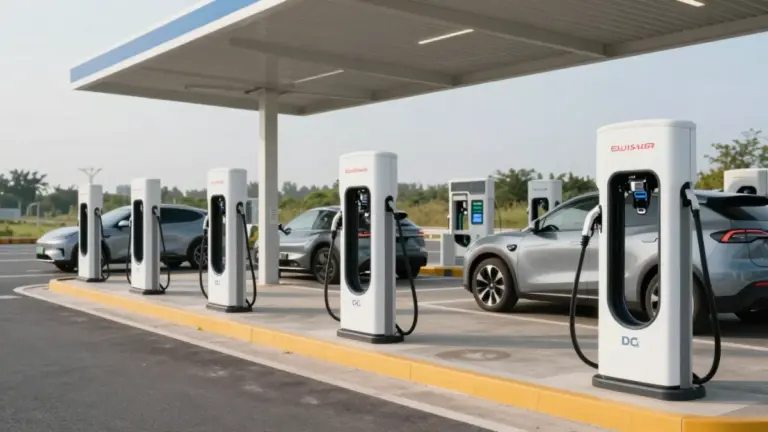
Ultra-fast charging technology has reached a tipping point. We’re now seeing commercial charging stations that can deliver 350 kW or more, adding 200 miles of range in less than 10 minutes. To put that in perspective, it’s roughly the time you’d spend in a gas station bathroom and grabbing a coffee. The “charging problem” is rapidly becoming no problem at all.
The technology behind this is elegant. New battery chemistry, improved thermal management systems, and higher voltage architectures (many new EVs run on 800-volt systems) combine to allow much faster energy transfer without damaging the battery. Companies like Porsche and Hyundai have vehicles that can handle these ultra-fast speeds, and more mainstream models are joining them every month.
But here’s what really matters: infrastructure is catching up. Highway corridors across North America and Europe are being lined with these ultra-fast chargers, often powered by renewable energy and backed up by battery storage systems. The experience is starting to mirror gas stations—pull up, plug in, grab a snack, and you’re back on the road.
I took a road trip last month in a newer EV model, and the difference from even two years ago is night and day. I stopped three times on a 600-mile journey, and each charging session was under 15 minutes. I spent more time deciding what snacks to buy than waiting for the car to charge. That’s the threshold where EVs stop being a compromise and start being genuinely convenient.
The ripple effects are significant. Faster charging means fleet vehicles can run more hours per day. It means apartment dwellers who can’t charge at home aren’t at such a disadvantage. And it means that the final psychological barrier to EV adoption—the fear of being stuck waiting for a charge—is crumbling.
Autonomous Electric Shuttles: The Future of Public Transit
If you haven’t ridden in an autonomous electric shuttle yet, 2025 is your year. These small, driverless electric vehicles are popping up in cities worldwide, and they’re quietly revolutionizing how we think about public transportation.
Unlike the fully autonomous cars that tech companies have been promising for years (and which remain largely in testing), these shuttles operate on defined routes in controlled environments—and they’re working beautifully. They’re running in business districts, college campuses, retirement communities, and tourist areas, providing a glimpse of what urban mobility could look like.
What makes them special? They’re optimized for short, frequent trips. They’re emission-free. They’re accessible to people with mobility challenges. And because they’re autonomous, they can operate around the clock without the cost constraints of human drivers. A shuttle can run every five minutes all day and night if demand exists.
The economics are compelling too. Cities are finding that autonomous shuttles cost less to operate than traditional buses on low-demand routes, while providing better service. They can adjust their frequency based on real-time demand, clustering when it’s busy and spacing out during quiet periods. It’s public transit that actually responds to how people want to move.
From a user perspective, they’re intuitive. You request a ride through an app, the shuttle picks you up at the nearest stop, and drops you at your destination. It’s like a bus and a ride-share service had a baby, and that baby is electric and drives itself. The first time you ride one, it feels futuristic. The fifth time, it just feels normal—which is exactly the point.
I’m particularly excited about how these shuttles are connecting underserved communities. In areas where traditional bus routes aren’t economically viable, autonomous electric shuttles are filling the gap, providing mobility to people who previously had limited options. That’s technology serving social good in a very tangible way.
Battery Swapping Stations: The Alternative Charging Model
While ultra-fast charging is grabbing headlines, there’s another approach gaining serious traction: battery swapping. Instead of waiting for your battery to charge, you simply drive into a station, and a machine swaps your depleted battery for a fully charged one in about three minutes. It’s as fast as filling up with gas, and it’s becoming a real option in several markets.
China is leading the charge here (pun intended), with NIO operating hundreds of battery swap stations across the country. But the model is spreading. European companies are testing it, and there’s renewed interest in North America. The appeal is obvious: it eliminates charging time entirely and separates battery ownership from vehicle ownership, potentially lowering the upfront cost of EVs.
The logistics are more complex than they might seem. You need standardized battery designs, which requires cooperation between manufacturers. You need stations stocked with charged batteries, which requires energy infrastructure. And you need enough volume to make the economics work. But where these conditions align, battery swapping is proving its worth.
For commercial fleets—delivery vans, taxis, trucks—battery swapping is a game-changer. These vehicles run constantly, and even 15 minutes of charging is expensive downtime. A three-minute battery swap means they’re back earning money almost immediately. The productivity gains are substantial.
Will battery swapping become the dominant model? Probably not—ultra-fast charging is advancing too quickly. But will it have a place in the ecosystem, particularly for high-utilization vehicles and specific markets? Absolutely. Diversity in charging options is a strength, not a weakness, as we build out electric mobility infrastructure.
The Road Ahead: Integration Is Everything
As we look at these trends—AI fleet management, smart charging networks, multimodal integration, ultra-fast charging, autonomous shuttles, and battery swapping—a pattern emerges. The future of electric mobility isn’t about any single technology dominating. It’s about all these pieces working together in an integrated ecosystem.
Your EV will charge intelligently overnight, potentially earning you money by supporting the grid. When you need a long trip, ultra-fast chargers will get you back on the road quickly. For urban journeys, you’ll seamlessly combine your EV with public transit, e-bikes, or autonomous shuttles. And AI will be optimizing everything in the background, from traffic flow to energy distribution.
This is the transformation happening right now. It’s not coming someday—it’s here in 2025, being implemented city by city, technology by technology. Some places are further along than others, but the direction is clear and the momentum is building.
What should you do with this information? If you’re considering an EV, know that the infrastructure supporting them is getting dramatically better. If you’re a business owner, explore how these technologies can reduce costs and improve efficiency. If you’re a city planner or policy maker, these trends show where to invest for maximum impact.
The electric mobility revolution is no longer about convincing people that EVs can work. It’s about showing them how the entire transportation system is being reimagined around electric, intelligent, and integrated mobility. And honestly? That future looks pretty exciting.
So next time you see an electric vehicle on the road, remember: it’s not just a car with a different power source. It’s a node in an intelligent network that’s quietly transforming how we move through our cities and our lives. And that transformation is accelerating every day.