
You know that feeling when you’re stuck in traffic, watching your gas gauge drop while the air outside gets hazier? Well, electric mobility in 2025 is bringing us something different—something that might just make you rethink everything you thought you knew about getting from point A to point B.
I’ve been following the electric mobility revolution for years now, and I’ll be honest: what’s happening right now isn’t just evolutionary—it’s revolutionary. We’re not just talking about swapping gas tanks for batteries anymore. We’re witnessing a complete reimagining of transportation, where your car talks to the grid, your city plans around clean energy, and that electric scooter you see everywhere is part of a much bigger puzzle.
So what’s really going on in 2025, and why should you care? Let’s dive into the trends that are literally redefining how we move.
The Battery Breakthrough We’ve Been Waiting For
Remember when everyone said EVs would never work because batteries were too expensive, too heavy, and didn’t last long enough? Yeah, about that…
2025 is the year solid-state batteries finally started moving from lab experiments to actual production lines. Companies like Toyota and QuantumScape are rolling out batteries that charge in 10-15 minutes and offer ranges that make “range anxiety” feel like a relic from the past. We’re talking 500+ miles on a single charge becoming the norm, not the exception.
But here’s what really gets me excited: sodium-ion batteries are now commercially viable. Why does this matter to you? Because sodium is everywhere—literally in seawater—making these batteries cheaper and more sustainable than lithium-ion. Chinese manufacturers like CATL and BYD are already putting them in affordable EVs, bringing down prices for consumers who’ve been waiting on the sidelines.
The real game-changer? Battery prices have dropped below $60 per kilowatt-hour in 2025, crossing the threshold where EVs cost the same to manufacture as traditional cars. That price parity everyone promised? It’s here.
Charging Infrastructure: Finally Catching Up to Reality
Let’s talk about the elephant in the room—or rather, the charging station that isn’t in the parking lot.
I get it. You’ve heard the horror stories: broken chargers, incompatible payment systems, waiting in line behind three other EVs on a road trip. But 2025 is writing a different story, and it’s about time.
Major charging networks are finally playing nice together. The adoption of the North American Charging Standard (NACS)—essentially Tesla’s plug—by nearly every automaker means you can pull up to almost any fast charger and know it’ll work. Ford, GM, Rivian, Mercedes—they’re all on board. No more carrying three different adapters like you’re going on a camping trip.
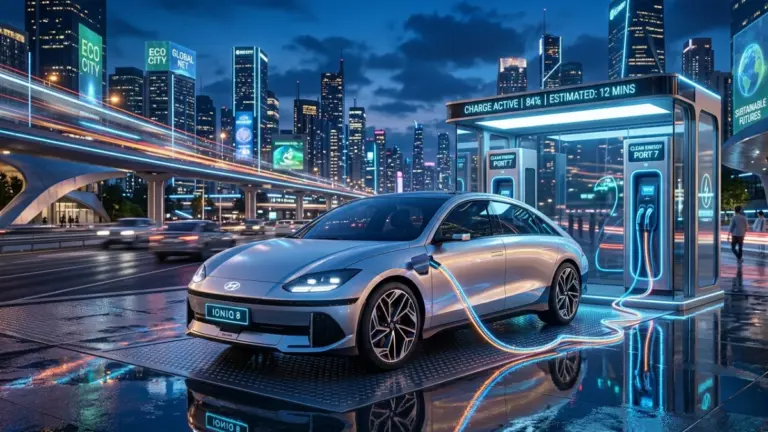
The numbers tell an impressive story too. The U.S. now has over 200,000 public charging points, with ultra-fast 350kW+ chargers spreading across major highways. Europe’s ahead with 600,000+ charging locations, while China—well, China has more than the rest of the world combined, with over 2.5 million public charging points.
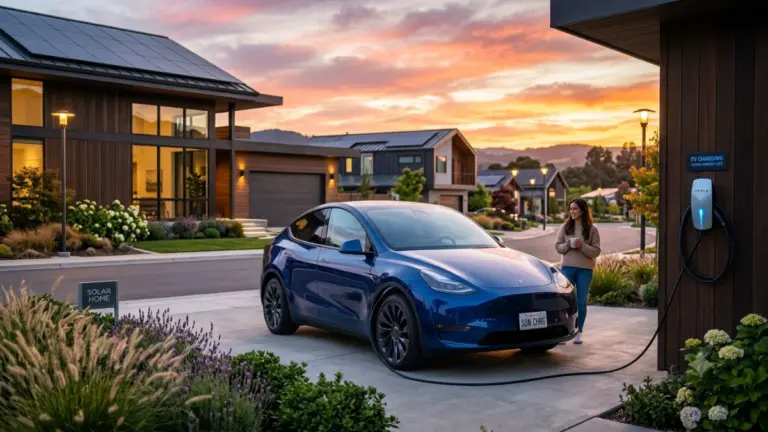
Here’s something cool happening in cities: curbside charging. London, Los Angeles, and Amsterdam are converting street lamps into charging stations. If you live in an apartment without a garage (like 40% of urban residents), this is huge. You can finally charge where you park overnight, just like plugging in your phone at home.
The Autonomous Revolution Is (Cautiously) Accelerating
Okay, I know we’ve been promised self-driving cars for a decade now. But 2025 is different because companies have finally figured out that full autonomy everywhere might not happen overnight—and that’s actually fine.
What we’re seeing instead is smarter, more practical deployment. Waymo operates fully autonomous ride-hailing services in Phoenix, San Francisco, Los Angeles, and Austin, completing over 100,000 paid rides weekly. No safety driver, no steering wheel drama—just regular people getting to work or heading out for dinner in cars that drive themselves.
Cruise, despite its setbacks, has resumed operations with improved safety protocols. Mercedes-Benz offers Level 3 autonomous driving (yes, where you can legally take your eyes off the road) in Germany and Nevada, though only under specific highway conditions. It’s not the flying car future we imagined, but it’s something arguably more valuable: proven technology that actually works.
The commercial sector is moving even faster. Autonomous delivery robots scurry along sidewalks in dozens of cities, handling last-mile deliveries for everything from groceries to prescriptions. Companies like Nuro and Starship Technologies operate thousands of these little vehicles, and honestly, they’re kind of adorable watching them wait patiently at crosswalks.
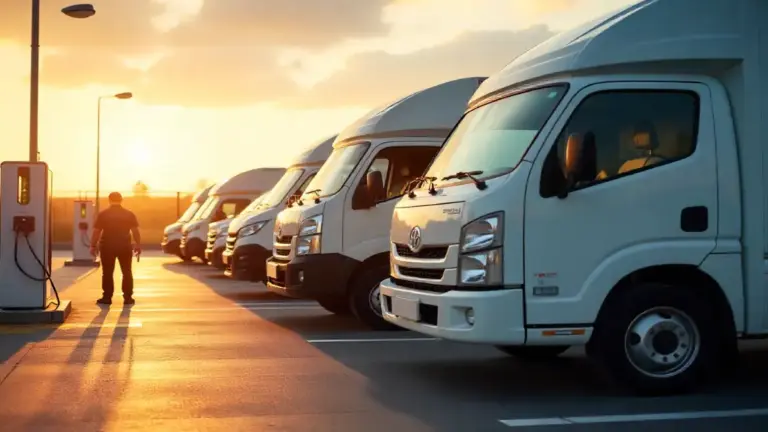
Long-haul trucking is where autonomous technology makes the most economic sense, and 2025 is seeing real progress. Aurora and TuSimple are running pilot programs on specific highway routes, primarily overnight when traffic is lighter. The goal isn’t to eliminate truck drivers entirely—it’s to address the massive driver shortage while improving safety on routes where human fatigue is a real concern.
Micromobility: Small Vehicles, Big Impact
Here’s something that doesn’t get enough credit: those electric scooters and bikes everyone loves to complain about are actually transforming urban transportation.
In 2025, micromobility isn’t just about convenience—it’s about solving the “first-mile, last-mile” problem that makes public transit impractical for so many people. How do you get from your house to the train station? How do you cover that awkward gap between the bus stop and your office?
E-scooters and e-bikes are filling that gap brilliantly. Cities like Paris, Barcelona, and Copenhagen have integrated them into their public transit systems, with dedicated lanes and parking zones. Paris went from car-centric to bike-friendly in just a few years, with e-bikes and scooters now accounting for over 11% of all trips in the city.
The technology has matured too. Today’s shared micromobility vehicles have swappable batteries (no more nighttime charging trucks), better build quality, and actually decent suspension. Companies learned from their chaotic early days—now there are geofenced parking zones, speed limits in crowded areas, and real consequences for bad behavior.
But here’s what really matters: micromobility is genuinely sustainable. A recent study found that e-scooter trips are replacing car trips 30-40% of the time in urban areas. That’s significant carbon reduction in congested city centers where every car-free trip counts.
Smart Cities and Vehicle-to-Everything (V2X) Integration
This is where things get really interesting—and where we start seeing how all these pieces fit together.
Your EV isn’t just a vehicle anymore; it’s a mobile power source, a data generator, and part of your city’s energy infrastructure. Vehicle-to-Grid (V2G) technology, which has been “coming soon” forever, is actually here in 2025.
Think about it: your car sits parked 95% of the time, but its battery could power your home during peak electricity rates or sell power back to the grid when demand is high. Ford’s F-150 Lightning and the Hyundai IONIQ 5 already offer bidirectional charging. Some utility companies will literally pay you to use your car as a backup power source during emergencies or peak demand periods.
Cities are getting smarter about this too. Singapore and Copenhagen use real-time data from connected vehicles to optimize traffic flow, dynamically adjusting traffic signals based on actual vehicle movement rather than fixed timers. The result? 15-20% reductions in congestion and emissions in pilot areas.
Then there’s Vehicle-to-Vehicle (V2V) communication, where cars essentially talk to each other to prevent accidents and smooth traffic flow. It sounds like science fiction, but it’s rolling out in new vehicles across Europe and parts of Asia. Your car can literally “see” around corners by receiving data from other vehicles and infrastructure.
The Policy Push Making It All Possible
None of this happens in a vacuum. Behind every charging station and EV incentive is policy driving change—and 2025 is a pivotal year for regulation.
The European Union’s emission standards are pushing automakers hard. By 2025, manufacturers must ensure their fleet average doesn’t exceed 93.6 grams of CO2 per kilometer, with the complete ban on new combustion engine sales coming in 2035. That’s not an aspiration—it’s law. Automakers unable to meet these targets face massive fines, which explains why nearly every major brand has announced aggressive EV transitions.
In the United States, the Inflation Reduction Act continues reshaping the market with tax credits up to $7,500 for new EVs and $4,000 for used ones—though with strings attached about domestic manufacturing and battery sourcing. California, representing the world’s fifth-largest economy alone, requires 68% of new vehicle sales to be zero-emission by 2030. Where California goes, other states typically follow.
China remains the global leader in EV adoption, with EVs and plug-in hybrids representing over 40% of new car sales in 2025. Their success comes from a combination of generous subsidies, license plate restrictions on combustion vehicles in major cities, and massive domestic manufacturing capacity.
But it’s not just about carrots—there are sticks too. More cities are implementing Low Emission Zones (LEZ) and congestion charges that make driving traditional vehicles expensive or outright banned in urban centers. London, Milan, Stockholm, and dozens of other cities are essentially making the economic case for EVs through the sheer cost of driving anything else downtown.
The Challenges We Can’t Ignore
Alright, let’s be real for a minute. This revolution isn’t all smooth sailing, and pretending otherwise does nobody any favors.
Grid Capacity: Adding millions of EVs means significantly more electricity demand. Are our grids ready? In many places, not quite. Utilities are scrambling to upgrade infrastructure, but it’s expensive and slow. The saving grace? Most EV charging happens at night when overall demand is low, and smart charging systems can help balance loads.
Material Sourcing: Those batteries need lithium, cobalt, and nickel. Mining these materials has environmental and ethical concerns—from water usage in lithium extraction to labor conditions in cobalt mines. The industry is responding with better recycling programs and alternative chemistries (remember those sodium-ion batteries?), but it’s an ongoing challenge.
Affordability: Despite falling battery costs, EVs still carry a price premium in many segments. Yes, total cost of ownership often favors EVs thanks to lower fuel and maintenance costs, but that upfront sticker shock is real. More affordable models are coming—China’s BYD Seagull starts under $10,000—but Western markets haven’t seen similar price points yet.
Charging Equity: If you own a home with a garage, charging is easy. If you rent an apartment or park on the street? It’s complicated. Cities need to ensure charging access isn’t a privilege of homeownership, which requires significant public infrastructure investment.
What This Means for You Right Now
So where does all this leave you, whether you’re considering an EV or just trying to understand where transportation is headed?
First, 2025 is genuinely a great time to go electric if you’ve been waiting. The technology is mature, charging infrastructure is finally catching up, and vehicle choices span every category from affordable hatchbacks to luxury SUVs and pickup trucks. Range anxiety? Still real for some use cases, but rapidly becoming a non-issue for most daily driving.
Second, think beyond just cars. If you live in a city, that e-bike or scooter subscription might actually solve more of your transportation needs than you’d expect. Many people are finding that micromobility plus occasional car rentals or ride-hailing works better (and costs less) than owning a vehicle.
Third, pay attention to your local policy changes. Is your city offering EV incentives? Installing curbside charging? Creating low-emission zones? These decisions will directly affect your transportation options and costs in the coming years.
The Road Ahead
Here’s what strikes me most about 2025: we’re past the experimental phase. Electric mobility isn’t some future vision anymore—it’s the present reality being deployed at scale. Sure, there are obstacles and debates and technologies still maturing, but the direction is clear.
The question isn’t if transportation will go electric and connected—it’s how fast and how equitably. Will we ensure everyone benefits from cleaner air and lower transportation costs, or will it remain a privilege? Can we upgrade infrastructure quickly enough to meet demand? Will we solve the materials and environmental challenges of our new technologies?
These aren’t rhetorical questions—they’re the challenges we’re actively working through right now.
What excites me most isn’t any single technology or policy. It’s seeing how they’re all connecting: EVs talking to grids, cities planning around clean mobility, batteries getting better and cheaper, charging becoming ubiquitous, and autonomous systems making transportation safer and more accessible.
Is it perfect? No. Is it happening anyway? Absolutely.
So next time you’re sitting in traffic, engine idling, take a look around. That Tesla that just passed you? That electric bus? That bike lane being installed? They’re not just alternatives—they’re the future arriving in real-time.
And honestly? The future’s looking pretty exciting from where I’m sitting.