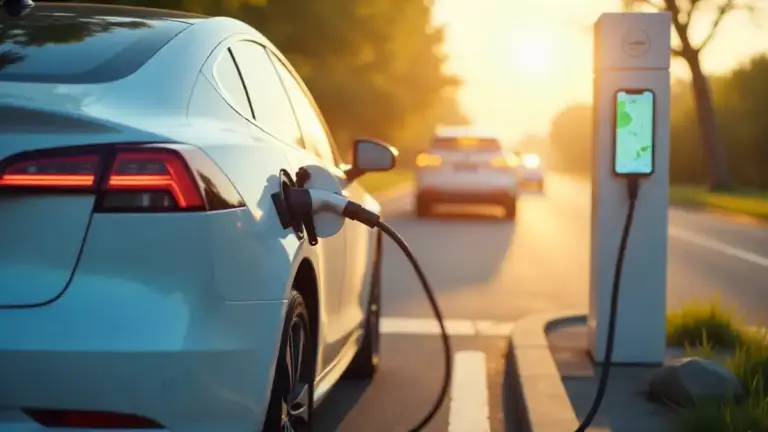
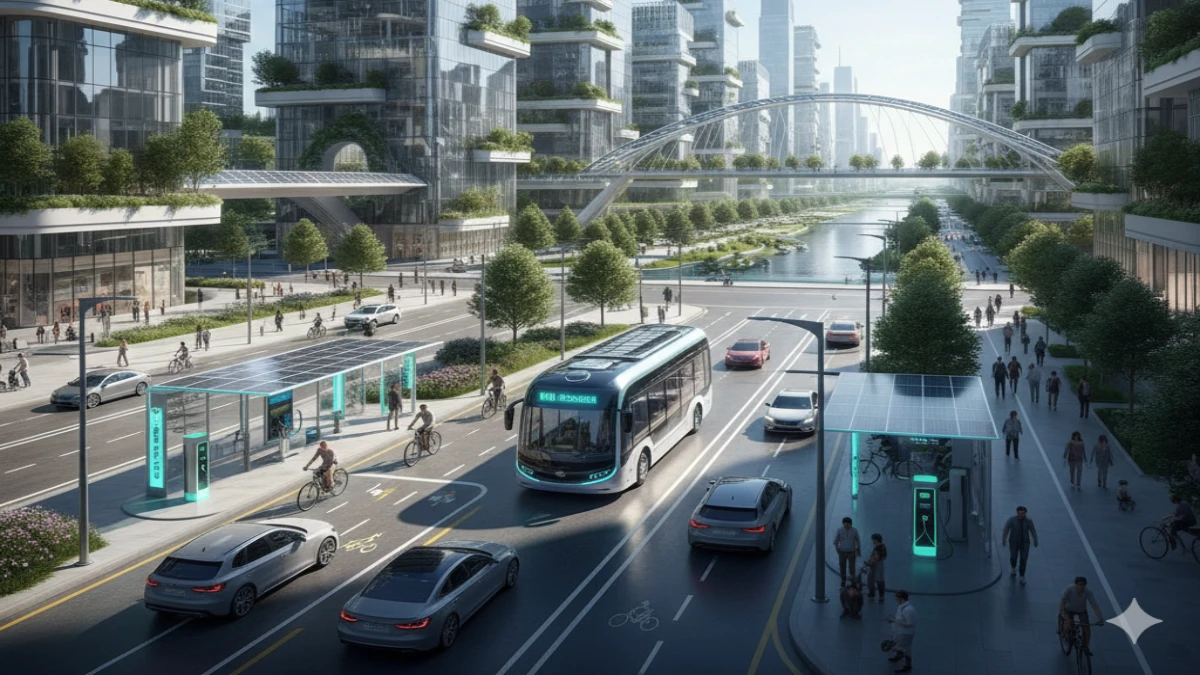
Have you noticed more charging stations popping up in your neighborhood lately? Or maybe you’ve heard about tax credits that could knock thousands off the price of a new electric vehicle? These aren’t random developments—they’re part of a massive, coordinated shift in how governments around the world think about transportation.
Sustainable transportation policy might sound like dry bureaucratic stuff, but here’s the thing: these policies are quietly revolutionizing how we’ll move around our cities in the next decade. They’re influencing what cars manufacturers build, where charging infrastructure appears, and whether going electric makes financial sense for your family. Let’s pull back the curtain and explore what’s really happening—and more importantly, what it means for you.
Why Governments Are All-In on Transportation Reform
Picture this: transportation accounts for roughly 27% of greenhouse gas emissions in the United States alone. That’s more than electricity generation or industry. When policymakers realized that hitting climate targets was impossible without tackling how we move people and goods, sustainable transportation shot to the top of the agenda.
But it’s not just about climate change. Cities are choking on traffic congestion and air pollution. The American Lung Association estimates that poor air quality contributes to tens of thousands of premature deaths annually in the U.S. When my cousin in Los Angeles talks about “bad air days” when his kids can’t play outside, that’s the human cost we’re talking about.
Governments also see economic opportunity. The global electric vehicle market is projected to reach over $800 billion by 2027. Countries want their domestic industries to capture a share of this growth, which means creating policies that support EV manufacturing, battery production, and charging infrastructure development.
So sustainable transportation policy isn’t a single issue—it’s a convergence of environmental urgency, public health necessity, and economic strategy. That’s why you’re seeing such aggressive action from governments at every level.
The Carrot Approach: Incentives That Make EVs Irresistible
Let’s talk about the good stuff first—the financial incentives that can make buying an electric vehicle genuinely appealing to your wallet.
In the United States, the federal government offers tax credits up to $7,500 for qualifying new electric vehicles under the Inflation Reduction Act. But here’s where it gets interesting: the rules have strings attached. To qualify, vehicles must meet certain criteria about where they’re assembled and where their battery components come from. The government isn’t just subsidizing EVs—it’s using incentives to reshape the entire supply chain.
And it’s not just the feds. California throws in an additional $2,000 rebate for qualifying EVs. Colorado offers up to $5,000 for new EVs and $2,500 for used ones. New York, New Jersey, Massachusetts—nearly every state has gotten into the game with some combination of rebates, tax credits, or exemptions.
But wait, there’s more. Many utilities offer special electricity rates for EV charging during off-peak hours. Some cities provide free parking for electric vehicles or let them use HOV lanes even with a single occupant. When you stack these benefits, the math starts looking very different than just comparing sticker prices.
I spoke with a teacher in Denver who bought a used Nissan Leaf last year. After the federal tax credit for used EVs, state rebate, and her utility’s charging incentive, she effectively paid $8,000 less than the listed price. “I wasn’t even considering electric,” she told me, “but my accountant basically insisted once we ran the numbers.”
Europe has its own flavor of incentives. Germany offers up to €4,500 for battery electric vehicles. Norway—which leads the world with EVs comprising over 80% of new car sales—exempts electric vehicles from the hefty import taxes that make conventional cars expensive. France, the UK, Netherlands—they’re all deploying generous incentive packages.
Building the Foundation: Infrastructure Investment
Here’s a truth about electric vehicles: they’re only as practical as the charging network that supports them. Governments get this, which is why massive infrastructure investment is a cornerstone of sustainable transportation policy.
The U.S. government allocated $7.5 billion through the Bipartisan Infrastructure Law specifically for EV charging infrastructure. The goal? Building out a national network of 500,000 public chargers by 2030. That’s roughly ten times what exists today.
The strategy focuses on eliminating “charging deserts”—areas where you can’t find a public charger within a reasonable distance. The National Electric Vehicle Infrastructure (NEVI) program requires charging stations every 50 miles along major highways. This addresses the number one concern I hear from people hesitant about EVs: “What if I run out of charge in the middle of nowhere?”
States are attacking this from multiple angles. Some are mandating that new residential buildings include EV-ready parking spaces. California requires that new homes have the electrical capacity for future EV chargers, even if they’re not installed immediately. It’s forward-thinking policy that prevents expensive retrofitting later.
Private companies are building charging networks too, but government policy shapes where they go. Tax incentives for installing chargers in underserved communities ensure that charging infrastructure doesn’t just appear in wealthy neighborhoods. Requirements for charging stations at government buildings and park-and-rides create guaranteed anchor locations that make private investment more attractive.
Europe’s ahead on this front. The EU requires member states to ensure adequate charging infrastructure, with specific targets based on the number of EVs in operation. Norway has charging stations seemingly everywhere—I’ve heard stories of people finding chargers in small mountain villages with populations under 1,000.
The Stick Approach: Regulations and Phase-Outs
Incentives get people excited, but regulations ensure change actually happens. And this is where policy gets serious.
California—often a bellwether for U.S. policy—announced that all new passenger vehicles sold in the state must be zero-emission by 2035. Not hybrids. Zero emission. Several other states including New York, Massachusetts, and Washington have adopted similar targets. That’s a hard deadline that gives automakers less than eleven years to completely transform their product lines for those markets.
The EU might be even more aggressive. The European Parliament voted to ban the sale of new petrol and diesel cars by 2035 across all member states. The UK is targeting 2030 for the phase-out of new gasoline and diesel cars, with hybrid sales allowed until 2035.
These aren’t aspirational goals—they’re legally binding requirements. Automakers are paying attention. Why do you think Ford is investing $50 billion in EVs through 2026? Or that GM plans to offer 30 electric models globally by 2025? It’s not just because they love the environment (though that doesn’t hurt). It’s because the regulatory landscape is forcing their hand.
Fuel economy standards are another powerful tool. The U.S. EPA established progressively stricter Corporate Average Fuel Economy (CAFE) standards that effectively push automakers toward electrification. Europe’s CO2 emissions standards serve a similar function. Miss the targets? Face hefty fines.
Some cities are going further with low-emission zones or congestion charges that make driving polluting vehicles in urban centers expensive. London’s Ultra Low Emission Zone charges £12.50 per day for older, more polluting vehicles. Paris restricts diesel vehicles in the city center. These policies make electric vehicles not just environmentally responsible, but economically logical for city dwellers.
Public Transportation Gets an Electric Makeover
Here’s something that doesn’t get enough attention: sustainable transportation policy isn’t just about personal vehicles. Governments are electrifying public transit on an impressive scale.
China leads the world with over 400,000 electric buses—nearly all the electric buses on the planet. But others are catching up. California has mandated that all new buses purchased by transit agencies must be zero-emission by 2029. New York City plans to electrify its entire bus fleet by 2040.
Why does this matter to you as a potential EV owner? Because it normalizes electric vehicles and proves the technology at scale. When your city’s buses run quietly on batteries and don’t spew diesel exhaust, electric vehicles seem less exotic and more like the obvious choice.
Plus, electrifying public transit creates shared benefits: cleaner air in neighborhoods served by bus routes, reduced noise pollution, and lower operating costs that can lead to better transit service. A cleaner, more efficient public transit system makes cities more livable, which in turn affects property values, public health, and overall quality of life.
The Hidden Power of Procurement Policy
Want to know a policy lever that rarely makes headlines but drives massive change? Government procurement requirements.
When governments require that some percentage of their vehicle fleets be electric, they create guaranteed demand that helps manufacturers achieve economies of scale. The U.S. Postal Service, for example, is in the process of electrifying its delivery fleet—that’s tens of thousands of vehicles representing a huge, stable order book for EV manufacturers.
Many states now require agencies to prioritize electric vehicles when replacing fleet vehicles, unless there’s a compelling reason otherwise. This puts thousands of electric vehicles on the road in highly visible roles—police cruisers, park ranger trucks, city utility vehicles. When people see EVs performing tough jobs reliably, it breaks down skepticism.
Government fleets also become testing grounds. Agencies collect detailed data on maintenance costs, reliability, and total cost of ownership. This real-world evidence often proves more persuasive than manufacturer claims. When a city’s fleet manager reports that electric vehicles cut maintenance costs by 40%, that’s information private fleet operators notice.
What These Policies Mean for You Right Now
Let’s get practical. How can you actually benefit from sustainable transportation policies today?
First, do your homework on incentives. The federal tax credit is significant, but check your state and local incentives too. Visit your utility’s website—many offer rebates or special rates you might not know about. Websites like Plug In America and the Department of Energy’s Alternative Fuels Data Center maintain comprehensive databases of available incentives.
Second, consider timing. Incentive programs change. Some phase out as more vehicles are sold, others have expiration dates. California’s Clean Vehicle Rebate Project, for instance, has fluctuating funding levels. If you’re on the fence about buying, understanding the incentive landscape might tip your decision.
Third, think long-term. Phase-out dates for gas vehicles might seem distant, but they affect resale values today. A 2030 ban on new gas car sales means that in 2029, you’re buying one of the last gas vehicles that will ever be sold. What does that do to resale value in 2035? Smart buyers are factoring this into their thinking now.
Fourth, advocate locally. Sustainable transportation policy isn’t just federal or state-level. Your city or county might be considering EV charging requirements for new developments, or incentives for workplace charging. Show up to city council meetings. Your voice matters in shaping policies that will affect your daily life.
The Road Ahead: What’s Coming Next
Policy evolution doesn’t stop. Here are trends I’m watching that will shape the next decade of sustainable transportation:
Vehicle-to-grid technology: Imagine your EV battery helping stabilize the electrical grid during peak demand, and you get paid for it. Policies enabling vehicle-to-grid (V2G) technology are emerging, creating a future where your car is both transportation and an energy asset.
Equity-focused policies: Early EV adopters tended to be wealthier households. Newer policies specifically target lower-income communities with larger incentives, used EV rebates, and charging infrastructure in affordable housing. California’s increased rebates for low-income buyers are a model here.
Commercial vehicle regulations: After passenger vehicles, expect aggressive policies targeting commercial trucks, delivery vans, and freight. California already requires manufacturers to transition to zero-emission trucks and vans starting in 2024. Your Amazon packages might soon arrive in electric delivery vans.
Battery recycling and circular economy policies: As the first wave of EV batteries reaches end-of-life, governments are implementing policies to ensure proper recycling and repurposing. The EU’s new battery regulations require minimum levels of recycled content in new batteries—creating a circular economy that reduces environmental impact.
The Big Picture: Why This All Matters
Step back from the details, and here’s what sustainable transportation policy really represents: a fundamental rethinking of how societies move people and goods.
For a century, we built our transportation system around fossil fuels. Our cities sprawled under the assumption that cheap gasoline was eternal. We accepted air pollution and climate change as unfortunate externalities. That era is ending, not just because technology offers alternatives, but because policy is deliberately closing the door on the old way.
This transition will be bumpy. There will be debates about the pace of change, concerns about jobs in traditional industries, and arguments over who bears transition costs. That’s democracy working through hard problems.
But the direction is set. When you see governments from California to China, from Norway to New York, all moving aggressively toward electrification—with different political systems and economic structures reaching the same conclusion—that tells you this isn’t a passing trend. It’s the future being built in policy documents before it appears on streets.
Your Move
Sustainable transportation policy might seem abstract, but it touches your life in concrete ways. It affects what cars manufacturers offer, how much they cost, where you can charge them, and even what your city looks like.
The policies we’ve explored—incentives, infrastructure investment, phase-out dates, fleet electrification—aren’t happening to you, they’re creating opportunities for you. Lower costs through tax credits. Growing charging networks that make EVs practical. Cleaner air in your community. A transportation system aligned with a livable climate future.
So whether you’re considering an EV purchase, thinking about your next car, or just curious about where transportation is headed, you’re already part of this story. These policies are building the road ahead—and it’s increasingly clear that road runs on electricity.
The question isn’t whether sustainable transportation will reshape our world. It already is. The question is: are you ready to be part of the journey?